
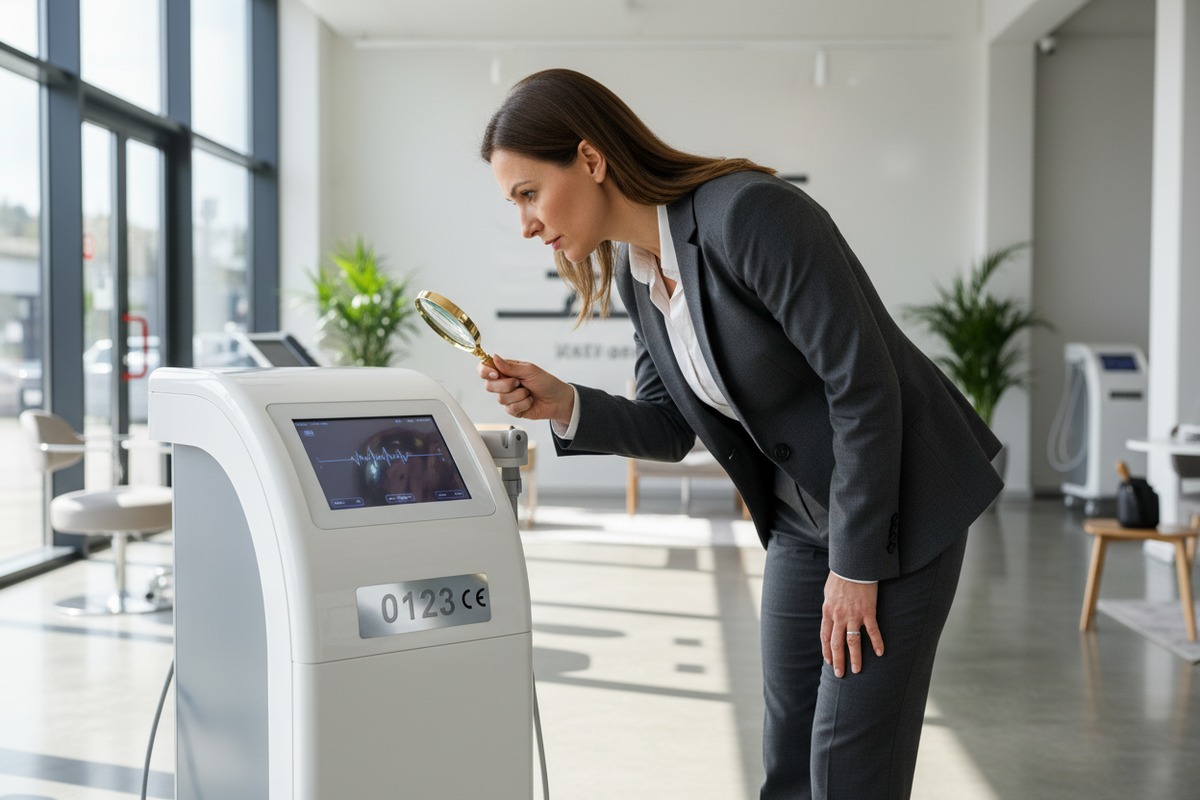
In our factory, we receive dozens of inquiries each month from brand owners concerned about one critical issue: Is the CE certificate on my supplier’s pressotherapy machine actually valid New Approach Directives and Regulations 1? This question keeps importers awake at night—and for good reason. A fake certificate means your products may be seized at customs, your brand could face lawsuits, and your clients may suffer harm from untested compression therapy equipment.
To verify if a pressotherapy machine CE certificate is issued by a Notified Body, locate the four-digit identification number on the device label, search that number in the EU’s NANDO database, confirm the Notified Body’s active status and medical device scope, then cross-check directly with the Notified Body using your certificate number.
This guide walks you through each verification step in plain language. You will learn how to use official EU databases, spot red flags on fake certificates, and protect your brand from compliance disasters. Let’s start with the most powerful verification tool available.
How can I use the NANDO database to verify my pressotherapy machine's CE certificate?
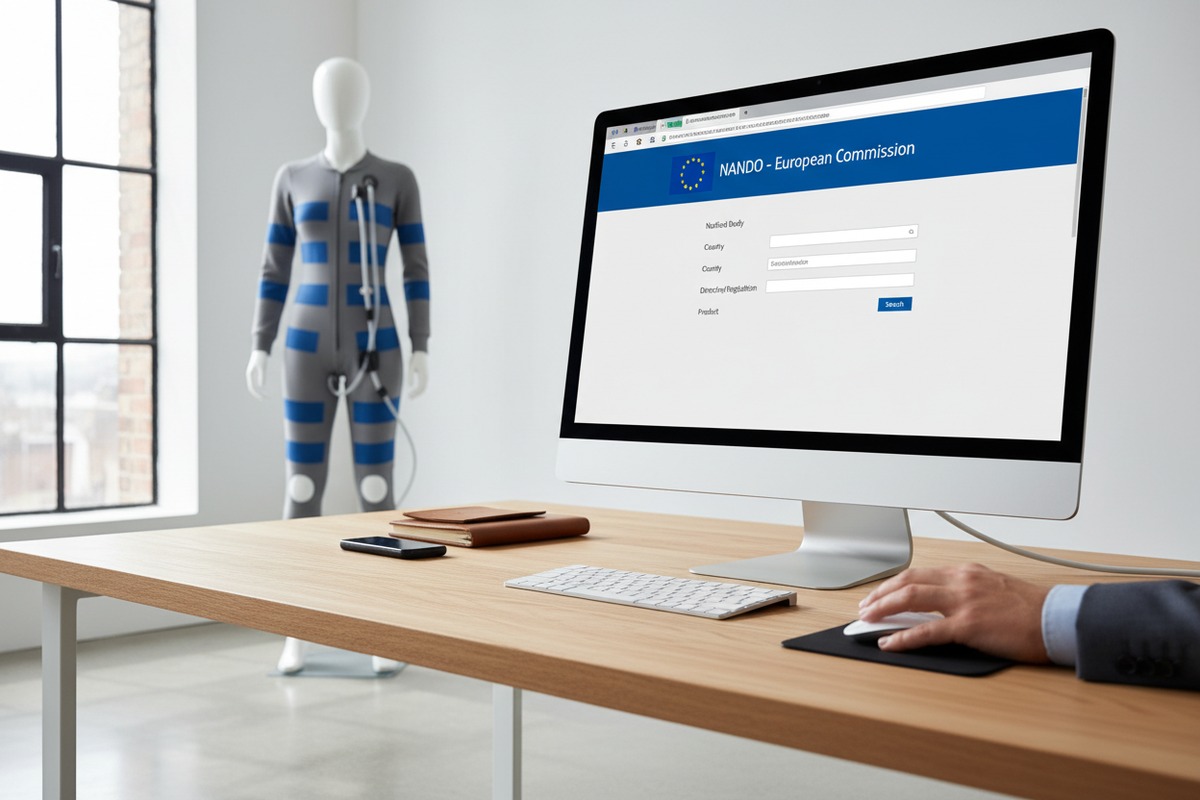
When we prepare export documentation for our clients, the NANDO database 2 is the first tool we recommend. Many buyers have never heard of it—yet it is the official EU resource that separates legitimate Notified Bodies from fraudulent labs.
NANDO (New Approach Notified and Designated Organisations) is a central and official database maintained by the European Commission. It provides public access to information about organizations designated and notified under the New Approach Directives and Regulations in the European Union.
What is NANDO and Why Does It Matter?
NANDO serves as a comprehensive and centralized repository for information on Notified Bodies in the EU. It includes details on organizations designated to perform conformity assessments and issue certifications for various products, including medical devices 3.
For pressotherapy machines—which typically fall under Class IIa or IIb due to compression risks—a Notified Body 4 must be involved in certification. For Class I (measuring/sterile/reusable), Class IIa, IIb, and III medical devices, CE certification must be obtained through a designated Notified Body under EU MDR 2017/745 5.
Step-by-Step NANDO Verification Process
Visit the European Commission's section for Notified Bodies. Scroll down to the search section. You will find three main options: Search by Country—useful if you prefer a Notified Body in a specific EU country. Search by Legislation—ideal for finding Notified Bodies based on the regulations they cover. Free Search—suitable if you know the name of the Notified Body or have general search preferences.
| Search Method | When to Use | What You'll Find |
|---|---|---|
| Search by Country | You want to verify a specific EU country's Notified Bodies | Full list of authorized bodies in that nation |
| Search by Legislation | You need to confirm MDR 2017/745 scope | All bodies authorized for medical device certification |
| Free Search | You have the NB number or name | Direct confirmation of active status and scope |
What Information Does NANDO Provide?
NANDO provides public access to information about designated Notified Bodies, including their scope of designation, identification numbers, and the member state that designated them. It allows manufacturers, regulatory authorities, and other stakeholders to verify the status and scope of designation of Notified Bodies.
Each entry shows the notification status (active, suspended, withdrawn). The NANDO database is publicly accessible via the European Commission portal and can be searched by country, by legislation (e.g., Regulation (EU) 2017/745 for medical devices), or by name or ID number. Each entry includes address, contact details, notification date, and scope.
Critical Check: Verify the Scope Matches Medical Devices
For manufacturers seeking to work with a Notified Body, NANDO serves as a verification tool. Manufacturers can confirm whether a specific Notified Body is officially designated and whether its designation covers the type of products they manufacture.
One common scam involves certificates from bodies authorized for other product categories. Some fake certificates are "issued" by existing notified bodies in EU, but when checked their accreditation, an institution accredited in certification of water pumps was not accredited for medical devices. When contacted, the real notified body confirmed that it is a scam and they have never issued such kind of certificate.
What steps should I take to confirm the four-digit Notified Body number on my supplier's paperwork?
Our quality control team has reviewed thousands of CE certificates over the years. The four-digit number next to the CE mark is your first line of defense against fraud. But many importers don't know what this number means or how to verify it.
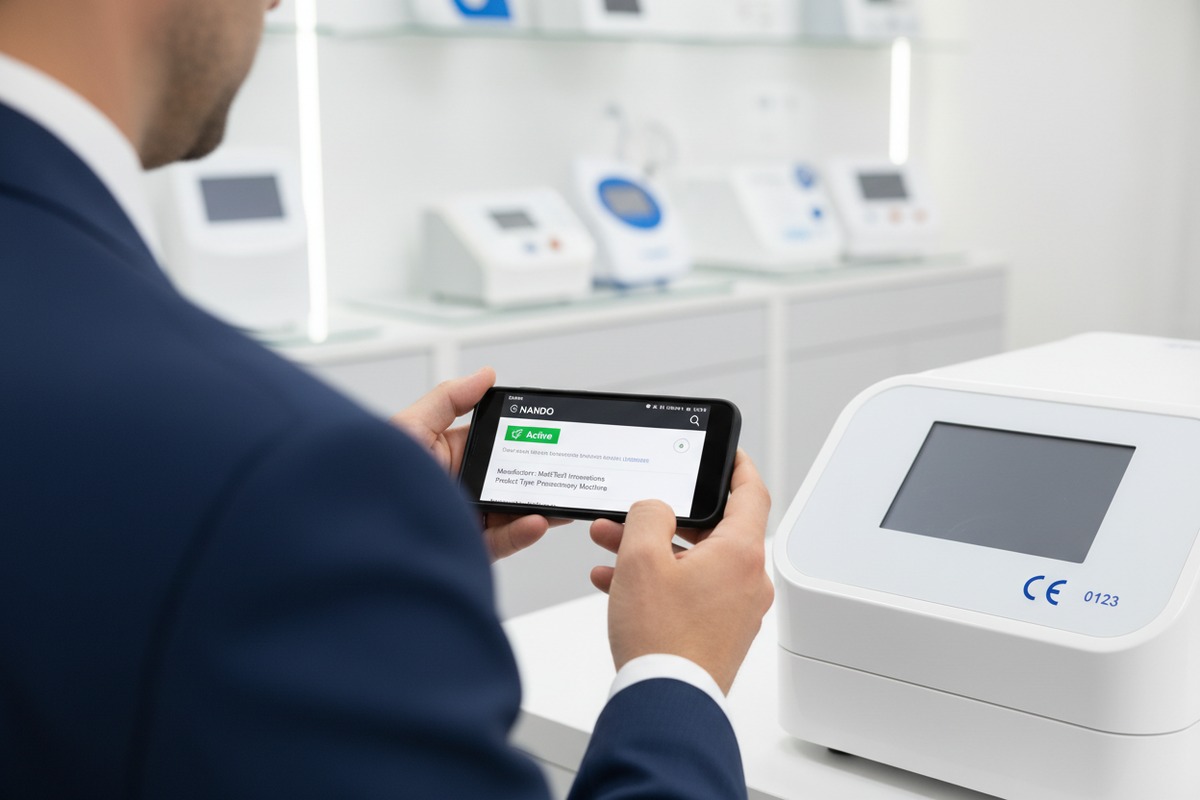
The CE marking four-digit number displayed next to the CE mark on some medical devices is the Notified Body (NB) number. If there is no CE marking four-digit number, this means the medical device is a Class I device that does not require NB involvement (self-declaration).
Understanding the Four-Digit Number
If required, search for notified bodies in the NANDO database and make sure the notified body you choose is authorised to carry out the specific conformity assessment procedure 6 required for your product under EU law. If a notified body is used, its 4-digit ID number must appear next to the CE marking.
For pressotherapy machines with therapeutic claims, this number is mandatory. The MDR distinguishes different risk classes I, I*, IIa, IIb and III for medical devices; the classification determines which conformity procedure is required. Apart from the lowest risk class (class I), a notified body must be involved in the conformity assessment of all medical devices.
Verification Checklist for the Four-Digit Number
| Step | Action | What to Look For |
|---|---|---|
| 1 | Locate the number on device label | Four digits following "CE" (e.g., CE 0123) |
| 2 | Check packaging and manual | Number should appear consistently |
| 3 | Search NANDO database | Confirm body exists and is active |
| 4 | Verify scope | Must include MDR 2017/745 for medical devices |
| 5 | Contact NB directly | Request certificate confirmation |
Red Flags on Supplier Paperwork
If someone wants to know which NB is associated with each NB number, the EU Commission operates the NANDO information system as a database, allowing you to search each of the 60+ NBs by CE marking 4 digit number.
Watch for these warning signs:
- No four-digit number on devices classified higher than Class I non-sterile
- Numbers that don't appear in NANDO
- Numbers linked to suspended or withdrawn bodies
- Scope that excludes medical devices under MDR 2017/745
Contacting the Notified Body Directly
Generally, large EU certification bodies will have a certificate inquiry window available on their official website. After logging into the body's website, there will be a certificate inquiry page. You can input the manufacturer's name in English, certificate number, or other relevant details to check if there is a matching CE certificate.
When contacting a Notified Body:
- Have your certificate number ready
- Provide the manufacturer name as shown on the certificate
- Ask for written confirmation of certificate validity
- Request verification of product scope coverage
How do I distinguish between a legitimate CE certificate and a fake "Certificate of Compliance" from a non-notified lab?
When we audit potential suppliers, fake certificates are more common than you might expect. Our engineers have seen everything from obviously forged documents to sophisticated fakes that require expert analysis to detect.
Fake CE marking refers to products sold with printed CE marking but which do not meet the safety requirements. Some products bearing the CE mark do so without actually being compliant with required safety and technical requirements. Importing and selling such products can result in fines and sales bans.

Why Fake Certificates Exist
It costs money to manufacture products that meet European safety requirements. It is partly a matter of using more expensive materials and components. It's simply cheaper to cut corners and produce products that don't meet the stringent compliance requirements the EU expects from CE-marked products. Likewise, lab testing is also costly.
It is quite common for manufacturers outside the EU to use fake CE certificates to "prove" that the product meets the CE requirements.
Key Differences: Legitimate vs. Fake Certificates
| Element | Legitimate Certificate | Fake Certificate |
|---|---|---|
| Issuing Body | Listed in NANDO database | Not in NANDO or wrong scope |
| Four-Digit NB Number | Valid and verifiable | Missing, fake, or wrong scope |
| Certificate Number | Traceable via NB website | No verification possible |
| Scope | Specifies MDR 2017/745 and device type | Vague or generic wording |
| Supporting Documents | Full DoC and technical file available | Missing or incomplete |
| Language | Professional, specific terminology | Generic, grammatical errors |
Documents That Are NOT Valid CE Certificates
Some organisations offer "voluntary certificates" that are not valid for CE marking.
These documents are usually nothing more than declarations that cannot be substantiated by valid test reports. EU market surveillance authorities do not accept these "certificates" as proof of compliance.
Watch out for:
- "Certificate of Compliance" from non-designated labs
- "Test Reports" without Notified Body involvement
- Self-issued "CE Certificates" for devices requiring NB assessment
- Documents from labs not authorized under MDR 2017/745
Cross-Verification Methods
Use the EU official websites to verify the issuing body and distinguish authenticity, but note that this method only works for Notified Bodies (NB), as non-NB bodies are not authorized third-party organizations. If the issuing body of your medical CE certificate is not listed in the databases, it means that the body is not authorized to issue CE certificates for medical products in the EU. Unfortunately, the CE certificate you have obtained would be invalid.
Using EUDAMED for Additional Verification
The European Medical Devices Regulation 2017/745 (MDR) and the European In Vitro Diagnostic Device Regulation 2017/746 (IVDR) introduced the publicly accessible European database for medical devices, EUDAMED 8.
MDR and IVDR conceptualize EUDAMED as the central platform for the European exchange of information and data on medical devices. EUDAMED consists of 6 modules: Actors Registration, UDI/Devices, Certificates/Notified Bodies, Vigilance, Clinical Investigations and Performance Studies, and Market Surveillance.
As an HCP, you and your patients will have access to medical device data via EUDAMED, including information relating to restricted substances, summary of safety and clinical performance, classification, clinical investigations, CE certification documentation, and vigilance reporting.
What are the risks to my brand if I import pressotherapy machines without a verified Notified Body certification?
In our experience working with US and European distributors, the consequences of importing non-compliant devices go far beyond fines. We have seen brand owners lose their businesses, face personal liability, and destroy years of reputation in weeks.
Given repeated discoveries of misuse of CE marking and fake CE marking, the financial losses incurred by industry—but also and primarily the health and safety risks faced by users of potentially unsafe products—are incalculable.

Immediate Consequences of Non-Compliance
Once your product bears the CE marking, you can make it available on the EU market and the competent national authority may carry out compliance checks. You must provide the competent authority with all the information and supporting technical documentation 9 concerning the compliance of the product upon request.
If the importer or distributor markets the product under their own company name, then they become responsible for CE marketing, and take over that role from the manufacturer.
| Risk Category | Potential Consequences |
|---|---|
| Regulatory | Customs seizure, forced recalls, sales bans |
| Financial | Fines, legal fees, product destruction costs |
| Legal | Personal liability, lawsuits, criminal charges |
| Reputational | Loss of customer trust, negative publicity |
| Operational | Market access loss, supply chain disruption |
The Importer's Legal Responsibilities
If you are importing medical devices into the EU, it is your responsibility to review all the technical documentation and maintain a copy. That the device has been CE marked and that the EU declaration of conformity has been completed. That the manufacturer has designated and established an authorized representative.
As an importer selling under your own brand, you assume full manufacturer responsibilities. This means:
- Liability for any harm caused by non-compliant devices
- Responsibility for proper documentation
- Obligation to cooperate with market surveillance authorities
- Legal exposure if devices cause injury
Long-Term Brand Damage
In the case of medical devices in particular, fake CE marking 10s not only damage our good reputation, but also have a negative effect on the market in general by simulating valid certification.
The pressotherapy market serves medical spas, clinics, and post-surgery recovery facilities. These are professional buyers who verify compliance. One incident with a non-compliant device can:
- Result in permanent blacklisting by major spa chains
- Trigger insurance claim denials
- Generate negative professional reviews
- Lead to loss of distribution partnerships
Post-Market Surveillance Requirements
In between re-certification audits, planned, annual surveillance audits are conducted by the Notified Body. In addition, Notified Bodies must conduct at least 1 unannounced audit in-between surveillance audits.
Conformity with the EU MDR does not end with CE marking. It is a continuous process throughout the device's lifecycle that entails device/process change management as well as Post-market Surveillance (PMS) and Vigilance activities.
| MDR Requirement | Non-Compliant Device Risk |
|---|---|
| Ongoing surveillance | No monitoring for device failures |
| Vigilance reporting | No system to track incidents |
| Technical documentation updates | Outdated safety information |
| Unannounced audits | Complete failure of oversight |
How to Protect Your Brand
Untrustful sources contact healthcare purchasing departments directly, offering medical devices with or without a CE Mark for direct delivery to hospitals. Ask your purchasing department to do a critical evaluation of the supplier before ordering devices which may put patients under uncontrolled/unknown risk.
Best practices include:
- Always verify certificates before placing orders
- Request full technical documentation
- Conduct supplier audits when possible
- Maintain your own compliance records
- Work with established manufacturers who demonstrate transparency
Conclusion
Verifying your pressotherapy machine's CE certificate is not optional—it's essential for brand protection and legal compliance. Use the NANDO database, confirm the four-digit Notified Body number, and always request direct verification from the certifying body before placing orders.
Footnotes
1. Official EU explanation of the New Approach Directives. ↩︎
2. Official EU portal for the NANDO database. ↩︎
3. Provides an overview of medical devices and their regulation in the EU. ↩︎
4. Replaced with an official European Commission page detailing Notified Bodies for medical devices. ↩︎
5. Direct link to the full text of the Medical Device Regulation (EU) 2017/745. ↩︎
6. Describes the process of conformity assessment for medical devices in the EU. ↩︎
7. Explains the meaning and presence of the four-digit identification number in CE marking. ↩︎
8. Official EU source for information on the EUDAMED database. ↩︎
9. Details the requirements and importance of technical documentation under EU MDR. ↩︎
10. Explains what fake CE marking is and its dangers. ↩︎

 English
 Español de México
 Deutsch
 Français
 العربية
 Русский
