
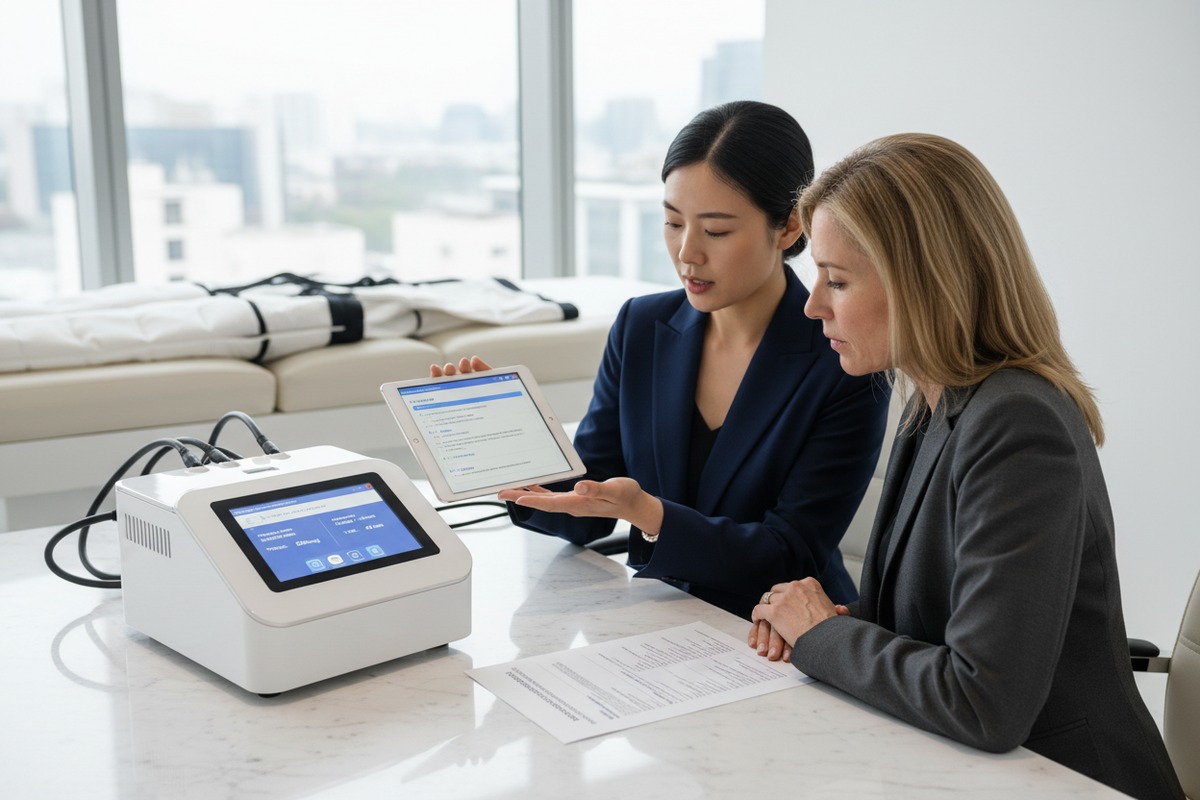
Every week, our team fields calls from US buyers frustrated by suppliers who cannot answer basic questions about state licensing rules. A pressotherapy machine may have perfect FDA paperwork, yet become a liability if the supplier cannot explain who may legally operate it in Texas versus California.
To evaluate supplier knowledge of US state beauty regulations for pressotherapy machines, ask about their understanding of FDA device classification, request proof of CE and ISO 13485 certifications, test their ability to distinguish between federal device approval and state scope-of-practice rules, and verify they can cite specific state cosmetology or medical board requirements for your operating location.
This guide walks you through the exact questions to ask and documentation to request. We will cover certifications, state-level licensing complexities, technical paperwork, and engineering competency—everything you need to protect your business from compliance missteps.
What specific FDA and safety certifications should I ask my pressotherapy machine supplier to provide?
Our engineering team often encounters buyers who assume any certification is enough. In reality, the wrong certification—or an outdated one—can expose you to seizure, fines, and liability. Knowing what to request protects your investment.
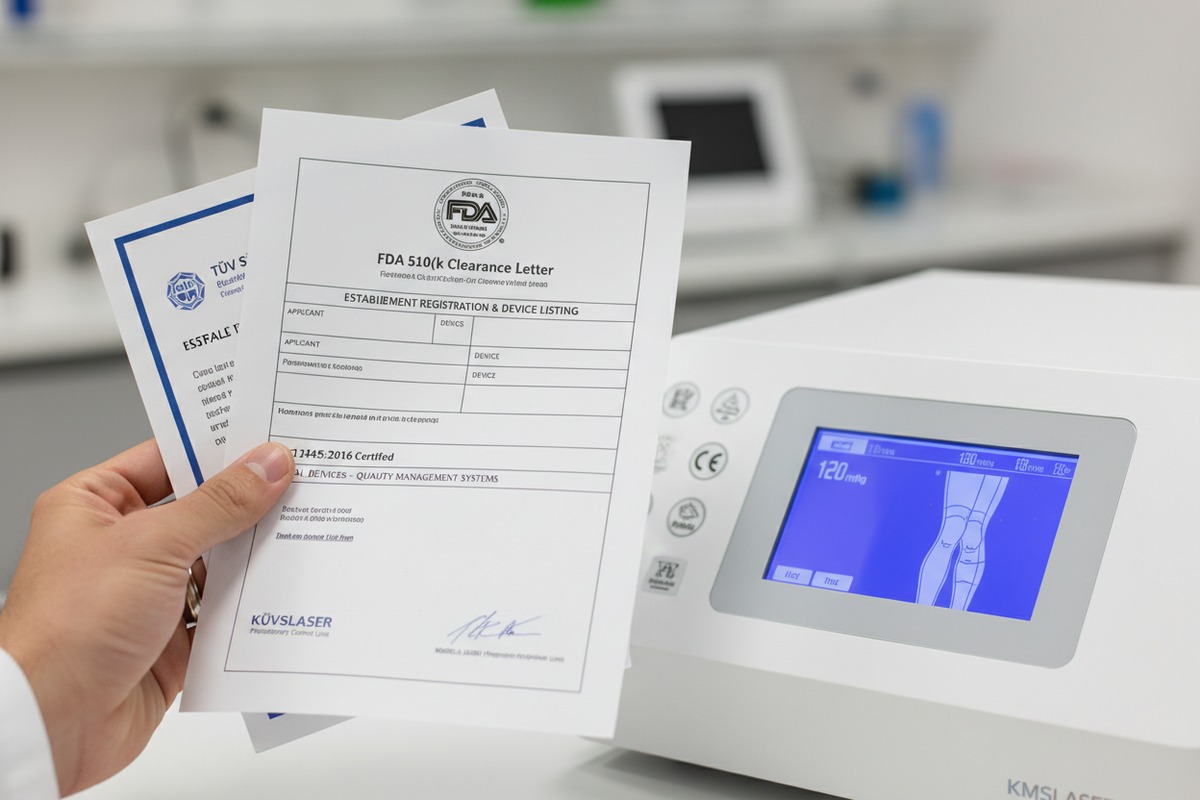
Ask your supplier for current FDA 510(k) clearance or registration documentation for the specific model you are purchasing, CE marking certificates with a valid Notified Body number, and ISO 13485 certification proving their quality management system meets international medical device standards. Each document should be verifiable through official regulatory databases.
Understanding FDA Device Classes
The FDA classifies medical devices into three regulatory classes based on risk. FDA device classification 1 Medical devices are assigned to one of three regulatory classes based on the level of control necessary to assure the safety and effectiveness of the device. The three classes are: Class I (General Controls), Class II (General Controls and Special Controls), and Class III (General Controls and Premarket Approval).
Pressotherapy machines typically fall under Class II devices. Class II devices are medium-risk, often with more complex designs but whose failure would be unlikely to pose an immediate risk of serious injury or death. This classification affects the regulatory pathway and documentation requirements.
Key Certifications to Request
| Certification | What It Proves | How to Verify |
|---|---|---|
| FDA 510(k) Clearance | Device is substantially equivalent to a legally marketed predicate device | FDA 510(k) database search |
| CE Marking 2 (EU) | Device meets European safety and health requirements | Notified Body certificate with valid number |
| ISO 13485 3 | Supplier maintains a compliant quality management system | Third-party registrar certificate |
| UL/ETL Listing | Electrical safety standards compliance | UL or ETL database lookup |
Compliance with ISO 13485 is often seen as the first step in achieving compliance with European regulatory requirements. This standard matters because it demonstrates your supplier has documented processes for design, manufacturing, and post-market surveillance.
CE Marking and Its Relationship to ISO 13485
The CE marking is a gateway to marketing products in Europe, even if the medical device was produced somewhere other than the European Union. While CE marking is primarily for European markets, it signals a higher standard of quality control that benefits US buyers.
ISO 13485 certification is essential for companies wishing to earn CE marking, indicating conformity with required safety standards to sell products in the European Economic Area.
Verification Steps You Must Take
Do not accept certificates at face value. Third-party certification can demonstrate to regulators that you have met the requirements of the standard. Request:
- Certificate expiration dates
- Scope of certification (does it cover the exact product you are buying?)
- Registrar contact information for independent verification
- Any FDA 483 observations or warning letters from the past three years
Perform a supplier audit to assess the company's ability to deliver products and/or services, perform independent testing of any components or products, and review any previous compliance issues such as FDA 483s, warning letters, or consent decrees.
How can I verify if my manufacturer understands the varying state-level licensing requirements for US salons?
When we prepare export documentation for US-bound machines, we always ask buyers which state they operate in. Many suppliers skip this step entirely. The result is equipment that sits unused because the buyer later discovers their estheticians cannot legally operate it.
Test your manufacturer’s knowledge by asking them to explain the specific regulations in your state, name the governing board (cosmetology board, medical board, or both), and distinguish between device certification and practitioner scope of practice. Knowledgeable suppliers will acknowledge state variations and may recommend legal consultation for state-specific compliance.
The Patchwork Problem of State Regulations
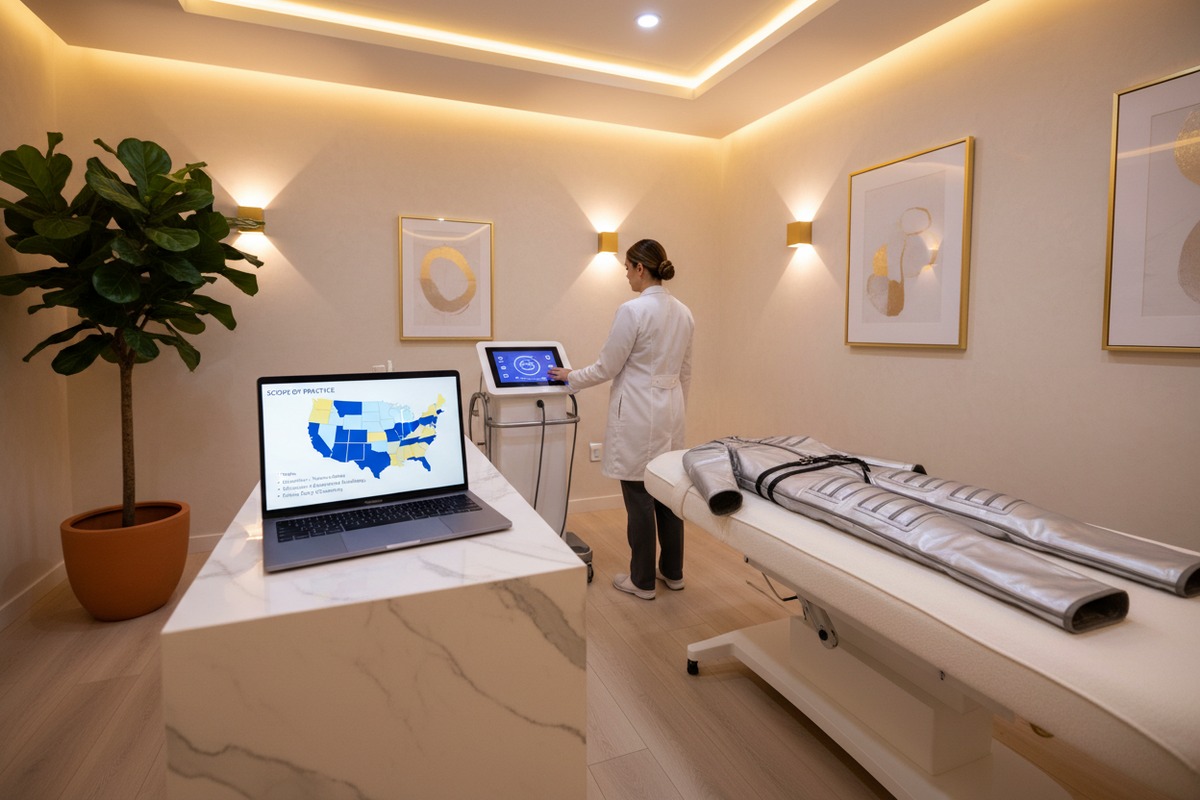
US regulations for medical spa services and device usage are inconsistent across states. Energy-based treatments including lasers and radiofrequency devices typically require physician oversight but may be delegated to trained non-physician providers depending on state regulations. The scope of practice 5 for nurse practitioners and physician assistants in aesthetic medicine varies dramatically across states.
This variation creates significant compliance challenges for buyers operating in multiple states or expanding their business.
Examples of State-Level Differences
| State | Key Regulation | Who Can Operate Pressotherapy |
|---|---|---|
| California | Bus. & Prof. Code § 7316 | Estheticians limited to non-invasive procedures on epidermis only |
| New York | March 2025 Board Ruling | Energy devices penetrating beyond skin surface require medical supervision |
| Texas | Multiple agency oversight | TDLR, Medical Board, and Health Services all regulate different aspects |
| Michigan | Class 2 device restrictions | Prescriptive devices require medical oversight |
Under this law, estheticians are permitted to perform services that improve the appearance or well-being of the skin, so long as those services do not affect live tissue or go beyond the outermost layer of skin—the epidermis.
Red Flags: Signs Your Supplier Lacks Regulatory Knowledge
Watch for these warning signs when evaluating supplier expertise:
- Makes blanket claims that pressotherapy is "legal everywhere"
- Cannot explain the difference between FDA device certification and state scope-of-practice regulations
- Provides outdated information or claims regulations have not changed recently
- Offers vague guidance on who can legally operate the equipment
- Cannot identify which state regulations apply to your location
Idaho's 2017 Bill: This law prohibits estheticians from using any class 2 devices like LED light therapy without medical oversight. This bill had no opposition or feedback from the profession, and the governor signed it into law in 2018. Many in the industry did not know about this bill until it was being enforced in 2024.
Green Flags: Signs of Strong Supplier Knowledge
A knowledgeable supplier should demonstrate:
- Clear explanation of the distinction between device certification and practice authority
- Awareness that Class 2 devices face increasing state restrictions
- Understanding of the difference between independent practice vs. medical supervision, which requires an esthetician to hire a medical provider to supervise these services through a collaborative agreement, direct supervision or engaging a medical services organization (MSO).
- Willingness to recommend legal consultation for state-specific compliance
- Proactive communication about regulatory changes and enforcement trends
Questions to Ask Your Supplier
- What are the specific regulations in [your state] for pressotherapy operators?
- Can you provide citations or references to those regulations?
- If I am an esthetician, can I use this equipment independently in my state?
- How do you stay informed about changing regulations?
- Can you explain what medical supervision entails in states that require it?
What technical documentation should I request from a supplier to ensure my imported equipment meets US regulatory standards?
Our documentation team prepares device master files and technical specifications every day. We know which documents US customs and state inspectors actually look for—and which ones many suppliers neglect. Missing even one critical document can delay your shipment or trigger an inspection.
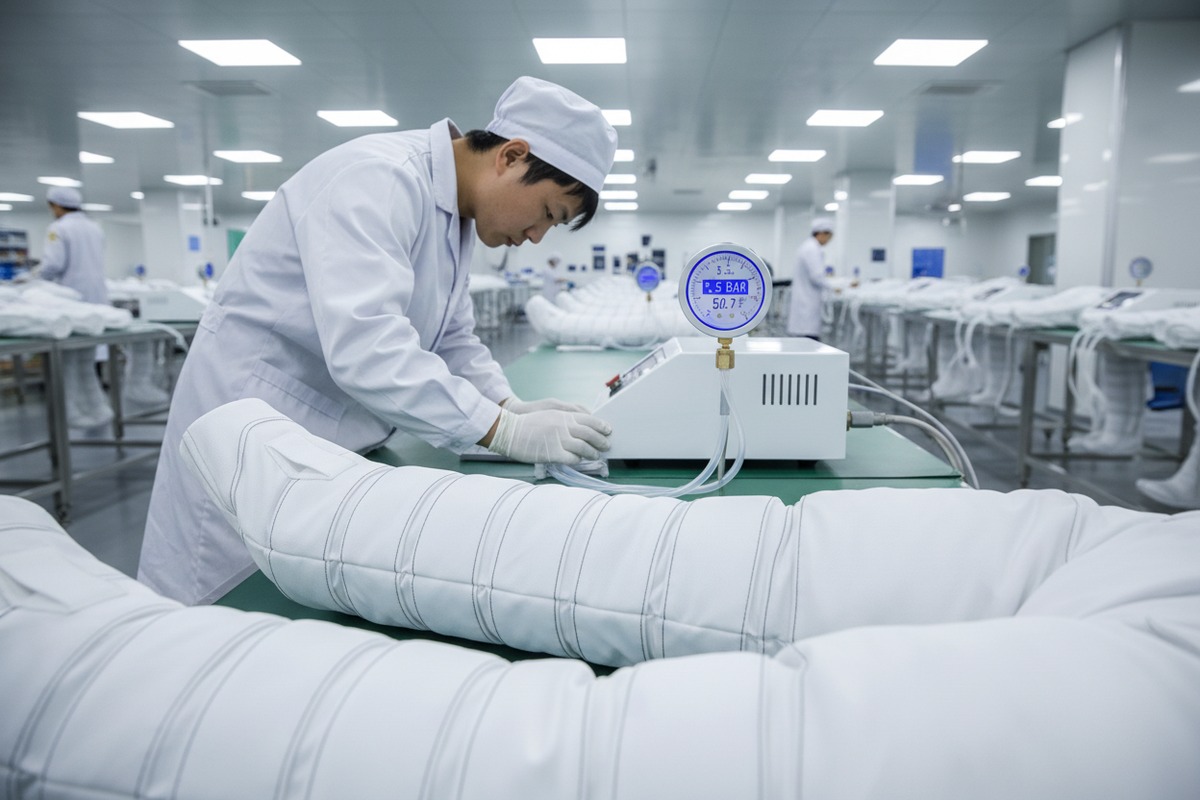
Request from your supplier the complete Device Master Record, risk management files per ISO 14971, electrical safety test reports, user manuals with proper labeling, calibration certificates, and any 510(k) summary or clearance letter. All documents should be in English, dated, and traceable to the specific model and serial number you are purchasing.
Essential Technical Documentation Checklist
ISO 13485 is the international quality standard that governs how medical devices are made, documented, and maintained. It sets the expectations for a quality management system 6 that can stand up to regulatory scrutiny, support safe and effective products, and scale across geographies and product lines.
| Document Type | Purpose | Why It Matters |
|---|---|---|
| Device Master Record 7 (DMR) | Complete specifications for manufacturing | Proves device was built to consistent standards |
| Design History File 8 (DHF) | Design inputs, outputs, verification records | Demonstrates design control compliance |
| Risk Management File | ISO 14971 9 risk analysis documentation | Shows hazards were identified and mitigated |
| User Manual | Operating instructions and warnings | Required for proper device use and liability protection |
| Electrical Safety Reports | IEC 60601 or UL testing | Confirms electrical safety compliance |
| Calibration Certificates | Measurement equipment accuracy | Validates test data reliability |
Device Master Record Contents
Maintain the Design History File (DHF), Device Master Record (DMR), and Device History Record (DHR) in a version-controlled environment with 21 CFR 11-compliant e-signatures and audit trails.
The Device Master Record should include:
- Device specifications and drawings
- Production process specifications
- Quality assurance procedures
- Packaging and labeling specifications
- Installation and servicing procedures
Labeling Requirements
Proper labeling is often overlooked. Your device labels must include:
- Manufacturer name and address
- Model number and serial number
- Intended use statements
- Warnings and precautions
- Storage and handling instructions
- Date of manufacture or lot number
Medical device manufacturers are subject to a range of regulatory controls to ensure that devices are not adulterated or misbranded and to otherwise assure their safety and effectiveness for their intended use.
Quality Management System Documentation
Both the FDA's 21 CFR Part 820 10 and ISO 13485:2016 require all medical device companies to implement purchasing controls.
Request evidence of:
- Documented quality manual
- Standard operating procedures (SOPs)
- Internal audit records
- Corrective and preventive action (CAPA) procedures
- Complaint handling processes
Traceability Requirements
ISO 13485 demands complete traceability throughout all processes. This means your supplier should provide:
- Lot or batch traceability for components
- Material certificates for critical parts
- Inspection records tied to serial numbers
- Shipping records linking devices to delivery
When our engineers discuss compliance with potential buyers, we can tell within minutes whether they understand the regulatory landscape. Some suppliers have sales teams who sell features but cannot explain how those features relate to compliance. The engineering team is where real expertise lives.
Assess engineering competency by requesting a technical call with the supplier’s engineering or regulatory affairs team. Ask them to explain how their device classification was determined, how they addressed specific FDA design control requirements, and how they handle post-market surveillance. A knowledgeable team will speak confidently about ISO 14971 risk management and design verification testing.

Why Engineering Knowledge Matters
Many FDA-regulated manufacturers falsely assume that by outsourcing duties to suppliers, these third parties take on the responsibilities for maintaining regulatory compliance. This is a fundamental misunderstanding of the expectations laid out in 21 CFR Part 820 for medical device companies.
Your supplier's engineering team should understand that compliance responsibility ultimately rests with you, the importer and distributor. They should be equipped to support your compliance efforts.
Engineering Team Competency Checklist
| Competency Area | Questions to Ask | Acceptable Responses |
|---|---|---|
| Design Controls | How did you verify design inputs match outputs? | Reference to DHF, verification testing protocols |
| Risk Management | How did you identify and mitigate device hazards? | Explanation of ISO 14971 process, risk matrix |
| Regulatory Pathway | Why did you choose this FDA classification? | Citation of predicate devices, product code research |
| Post-Market | How do you track complaints and adverse events? | Description of complaint handling SOP, trending analysis |
| Training | How do you train users on proper operation? | Training materials, certification programs |
Design Control Knowledge
Medical device companies must audit core areas like design control, risk management, CAPA, production, and supplier oversight per applicable standards and regulations.
A competent engineering team should explain:
- How user needs were translated into design inputs
- What verification and validation testing was performed
- How design changes are controlled and documented
- Where design review records are maintained
Risk Management Expertise
QMS requires risk analysis to be done, keeping ISO 14971 as the guidance document. This means ISO 13485 looks to ISO 14971 for guidelines for risk analysis and implementing risk control measures, thus ensuring the safety of the device during the product lifecycle.
Ask the engineering team to walk you through:
- Their risk analysis methodology
- How they identified potential hazards
- What risk controls they implemented
- How they verified risk controls are effective
Supplier Audit Indicators
A supplier audit may include a review of the supplier's facilities, production processes, quality control, and quality system.
Consider conducting an on-site or remote audit to verify:
- Engineering team qualifications and training records
- Availability of technical documentation
- Production process controls
- Equipment calibration and maintenance
- Nonconformance handling procedures
Regulatory Intelligence Capabilities
"The first quarter of 2025 has seen a significant wave of legislative activity that could have profound impacts on the day-to-day of medical spas."
A knowledgeable supplier should:
- Subscribe to regulatory update services
- Monitor state board communications
- Track enforcement actions in the industry
- Communicate proactively about regulatory changes
Long-Term Support Evaluation
| Support Area | What to Look For | Red Flags |
|---|---|---|
| Training | Comprehensive operator training programs | Generic manuals only, no live training |
| Updates | Regulatory change notifications | No communication after sale |
| Technical Support | Accessible engineering contacts | Sales-only contact points |
| Spare Parts | Long-term parts availability commitment | No spare parts program |
| Documentation | Updated technical files when regulations change | Static documents, no revision process |
Conclusion
Evaluating supplier knowledge of US state beauty regulations requires testing two distinct competencies: understanding of federal device certification and awareness of state-level scope-of-practice rules. Request complete certification documentation, verify your supplier can cite specific state requirements, demand technical files that support regulatory compliance, and assess engineering expertise through direct technical discussions. A supplier who meets these standards becomes a true partner in your compliance journey—not just a vendor shipping equipment.
Footnotes
1. Official FDA page detailing medical device classification. ↩︎
2. Explains the purpose and requirements of CE marking for medical devices in the EU. ↩︎
3. Authoritative information on ISO 13485 from BSI, a recognized certification body. ↩︎
4. Official FDA page explaining the 510(k) Premarket Notification process. ↩︎
5. Authoritative definition of ‘scope of practice’ from the American Medical Association. ↩︎
6. Outlines the FDA’s Quality System Regulation (QSR) for medical device manufacturers. ↩︎
7. Details the FDA requirements for a Device Master Record (DMR) in medical device manufacturing. ↩︎
8. Explains the FDA requirements for maintaining a Design History File (DHF) for medical devices. ↩︎
9. Authoritative information on ISO 14971 risk management for medical devices from BSI. ↩︎
10. Provides the official Code of Federal Regulations for Quality System Regulation (QSR) for medical devices. ↩︎

 English
 Español de México
 Deutsch
 Français
 العربية
 Русский
