

Last month, our quality team received an urgent call from a US distributor. Their shockwave therapy shipment was detained at the Los Angeles port due to missing UDI labels 1. The financial loss and customer frustration were significant.
US medical device packaging and labeling rules for importing shockwave therapy machines require FDA compliance under 21 CFR Part 801, including manufacturer identification, intended use statements, warnings, directions for use, and Unique Device Identification (UDI). Packaging must maintain device integrity, support traceability, and meet Quality System Regulation standards under 21 CFR Part 820.
Understanding these regulations is critical before your first shipment leaves the factory. Let me walk you through the essential requirements that protect your investment and keep your products moving through US customs.
How do I ensure my shockwave therapy machine labels comply with FDA UDI requirements?
Our engineering team has learned that UDI compliance is where most importers stumble. A single missing element can trigger a port detention that costs thousands in storage fees and delays.
To ensure FDA UDI compliance, your shockwave therapy machine labels must display a UDI carrier (barcode or RFID) containing both a Device Identifier (DI) and Production Identifier (PI). You must register your device in the FDA's Global Unique Device Identification Database (GUDID) and ensure the UDI appears on all packaging levels and the device itself.
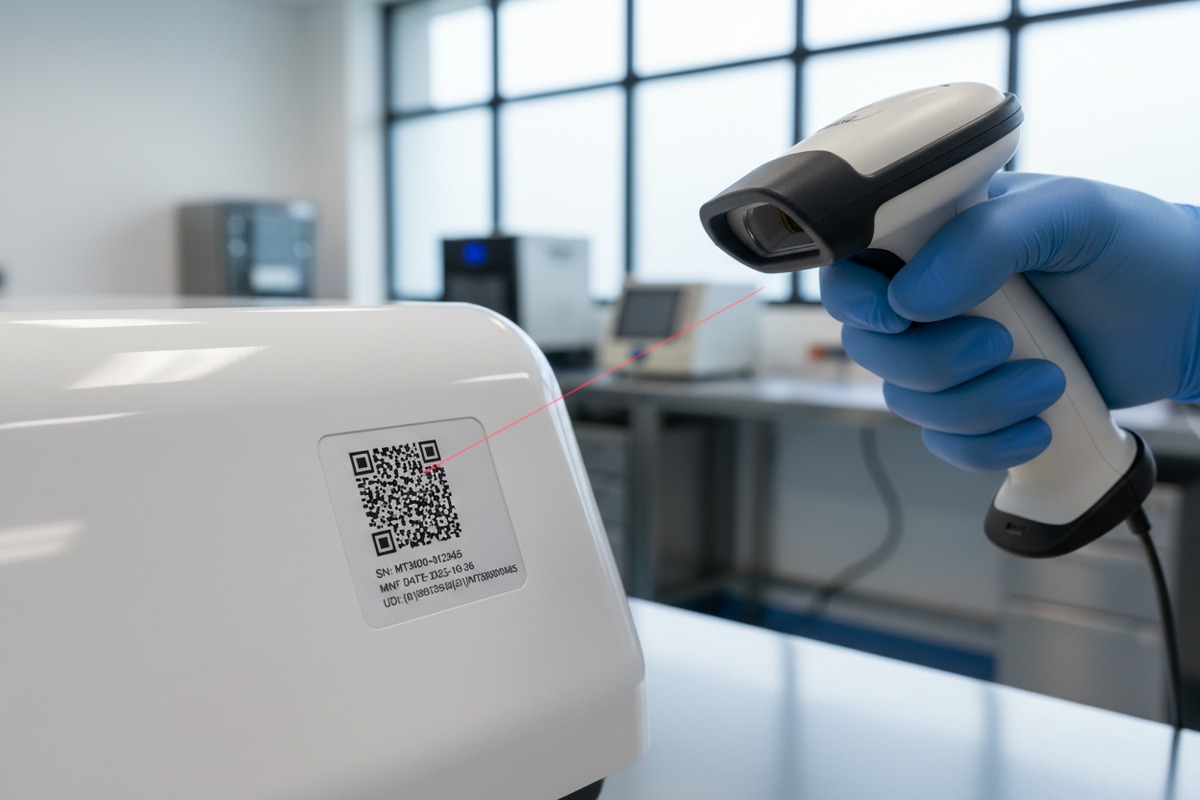
Understanding the UDI Structure
The Unique Device Identification system 2 has two main components. The Device Identifier (DI) is a fixed portion that identifies the labeler and device version. The Production Identifier (PI) is a variable portion that includes manufacturing details like lot number, serial number, expiration date, and manufacturing date.
For Class II shockwave therapy machines, the UDI must appear on both the device label and all packaging levels. This means your inner box, outer carton, and shipping container all need proper UDI markings.
Required Label Elements Under 21 CFR Part 801
| Label Element | Requirement | Location |
|---|---|---|
| Manufacturer Name | Full legal name and place of business | Device label, outer packaging |
| Intended Use | Clear statement of therapeutic purpose | Device label, IFU |
| Directions for Use | Complete operating instructions | IFU, can reference eIFU |
| Warnings/Precautions | All safety-related information | Device label, IFU |
| UDI Barcode | Machine-readable format (GS1, HIBCC, or ICCBBA) | Device label, all packaging |
| UDI Plain Text | Human-readable UDI below barcode | Device label, all packaging |
| Caution Statement | "Rx only" for prescription devices | Device label, outer packaging |
Common UDI Mistakes We Have Seen
In our experience shipping to North America, these errors cause the most problems:
First, importers forget that the UDI must be permanent on the device itself, not just the packaging. Our production line now uses laser etching for durability.
Second, the barcode quality matters. FDA requires a minimum grade of C on the ISO/IEC 15415 scale 3. Poor print quality triggers scanner failures at distribution centers.
Third, many forget to submit data to GUDID before shipping. The database entry must be active when goods arrive at US ports.
GUDID Submission Timeline
Your GUDID submission 4 should happen at least 14 days before your first US shipment. This allows time for FDA review and any corrections. Our documentation team prepares GUDID data packages alongside production schedules to avoid delays.
The FDA requires 27 mandatory data elements in your GUDID submission, including brand name, version number, device description, and whether the device is sterile or contains latex.
What specific packaging standards must my imported shockwave equipment meet to avoid transit damage?
When we first started exporting shockwave machines, transit damage claims ate into our margins. A cracked handpiece or scratched console meant costly replacements and unhappy customers. We invested heavily in packaging engineering to solve this problem.
Your shockwave equipment packaging must meet drop test standards (ISTA 2A or 3A), provide adequate cushioning for sensitive components, include moisture barriers for ocean freight, and maintain device integrity throughout the distribution chain. Packaging validation records are required under 21 CFR Part 820 Quality System Regulation.
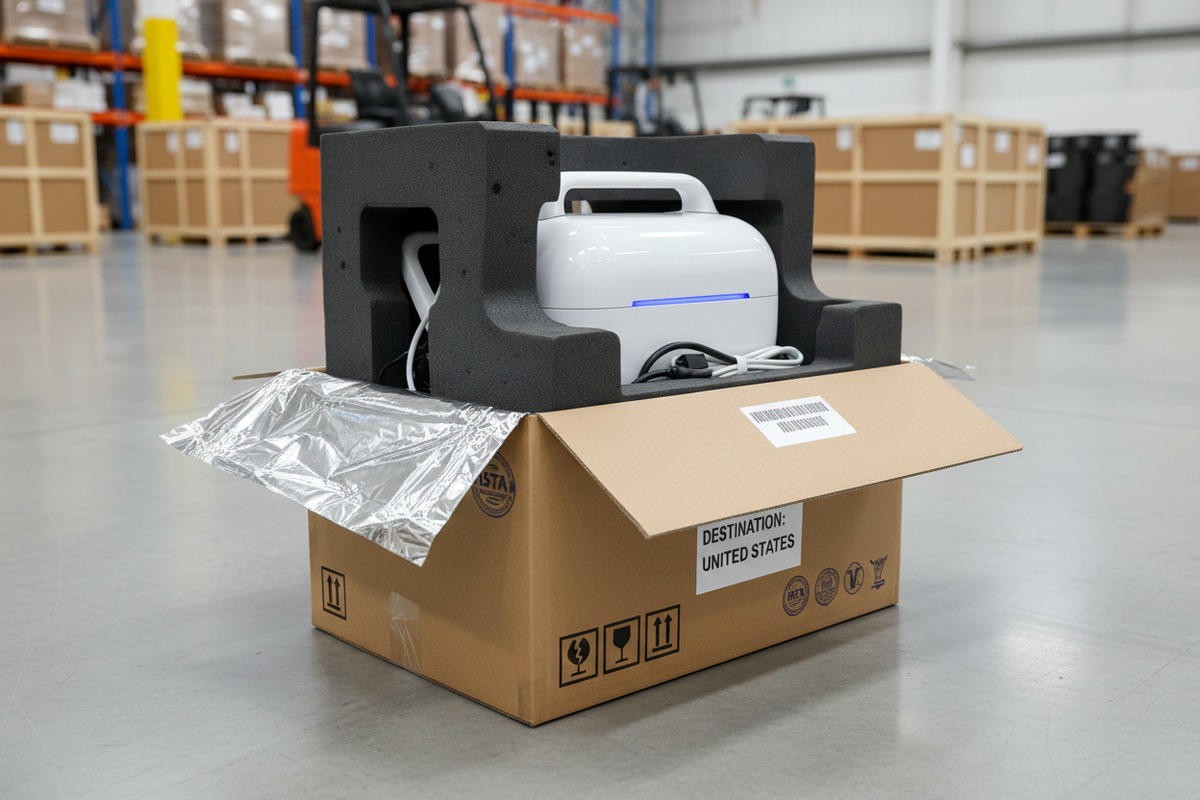
Packaging Validation Requirements
FDA expects packaging to be validated, not just designed. This means documented testing that proves your packaging protects the device under expected shipping conditions.
Our quality team runs ISTA 3A testing 5 on every new packaging design. This protocol simulates real-world shipping stresses including drops, vibration, compression, and temperature changes.
Material Specifications for Shockwave Machine Packaging
| Component | Material | Purpose | Testing Standard |
|---|---|---|---|
| Inner Cushion | PE foam, 2lb density minimum | Shock absorption | ASTM D3574 |
| Device Wrap | Anti-static bubble wrap | Static protection | EIA-541 |
| Moisture Barrier | Poly bag with desiccant | Humidity control | MIL-PRF-22019 |
| Inner Box | 275 lb ECT corrugated | Structural integrity | ASTM D4169 |
| Outer Carton | 350 lb ECT double-wall | Stacking strength | ISTA 2A |
| Corner Protectors | Molded foam or corrugated | Impact protection | Drop test validated |
Critical Protection Points for Shockwave Machines
Our engineering analysis identified the most vulnerable components on shockwave therapy machines. The handpiece connector is especially sensitive to lateral impacts. We designed custom foam inserts that cradle this area completely.
The control panel screen requires a rigid barrier. Even minor pressure during stacking can crack LCD displays. Our current design uses corrugated separators that distribute load away from the screen surface.
Power supplies generate heat during transport if batteries remain connected. Our packaging instructions require battery disconnection and include ventilation paths to prevent thermal damage.
Ocean Freight Considerations
Sea shipments face unique challenges. Container humidity can reach 95% during ocean transit. Temperature swings of 40°F or more are common.
We include industrial-grade desiccants rated for 60 days of protection. The moisture barrier bag is heat-sealed, not just folded. These steps prevent corrosion on circuit boards and metal components.
For palletized shipments, we specify stretch wrap with minimum 80-gauge thickness applied in a crosshatch pattern. Pallet quality matters too. Heat-treated wood pallets with ISPM-15 stamps 6 are required for US import.
Documentation Your Packaging Needs
Beyond physical protection, your packaging must support regulatory compliance. Include a packing list that matches your commercial invoice exactly. Serial numbers on documents must match serial numbers on UDI labels.
Our packing slips reference the 510(k) clearance 7 number for each device model. This helps customs officers verify premarket authorization quickly.
Can I private-label my shockwave machines while still meeting all US medical device packaging rules?
Private labeling is the foundation of our export business model. Most of our US customers want their brand on the device, not ours. The good news is FDA regulations fully support this arrangement with proper documentation.
Yes, you can private-label shockwave machines while meeting US packaging rules by ensuring the private labeler registers as an establishment with FDA, the labeler's name appears as the distributor on device labels, 510(k) clearance covers the specific indications, and a quality agreement defines labeling responsibilities between manufacturer and private labeler.
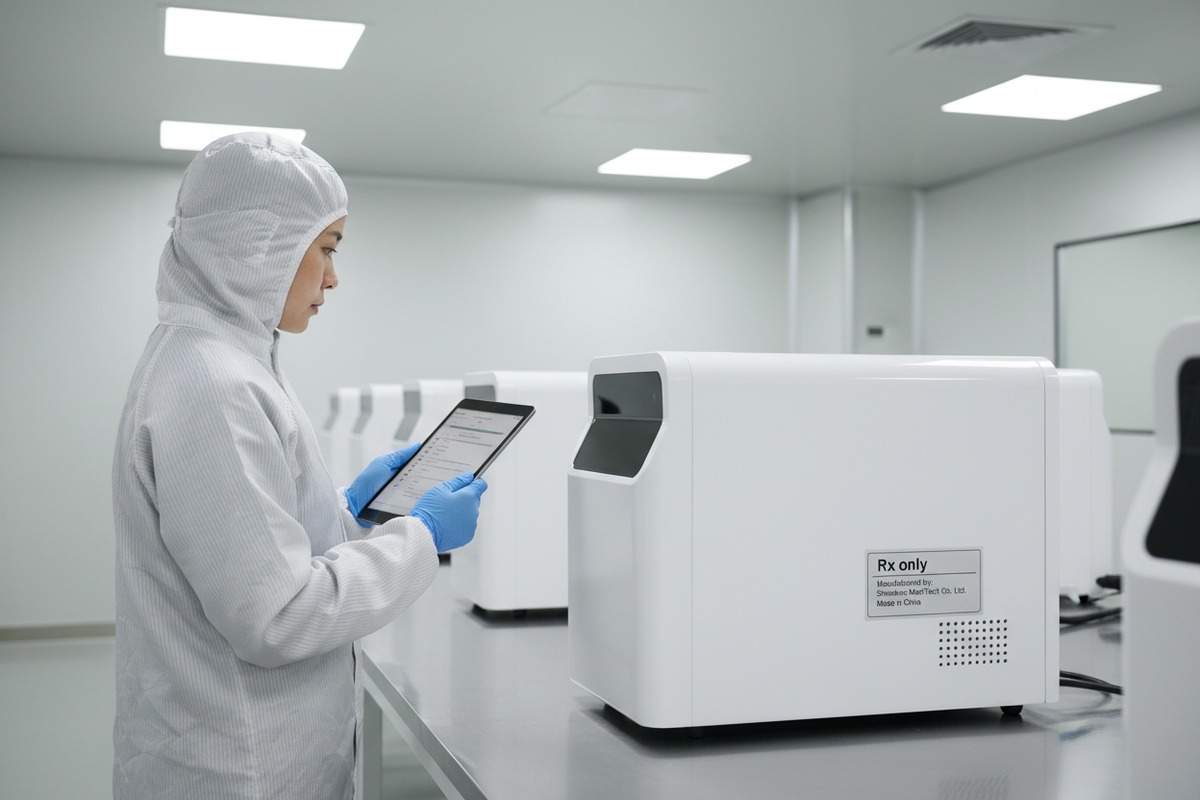
FDA Registration Requirements for Private Labelers
When you private-label a shockwave machine, you become the "labeler" in FDA terminology. This triggers specific obligations.
You must register your establishment with FDA annually. The registration fee for fiscal year 2025 is $7,653 for foreign establishments. Your registration must be active before any devices enter the US.
You must list each device model under your establishment. Device listing is free but mandatory. List updates are required within 30 days of changes.
Label Content for Private-Label Arrangements
| Label Element | Manufacturer Option | Private Labeler Option |
|---|---|---|
| Business Name | "Manufactured by [Name]" | "Distributed by [Name]" |
| Address | Full manufacturer address | Private labeler's US address |
| UDI Labeler | Manufacturer's DUNS | Private labeler's DUNS |
| 510(k) Holder | Can be either party | Can be either party |
| Contact for Complaints | Typically manufacturer | Can be either party |
The 510(k) Clearance Question
Here is where many importers get confused. The 510(k) clearance is device-specific, not company-specific. If your manufacturer already has 510(k) clearance for a shockwave machine, you can legally import that exact device.
However, the cleared indications must match your marketing claims exactly. If the 510(k) covers "pain management" but you market for "cellulite reduction," you have a compliance problem.
Some private labelers choose to hold their own 510(k). This gives more control over claims and modifications. Our team has supported several customers through the 510(k) process by providing technical files and testing data.
Quality Agreement Essentials
FDA expects a written agreement defining who does what. This document should cover:
Label design approval process. Who reviews artwork? Who approves final proofs?
Change control procedures. What happens when we update the device? How quickly must labels be revised?
Complaint handling. Where do adverse event reports go? Who submits MDR reports to FDA?
Record retention. Both parties must keep documentation. Define what each party maintains.
Our standard quality agreements run about 15 pages and take two to three weeks to negotiate. This investment prevents disputes later.
Practical Branding Considerations
From a production standpoint, private labeling adds complexity. We stock blank housings and print custom logos per order. This increases lead time by about five business days.
Color matching requires physical samples. Pantone numbers alone are not reliable across different plastic types. We recommend sending a reference item for exact matching.
User interface screens can display custom logos and brand colors. Software customization is a separate engineering service with its own timeline and cost.
How do I audit my supplier's labeling and quality control processes before my machines leave China?
Before we ship any order, we invite customers to audit our facility. Those who accept find problems we can fix before they become expensive. Those who skip audits often face surprises at US ports.
To audit your supplier's labeling and quality control, review their ISO 13485 certification, inspect labeling SOPs and change control records, verify UDI data accuracy, witness label application processes, and confirm packaging validation documentation. Remote audits via video are acceptable but on-site visits provide deeper insight.
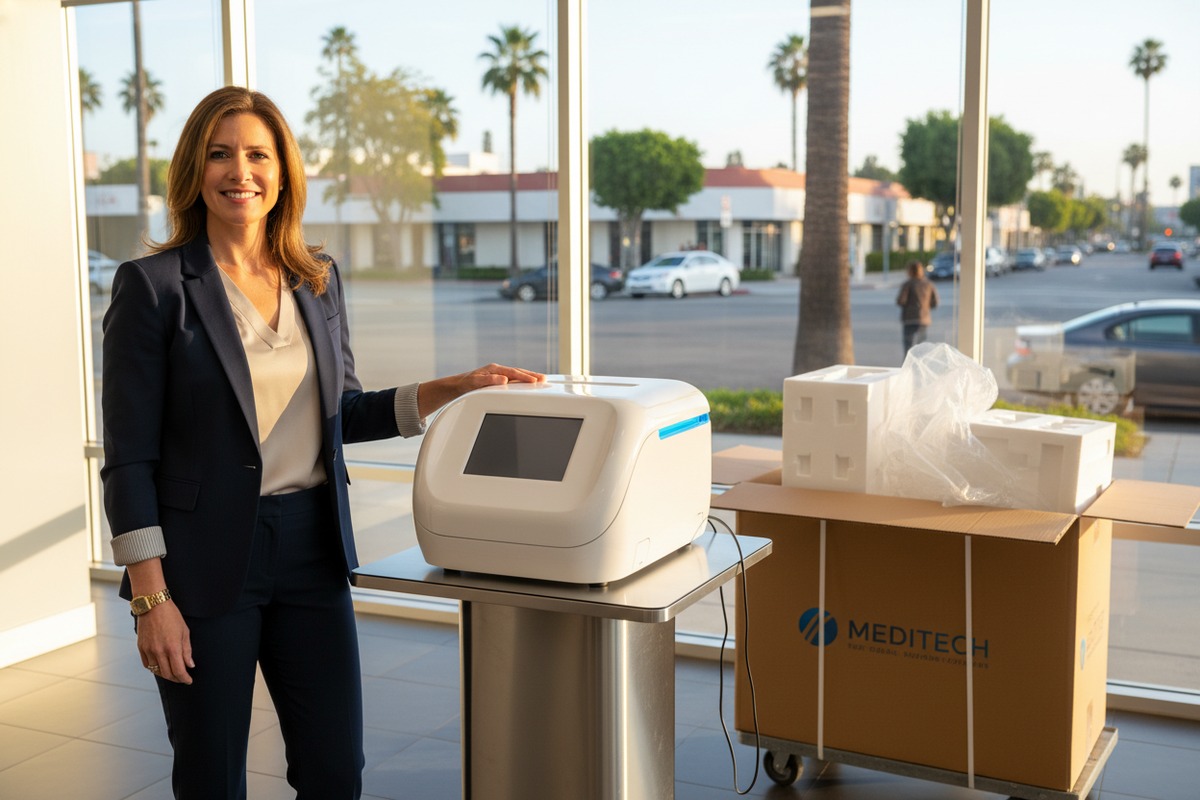
Pre-Audit Document Request
Request these documents before your visit or video call:
ISO 13485:2016 certificate 8 with scope statement. The scope must include your device type.
FDA establishment registration 9 confirmation. Verify the registration number on FDA's public database.
510(k) clearance letter for your specific model. Check that indications match your marketing plans.
Quality manual table of contents. This shows what procedures exist.
Recent internal audit reports. Look for labeling-related findings.
Key Process Areas to Audit
| Process Area | What to Check | Red Flags |
|---|---|---|
| Label Design Control | Change request forms, approval signatures | Missing approvals, no version control |
| Label Printing | Printer calibration records, ink specifications | No calibration schedule, poor print quality |
| Label Application | Work instructions, verification steps | Labels applied by memory, no inspection |
| UDI Management | GUDID submission records, barcode verification | Incorrect data, unreadable barcodes |
| Packaging Validation | Test reports, failure mode analysis | No testing, outdated reports |
| Document Control | Master label files, revision history | Mixed versions, no traceability |
Questions to Ask During the Audit
Our customers who ask tough questions get better products. Here are questions that reveal true capability:
"Show me the last labeling error you caught. What was the root cause? What corrective action did you take?"
"Walk me through what happens when FDA updates a labeling regulation. How long until your procedures change?"
"Can I see your barcode verification records from last week? What was your first-pass yield?"
"Who has authority to release labeled products? What training do they have?"
Remote Audit Techniques
Video audits have become standard since 2020. They work well for label inspection if done properly.
Use high-definition video calls. 1080p minimum allows reading label text on screen.
Request live camera walks through the production area. Pre-recorded videos can hide problems.
Ask operators to hold labels up to the camera. Check text clarity, barcode quality, and placement accuracy.
Review screen-shared documents in real time. Watch them navigate their document control system.
QMSR Transition Considerations
FDA's new Quality Management System Regulation takes effect February 2, 2026. This aligns US requirements with ISO 13485:2016.
During audits, ask about QMSR preparation. Suppliers should have gap analysis documents and implementation timelines.
Key QMSR changes for labeling include expanded requirements for electronic records and signatures, plus specific controls under proposed section 820.45.
Our quality team completed QMSR gap analysis in 2024. We share this documentation with audit customers to demonstrate readiness.
Building Long-Term Quality Partnerships
One audit is not enough. The best import relationships include ongoing quality monitoring.
We provide monthly quality reports to key customers. These include production yields, complaint trends, and corrective action status.
We welcome repeat audits. Returning customers often focus on specific improvement areas from previous visits.
Consider third-party inspections for each shipment. Companies like SGS and Bureau Veritas offer pre-shipment inspection services in China.
Conclusion
US medical device packaging and labeling rules protect patients and legitimate importers alike. With proper UDI compliance, validated packaging, clear private-label agreements, and thorough supplier audits, your shockwave therapy machines will clear customs smoothly and reach customers safely.
Footnotes
1. Official FDA page providing an overview of the UDI system, including labeling requirements. ↩︎
2. Official FDA page detailing the Unique Device Identification system. ↩︎
3. Explains ISO/IEC 15415 for 2D barcode print quality and its importance. ↩︎
4. FDA guidance on methods and requirements for submitting data to GUDID. ↩︎
5. Details on ISTA 3A, a general simulation test for packaged products in parcel delivery. ↩︎
6. Explains ISPM 15 standards for wood packaging materials in international trade. ↩︎
7. Comprehensive guide to the FDA 510(k) premarket notification process for medical devices. ↩︎
8. Information on ISO 13485:2016 certification for medical device quality management systems. ↩︎
9. FDA’s official page on annual establishment registration for medical device facilities. ↩︎

 English
  Español de México
  Deutsch
  Français
  العربية
  Русский