Every week, our quality control team reviews supplier documents from around the world ISO 13485 certification 1. The number of fake certificates we encounter is alarming. Without proper verification, your brand faces customs seizures, legal liability, and damaged reputation.
To verify shockwave therapy machine suppliers, you need to check their business license, FDA establishment registration, ISO 13485 certification, CE marking under EU MDR, and export certificates like CFG or Section 801/802. Independent lab reports for IEC 60601 electrical safety and ISO 10993 biocompatibility testing are also essential.
This guide breaks down each license and certification you need to request CE marking under EU MDR 2. We will show you exactly how to validate these documents and protect your business from compliance risks.
How can I verify a Chinese supplier's business license to ensure they are a legitimate manufacturer?
Our export team has processed hundreds of shipments to the US and Europe National Enterprise Credit Information Publicity System (NECIPS) 3. We have seen buyers lose thousands of dollars to trading companies pretending to be manufacturers. Verifying a Chinese business license is your first line of defense FDA Certificate to Foreign Government (CFG) 4.
To verify a Chinese supplier's business license, check their Unified Social Credit Code on the National Enterprise Credit Information Publicity System (NECIPS). Confirm the registered business scope includes medical device manufacturing, and verify the registered capital matches their claimed production capacity.

Understanding the Chinese Business License Structure
A legitimate Chinese manufacturer holds a Business License (营业执照) issued by the local Administration for Market Regulation IEC 60601-1 electrical safety 5. This document contains critical information you must verify.
The Unified Social Credit Code is an 18-digit number unique to each registered business. You can enter this code at the official government website to confirm the company exists. The database shows registration date, registered capital, legal representative name, and business scope.
Key Elements to Check
| Element | What to Look For | Red Flag |
|---|---|---|
| Business Scope | "Medical device manufacturing" or "Class II medical device production" | Only trading or wholesale activities listed |
| Registered Capital | Minimum 1 million RMB for medical device manufacturers | Very low capital (under 500,000 RMB) |
| Registration Date | At least 3-5 years of operation | Newly registered within past year |
| Address | Factory address matches claimed location | Registered in residential area |
| Legal Representative | Consistent with company communications | Frequent changes in legal representative |
Additional Verification Steps
Request the Medical Device Production License 6 (医疗器械生产许可证). This license is mandatory for Class II medical devices in China. It proves the supplier has passed government inspections of their production facilities.
Cross-reference the factory address with satellite imagery on Google Maps or Baidu Maps. A real manufacturing facility will show industrial buildings, not apartment complexes.
Ask for photos and videos of the production line. At our facility in Guangzhou, we regularly host video factory tours for international buyers. Legitimate manufacturers welcome this transparency.
Contact the local tax bureau to verify the company files regular tax returns. Trading companies often have minimal tax records compared to actual manufacturers.
Third-Party Verification Services
Consider using verification services like Dun & Bradstreet, Bureau Veritas, or SGS. These companies conduct on-site factory audits and provide detailed reports. The cost ranges from $500 to $2,000 but provides peace of mind.
Our engineering team recommends requesting supplier references from existing international clients. A legitimate manufacturer will have documented business relationships with importers in regulated markets.
Which export licenses should I request to confirm my supplier can legally ship shockwave equipment to the US?
When we prepare shipments to American distributors, our documentation team assembles a complete export package. Missing even one certificate can mean your container sits in customs for weeks. Understanding export license requirements protects your supply chain.
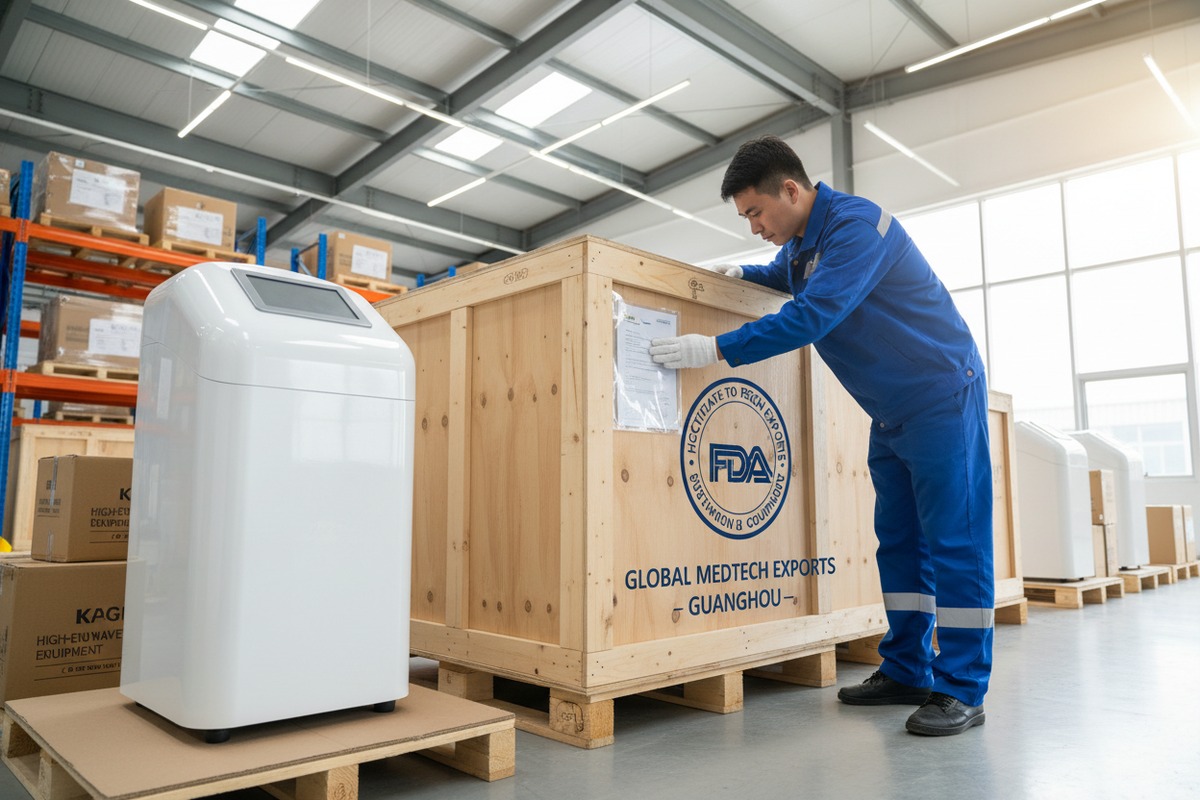
Request the FDA Certificate to Foreign Government (CFG), FDA establishment registration number, and device listing number. For Section 801(e)(1) exports, confirm the supplier has proper labeling stating "For Export Only." Chinese suppliers also need China Customs registration and an Export License from MOFCOM for controlled items.
FDA Export Certificate Types
The US FDA offers several export certificate types. Each serves a different purpose depending on the device's US marketing status.
| Certificate Type | When Used | Cost | Processing Time |
|---|---|---|---|
| Certificate to Foreign Government (CFG) | Device is legally marketed in US | $175 first, $85 additional | 2-4 weeks |
| Section 801(e)(1) | Device meets foreign country specs, not US marketed | $175 first, $85 additional | 2-4 weeks |
| Section 802 (Tier 1 Countries) | Device approved in Australia, Canada, EU, Japan, etc. | $175 first, $85 additional | 2-4 weeks |
| Non-Clinical Research Certificate (NCR) | Research use only | $175 first, $85 additional | 2-4 weeks |
FDA Establishment Registration
Every facility that manufactures, prepares, compounds, or processes medical devices for US distribution must register with the FDA. Your supplier should provide their FDA establishment registration number.
You can verify this number directly on the FDA's online database. The listing shows the facility name, address, owner/operator information, and registration status.
Device Listing Requirements
Beyond establishment registration, each specific device must be listed with the FDA. The listing includes the product code, device class, and regulatory pathway (510(k), PMA, or exempt).
Ask your supplier for the 510(k) clearance letter if they claim the device is FDA cleared. Verify this by searching the FDA 510(k) database 7 using the clearance number (K######).
Chinese Export Documentation
Chinese suppliers need their own export documentation. The key documents include:
- Export License from Ministry of Commerce (MOFCOM) for controlled goods
- China Customs Registration Certificate
- Certificate of Origin issued by China Council for the Promotion of International Trade (CCPIT)
- Packing List and Commercial Invoice
Special Considerations for 2024-2025
The Bureau of Industry and Security (BIS) introduced License Exception MED in 2024. This allows exports of EAR99 medical devices to Russia and Belarus without a full license. Suppliers must use AES License Code C69 and maintain records.
For most US-bound shipments, shockwave therapy machines classified as EAR99 do not require BIS export licenses. However, always check the current sanctions list for any end-user restrictions.
What medical device certifications and ISO standards must my manufacturer hold to guarantee product safety?
Our R&D engineers spend months testing each new shockwave therapy model before production begins. We have learned that cutting corners on certifications leads to customs rejections and worse, patient safety issues. The right certifications are non-negotiable.
Your manufacturer must hold ISO 13485 for quality management systems, FDA 510(k) clearance for US markets, and CE marking under EU MDR for European markets. Essential safety testing includes IEC 60601-1 for electrical safety, IEC 60601-1-2 for electromagnetic compatibility, and ISO 10993 for biocompatibility.
ISO 13485 Quality Management System
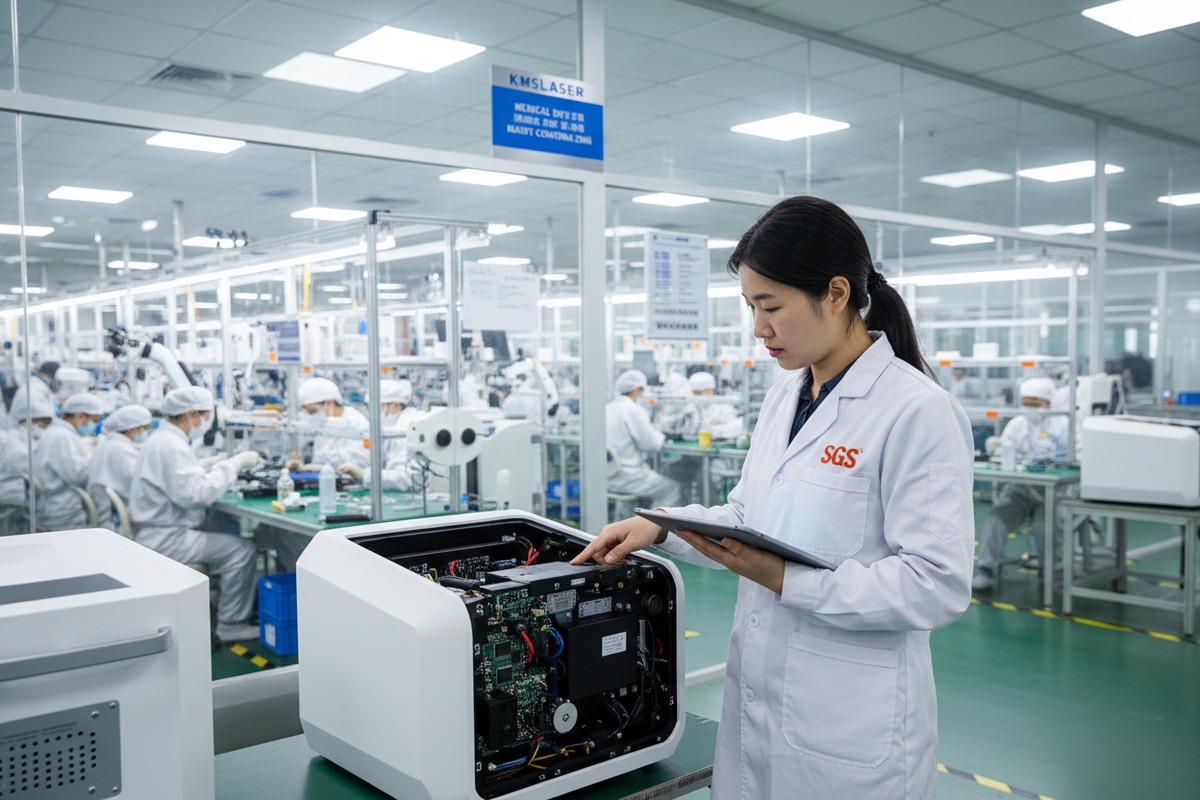
ISO 13485 is the foundation of medical device quality. This standard specifies requirements for a quality management system where an organization needs to demonstrate its ability to provide medical devices that consistently meet customer and regulatory requirements.
Key elements of ISO 13485 include:
- Document control procedures
- Design and development processes
- Supplier management
- Production and service provision controls
- Corrective and preventive action (CAPA) systems
- Internal audit programs
Request a copy of the ISO 13485 certificate. Verify it with the issuing certification body. Check that the scope covers medical device manufacturing, not just general quality management.
Essential Testing Standards
| Standard | What It Covers | Why It Matters |
|---|---|---|
| IEC 60601-1 | General electrical safety | Prevents electrical shock, fire hazards |
| IEC 60601-1-2 | Electromagnetic compatibility | Ensures device works near other equipment |
| ISO 10993 | Biocompatibility | Confirms materials are safe for patient contact |
| IEC 62304 | Software lifecycle | Validates medical device software safety |
| ISO 14971 | Risk management | Documents hazard analysis and controls |
FDA 510(k) Clearance Process
Shockwave therapy machines are Class II medical devices in the US. Most require 510(k) premarket notification. This process demonstrates the device is substantially equivalent to a legally marketed predicate device.
The 510(k) submission includes:
- Device description and intended use
- Comparison to predicate device
- Performance testing data
- Labeling and instructions for use
- Biocompatibility data if applicable
Ask your supplier for the 510(k) clearance letter and summary. Verify the clearance number in the FDA's 510(k) database.
CE Marking Under EU MDR
For European markets, devices must comply with the Medical Device Regulation (MDR) 2017/745 8. This requires:
- Clinical Evaluation Report (CER)
- Technical documentation file
- Declaration of Conformity
- Notified Body assessment for Class IIa and above
- Post-market surveillance plan
- Unique Device Identification (UDI)
Laboratory Accreditation
Test reports must come from accredited laboratories. Look for:
- NRTL (Nationally Recognized Testing Laboratory) mark for US: UL, ETL, CSA
- IECEE CB Scheme for international harmonization
- A2LA or NVLAP accreditation for US labs
- CNAS accreditation for Chinese labs
At our production facility, we use accredited third-party labs for all safety testing. In-house tests are useful for development but not accepted for regulatory submissions.
How do I validate the authenticity of these documents to protect my brand from compliance risks?
Our quality assurance team has developed a systematic approach to document validation. We have caught forged certificates that looked perfect at first glance. Protecting your brand requires careful verification of every document.
Validate document authenticity by contacting the issuing authority directly, checking official online databases, verifying certificate numbers and dates, comparing signatures and formatting to known authentic documents, and requesting original documents rather than copies. Use third-party verification services for high-value transactions.
Red Flags in Fake Documents
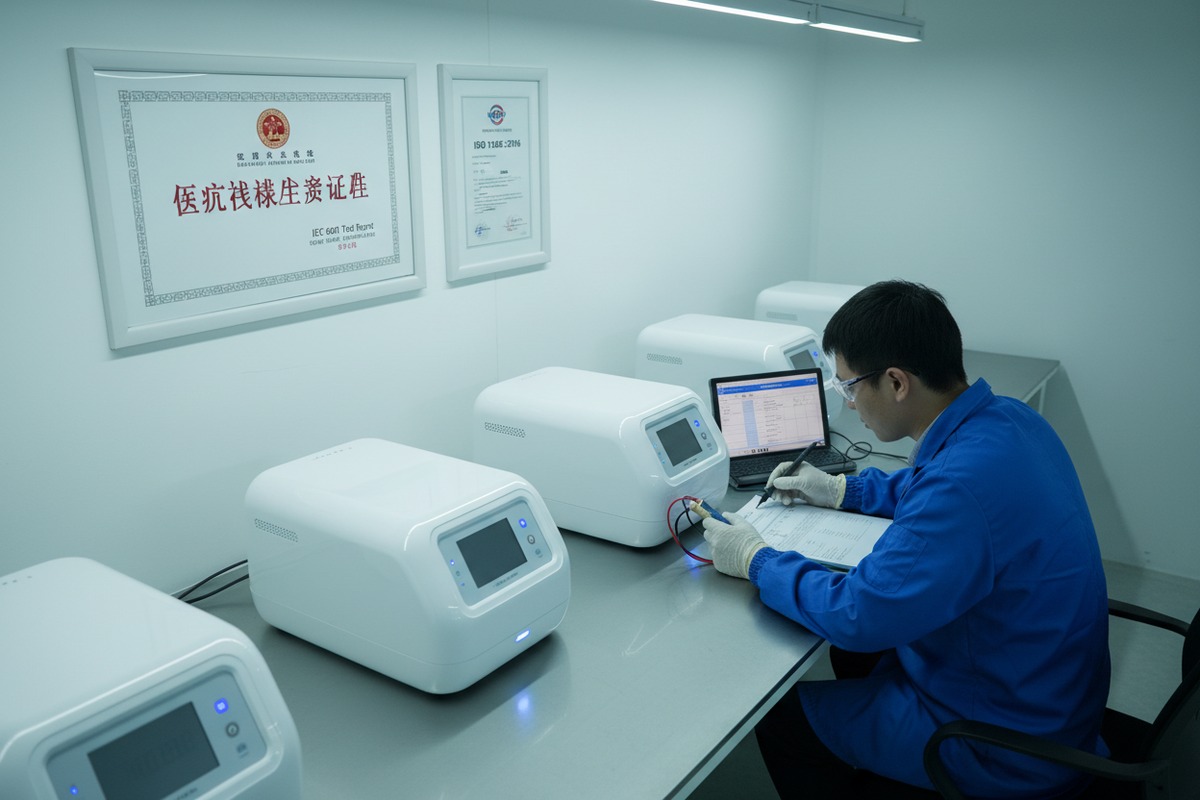
Counterfeit certificates are increasingly sophisticated. However, they often contain telltale signs:
- Spelling or grammatical errors
- Incorrect logos or outdated formatting
- Certificate numbers that do not verify in official databases
- Expiration dates in the past
- Scope statements that do not match the product
- Issuing bodies that do not exist or are not accredited
Step-by-Step Verification Process
Follow this systematic approach for each document:
Step 1: Check the Issuing Authority
Verify the certification body is legitimate. For ISO certifications, check the IAF (International Accreditation Forum) database. For EU Notified Bodies, check the NANDO database.
Step 2: Verify Certificate Numbers
Contact the issuing authority directly. Most certification bodies have online verification portals or will confirm validity via email.
Step 3: Compare Formatting
Request sample certificates from the certification body's website. Compare fonts, logos, signatures, and layout to the submitted document.
Step 4: Check Dates and Scope
Confirm the certificate is current and the scope covers the specific products you are purchasing.
Official Verification Databases
| Document Type | Verification Database | URL |
|---|---|---|
| ISO 13485 | IAF CertSearch | www.iafcertsearch.org |
| EU Notified Body | NANDO | ec.europa.eu/growth/tools-databases/nando |
| FDA 510(k) | FDA 510(k) Database | www.accessdata.fda.gov/scripts/cdrh/cfdocs/cfpmn/pmn.cfm |
| FDA Establishment | FDA Registration & Listing | www.accessdata.fda.gov/scripts/cdrh/cfdocs/cfRL/rl.cfm |
| Chinese Business License | NECIPS | www.gsxt.gov.cn |
Working with Third-Party Verification Services
For high-value orders, consider professional verification services. Companies like SGS, Bureau Veritas, and TÜV offer document authentication and factory audit services.
The investment typically ranges from $1,000 to $5,000 depending on scope. This cost is minimal compared to the risk of importing non-compliant devices.
Maintaining Ongoing Compliance
Document verification is not a one-time activity. Certificates expire. Regulations change. Suppliers may lose their certifications.
At our facility, we maintain a certificate tracking system that alerts us 90 days before any certification expires. We recommend importers implement similar systems.
Request updated certificates annually. Conduct periodic factory audits or use third-party audit services. Monitor FDA warning letters and EU RAPEX alerts for any actions against your suppliers.
Legal Protection Measures
Include compliance warranties in your supplier contracts. Specify that the supplier guarantees all certifications are valid and products meet stated regulatory requirements. Include indemnification clauses for any losses resulting from non-compliance.
Require your supplier to notify you immediately if any certification is suspended, withdrawn, or not renewed. This gives you time to find alternative sources before your supply chain is disrupted.
Conclusion
Verifying shockwave therapy machine suppliers requires checking business licenses, export certificates, medical device certifications, and document authenticity. Take time to verify each document through official databases. Your brand reputation depends on supplier compliance.
Footnotes
1. Provides comprehensive information on ISO 13485 from an authoritative certification body. ↩︎
2. Official European Commission page on medical devices, covering EU MDR and CE marking. ↩︎
3. Official Chinese government database for verifying business registrations. ↩︎
4. Explains a key FDA export certificate for legally marketed devices. ↩︎
5. International standard for the basic safety and essential performance of medical electrical equipment. ↩︎
6. Mandatory license for manufacturing Class II and Class III medical devices in China. ↩︎
7. Direct link to the FDA’s official searchable 510(k) Premarket Notification database. ↩︎
8. The primary regulation governing medical devices within the European Union. ↩︎

 English
  Español de México
  Deutsch
  Français
  العربية
  Русский