As the manufacturer, I am asked this in nearly every EU tender: “Is Class IIb or III mandatory for shockwave systems?” The real answer depends on intended purpose, energy delivery, and MDR Annex VIII rules 1—not on a single, blanket class.
MDR Class IIb or III is not automatically mandatory for all shockwave therapy devices. Most therapeutic ESWT systems fall into Class IIa or IIb depending on intended use, energy coupling, and risk profile. Regardless of class, MDR compliance and CE-marking are mandatory before EU placement on the market.
The following sections detail classification logic, CE/technical file expectations, importer due-diligence, and how radial versus focused systems can land in different classes under the broader EU Medical Device Regulation (MDR) framework 2.
How is shockwave therapy equipment classified under the MDR framework?
Classification is determined by intended purpose and inherent risk, using MDR Annex VIII rules for medical device classification into I, IIa, IIb and III 3. Shockwave devices are active non-implantable therapeutic equipment that administer mechanical/acoustic energy through the skin to human tissue.
Under Annex VIII, ESWT is generally classified via Rule 9 (active therapeutic devices intended to administer or exchange energy) and supported by Rule 11 when software drives performance claims. In practice, most MSK/aesthetic ESWT is Class IIa or IIb; lithotripsy-grade devices tend toward IIb, consistent with MDCG 2021-24 guidance on classification of medical devices 4.

Practical reading of Annex VIII for ESWT
- Rule 9: Active devices delivering energy. Risk increases with energy magnitude, depth, and potential for tissue injury.
- Duration & invasiveness: ESWT is non-invasive and transient-contact, but energy density and target organ matter.
- Intended purpose: Pain relief, tendinopathy, wound/dermal remodeling, or stone fragmentation (lithotripsy-like).
For Chinese-speaking teams, a Chinese-language overview of MDR risk classification 5 can help align internal documentation with EU rules.
Table 1 — Typical MDR outcomes for shockwave devices (illustrative, device-specific)
| Intended use / technology | Likely class | Why |
|---|---|---|
| MSK pain relief, tendinopathy (radial or focused; non-lithotripsy energy) | IIa–IIb | Active therapeutic energy with limited systemic risk |
| Dermatology/aesthetic (cellulite, scar remodeling) | IIa–IIb | Non-invasive energy; risk hinges on dose/depth |
| Wound therapy / bone healing claims | Often IIb | Higher risk claims; deeper biological effect |
| Lithotripsy-like focused high energy for stone fragmentation | IIb | Greater potential for tissue injury |
| Software-driven dose algorithms (stand-alone SaMD influencing therapy) | Rule 11 interplay | Software risk can elevate controls, same device class still applies |
Key point: The strictest applicable rule governs the final class. A manufacturer must justify the class with a formal Annex VIII rationale in the technical documentation, and many use practical MDR class guidance for EU manufacturers and importers 6 as a starting point.
For export-to-EU purchasers, what CE-marking/technical file requirements apply for these classes?
CE-marking under MDR requires a Notified Body for Class IIa/IIb/III. Purchasers should expect a complete regulatory package tied to the exact model, options, and accessories (e.g., handpieces, heads, cables), informed by MDCG-endorsed guidance and useful documents for MDR implementation 7.
For Class IIa/IIb ESWT, expect a valid EU MDR certificate from a Notified Body, a Declaration of Conformity, and full technical documentation: GSPR checklist, risk management (ISO 14971), clinical evaluation report, PMCF plan/reports, PMS plan, IFU/labeling, and UDI assignments registered in EUDAMED.

Table 2 — CE / technical file elements buyers should see (condensed)
| Item | What to look for | Notes |
|---|---|---|
| NB certificate (EU MDR Art. 56) | Notified Body name, NB number, scope lists your exact model and accessories | Check edition, expiry, and certificate changes |
| EU Declaration of Conformity | References MDR, device class, standards (e.g., EN 60601-1/-1-2) | Legal signatory and date current |
| GSPR checklist | Annex I traceability to tests and design controls | Cross-reference with reports |
| Clinical Evaluation Report (CER) | Literature &/or clinical data supporting claims | PMCF plan when evidence gaps exist |
| Risk Management File | ISO 14971 process; hazards linked to verification/validation | Includes energy-dose risks |
| PMS/PSUR | PMS plan; PSUR for IIa/IIb cadence | Field feedback loop defined |
| IFU/labeling/UDI | UDI-DI assignment, symbols, language set | EUDAMED SRN of manufacturer |
| Essential testing | EN 60601-1, EN 60601-1-2, biocompatibility (ISO 10993) where applicable | EMC labeling for environment of use |
Conformity assessment route: Class IIa/IIb typically uses Annex IX (QMS + TD) or Annex XI variants; your NB certificate should state the route.
What due-diligence steps should importers take regarding supplier’s MDR compliance?
Importers and EU distributors carry legal obligations (Articles 13–14 MDR). Due-diligence protects market access and reduces liability in line with Article 13 general obligations of importers under MDR 8.
Importers should verify NB certification authenticity, match model identities, check UDI/labeling, confirm economic operator details, and retain copies of the DoC and certificates. Establish a vigilance pathway for complaints and field safety actions, and verify EUDAMED registrations and PRRC details, using detailed importer requirements and FAQs under EU MDR/IVDR 9 as a practical checklist.

Table 3 — Importer due-diligence checklist (copy/paste)
| Control | How to verify | Red flags |
|---|---|---|
| NB certificate validity | Check NB number; confirm with NB website/database | Certificate lists a different model family |
| Declaration of Conformity | Cross-check part numbers, options, accessories | Missing standards or wrong regulation cited |
| UDI & labeling | Verify UDI-DI and basic UDI-DI; language set for target MS | UDI not printed; mismatched device name |
| Economic operators | Manufacturer, Authorized Representative, Importer identified with addresses | Missing EU AR; shell addresses |
| IFU & claims | Claims align with CER and certificate scope | Off-label marketing, aesthetic claims not covered |
| PMS / vigilance | Supplier SOP for complaints, FSN/FSCA management | No documented process or contacts |
| EUDAMED / SRN | Manufacturer and AR have SRNs; UDI module entries as applicable | No SRN; “registration pending” for years |
| Configuration control | Options/heads/handpieces listed in certificate | Selling kits not covered by scope |
Maintain a technical dossier access agreement so you can obtain targeted evidence under NDA during audits or tenders.
Are there differences in classification/requirements between radial and focused shockwave machines?
Both are active non-implantable energy devices, but energy coupling and intended purpose differ. Regulators focus on risk, not branding; they apply the same Annex VIII rules summarized in ReguVerse MDR classification notes 10.
Radial systems (broader, superficial pressure waves) often justify Class IIa for MSK indications, while focused systems—especially with deeper or lithotripsy-like claims—more commonly fall into Class IIb. Classification depends on intended use, energy density, depth, and clinical evidence supporting safety and performance.
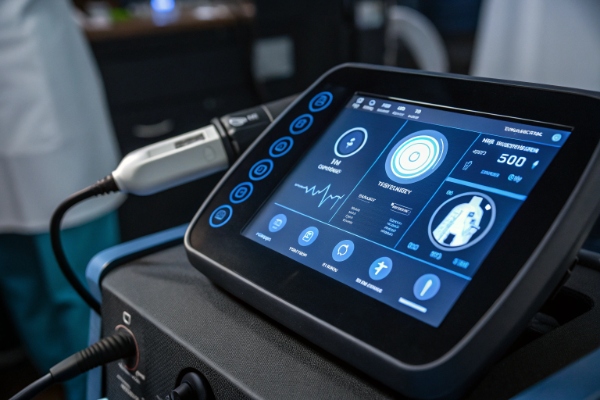
Table 4 — Radial vs focused: regulatory considerations (generalized)
| Aspect | Radial ESWT | Focused ESWT |
|---|---|---|
| Energy profile | Broader, lower peak focal energy | Higher focal energy, deeper reach |
| Typical claims | MSK pain relief, tendinopathy, cellulite smoothing | MSK, bone stimulation, difficult tendons; some systems near lithotripsy ranges |
| Likely class (illustrative) | IIa → IIb (risk-based) | IIb more common |
| Evidence burden | Literature + performance equivalence | Stronger CER, PMCF often expected |
| Testing emphasis | EMC, essential performance, usability | Additional performance validation at depth |
| Labeling nuance | Professional use; environment limits | Clear warnings for sensitive anatomy |
Caution: If a radial device’s software claims or marketing infer deeper biological effects or peri-organ targets, the class can escalate. The final class lives in the intended purpose.
Conclusion
EU MDR compliance is mandatory; Class IIb or III is not automatically required for all shockwave devices. Most ESWT systems are Class IIa or IIb depending on intended use and energy profile. Buyers should demand NB certificates, DoC, UDI/labeling, CER, and risk files that match the exact model and claims—and confirm that radial or focused indications align with the certified scope.
Footnotes
1. Unofficial consolidated text of MDR Annex VIII with full classification rules. ↩︎
2. European Commission overview of the new MDR/IVDR regulatory framework. ↩︎
3. EU UDI Helpdesk summary of MDR medical device classification principles. ↩︎
4. MDCG 2021-24 guidance document on applying MDR Annex VIII classification rules. ↩︎
5. Chinese article explaining MDR risk classes and classification rules for manufacturers. ↩︎
6. Practical guide describing EU MDR classes I, IIa, IIb and III and conformity routes. ↩︎
7. Index of MDCG-endorsed guidance documents supporting MDR implementation. ↩︎
8. Article reproducing MDR Article 13 on general obligations of importers. ↩︎
9. Consulting overview of importer obligations and FAQs under EU MDR/IVDR. ↩︎
10. Explanatory notes on MDR classification definitions including active therapeutic devices. ↩︎

 English
  Español de México
  Deutsch
  Français
  العربية
  Русский