
When our logistics team prepares a shipment for South America, we know that the physical machine is only half the battle. We understand that navigating the complex regulatory landscape of countries like Brazil, Argentina, and Colombia requires a mountain of precise paperwork. Our experience shows that a single missing circuit diagram or an improperly translated manual can delay a product launch by months.
South American registration for pressotherapy machines requires a comprehensive technical file containing ISO 13485 QMS certification, detailed clinical evaluation reports proving safety and efficacy, local language manuals, and risk management files. Manufacturers must also provide a Letter of Authorization to a local representative and valid Free Sale Certificates.
Here is a detailed breakdown of the specific documents you must gather to ensure your medical equipment clears customs and secures regulatory approval.
Which specific technical files do I need from my manufacturer for ANVISA registration in Brazil?
Our engineering department spends weeks compiling data specifically for the Brazilian market because we know ANVISA is one of the strictest regulatory bodies in the region. We treat every dossier with the same level of detail as an FDA submission, ensuring that every pressure sensor reading and material test is fully documented.
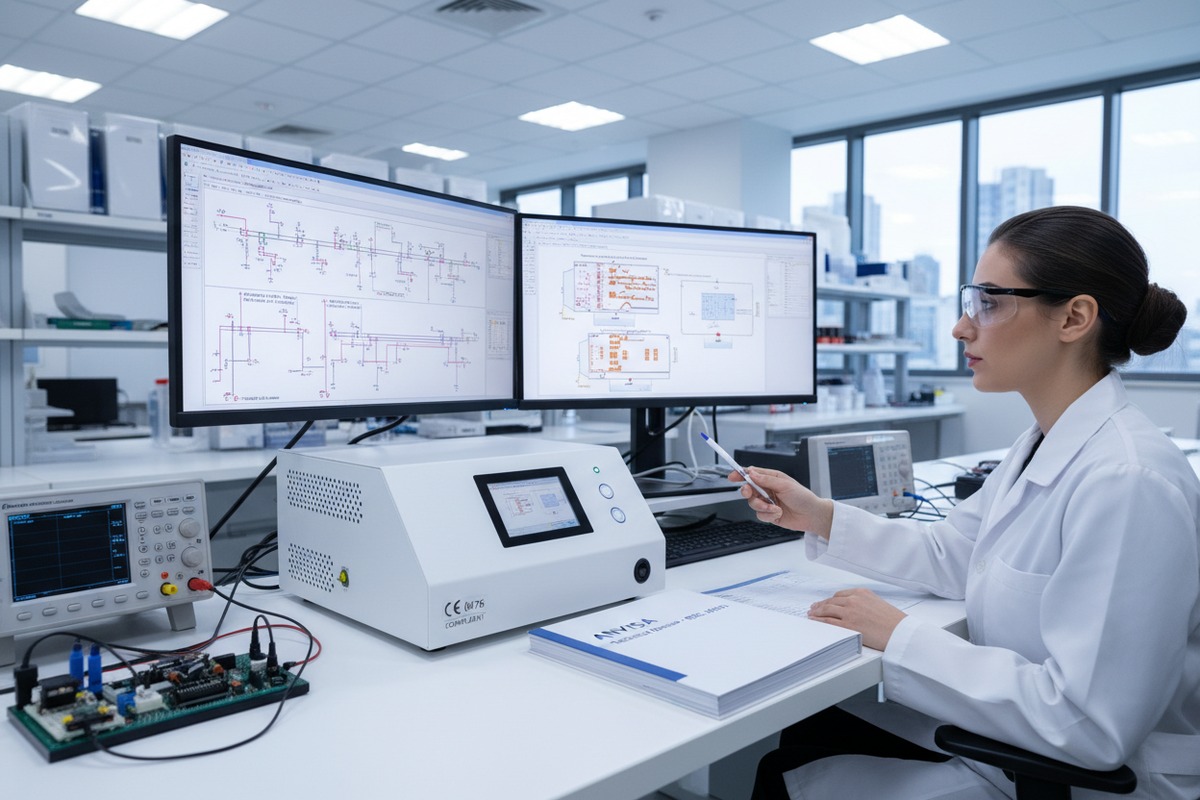
For ANVISA registration, you need a complete technical dossier including the device’s mechanical and electrical drawings, block diagrams, and raw material specifications. You must also submit biocompatibility test reports, software validation documents, and a detailed risk management file compliant with RDC 16/2013 standards.
Understanding the ANVISA Technical Dossier
Registering pressotherapy equipment in Brazil is a rigorous process that demands a highly structured technical file. Unlike some markets where a simple product brochure might suffice, ANVISA (Agência Nacional de Vigilância Sanitária) requires deep insight into the engineering and safety of the device. The core of your submission is the technical dossier, which serves as the biography of your machine.
You must request specific engineering documents from us. This includes the master block diagram, which illustrates how the air pump communicates with the control unit and the air chambers. ANVISA engineers want to see the logic behind the pressure distribution. If the machine claims to treat lymphedema, the technical drawings must show the specific valve configurations that enable the peristaltic pressure wave.
Biocompatibility and Material Safety
The pressotherapy suit contacts the patient's skin directly. Therefore, you cannot simply state that the suit is made of "nylon." You need biological evaluation reports 1. We provide test data based on ISO 10993 standards to prove that the materials used in the sleeves and pants do not cause irritation or sensitization.
Software Validation and Risk Management
Modern pressotherapy machines use software to control cycle times and pressure levels. ANVISA requires a software life cycle report 2. This document tracks the software from its initial coding to its final validation. It proves that the machine will not accidentally over-inflate due to a software bug.
Furthermore, the risk management file 3 is critical. This document, based on ISO 14971, lists every possible hazard—such as a hose rupture or electrical failure—and details the mitigation steps we have built into the design.
Essential Document Checklist for ANVISA
| Document Category | Specific Requirement | Purpose |
|---|---|---|
| Engineering | Electrical Schematics & PCB Layouts | Proves electrical safety and compliance with IEC 60601-1. |
| Safety | Biocompatibility Report (ISO 10993) | Ensures suit materials are safe for patient skin contact. |
| Software | Software Validation Report (IEC 62304) | Verifies that control algorithms function correctly without errors. |
| Risk | Risk Management File (ISO 14971) | Identifies potential hazards and the safety measures implemented. |
| Labeling | Portuguese User Manual & Labels | Ensures local users can operate the device safely. |
How can my OEM partner help me prepare the clinical evaluation reports required for South American markets?
When we test our lymphatic drainage protocols in the lab, we record extensive performance data that goes beyond basic functionality. We understand that for you to sell these devices as medical treatments, you need more than just marketing claims; you need scientific proof that the therapy actually works.
Your OEM partner supports clinical evaluation by providing existing literature reviews, post-market surveillance data from other regions, and validation testing reports. They consolidate safety and performance data into a Clinical Evaluation Report (CER) that demonstrates the device’s benefit-risk profile aligns with local regulatory requirements.

The Role of the Clinical Evaluation Report (CER)
In South America, regulators are increasingly adopting international standards for clinical data. A Clinical Evaluation Report 5 (CER) is a living document that assesses the safety and performance of the pressotherapy machine. As your OEM partner, we do not expect you to conduct a new clinical trial from scratch. Instead, we utilize the "equivalence" pathway.
Leveraging Predicate Devices
We help you identify "predicate devices"—machines that are already registered and are substantially equivalent to the new model. We provide a technical comparison table showing that our air pump pressure (e.g., 20-200 mmHg), cycle times, and treatment modes match those of established devices. By proving technical equivalence, we can leverage the clinical data of those existing devices to support your application.
Literature Reviews and Validation Data
Our R&D team compiles a literature review. We gather published scientific studies that validate pressotherapy as a treatment for conditions like venous stasis or lymphatic edema. We map these studies to the specific specifications of our machine.
Additionally, we supply internal validation reports. For example, if the machine claims to improve circulation, we provide bench test data showing the precise pressure gradient achieved in the air chambers. This technical validation bridges the gap between theoretical medical benefits and the actual hardware performance.
Post-Market Surveillance (PMS) Data
Regulators want to know if the device has a history of safety. Since we export to Europe and North America, we have years of Post-Market Surveillance (PMS) data. We can provide you with anonymized reports showing low complaint rates and a lack of serious adverse events. This real-world data is powerful evidence that the technology is mature and safe for the South American public.
Components of a Strong Clinical Data Package
| Data Type | Description | OEM Contribution |
|---|---|---|
| Equivalence Analysis | Comparison with registered devices. | Detailed side-by-side technical specification tables. |
| Literature Search | Review of published medical journals. | Bibliography of studies supporting pressotherapy efficacy. |
| Bench Testing | Non-clinical performance testing. | Lab reports verifying pressure accuracy and timer precision. |
| PMS Reports | Real-world safety history. | Data on device reliability and adverse event history from other markets. |
What quality management system certifications must my supplier provide to ensure my shipment passes local health inspections?
Our production lines operate under strict protocols because we have seen shipments get detained simply because a certificate had expired. We know that demonstrating a robust quality system is not just a badge of honor; it is the fundamental ticket to entry for any medical device market.
Suppliers must provide a valid ISO 13485:2016 certification to prove their quality management system meets medical device standards. Additionally, many South American countries require a Good Manufacturing Practice (GMP) certificate or proof that the manufacturer complies with the specific GMP regulations of the importing country.

The Necessity of ISO 13485
ISO 13485 6 is the gold standard for the medical device industry. Unlike general quality standards, it focuses specifically on the safety and efficacy of medical products. When you register a pressotherapy machine in countries like Peru, Colombia, or Chile, the authorities will first ask for our ISO 13485 certificate.
This certificate proves that we have a system in place to control design changes, manage suppliers, and trace every component used in the machine. Without this, most health ministries will reject the application immediately.
Good Manufacturing Practices (GMP)
While ISO 13485 is international, South American countries often have their own layer of quality regulation called Good Manufacturing Practices (GMP) 7.
- Brazil (BGMP): Brazil is unique and strict. For higher-risk devices, ANVISA may require a physical inspection of our factory in China to issue a BGMP certificate. This process can be expensive and time-consuming. However, for many pressotherapy devices (depending on risk class), participation in the Medical Device Single Audit Program (MDSAP) 8 can sometimes streamline this.
- Argentina: ANMAT also requires proof of GMP compliance. They often accept a "Free Sale Certificate 9" (FSC) from a reference country (like the US or an EU member state) as proof that the manufacturer meets quality standards.
The Role of the Free Sale Certificate (FSC)
The FSC is a vital document. It is issued by the authority in the manufacturer's home country (or a reference country) stating that the goods are legally sold there. We provide an FSC that is legalized or apostilled. This document acts as a bridge, telling the South American regulator, "This product is trusted in its home market, so you can trust it too."
Certification Documents for Market Entry
| Certification | Authority/Standard | Importance for South America |
|---|---|---|
| ISO 13485:2016 | International Standard | Mandatory. The baseline requirement for registration in almost all LATAM countries. |
| Certificate of Free Sale | Country of Origin | Critical. Proves the device is legal and marketed in the country of manufacture. |
| BGMP | ANVISA (Brazil) | Mandatory for Brazil. Required for Class III/IV devices, sometimes Class II. |
| MDSAP Report | Audit Program | Highly Recommended. accepted by Brazil as a substitute for some inspections. |
Can my manufacturer provide the customized technical manuals and circuit diagrams I need for local regulatory compliance?
We constantly adapt our schematics and documentation because we recognize that power grids and safety standards vary wildly from Bogota to Buenos Aires. Our team is accustomed to modifying technical files to match the specific expectations of local engineers who will scrutinize your submission.
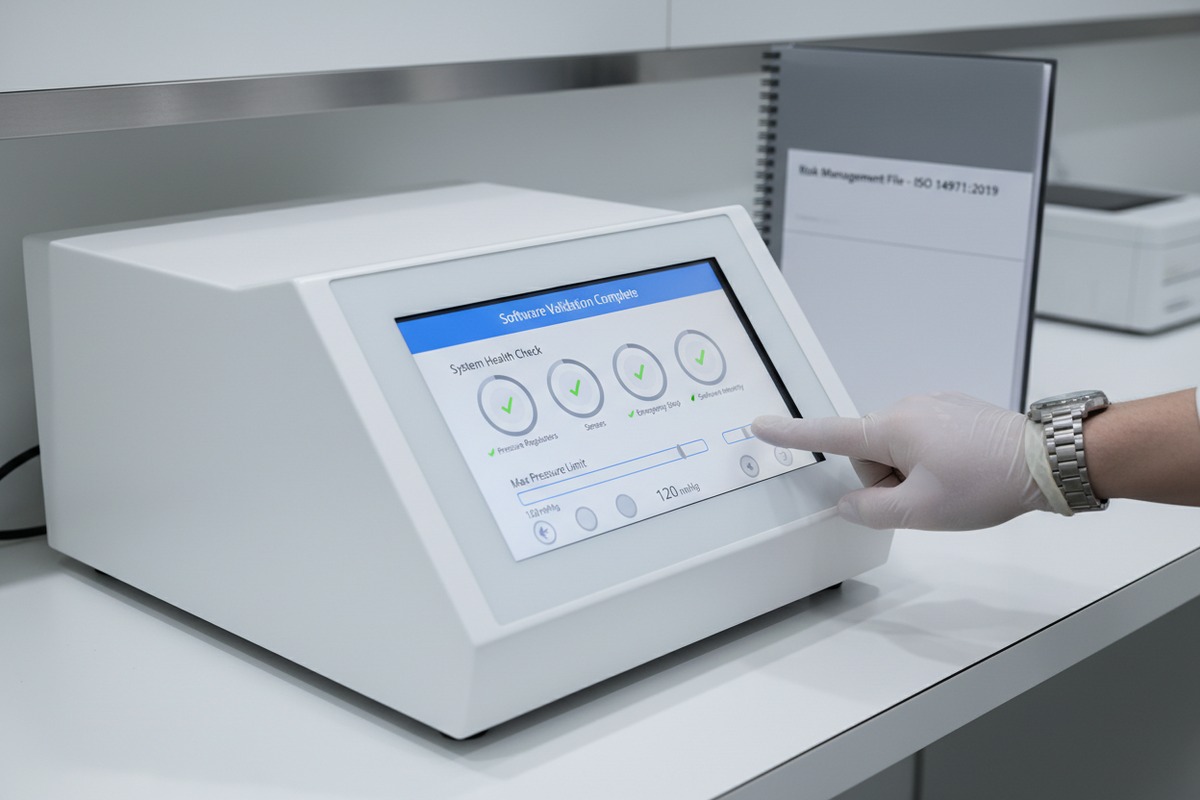
Yes, a capable manufacturer can provide customized technical manuals and detailed circuit diagrams adapted to local voltage and language requirements. These documents must explicitly show critical components, safety fuses, and electrical insulation diagrams to satisfy the strict technical review of local engineering departments.
Localizing Technical Specifications
South America uses a mix of voltage standards. Brazil alone uses both 110V and 220V depending on the state, while Argentina uses 220V. We provide circuit diagrams that match the specific power supply unit (PSU) configuration of the units we ship to you. These diagrams must clearly label the fuse ratings and the transformer specifications.
Regulatory engineers look for these details to ensure the machine won't overheat or cause a fire hazard under local grid conditions. A generic "worldwide" schematic often fails this review; it needs to be specific to the model variant being imported.
The Importance of Exploded View Drawings
For maintenance and registration, you need "exploded view" drawings. These are detailed illustrations that pull the machine apart component by component.
- Spare Parts Identification: It helps local technicians identify which part number to order if a valve fails.
- Regulatory Review: Regulators use this to verify that the internal construction matches the description in the technical dossier. They will check if the air pump isolation matches the safety claims.
Translating the User Manual vs. Service Manual
You will need two distinct manuals, and we provide the source files for both to facilitate accurate translation.
- User Manual (IFU): This is for the beautician or operator. It focuses on contraindications (e.g., deep vein thrombosis), safe operation, and cleaning protocols. It must be in the official local language (Spanish or Portuguese).
- Service Manual: This is for the biomedical engineer. It includes the calibration procedures, troubleshooting logic trees, and internal schematics.
Quality of Translation
We always recommend that our partners use a specialized medical translator for these documents. A poor translation of a technical term—for example, translating "fuse" incorrectly or misstating a pressure warning—can lead to immediate rejection by the regulatory agency. We provide the English master files in editable formats (like InDesign or Word) so your local experts can ensure the terminology is compliant with local medical dictionaries.
Key Technical Diagrams Required
| Diagram Type | What It Shows | Why Regulators Want It |
|---|---|---|
| Block Diagram | High-level system flow. | Shows how inputs (settings) result in outputs (pressure). |
| Main Board Schematic | Circuit connections on the motherboard. | Verifies electronic safety and component quality. |
| Pneumatic Diagram | Airflow path from pump to suit. | Critical for pressotherapy to prove pressure safety limits. |
| Exploded View | Mechanical assembly. | Validates the physical construction and internal layout. |
Conclusion
Successfully registering pressotherapy machines in South America demands a detailed and localized technical documentation strategy. From the specific engineering dossiers for ANVISA to the universal need for ISO 13485 certification and clinical evaluation reports, every document plays a vital role in market access. By partnering with a manufacturer who understands these rigorous requirements and can provide customized, accurate technical files, you can navigate the complex regulatory landscape, avoid costly delays, and ensure your products reach the clinics and salons that need them.
Footnotes
1. Explains the importance of biocompatibility testing for patient safety and material evaluation. ↩︎
2. Highlights the regulatory requirement for software validation in medical devices. ↩︎
3. Details the necessity and content of a risk management file in medical device regulation. ↩︎
4. Provides context on ANVISA’s role in medical device regulation in Brazil. ↩︎
5. Provides a complete guide to Clinical Evaluation Reports for medical device manufacturers, covering EU MDR requirements and best practices. ↩︎
6. Explains the importance of this quality standard for medical devices. ↩︎
7. Explains the role of GMP in ensuring quality and compliance for medical device manufacturing. ↩︎
8. Explains how MDSAP can simplify regulatory compliance for medical device manufacturers. ↩︎
9. Describes the purpose of a Free Sale Certificate in international medical device trade. ↩︎

 English
  Español de México
  Deutsch
  Français
  العربية
  Русский