Working with overseas brands to co-develop shockwave devices, my team and I spend a lot of time explaining what “development cost” really means behind one finished machine.
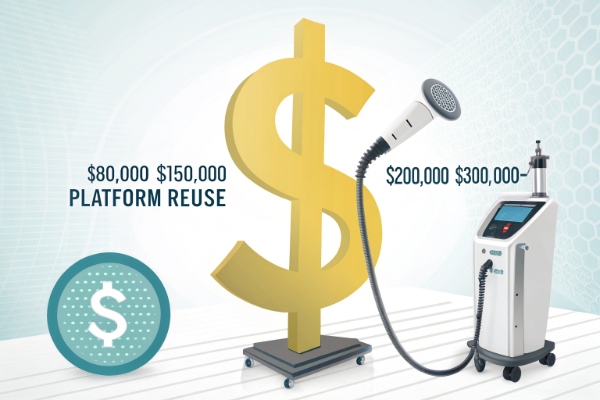
The development cost for a shockwave therapy machine typically ranges from around $80,000–$150,000 for a light customization project built on an existing platform to $200,000–$300,000+ for a fully new device with fresh moulds, certification, and tooling, excluding the working capital for first mass-production batches.
In the rest of this article, I will break down cost components, budgeting methods, cost-saving ideas, and ways to phase payments so you can reduce risk.
What cost components (R&D, tooling, certification, packaging) should you expect?
When we plan new projects with buyers, the biggest surprise is usually not the unit price, but how many separate cost buckets sit behind “development”.
You should expect development costs to include R&D and engineering (NRE), industrial design, tooling and moulds, certification and testing, pilot builds, packaging and artwork, and sometimes software and interface localization. Ignoring any of these items makes quotes look cheaper than they really are.
Main Cost Buckets in a New Shockwave Project
For a realistic budget, it helps to slice the project into clear components instead of one big “R&D fee”.
1. R&D / Engineering (NRE)
This covers electrical design, firmware, mechanical layout, and documentation. For a shockwave machine, it often includes:
- Generator and power section design
- Control system and UI logic
- Safety circuits, alarms, and self-check functions
- Non-Recurring Engineering (NRE) costs 1 are typically tied to a specific product and do not repeat with each batch, covering efforts like testing protocol implementation and fixture development.
2. Tooling and Moulds
If you develop a completely new housing, full mould sets can easily reach low-to-mid six figures in USD. Tooling costs for complex geometries and large orders can range up to $100,000 or more 2. To save money, many brands start with a few small moulds (for example, side trims, front bezel) instead of a full shell.
3. Certification and Testing
Includes electrical safety (like IEC 60601), EMC, reliability, and in some markets basic clinical or usability evaluation. These fees are often paid to third-party labs. Regulatory fees for medical devices can vary significantly; for example, a standard FDA 510(k) fee is over $21,000, while fees for a De Novo request are over $145,000 3.
4. Packaging, Artwork, and Manuals
Custom boxes, foam inserts, labels, and multi-language manuals are part of development cost, even if they look small compared with tooling.
5. Pilot Builds & Validation
These sample runs (EVT/DVT/NPI) ensure the design and manufacturing process are stable before mass production begins.
Example Cost Component Table (Indicative Only)
| Cost Component | Typical Range (USD) | Notes |
|---|---|---|
| R&D / Engineering (NRE) | 20,000 – 60,000 | Depends on how new the platform is |
| Tooling & Moulds (housing) | 100,000 – 250,000+ | Full set; partial moulds can be much lower |
| Certification & Lab Tests | 15,000 – 60,000 | Varies by market (CE, FDA, others) |
| Packaging & Artwork | 3,000 – 15,000 | Includes box, inserts, labels, manuals |
| Pilot Builds & Validation | 10,000 – 40,000 | EVT/DVT/NPI sample runs |
Why Splitting Costs Matters
When everything is mixed into one line, you cannot compare suppliers. When each cost is listed, you can see where the real differences come from: engineering depth, tooling level, or certification scope.
For many first-time projects, my suggestion is simple: start with fewer new moulds and more platform reuse. You still get a unique product but keep development cost and MOQ under better control.
How should buyers budget and compare development quotes across suppliers?
When buyers send one set of requirements to three factories, the quotes often look completely different in both structure and total number, which creates confusion.
To budget and compare quotes, buyers should ask suppliers to break out NRE, tooling, certification, and unit price separately; confirm what is included or excluded; normalize order quantities; and clarify ownership of moulds and IP before calculating the true per-unit development burden.
Build a Top-Level Budget First
Instead of starting from “What is your NRE fee?”, start from a total project perspective:
- Target launch date
- Expected annual volume
- Target end-customer price range
- Markets you will sell into (affects regulation)
Then decide what share of that future business you are ready to invest in development. For a Class II device, the initial investment for engineering and development is typically $2.5–5 million 4, showing the scale of investment often required in this sector.
How to Read and Compare Quotes
1. Normalize Assumptions
Check that each quote is based on the same:
- Features and energy range
- Certification markets (for example, only CE vs CE + FDA)
- Level of mechanical customization
2. Check “What’s Included”
Some factories quote low development fees but exclude:
- Third-party lab fees
- Updated manuals
- Software localization
Others include more in a single NRE number. You need to mark these differences on a simple comparison sheet.
Example Quote Comparison Table
| Item | Supplier A | Supplier B | Supplier C |
|---|---|---|---|
| NRE / Engineering | $30,000 (incl. UI) | $18,000 (UI excluded) | $45,000 (full package) |
| Tooling & Moulds (housing) | $120,000 (partial) | $200,000 (full shell) | $0 (existing housing) |
| Certification (CE only) | Included | +$18,000 extra | Included |
| First Order MOQ | 100 units | 300 units | 50 units |
Once this is clear, you can compare total project cost over the first 1–3 years, not just a single line item.
Rule of Thumb for Budgeting
A practical approach we often use with buyers:
- Estimate your first 2–3 years’ margin on the new product.
- Decide what share (for example, 10–20%) you are willing to invest into development.
- Work backward to see if full new tooling is justified or if a micro-customization route (only a few new moulds) makes more sense.
What cost-saving strategies are available when commissioning a new device?
Many brands want a unique shockwave machine but hesitate when they see that full new tooling can run into hundreds of thousands of dollars.
Cost-saving strategies include reusing an existing technical platform, developing only a few new moulds instead of a full housing set, phasing features across generations, choosing staged certification markets, and standardizing components to share cost across product families.
Strategy 1: Use an Existing Platform
If the base shockwave engine, power board, and handpiece already exist and are proven, you can:
- Keep core hardware unchanged
- Customize interface, software presets, and exterior styling
- Reduce both R&D and testing risk
This approach, known as ODM, offers a faster time-to-market and reduced initial investment compared to OEM, which requires substantial upfront costs for design and tooling 5.
Strategy 2: Partial Mould Development
Instead of building a completely new shell, consider:
- New front frame + decorative side panels
- Custom handpiece casing
- A unique docking station or trolley
This lets you achieve a distinct look while keeping tooling closer to tens of thousands rather than hundreds of thousands of dollars.
Strategy 3: Feature Phasing
You do not need every feature in version 1. For example:
- V1: core radial shockwave modes + simple presets
- V2: extended sports protocols + cloud update
- V3: advanced UI themes, integration with other platforms
Each new version can reuse most hardware while adding incremental value.
Strategy 4: Staged Certification
Sometimes it is cheaper and faster to:
- Launch first in markets with simpler or faster approval.
- Collect feedback and refine design.
- Then invest in more complex markets (for example, FDA) with a more mature product. This is particularly relevant given that regulatory compliance can consume over 50% of the total budget 6.
Example: Cost-Saving Options Table
| Approach | Savings Potential | Typical Trade-Off |
|---|---|---|
| Existing hardware platform | High | Less freedom for internal architecture |
| Partial mould set | Medium–High | Housing not 100% unique |
| Feature phasing | Medium | Some features launched later |
| Staged certification | Medium | Market access delayed in some regions |
In many discussions, I recommend starting with micro-customization: a few key visual parts and strong brand identity, while using mature internal hardware. This lets you test the market before committing to a full redesign.
How can development costs be phased to reduce upfront payment risk?
For international buyers, large upfront development invoices feel risky, especially before trust is fully built.
Development costs can be phased by tying payments to milestones—such as design freeze, EVT, DVT, and tooling completion—splitting mould fees, and blending part of the NRE into the first production runs. This reduces cash pressure and aligns supplier incentives with project progress.
Milestone-Based Payment Structure
A simple and fair approach is to break the total development budget into smaller steps:
-
Project Kickoff Payment
Small percentage to start detailed design and planning. -
Design Freeze Payment
Once 3D files, schematics, and main specs are confirmed. -
Tooling & EVT Payment
When moulds are cut and first test shots or prototypes are ready. -
DVT / Certification Payment
After reliability tests and lab submissions. -
NPI / First Mass Production
Remaining balance blended into product cost.
Example Phased Payment Plan
| Stage | Typical Share of Total Dev Cost |
|---|---|
| Contract + URS freeze | 10–15% |
| Design freeze (3D & schematics) | 15–20% |
| Tooling kickoff (T0) | 30–40% |
| EVT / DVT completion | 20–25% |
| NPI / First mass order | 10–20% |
Other Ways to Reduce Upfront Risk
- Tooling offset by volume: Supplier discounts tooling partly against future orders once volume is reached.
- Annual volume agreement: Buyer commits to a yearly quantity; supplier spreads some development cost into unit price.
- Separate shell-batch payment: For high-cost housings, you pay only for the appearance parts’ moulds, not the full inside structure, at the beginning.
In our own projects, we often combine a smaller NRE up front with slightly higher unit price in the first batches. This helps buyers access better engineering without pushing all risk into the first payment.
Conclusion
Shockwave machine development is a serious investment, but with clear cost breakdown, smart customization scope, and phased payments, you can control risk and still build a differentiated device.
Footnotes
1. Explanation of Non-Recurring Engineering (NRE) fees, covering tooling, programming, and documentation as one-time development costs. ↩︎
2. Overview of injection molding costs, noting that tooling for complex geometries can be the most significant fixed startup cost. ↩︎
3. Information on FDA user fees for medical device applications, showing the substantial regulatory costs associated with submissions like 510(k) and De Novo requests. ↩︎
4. Overview of the substantial funding required to bring a Class II medical device to market, with $2-5M typically spent on engineering and development. ↩︎
5. Comparison of OEM and ODM manufacturing models, noting that ODM offers reduced initial outlays in product development stages. ↩︎
6. Detailed analysis of medical device development phases, where regulatory compliance can consume over 50% of the total budget. ↩︎
7. Guide on NRE costs, emphasizing that they are the one-time expenses required to get a product ready for mass manufacturing. ↩︎
8. Analysis of general medical device development costs, noting that R&D and engineering (NRE) is a significant component of the overall budget. ↩︎
9. Breakdown of medical device development phases, indicating that design validation and regulatory compliance are key cost drivers. ↩︎
10. This video provides valuable insight into the major cost components and budgeting frameworks used when bringing a medical device to market. How Much Does It Cost to Bring a Medical Device to Market? 2025 Budget Guide ↩︎

 English
  Español de México
  Deutsch
  Français
  العربية
  Русский