

We often see US clients struggle with complex compliance rules when ordering our compression systems. Avoiding these regulatory pitfalls is critical for your school’s liability and reputation.
Pressotherapy machines sourced for US beauty schools are regulated as Class II medical devices requiring FDA 510(k) clearance. Suppliers must prove substantial equivalence to predicate devices under product code 89K, ensure compliance with 21 CFR Part 820 quality standards, and provide verified listing numbers to avoid import detention.
Let’s examine the specific steps needed to secure compliant equipment for your educational programs.
How do I determine the correct FDA medical device classification for my pressotherapy machines?
Our engineering team reviews intended use claims 1 early in development to prevent misclassification risks. If you ignore these definitions, your imported equipment could face immediate border rejection.
You must classify pressotherapy machines based on their intended use and risk level, typically falling under Class II with Product Code 89K for pressure-applying devices. While some simple massagers are Class I, devices making lymphatic drainage or therapeutic claims for schools require 510(k) clearance to demonstrate safety.
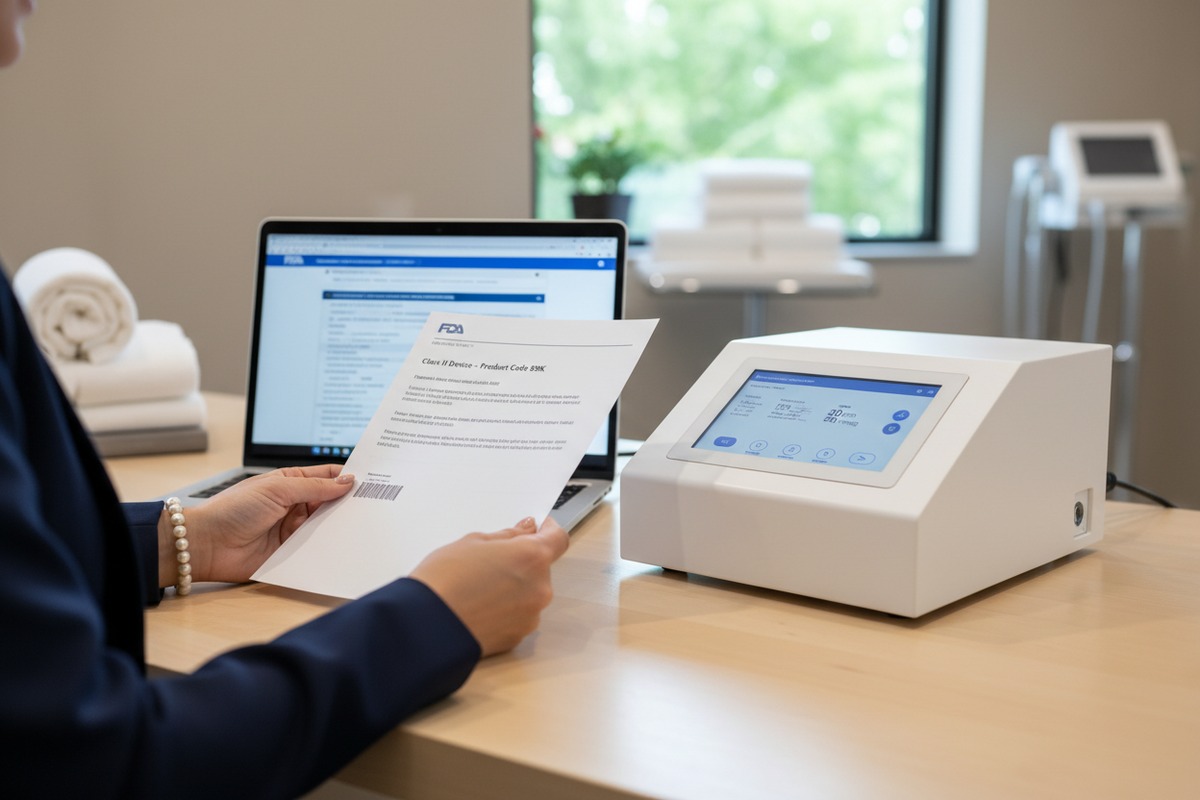
Determining the correct classification is the foundation of a legal import strategy. Many buyers assume that because a machine is used in a "beauty" setting, it is exempt from medical regulations. This is a dangerous misconception. In our factory, we design circuits and pressure controls specifically to meet the rigorous standards of Class II devices 2 because we know the FDA focuses on the mechanism of action, not just the setting where the device is used.
For beauty schools, the distinction is vital. You are training students on professional equipment. If that equipment is an unapproved Class III device (which requires rigorous Premarket Approval 3) or a misbranded Class II device, the school assumes massive liability. The FDA categorizes these machines based on Product Codes 4.
Common Product Codes for Compression Systems
The table below outlines where most professional pressotherapy systems fit within FDA regulation.
| Product Code | Device Classification | Common Description | Regulation Number | Requirement |
|---|---|---|---|---|
| 89K | Class II | Pressure Applying Device | 21 CFR 890.5650 | 510(k) Required |
| 89I | Class I (Sometimes II) | Measuring/Therapeutic Massager | 21 CFR 890.5660 | General Controls (Some Exempt) |
| IPF | Class II | Vibrator, Therapeutic | 21 CFR 890.5975 | 510(k) Required |
The "Intended Use" Trap
The classification depends heavily on your labeling. If your private label manual claims to "cure obesity" or "treat circulatory disease," the device might be elevated to Class III, which is virtually impossible to import without millions in clinical trials. For beauty schools, the safe path is sticking to indications cleared for Class II predicates, such as temporary relief of muscle aches, increased local blood circulation, or temporary reduction in the appearance of cellulite (if supported by specific predicates). We advise all our partners to review their marketing materials against the FDA's database of cleared devices to ensure alignment.
Can my Chinese OEM partner handle the FDA registration and 510(k) process for my private label?
We guide many brand owners through the documentation maze, but the legal burden often shifts. Relying solely on a factory’s generic clearance may limit your brand’s growth potential.
Your Chinese OEM partner can support the process by providing technical testing data and device master files, but the US-based brand owner or initial importer is typically the 510(k) submitter. You must act as the official correspondent to control the listing and ensure your specific private label branding is cleared.
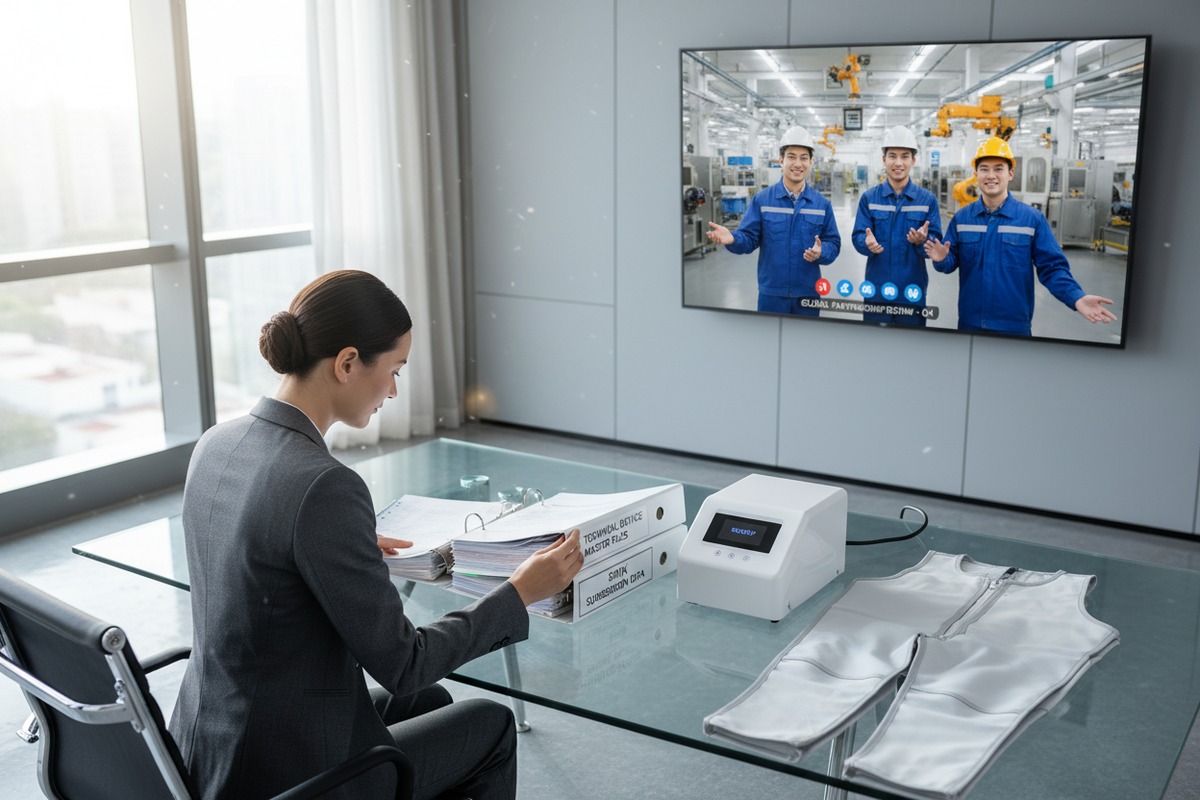
This is one of the most frequently asked questions we receive from Purchasing Managers. The short answer is that while we, as the manufacturer, do the heavy lifting regarding engineering and safety testing, the regulatory strategy depends on who you want to be the "owner" of the market authorization.
If you simply buy our standard model and resell it, you might be able to use our existing 510(k) if we grant you permission to list under our number. However, most serious beauty schools and distributors want to build their own asset. They want the 510(k) in their name. In this scenario, we become your contract manufacturer. We provide the device, the technical drawings, the EMC test reports (electromagnetic compatibility), and the safety data. You (or your regulatory consultant) then submit the 510(k) application 5 to the FDA.
Roles and Responsibilities in FDA Submission
Understanding the division of labor is crucial for a smooth launch.
| Task | OEM Factory (Us) | Brand Owner (You) |
|---|---|---|
| Device Design & Engineering | Lead Responsibility | Provides Requirements |
| IEC 60601 Safety Testing | Arranges & Pays Lab | Reviews Reports |
| 510(k) Submission Fee | Support | Pays FDA User Fee |
| Legal 510(k) Holder | Optional | Recommended |
| US Agent Representation | n/a | Appoints US Agent |
| Device Listing | Contract Manufacturer | Specification Developer |
The "Traditional" vs. "Abbreviated" Path
Most pressotherapy devices enter via the "Traditional 510(k)" pathway. This requires proving your device is "substantially equivalent" to a device already legally on the market (a predicate). We assist by identifying suitable predicates—often devices we have previously manufactured or well-known competitor models. We then conduct bench testing to prove that our pressure output, cycle times, and electrical safety match or exceed that predicate. Without this data from your supplier, your application will be rejected "Refuse to Accept" (RTA) immediately.
What specific FDA documentation do I need to clear US Customs when importing beauty school equipment?
Our logistics team prepares these packets daily to ensure containers aren’t held at Long Beach. Missing a single code or registration number can cause weeks of expensive delays.
To clear US Customs, you need the manufacturer’s FDA Establishment Registration number, the specific Device Listing number for the imported model, and a valid 510(k) “K number.” Additionally, the commercial invoice must strictly match the product codes declared to the FDA to prevent red-list detention.
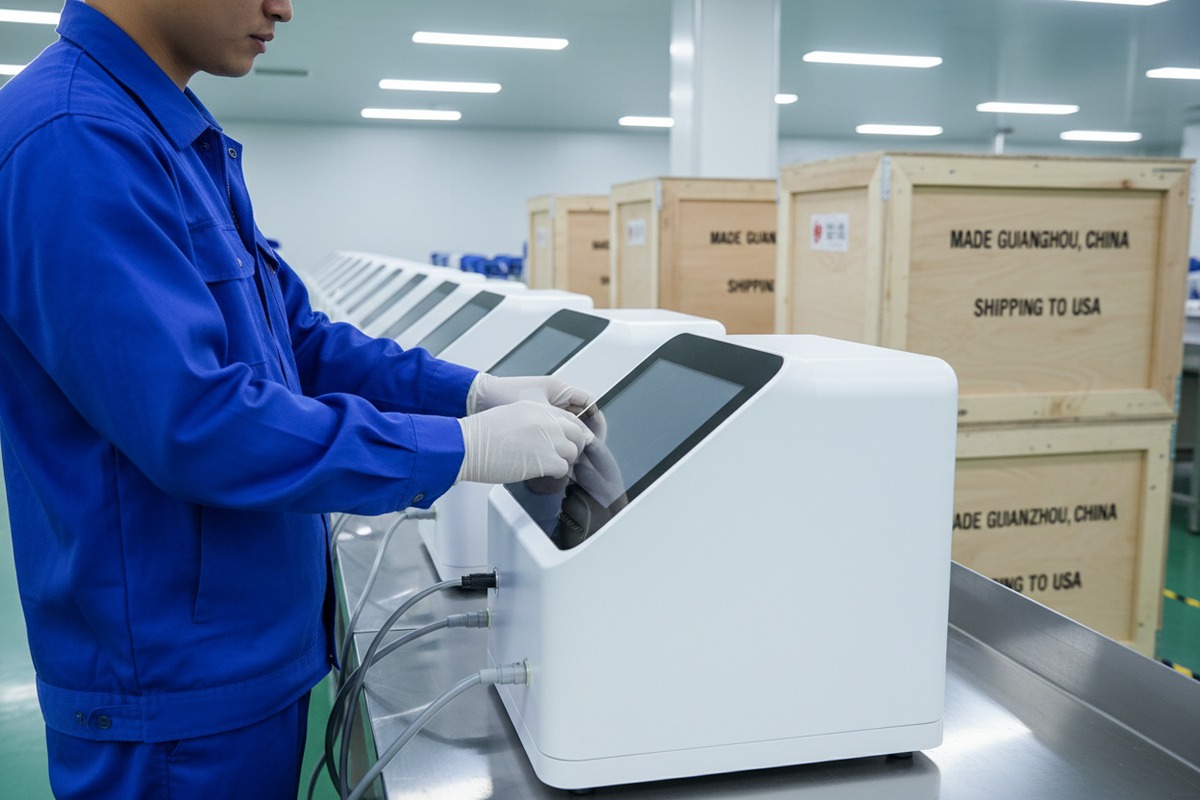
When your shipment arrives at a US port, FDA import reviewers work alongside Customs and Border Protection 6 (CBP). They do not physically inspect every box, but they digitally inspect every document. If the data does not match the FDA's PREDICT database, your pressotherapy machines will be flagged. We have seen competitors' shipments detained because the product on the invoice ("Lymphatic Drainage Machine") did not match the product name in the FDA Device Listing.
The Critical "Red List" Warning
The FDA maintains "Import Alerts 7," often referred to as the Red List. This list contains companies and products that are detained without physical examination (DWPE). Pressotherapy devices are frequent targets. If your supplier has ever shipped non-compliant Class III devices or failed to provide a 510(k) when required, they might be on this list. Once on the list, getting off is difficult and costly. Before placing an order, you must verify your supplier's standing.
Essential Import Documentation Checklist
Ensure your supplier provides the following before the goods leave the factory floor.
| Document / Data Point | Why It Is Critical | Where to Verify |
|---|---|---|
| 510(k) Premarket Notification Number | Proves the device is cleared for sale. | FDA 510(k) Database |
| Establishment Registration No. | Proves the factory is registered with the FDA. | FDA Establishment Search |
| Device Listing Number | Links the specific model to the manufacturer. | FDA Device Listings |
| Affirmation of Compliance Codes | Used by customs brokers to file entry. | ACE System (Broker) |
| Intended Use Labeling | Must match the 510(k) clearance exactly. | User Manual / Packaging |
Accurate Invoicing is Key
We emphasize to our partners that the commercial invoice is a legal document. Vague descriptions like "Beauty Equipment" are insufficient for medical devices. The invoice should list the specific model number that matches the Device Listing. Furthermore, the "Value" declared must be accurate. Undervaluing goods to save on duties is fraud, but it also triggers FDA scrutiny if the pricing looks suspicious for a sophisticated medical device. Consistency across all paperwork—from the Bill of Lading to the FDA Device Listing—is your best defense against delays.
How can I ensure my supplier’s manufacturing standards align with FDA safety requirements for US beauty schools?
We invite clients to audit our assembly lines to see our quality controls in action. Trust is good, but verified documentation of a Quality Management System is safer.
You must verify that your supplier operates under a Quality Management System compliant with 21 CFR Part 820 (Quality System Regulation). Demand proof of ISO 13485 certification, review their electrical safety test reports (IEC 60601-1), and request recent audit results to ensure consistent safety for student use.

Sourcing for beauty schools adds a layer of responsibility. Students are learning; they make mistakes. The equipment must be robust and intrinsically safe. The FDA mandates that medical device manufacturers follow Current Good Manufacturing Practices (cGMP), codified in 21 CFR Part 820. This is not just about the final product working; it is about the process of making it.
The Link Between ISO 13485 and FDA QSR
While the FDA has its own regulation (Part 820), it is harmonizing closely with the international standard ISO 13485. A factory that is ISO 13485 certified is much more likely to be FDA compliant. When you evaluate us or any other supplier, ask for the ISO 13485 certificate 8 issued by a reputable registrar (like SGS, TUV, or Intertek). This certificate proves we have procedures for design controls, risk management, and complaint handling.
Safety Testing You Cannot Skip
For pressotherapy, the biggest risks are electrical shock and over-pressurization (which can cause injury).
- IEC 60601-1: This is the general standard for medical electrical equipment safety.
- IEC 60601-1-2: This covers electromagnetic compatibility (EMC). It ensures the machine won't interfere with other electronics in the school and won't be disrupted by them.
- Software Validation: Modern pressotherapy machines use software to control compression cycles. FDA requires "Software Validation" documentation to prove the code won't fail dangerously.
If a supplier cannot produce these test reports from an accredited lab, walk away. A "CE Certificate" from a questionable notified body is not a substitute for a full IEC 60601 test report when facing US liability laws.
Continuous Quality Monitoring
Compliance does not end at shipping. FDA regulations require manufacturers to monitor complaints. If a student at your school claims the machine squeezed too hard and caused bruising, this is an adverse event. Your supplier must have a system to log this complaint, investigate the root cause, and implement a corrective action (CAPA). We maintain a digital portal for our partners to log such issues, ensuring we both stay compliant with FDA reporting requirements (MDR).
Conclusion
Sourcing pressotherapy machines for US beauty schools requires navigating complex FDA Class II regulations, 510(k) clearances, and strict import documentation. By partnering with a manufacturer who understands 21 CFR Part 820 and provides transparent compliance data, you protect your students and business.
Footnotes
1. Official FDA guidance on determining the intended use of medical devices. ↩︎
2. Provides official FDA information on medical device classification and controls. ↩︎
3. Explains the FDA’s most rigorous review process for high-risk Class III devices. ↩︎
4. Direct link to the FDA database for medical device product codes. ↩︎
5. Outlines the steps and requirements for a 510(k) premarket notification submission. ↩︎
6. Details the collaboration between FDA and CBP for medical device imports. ↩︎
7. Provides official FDA information on Import Alerts and their purpose. ↩︎
8. Explains the international standard for quality management systems in medical devices. ↩︎

 English
 Español de México
 Deutsch
 Français
 العربية
 Русский
