When our production team receives urgent requests for replacement sleeves or air hoses, we see firsthand how shipping costs can quietly erode your profit margins. pressotherapy machine replacement parts 2 A single compression sleeve might cost $15, but the shipping? That could easily hit $50 or more if you’re not careful. For spa owners and distributors sourcing from China, this imbalance between part value and freight expense creates real frustration.
To negotiate shipping costs for pressotherapy machine replacement parts effectively, consolidate multiple orders into single shipments, request itemized freight quotes from at least three carriers, optimize packaging dimensions to reduce volumetric weight, and negotiate DDP (Delivered Duty Paid) terms with your Chinese supplier to lock in predictable all-inclusive rates.
The strategies below come from our years of exporting beauty equipment to the US, Canada, and Europe. We’ve learned what works—and what doesn’t—when helping clients minimize their total landed costs. Let’s walk through each approach step by step.
How can I consolidate my pressotherapy part orders to lower my total shipping costs?
From our export experience, we notice that buyers who order replacement parts one at a time end up paying three to four times more in shipping over a year than those who plan ahead. Scattered orders mean scattered costs, and carriers charge a minimum fee for every single shipment regardless of size.
Consolidating pressotherapy part orders lowers total shipping costs by combining multiple items into fewer, larger shipments. This approach eliminates per-shipment minimum charges, unlocks volume discounts, reduces customs processing fees, and allows you to negotiate better freight rates based on increased shipment weight and value.

Understanding the Consolidation Process
The basic idea is simple: instead of shipping five separate orders from five different dates, you collect everything into one warehouse and ship once. This works especially well for pressotherapy components because most parts—sleeves, cables, pads, and air tubes—are lightweight and compact.
Here's how consolidation typically works when sourcing from China:
- Your supplier sends goods to a designated consolidation warehouse 3
- The warehouse receives, inspects, and stores your items
- Once all items arrive, they're repacked into optimized packaging
- Everything ships together as a single international shipment
Why Consolidation Saves Money
Consolidation helps minimize your shipping costs because the larger the shipment the lower the cost per kg or per CBM and you don't have to pay a base shipping charge for each shipment. Since each shipment has a minimum charge and there are volume discounts for large shipments, it makes economic sense to consolidate and ship together internationally rather than shipping each one out separately.
| Shipping Approach | Typical Minimum Charge | Cost per kg (Air) | Annual Savings Potential |
|---|---|---|---|
| Individual Orders (5 per month) | $35-50 per shipment | $8-12/kg | Baseline |
| Monthly Consolidation | $35-50 once | $6-8/kg | 40-50% |
| Quarterly Consolidation | $35-50 once | $4.5-6/kg | 55-65% |
Working with Consolidation Agents
To initiate the consolidation process, engage with multiple suppliers in China and discuss the possibility of consolidating shipments. Collect goods from different suppliers into one warehouse, conduct quality checks and inspections, and then ship them together.
Many third-party logistics providers 4 in China offer free or low-cost storage while you accumulate orders. Storage, warehousing, repacking and consolidation services are all offered free of charge at certain warehouses which means you can take your time to make all the orders you need.
Practical Tips for Pressotherapy Parts
For pressotherapy components specifically, consider these consolidation strategies:
- Group by urgency: Separate critical parts (air pumps, control boards) from routine consumables (sleeves, pads)
- Set a monthly cut-off date: Tell your supplier you'll place standing orders by the 15th of each month
- Bundle with machine orders: If ordering new machines, add replacement parts to the same shipment
- Coordinate with other buyers: Some suppliers can consolidate orders from multiple clients heading to the same region
What strategies should I use to negotiate better door-to-door freight rates with my Chinese supplier?
In our experience shipping to the US and Europe, we’ve learned that buyers who accept the first quoted rate typically overpay by 15-30%. Chinese suppliers often quote conservative freight estimates to protect themselves from rate fluctuations, leaving room for negotiation if you know how to ask.
Negotiate better door-to-door freight rates by requesting DDP (Delivered Duty Paid) terms with itemized cost breakdowns, comparing quotes from the supplier’s forwarder against independent freight companies, committing to volume or long-term agreements, and asking for shipping to be included as part of larger order negotiations.
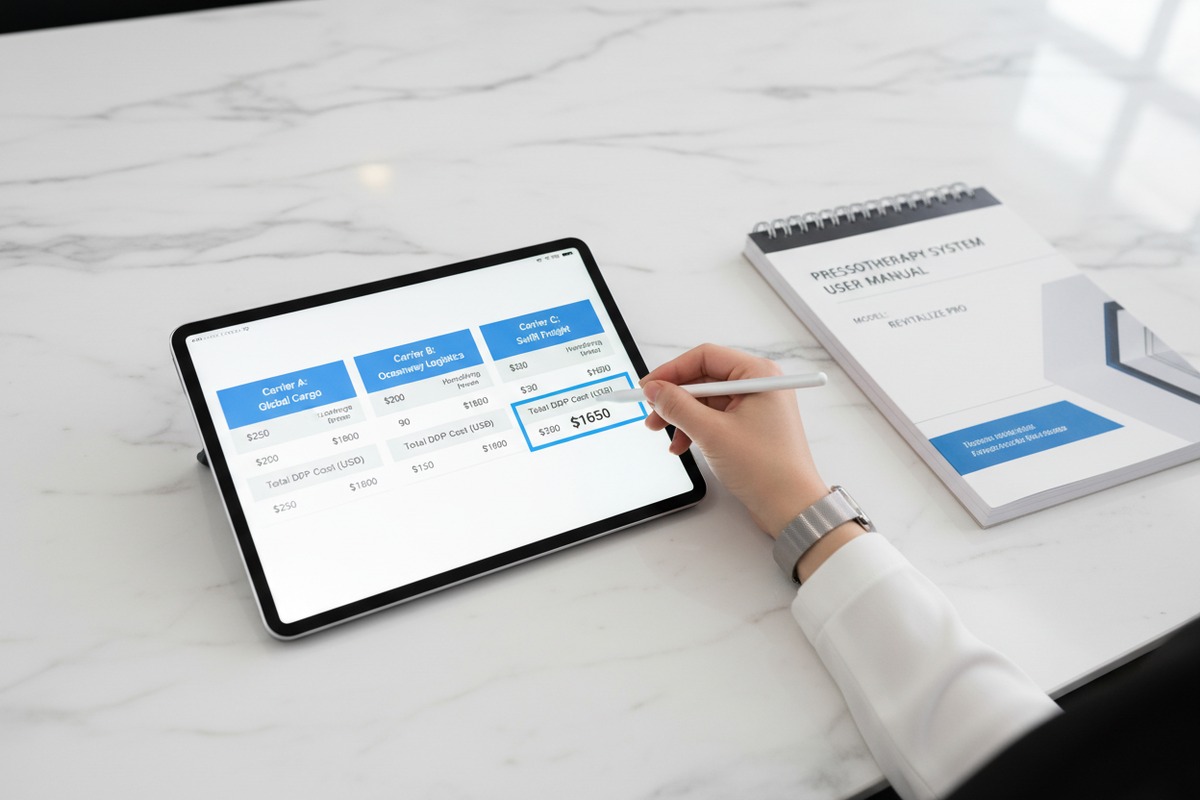
Understanding Door-to-Door Shipping Terms
Door-to-door service is a one-stop shipping solution that spares you from dealing with multiple transport legs or paperwork independently. Unlike port-to-port shipping, door-to-door service means the provider takes care of everything including handling customs declarations, paying export fees in China, arranging ocean or air freight, clearing customs on arrival, and trucking the goods to your warehouse.
When negotiating with your Chinese supplier, clarify the Incoterms 5 being used:
| Incoterm | Who Pays Duties | Who Handles Customs | Best For |
|---|---|---|---|
| DDP (Delivered Duty Paid) | Seller | Seller | Hassle-free delivery, cost certainty |
| DAP (Delivered at Place) | Buyer | Buyer | When you have customs expertise |
| FOB (Free on Board) | Buyer | Buyer | When you prefer your own forwarder |
Key Negotiation Strategies
Negotiate without damaging relationships by first acknowledging the supplier's value and product quality, then discussing price. Use neutral language, request price breakdowns instead of direct criticism, and clearly state your long-term purchasing intentions.
Strategy 1: Request Itemized Quotes
Ask your supplier to break down the shipping quote into components:
- Export handling and documentation
- International freight (air/sea/rail)
- Customs clearance at destination
- Import duties and taxes
- Final mile delivery
This transparency reveals where costs can be trimmed.
Strategy 2: Compare Against Independent Forwarders
A freight forwarder 6 based in China will have rates far lower than what a US or international freight forwarder can typically offer. And that's because their rates have been negotiated for the Chinese market.
Get at least two quotes from China-based forwarders and use them as leverage. Even if you don't switch, showing competitive rates encourages your supplier to sharpen their pricing.
Strategy 3: Bundle Shipping with Order Negotiations
When negotiating a larger order, don't treat shipping as separate. Ask: "Can you include free shipping if I increase my order to 20 units?" or "What's your best all-in DDP price?"
Timing Your Negotiations
Freight rates fluctuate seasonally. Avoid negotiating during:
- Chinese New Year 7 (January-February)
- Peak shipping season (August-October)
- Major holidays when capacity is tight
Instead, lock in rates during slower periods (March-May, November) when carriers compete for business.
Building Long-Term Rate Agreements
If you order regularly, propose a quarterly or annual shipping rate agreement. We offer this to our repeat clients—predictable volumes let us secure better carrier contracts, and we pass those savings along.
How do I choose the most cost-effective shipping method for my urgent replacement part needs?
Our service team handles emergency part requests weekly—a client’s pressotherapy machine stops mid-session, and they need a new air pump within days, not weeks. In these moments, choosing the wrong shipping method can mean either paying double the part’s value in freight or losing revenue from an idle machine.
Choose the most cost-effective shipping method by weighing part urgency against cost: use express courier (3-5 days) for critical failures affecting revenue, air freight (7-10 days) for urgent but not emergency needs, and sea freight (25-40 days) for planned inventory replenishment of non-critical components.
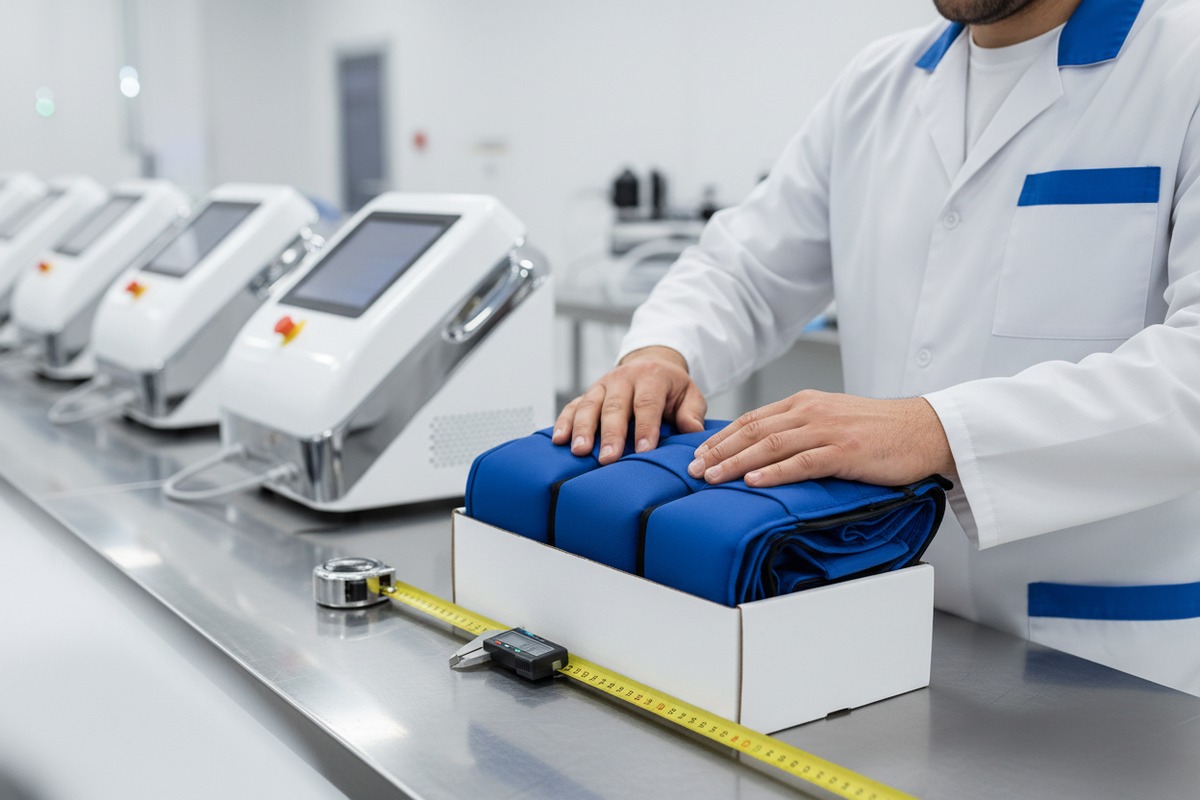
Comparing Shipping Methods for Pressotherapy Parts
Each method suits different situations. Here's how they compare for typical pressotherapy components:
| Shipping Method | Transit Time | Cost (per kg) | Best For | Tracking |
|---|---|---|---|---|
| Express (DHL/FedEx/UPS) 8 | 3-5 days | $8-15 | Emergency parts, control boards | Real-time |
| Air Freight | 7-12 days | $4.5-7.5 | Urgent parts, medium weight | Milestone updates |
| Sea Freight (LCL) | 25-35 days | $1.5-3 | Bulk sleeves, pads, cables | Weekly updates |
| Sea Freight (FCL) | 25-35 days | $800-1500/container | Large inventory orders | Weekly updates |
For small but urgent shipments, air freight costs can range from $4.5 to $7.5/kg, depending on route and volume.
Decision Framework for Urgent Parts
When a replacement part request comes in, ask these questions:
1. How much revenue are you losing daily?
If your pressotherapy machine generates $200-400/day in treatment revenue, paying $100 extra for express shipping to save 5 days makes financial sense.
2. What's the part's weight and dimensions?
Lightweight items (cables, sensors, small pads) ship economically by express. Heavy components (pumps, control units) favor air freight.
3. Can you source locally as a stopgap?
For common consumables, local distributors might bridge the gap while sea freight brings your main inventory.
Express Courier Considerations
DHL, FedEx, TNT and UPS offer the fastest express shipping from China door to door, with discounts of more than 30% compared to direct carrier rates available through freight forwarders.
Work with a China-based forwarder rather than booking directly. They access negotiated rates unavailable to individual shippers.
Balancing Speed and Cost
Here's a practical approach we recommend to our clients:
- Keep critical parts in stock: Air pumps, control boards, power supplies
- Use express for true emergencies only: Anything causing immediate revenue loss
- Batch routine parts monthly: Sleeves, pads, cables, tubes via sea freight
- Consider hybrid shipping: Sea freight to a US warehouse, then local express when needed
Insurance for Urgent Shipments
Although insurance is not mandatory, we strongly recommend purchasing it, especially for valuable or fragile goods. If you are unsure whether insurance is necessary, it is always safer to purchase it, particularly when shipping valuable goods or dealing with international logistics.
For expensive parts shipped urgently, always add cargo insurance 9. The small premium (typically 1-2% of value) protects against total loss if something goes wrong during expedited handling.
Can I reduce my shipping expenses by optimizing the packaging size of my pressotherapy components?
When our engineers design packaging for pressotherapy parts, they obsess over every centimeter. Why? Because carriers charge by “volumetric weight 10“—the space your package occupies—not just its actual weight. A poorly packed compression sleeve kit might weigh 3kg but get charged as 8kg due to oversized boxes.
Optimizing packaging size significantly reduces shipping expenses for pressotherapy components. By using custom-fitted boxes, vacuum-sealing soft goods like compression sleeves, removing excess packaging materials, and reconfiguring part layouts, you can reduce volumetric weight by 20-40% and lower freight charges proportionally.

Understanding Volumetric Weight
Carriers use a simple formula to calculate volumetric (or dimensional) weight:
Volumetric Weight (kg) = Length × Width × Height (cm) ÷ 5000 (for air freight)
For sea freight, the divisor is typically 1000. This means air freight penalizes bulky packaging much more severely.
Example Calculation:
| Scenario | Box Dimensions | Actual Weight | Volumetric Weight | Charged Weight |
|---|---|---|---|---|
| Standard packaging | 50×40×30 cm | 4 kg | 12 kg | 12 kg |
| Optimized packaging | 40×30×20 cm | 4 kg | 4.8 kg | 4.8 kg |
| Savings | – | – | – | 60% reduction |
Packaging Optimization Strategies
1. Custom-Sized Boxes
Don't use one-size-fits-all packaging. Size boxes to fit each part category:
- Compression sleeves: Flat-packed, vacuum-sealed
- Air hoses: Coiled tightly, minimal void space
- Control panels: Snug foam inserts, no excess cushioning
- Cables: Rolled and bundled compactly
2. Remove Manufacturer Packaging
Original retail packaging often contains promotional materials, excessive plastic, and decorative elements. For B2B shipments, request:
- Plain inner bags instead of retail boxes
- Consolidated packing lists instead of individual product inserts
- Bulk packaging for multiple identical items
3. Material Selection
Use high-quality and extra-strong packaging materials. It may be necessary, depending upon the device, to use custom-made pieces for the packing materials.
For pressotherapy parts:
- Use high-density foam instead of bubble wrap (same protection, less volume)
- Choose corrugated cardboard that's strong but thin
- Apply stretch wrap directly to items before boxing
Special Considerations for Pressotherapy Components
Different parts require different approaches:
| Component | Packaging Challenge | Optimization Solution |
|---|---|---|
| Compression sleeves | Bulky when folded | Vacuum-seal to remove air |
| Air tubes/hoses | Coil diameter wastes space | Use smaller coil diameter, stack flat |
| Control units | Fragile, need cushioning | Custom-molded foam, not excess fill |
| Pads/electrodes | Multiple small items | Stackable trays, bulk bags |
Communicating with Your Supplier
At our facility, we work with clients on packaging optimization before the first shipment. Ask your supplier:
- "Can you repack for export using smaller boxes?"
- "What's the volumetric weight of the current packaging?"
- "Is there a packaging optimization service available?"
Optimize packaging by using efficient packaging methods to reduce weight and volume, potentially lowering freight costs.
Protection vs. Size Trade-offs
Proper packaging is paramount to protect medical equipment from damage during transit. Often, larger equipment is packaged with care at the manufacturing facility. Shock-absorbent materials such as foam inserts and bubble wrap may be used to cushion against in-transit bumps and vibrations.
Don't sacrifice protection for size reduction. The goal is eliminating waste, not compromising safety. Work with your supplier to find the minimum viable packaging that still prevents damage.
Measuring Your Savings
Track these metrics before and after optimization:
- Average box dimensions per order
- Volumetric weight vs. actual weight ratio
- Freight cost per unit shipped
- Damage/return rate (ensure it doesn't increase)
Successful optimization typically achieves 20-40% reduction in shipping costs without increasing damage rates.
Conclusion
Negotiating shipping costs for pressotherapy replacement parts requires a systematic approach. By consolidating orders, negotiating DDP terms with your Chinese supplier, selecting appropriate shipping methods based on urgency, and optimizing packaging dimensions, you can reduce freight expenses by 30-50% without compromising delivery quality. Contact your supplier to discuss these strategies for your next order.
## Footnotes

<span id="footnote-1">
1. Explains DDP Incoterms, seller's responsibilities, and cost implications. <a href="#ref-1" class="footnote-backref">↩︎</a>
</span>

<span id="footnote-2">
2. Lists common replacement parts and accessories for pressotherapy machines. <a href="#ref-2" class="footnote-backref">↩︎</a>
</span>

<span id="footnote-3">
3. Defines consolidation warehouses and their role in reducing shipping costs from China. <a href="#ref-3" class="footnote-backref">↩︎</a>
</span>

<span id="footnote-4">
4. Wikipedia provides a comprehensive and authoritative overview of 3PLs. <a href="#ref-4" class="footnote-backref">↩︎</a>
</span>

<span id="footnote-5">
5. Official source for Incoterms rules, defining responsibilities in international trade. <a href="#ref-5" class="footnote-backref">↩︎</a>
</span>

<span id="footnote-6">
6. Explains the role and functions of a freight forwarder in coordinating shipments. <a href="#ref-6" class="footnote-backref">↩︎</a>
</span>

<span id="footnote-7">
7. Wikipedia offers a comprehensive and authoritative overview of Chinese New Year. <a href="#ref-7" class="footnote-backref">↩︎</a>
</span>

<span id="footnote-8">
8. Compares major express courier services for international shipping speed and cost. <a href="#ref-8" class="footnote-backref">↩︎</a>
</span>

<span id="footnote-9">
9. Explains cargo insurance, its types, and importance for protecting goods in transit. <a href="#ref-9" class="footnote-backref">↩︎</a>
</span>

<span id="footnote-10">
10. Found a working and informative article explaining volumetric weight from LetMeShip. <a href="#ref-10" class="footnote-backref">↩︎</a>
</span>

 English
  Español de México
  Deutsch
  Français
  العربية
  Русский