
When our production team receives urgent requests for replacement sleeves or air hoses, we see firsthand how shipping costs can quietly erode your profit margins. pressotherapy machine replacement parts 2 Eine einzelne Kompressionsmanschette kostet vielleicht 15 $, aber der Versand? Der kann leicht 50 $ oder mehr erreichen, wenn Sie nicht aufpassen. Für Spa-Besitzer und Distributoren, die aus China beziehen, sorgt dieses Ungleichgewicht zwischen Teilewert und Frachtkosten für echte Frustration.
To negotiate shipping costs for pressotherapy machine replacement parts effectively, consolidate multiple orders into single shipments, request itemized freight quotes from at least three carriers, optimize packaging dimensions to reduce volumetric weight, and negotiate DDP (Delivered Duty Paid) terms with your Chinese supplier to lock in predictable all-inclusive rates.
Die folgenden Strategien stammen aus unseren Jahren des Exports von Beauty-Geräten in die USA, nach Kanada und Europa. Wir haben gelernt, was funktioniert – und was nicht –, wenn wir Kunden dabei helfen, ihre gesamten Landed Costs zu minimieren. Gehen wir jeden Ansatz Schritt für Schritt durch.
How can I consolidate my pressotherapy part orders to lower my total shipping costs?
From our export experience, we notice that buyers who order replacement parts one at a time end up paying three to four times more in shipping over a year than those who plan ahead. Scattered orders mean scattered costs, and carriers charge a minimum fee for every single shipment regardless of size.
Consolidating pressotherapy part orders lowers total shipping costs by combining multiple items into fewer, larger shipments. This approach eliminates per-shipment minimum charges, unlocks volume discounts, reduces customs processing fees, and allows you to negotiate better freight rates based on increased shipment weight and value.

Understanding the Consolidation Process
The basic idea is simple: instead of shipping five separate orders from five different dates, you collect everything into one warehouse and ship once. This works especially well for pressotherapy components because most parts—sleeves, cables, pads, and air tubes—are lightweight and compact.
So funktioniert die Konsolidierung typischerweise beim Bezug aus China:
- Your supplier sends goods to a designated consolidation warehouse 3
- The warehouse receives, inspects, and stores your items
- Sobald alle Artikel angekommen sind, werden sie in optimierte Verpackungen umgepackt
- Everything ships together as a single international shipment
Why Consolidation Saves Money
Konsolidierung hilft, Ihre Versandkosten zu minimieren, denn je größer die Sendung, desto niedriger die Kosten pro kg oder pro CBM, und Sie müssen nicht für jede Sendung eine Grundversandgebühr zahlen. Da jede Sendung eine Mindestgebühr hat und es Mengenrabatte für große Sendungen gibt, ist es wirtschaftlich sinnvoll, zu konsolidieren und gemeinsam international zu versenden, statt jede einzeln separat zu verschicken.
| Shipping Approach | Typical Minimum Charge | Cost per kg (Air) | Annual Savings Potential |
|---|---|---|---|
| Individual Orders (5 per month) | $35-50 per shipment | $8-12/kg | Baseline |
| Monthly Consolidation | $35-50 once | $6-8/kg | 40-50% |
| Quarterly Consolidation | $35-50 once | $4.5-6/kg | 55-65% |
Working with Consolidation Agents
To initiate the consolidation process, engage with multiple suppliers in China and discuss the possibility of consolidating shipments. Collect goods from different suppliers into one warehouse, conduct quality checks and inspections, and then ship them together.
Many third-party logistics providers 4 in China offer free or low-cost storage while you accumulate orders. Storage, warehousing, repacking and consolidation services are all offered free of charge at certain warehouses which means you can take your time to make all the orders you need.
Practical Tips for Pressotherapy Parts
For pressotherapy components specifically, consider these consolidation strategies:
- Group by urgency: Separate critical parts (air pumps, control boards) from routine consumables (sleeves, pads)
- Set a monthly cut-off date: Teilen Sie Ihrem Lieferanten mit, dass Sie bis zum 15. jedes Monats Dauerbestellungen aufgeben werden
- Bundle with machine orders: If ordering new machines, add replacement parts to the same shipment
- Coordinate with other buyers: Some suppliers can consolidate orders from multiple clients heading to the same region
What strategies should I use to negotiate better door-to-door freight rates with my Chinese supplier?
Aus unserer Erfahrung mit Versand in die USA und nach Europa haben wir gelernt, dass Käufer, die den ersten angebotenen Tarif akzeptieren, typischerweise 15–30 % zu viel zahlen. Chinesische Lieferanten geben oft konservative Frachtschätzungen ab, um sich vor Tarifschwankungen zu schützen, was Verhandlungsspielraum lässt, wenn Sie wissen, wie Sie fragen müssen.
Verhandeln Sie bessere Tür-zu-Tür-Frachttarife, indem Sie DDP-Bedingungen (Delivered Duty Paid) mit aufgeschlüsselten Kostenaufstellungen anfordern, Angebote des Spediteurs des Lieferanten mit unabhängigen Frachtunternehmen vergleichen, sich zu Volumen- oder langfristigen Vereinbarungen verpflichten und darum bitten, den Versand als Teil umfassenderer Bestellverhandlungen einzubeziehen.
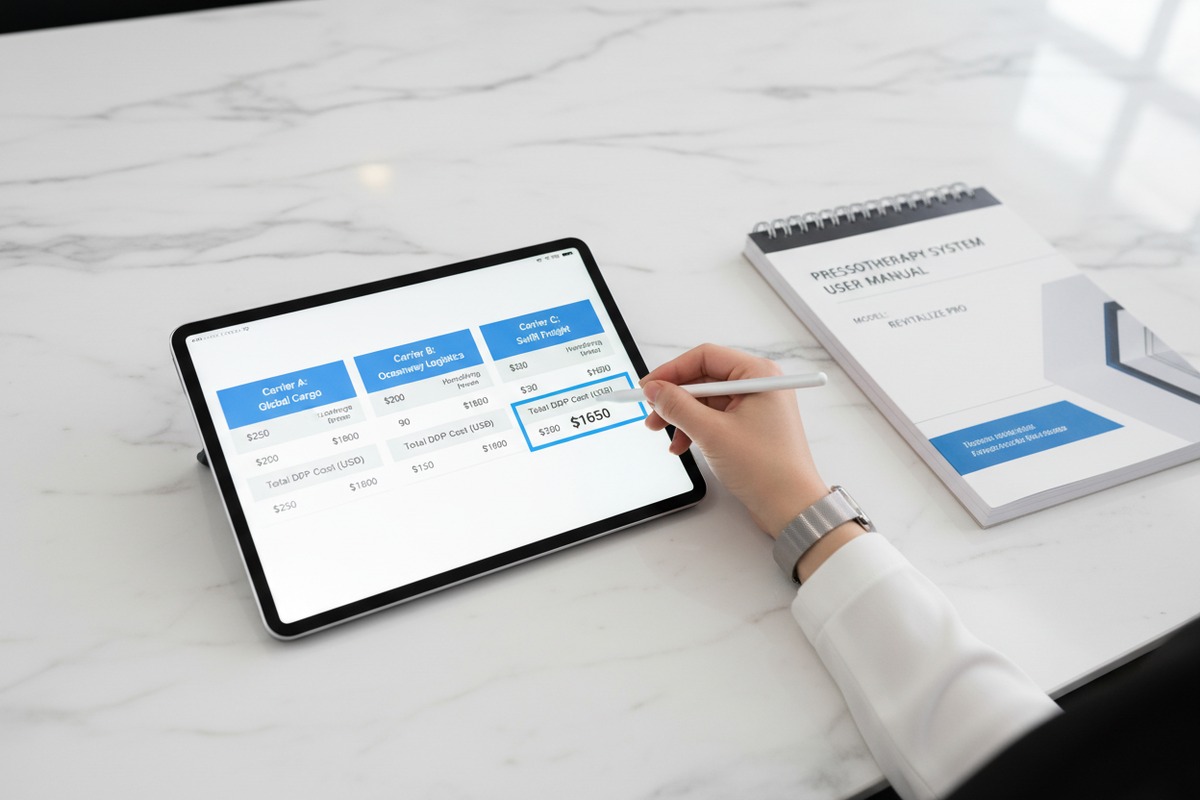
Understanding Door-to-Door Shipping Terms
Door-to-door service is a one-stop shipping solution that spares you from dealing with multiple transport legs or paperwork independently. Unlike port-to-port shipping, door-to-door service means the provider takes care of everything including handling customs declarations, paying export fees in China, arranging ocean or air freight, clearing customs on arrival, and trucking the goods to your warehouse.
When negotiating with your Chinese supplier, clarify the Incoterms 5 being used:
| Incoterm | Who Pays Duties | Who Handles Customs | Am besten für |
|---|---|---|---|
| DDP (Geliefert verzollt) | Seller | Seller | Hassle-free delivery, cost certainty |
| DAP (Delivered at Place) | Käufer | Käufer | When you have customs expertise |
| FOB (Frei an Bord) | Käufer | Käufer | When you prefer your own forwarder |
Key Negotiation Strategies
Verhandeln Sie, ohne Beziehungen zu beschädigen, indem Sie zuerst den Wert und die Produktqualität des Lieferanten anerkennen und dann über den Preis sprechen. Verwenden Sie neutrale Sprache, fordern Sie Preisaufschlüsselungen statt direkter Kritik an und legen Sie klar Ihre langfristigen Kaufabsichten dar.
Strategy 1: Request Itemized Quotes
Ask your supplier to break down the shipping quote into components:
- Export handling and documentation
- International freight (air/sea/rail)
- Customs clearance at destination
- Import duties and taxes
- Final mile delivery
This transparency reveals where costs can be trimmed.
Strategy 2: Compare Against Independent Forwarders
A Frachtspediteur 6 mit Sitz in China haben Tarife, die weit niedriger sind als das, was ein US- oder internationaler Spediteur typischerweise anbieten kann. Und das liegt daran, dass ihre Tarife für den chinesischen Markt verhandelt wurden.
Holen Sie mindestens zwei Angebote von in China ansässigen Spediteuren ein und nutzen Sie diese als Hebel. Selbst wenn Sie nicht wechseln, ermutigt das Zeigen wettbewerbsfähiger Tarife Ihren Lieferanten, seine Preisgestaltung zu verschärfen.
Strategy 3: Bundle Shipping with Order Negotiations
Wenn Sie eine größere Bestellung verhandeln, behandeln Sie den Versand nicht separat. Fragen Sie: "Können Sie kostenlosen Versand einschließen, wenn ich meine Bestellung auf 20 Einheiten erhöhe?" oder "Was ist Ihr bester All-in-DDP-Preis?"
Timing Your Negotiations
Freight rates fluctuate seasonally. Avoid negotiating during:
- Chinese New Year 7 (January-February)
- Peak shipping season (August-October)
- Major holidays when capacity is tight
Instead, lock in rates during slower periods (March-May, November) when carriers compete for business.
Building Long-Term Rate Agreements
If you order regularly, propose a quarterly or annual shipping rate agreement. We offer this to our repeat clients—predictable volumes let us secure better carrier contracts, and we pass those savings along.
How do I choose the most cost-effective shipping method for my urgent replacement part needs?
Unser Serviceteam bearbeitet wöchentlich Notfall-Teileanfragen – die Pressotherapie-Maschine eines Kunden stoppt mitten in der Sitzung, und er braucht innerhalb von Tagen, nicht Wochen, eine neue Luftpumpe. In diesen Momenten kann die Wahl der falschen Versandmethode bedeuten, entweder das Doppelte des Teilewerts an Fracht zu zahlen oder Umsatz durch eine stillstehende Maschine zu verlieren.
Choose the most cost-effective shipping method by weighing part urgency against cost: use express courier (3-5 days) for critical failures affecting revenue, air freight (7-10 days) for urgent but not emergency needs, and sea freight (25-40 days) for planned inventory replenishment of non-critical components.
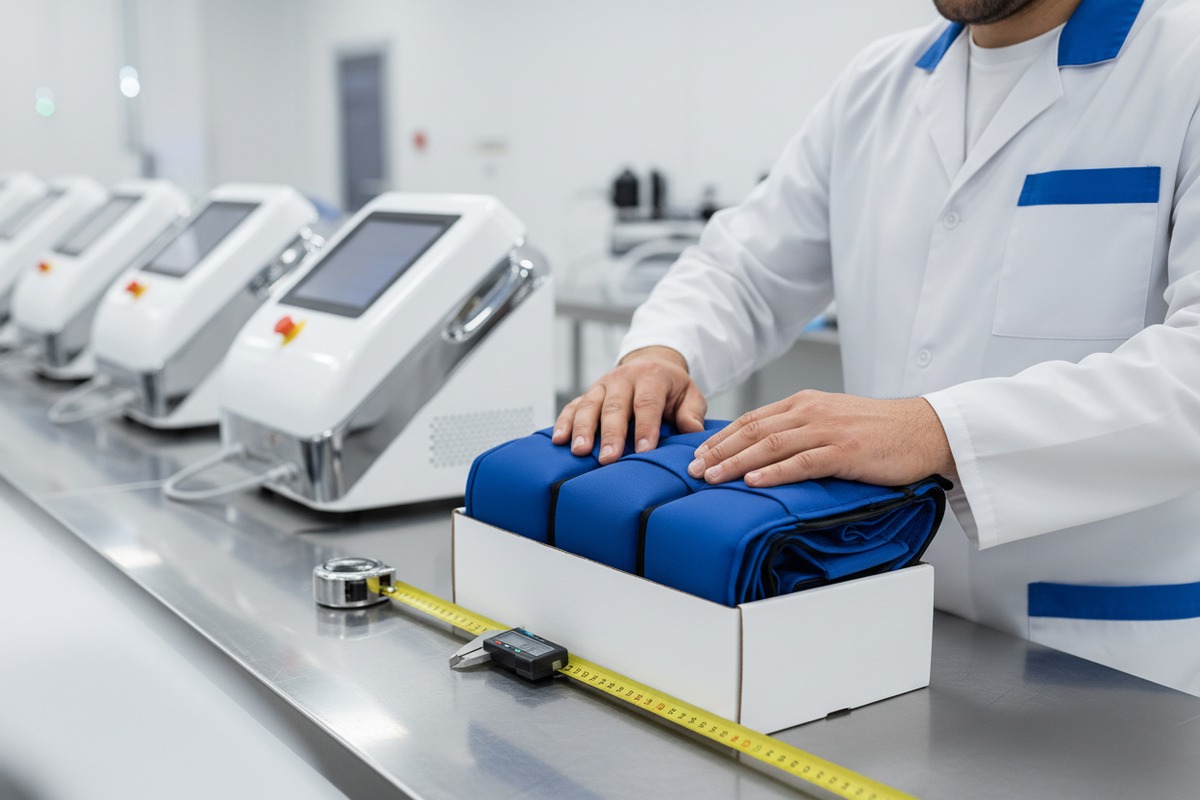
Comparing Shipping Methods for Pressotherapy Parts
Jede Methode eignet sich für unterschiedliche Situationen. So schneiden sie für typische Pressotherapie-Komponenten im Vergleich ab:
| Versandart | Transitzeit | Cost (per kg) | Am besten für | Tracking |
|---|---|---|---|---|
| Express (DHL/FedEx/UPS) 8 | 3-5 days | $8-15 | Emergency parts, control boards | Real-time |
| Luftfracht | 7-12 days | $4.5-7.5 | Urgent parts, medium weight | Milestone updates |
| Seefracht (LCL) | 25-35 days | $1.5-3 | Bulk sleeves, pads, cables | Weekly updates |
| Seefracht (FCL) | 25-35 days | $800-1500/container | Large inventory orders | Weekly updates |
For small but urgent shipments, air freight costs can range from $4.5 to $7.5/kg, depending on route and volume.
Decision Framework for Urgent Parts
When a replacement part request comes in, ask these questions:
1. How much revenue are you losing daily?
If your pressotherapy machine generates $200-400/day in treatment revenue, paying $100 extra for express shipping to save 5 days makes financial sense.
Welches Gewicht und welche Abmessungen hat das Teil?
Lightweight items (cables, sensors, small pads) ship economically by express. Heavy components (pumps, control units) favor air freight.
3. Can you source locally as a stopgap?
For common consumables, local distributors might bridge the gap while sea freight brings your main inventory.
Express Courier Considerations
DHL, FedEx, TNT and UPS offer the fastest express shipping from China door to door, with discounts of more than 30% compared to direct carrier rates available through freight forwarders.
Work with a China-based forwarder rather than booking directly. They access negotiated rates unavailable to individual shippers.
Balancing Speed and Cost
Hier ist ein praktischer Ansatz, den wir unseren Kunden empfehlen:
- Keep critical parts in stock: Air pumps, control boards, power supplies
- Use express for true emergencies only: Anything causing immediate revenue loss
- Batch routine parts monthly: Sleeves, pads, cables, tubes via sea freight
- Consider hybrid shipping: Sea freight to a US warehouse, then local express when needed
Insurance for Urgent Shipments
Although insurance is not mandatory, we strongly recommend purchasing it, especially for valuable or fragile goods. If you are unsure whether insurance is necessary, it is always safer to purchase it, particularly when shipping valuable goods or dealing with international logistics.
For expensive parts shipped urgently, always add cargo insurance 9. The small premium (typically 1-2% of value) protects against total loss if something goes wrong during expedited handling.
Can I reduce my shipping expenses by optimizing the packaging size of my pressotherapy components?
Wenn unsere Ingenieure Verpackungen für Pressotherapie-Teile entwerfen, sind sie von jedem Zentimeter besessen. Warum? Weil Frachtführer nach “Volumengewicht 10“ abrechnen – dem Raum, den Ihr Paket einnimmt – nicht nur nach seinem tatsächlichen Gewicht. Ein schlecht verpacktes Kompressionsmanschetten-Kit wiegt vielleicht 3 kg, wird aber aufgrund übergroßer Kartons als 8 kg berechnet.
Optimizing packaging size significantly reduces shipping expenses for pressotherapy components. By using custom-fitted boxes, vacuum-sealing soft goods like compression sleeves, removing excess packaging materials, and reconfiguring part layouts, you can reduce volumetric weight by 20-40% and lower freight charges proportionally.

Understanding Volumetric Weight
Carriers use a simple formula to calculate volumetric (or dimensional) weight:
Volumetric Weight (kg) = Length × Width × Height (cm) ÷ 5000 (for air freight)
For sea freight, the divisor is typically 1000. This means air freight penalizes bulky packaging much more severely.
Example Calculation:
| Szenario | Box Dimensions | Actual Weight | Volumetric Weight | Charged Weight |
|---|---|---|---|---|
| Standard packaging | 50×40×30 cm | 4 kg | 12 kg | 12 kg |
| Optimized packaging | 40×30×20 cm | 4 kg | 4.8 kg | 4.8 kg |
| Savings | – | – | – | 60% reduction |
Packaging Optimization Strategies
1. Custom-Sized Boxes
Verwenden Sie keine Einheitsverpackung. Passen Sie die Kartongrößen an jede Teilekategorie an:
- Compression sleeves: Flat-packed, vacuum-sealed
- Air hoses: Coiled tightly, minimal void space
- Control panels: Snug foam inserts, no excess cushioning
- Cables: Rolled and bundled compactly
2. Remove Manufacturer Packaging
Original retail packaging often contains promotional materials, excessive plastic, and decorative elements. For B2B shipments, request:
- Plain inner bags instead of retail boxes
- Consolidated packing lists instead of individual product inserts
- Bulk packaging for multiple identical items
3. Material Selection
Use high-quality and extra-strong packaging materials. It may be necessary, depending upon the device, to use custom-made pieces for the packing materials.
For pressotherapy parts:
- Use high-density foam instead of bubble wrap (same protection, less volume)
- Wählen Sie Wellpappe, die stark, aber dünn ist
- Apply stretch wrap directly to items before boxing
Special Considerations for Pressotherapy Components
Different parts require different approaches:
| Komponente | Packaging Challenge | Optimization Solution |
|---|---|---|
| Compression sleeves | Bulky when folded | Vacuum-seal to remove air |
| Air tubes/hoses | Coil diameter wastes space | Use smaller coil diameter, stack flat |
| Control units | Fragile, need cushioning | Custom-molded foam, not excess fill |
| Pads/electrodes | Multiple small items | Stackable trays, bulk bags |
Communicating with Your Supplier
At our facility, we work with clients on packaging optimization before the first shipment. Ask your supplier:
- "Can you repack for export using smaller boxes?"
- "Was ist das Volumengewicht der aktuellen Verpackung?"
- "Is there a packaging optimization service available?"
Optimize packaging by using efficient packaging methods to reduce weight and volume, potentially lowering freight costs.
Protection vs. Size Trade-offs
Proper packaging is paramount to protect medical equipment from damage during transit. Often, larger equipment is packaged with care at the manufacturing facility. Shock-absorbent materials such as foam inserts and bubble wrap may be used to cushion against in-transit bumps and vibrations.
Opfern Sie nicht den Schutz für eine Größenreduzierung. Das Ziel ist, Verschwendung zu beseitigen, nicht die Sicherheit zu beeinträchtigen. Arbeiten Sie mit Ihrem Lieferanten zusammen, um die minimal praktikable Verpackung zu finden, die dennoch Schäden verhindert.
Measuring Your Savings
Track these metrics before and after optimization:
- Average box dimensions per order
- Volumetric weight vs. actual weight ratio
- Freight cost per unit shipped
- Schadens-/Rückgabequote (stellen Sie sicher, dass sie nicht steigt)
Successful optimization typically achieves 20-40% reduction in shipping costs without increasing damage rates.
Schlussfolgerung
Negotiating shipping costs for pressotherapy replacement parts requires a systematic approach. By consolidating orders, negotiating DDP terms with your Chinese supplier, selecting appropriate shipping methods based on urgency, and optimizing packaging dimensions, you can reduce freight expenses by 30-50% without compromising delivery quality. Contact your supplier to discuss these strategies for your next order.
## Fußnoten

<span id="footnote-1">
1. Explains DDP Incoterms, seller's responsibilities, and cost implications. <a href="#ref-1" class="footnote-backref">︎</a>
</span>

<span id="footnote-2">
2. Lists common replacement parts and accessories for pressotherapy machines. <a href="#ref-2" class="footnote-backref">︎</a>
</span>

<span id="footnote-3">
3. Defines consolidation warehouses and their role in reducing shipping costs from China. <a href="#ref-3" class="footnote-backref">︎</a>
</span>

<span id="footnote-4">
4. Wikipedia provides a comprehensive and authoritative overview of 3PLs. <a href="#ref-4" class="footnote-backref">︎</a>
</span>

<span id="footnote-5">
5. Official source for Incoterms rules, defining responsibilities in international trade. <a href="#ref-5" class="footnote-backref">︎</a>
</span>

<span id="footnote-6">
6. Explains the role and functions of a freight forwarder in coordinating shipments. <a href="#ref-6" class="footnote-backref">︎</a>
</span>

<span id="footnote-7">
7. Wikipedia offers a comprehensive and authoritative overview of Chinese New Year. <a href="#ref-7" class="footnote-backref">︎</a>
</span>

<span id="footnote-8">
8. Compares major express courier services for international shipping speed and cost. <a href="#ref-8" class="footnote-backref">︎</a>
</span>

<span id="footnote-9">
9. Explains cargo insurance, its types, and importance for protecting goods in transit. <a href="#ref-9" class="footnote-backref">︎</a>
</span>

<span id="footnote-10">
10. Found a working and informative article explaining volumetric weight from LetMeShip. <a href="#ref-10" class="footnote-backref">︎</a>
</span>


 English
 Español de México
 Deutsch
 Français
 العربية
 Русский
Nehmen Sie an der Diskussion teil
Haben Sie eine Frage oder einen Einblick zu teilen? Wir lesen jeden Kommentar — ob Sie Distributor, Salonbesitzer oder einfach nur neugierig auf die Technologie sind. Ihre praktische Erfahrung hilft anderen, bessere Entscheidungen zu treffen. Teilen Sie Ihre Gedanken unten mit.