Our production floor ships over 200 pressotherapy units to the U.S. every month. Yet many buyers still ask us the same question: How do we get the FDA product code 1 right? Getting it wrong can mean costly delays, detained shipments, or even forced destruction of goods at the port.
To handle FDA product codes correctly when importing pressotherapy machines, identify your device’s classification (typically Class II for lymphatic drainage), search the FDA Product Classification Database for the correct alphanumeric code, ensure your manufacturer has valid FDA registration and device listing, and submit accurate entry documentation through your customs broker.
This guide walks you through every step. We cover how to find the right product code, the real risks of using the wrong one, how your Chinese supplier can help with registration, and what all this means for your shipping timeline.
How do I find the correct FDA product code for my pressotherapy machine imports?
When our engineering team develops a new pressotherapy model, we start the FDA code search early Center for Devices and Radiological Health 2. Many importers wait until their shipment is ready. By then, it is too late to fix problems.
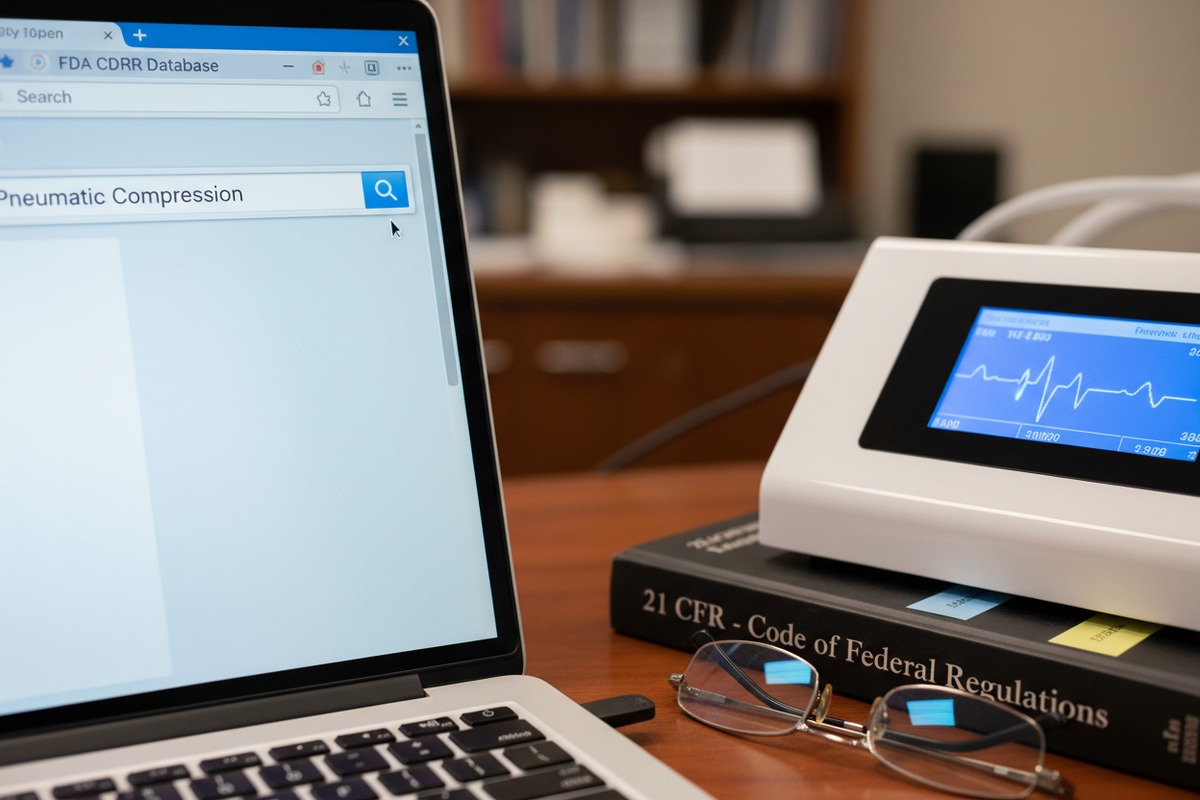
To find the correct FDA product code, visit the FDA's Product Classification Database maintained by the Center for Devices and Radiological Health (CDRH). Search using keywords like "compression," "pneumatic," or "lymphatic drainage." The database assigns codes based on intended use and device function under 21 CFR Parts 862-892.
Understanding the FDA Product Code Structure
The FDA product code is not just one number. It is an alphanumeric descriptor that tells the FDA exactly what your device is 21 CFR Parts 862-892 3. The code identifies the generic category of a device for regulatory purposes.
Each pressotherapy machine falls under a specific regulation number. Devices for lymphatic drainage and circulation improvement often appear in the 890 series (Physical Medicine Devices). However, the exact code depends on your device's intended use.
Steps to Identify Your Product Code
Here is how to find your code:
- Go to the FDA Product Classification Database 4
- Enter search terms related to your device function
- Review matching results and regulation numbers
- Confirm the device class (I, II, or III)
- Note all required premarket submissions
| Search Term | Possible Regulation | Typical Class |
|---|---|---|
| Pneumatic compression | 21 CFR 870/890 | Class II |
| Lymphatic drainage | 21 CFR 890 | Class II |
| Therapeutic massager | 21 CFR 890 | Class I or II |
| Circulatory device | 21 CFR 870 | Class II |
Why Intended Use Matters
The FDA cares deeply about how you market your device. A pressotherapy machine sold for "general wellness" may face different requirements than one marketed for "lymphedema treatment."
If your device claims to treat specific medical conditions like lymphedema, deep vein thrombosis, or venous ulcers, it likely requires a 510(k) premarket notification 5. This means you must demonstrate substantial equivalence to a predicate device 6 already on the market.
Our R&D team always reviews the intended use statements before finalizing any model. This step prevents classification surprises later.
Using Predicate Devices
For Class II pressotherapy machines, you need to find a predicate device. This is a legally marketed device that is substantially equivalent to yours. Some FDA-cleared lymphatic drainage systems already exist in the database. Your device must match them in intended use and technological characteristics.
What are the risks to my business if I use an incorrect FDA code during customs entry?
We have seen it happen to our clients. One wrong code entry. One shipment held for weeks. Thousands of dollars lost. The FDA does not take coding errors lightly.
Using an incorrect FDA code can result in shipment detention, refusal of admission, financial penalties up to three times the lot's value, mandatory product destruction, and placement on FDA Import Alerts. These consequences damage your business reputation and disrupt your entire supply chain.

Immediate Consequences at the Port
When your entry documentation shows the wrong product code, the FDA's PREDICT system flags it for review. This triggers a manual examination. Your goods sit in a warehouse while officials investigate.
The FDA issues a Notice of FDA Action to inform you of the problem. You have limited time to respond. If you cannot prove compliance, the shipment moves to detention status.
Financial Impact of Detention
| Scenario | Cost Impact | Timeline |
|---|---|---|
| Initial hold for review | Warehouse fees + delays | 5-15 days |
| Notice of Detention | Attorney fees + testing costs | 20+ days |
| Refusal of Admission | Destruction/export costs + bond penalties | Up to 90 days |
| Import Alert listing | Future shipments flagged | Months to years |
Failure to comply within 90 days may result in liquidated damages up to three times the shipment's value. This penalty comes on top of losing your entire product investment.
Long-Term Business Damage
The real danger is what happens next. The FDA tracks compliance history. One bad entry can follow you for years.
Import alerts inform FDA field staff that the agency has enough evidence to allow detention without physical examination. Once your company or supplier ends up on an import alert, every future shipment faces automatic scrutiny.
Your customers lose trust. Your cash flow suffers. Your competitors gain ground.
How to Protect Your Business
Work with a customs broker who understands medical device imports. Verify every code before shipment. Keep detailed documentation of your device classification.
Our quality control team reviews all export paperwork three times before release. This prevents errors from leaving our facility.
How can my Chinese supplier assist me with the FDA registration and listing process?
When we work with new U.S. importers, we handle more than just manufacturing. Our compliance team supports the entire FDA pathway. A good supplier does the same.
Your Chinese supplier can assist by registering their establishment with FDA, listing your devices under their registration, designating a U.S. Agent to communicate with FDA, providing technical documentation for 510(k) submissions, and ensuring manufacturing follows Quality System Regulation (QSR) standards outlined in 21 CFR Part 820.

Supplier FDA Registration Requirements
Foreign manufacturers must register annually with FDA. This registration proves they meet basic compliance standards. Without it, their products cannot legally enter U.S. commerce.
When FDA receives your import entry, they verify that the declared manufacturer is registered. They compare submitted information with CDRH's establishment registration and listing database. If your supplier is not registered, your shipment is refused.
| Supplier Responsibility | Your Role | Timeline |
|---|---|---|
| FDA Establishment Registration | Verify registration status | Annual renewal |
| Device Listing | Confirm device appears in listing | Before first shipment |
| U.S. Agent Designation | Provide agent contact if needed | During registration |
| QSR Compliance | Request documentation | Ongoing |
| Technical Files | Review specifications | Before 510(k) |
The U.S. Agent Requirement
Foreign manufacturers need a U.S. Agent. This person or company acts as the communication bridge between your supplier and FDA. The agent must reside in the U.S. or maintain a U.S. place of business.
At time of registration, foreign manufacturers provide the agent's name, address, telephone, fax, and email to FDA. The agent receives official communications and can respond on behalf of the foreign company.
Quality System Support
The FDA requires all medical device manufacturers to follow Quality System Regulation (QSR) standards 7. This includes proper documentation, process validation, personnel training, and facility controls.
Our facility holds ISO 13485 certification. We maintain detailed batch records, testing protocols, and traceability systems. When our clients need documentation for FDA submissions, we provide complete technical files.
What to Ask Your Supplier
Before placing an order, ask these questions:
- Is your FDA registration current?
- Is this specific device listed under your registration?
- Who is your designated U.S. Agent?
- Can you provide QSR compliance documentation?
- Do you have 510(k) clearance records for similar devices?
A supplier who cannot answer these questions is not ready to support U.S. market entry.
Will the FDA product code affect my total shipping time and door-to-door logistics?
Our logistics partners always ask for FDA codes before quoting transit times. The code determines how customs handles your shipment. The wrong code adds weeks. The right code keeps goods moving.
Yes, the FDA product code directly affects shipping time. Correct codes allow automated clearance through FDA's PREDICT system in 1-3 days. Incorrect codes trigger manual review, adding 5-30 days. Detention can extend to 90+ days. Work with an experienced medical device customs broker to minimize delays.

How FDA Screening Works
When your entry is submitted to U.S. Customs and Border Protection, it goes to FDA for review. FDA uses the PREDICT system (Predictive Risk-based Evaluation for Dynamic Import Compliance Targeting) to screen entries.
The system checks your product code against registration databases. It verifies device listing status. It reviews your company's compliance history.
If everything matches, your shipment gets a "May Proceed" status. If not, it gets flagged for manual review.
Timeline Comparison
| Scenario | Documentation Status | Expected Clearance Time |
|---|---|---|
| Perfect entry | Correct code + registered supplier | 1-3 business days |
| Minor errors | Code lookup fails | 5-10 business days |
| Hold for examination | Physical inspection required | 10-20 business days |
| Detention | Violation appearance | 20-60+ business days |
| Refusal | Non-compliance confirmed | 90 days to export/destroy |
Planning Your Supply Chain
Smart importers build FDA clearance time into their logistics planning. They do not assume smooth passage.
Our shipping department coordinates with clients 30 days before production completion. We verify all documentation. We confirm registration status. We review recent import alerts.
This advance work prevents surprises at the port.
Working with the Right Broker
A customs broker with medical device experience knows FDA requirements. They understand product codes. They catch errors before submission.
Accurate tariff classification prevents unnecessary duties and delays. Complete documentation speeds screening. Proper coding keeps your goods off import alerts.
Our preferred logistics partners handle FDA entries daily. They have direct communication channels with port officials. They know how to respond to Notices of Action quickly.
Protecting Your Delivery Schedule
Plan for a 2-week buffer on first-time imports. Build relationships with compliance-focused brokers. Keep registration documents current. Monitor FDA import alerts 8 regularly.
Your customers expect on-time delivery. The FDA product code is one factor you can control.
Conclusion
Getting FDA product codes right protects your business and keeps your pressotherapy machines moving. Work with registered suppliers. Use experienced brokers. Verify every code before shipment. The effort upfront saves money and headaches later.
Footnotes
1. Official FDA page explaining medical device product codes and classification. ↩︎
2. Official FDA page providing an overview of CDRH’s mission and responsibilities. ↩︎
3. Official FDA page detailing device classification panels and referencing these CFR parts. ↩︎
4. Direct link to the official FDA database for device classification. ↩︎
5. Official FDA guidance on the 510(k) premarket notification process. ↩︎
6. Official FDA guidance on how to find and use predicate devices. ↩︎
7. Official FDA page detailing the Quality Management System Regulation (QMSR), formerly QSR, for medical devices. ↩︎
8. Official FDA page explaining the purpose and function of Import Alerts. ↩︎

 English
  Español de México
  Deutsch
  Français
  العربية
  Русский