
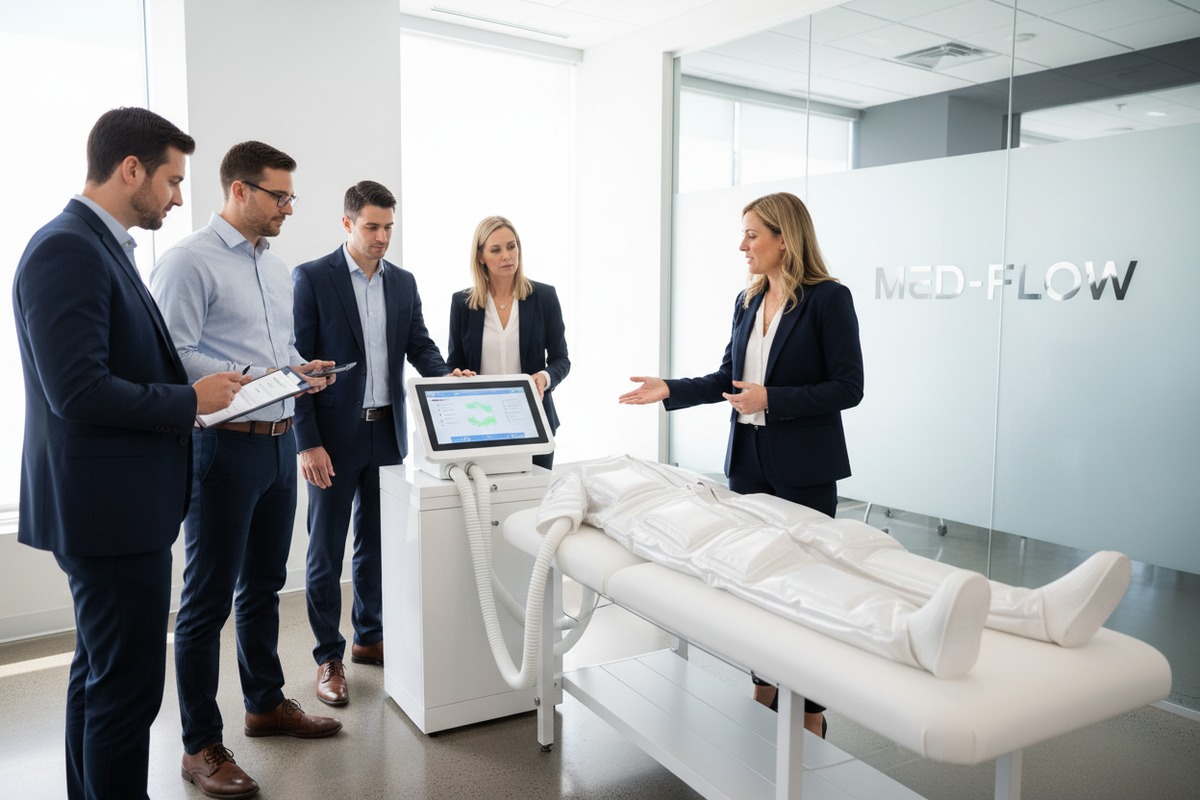
Receiving a shipment of faulty pressotherapy units 1 can paralyze your salon operations and drain your budget. When we assemble machines in our facility, we see how easily small oversight can lead to major failures.
To guide branch managers, provide a standardized checklist focusing on chamber integrity, pressure accuracy (±3 mmHg), and material durability. Training should include hands-on testing of all 24 chambers, verifying ISO 8570:2023 compliance, and checking private-label branding to ensure high-performance standards and long-term reliability.
Successful purchasing starts with empowering your team to spot red flags before the machines leave the factory.
How can I create a standardized inspection checklist for my branch managers to verify machine build quality?
Our engineering team maintains strict assembly protocols because a single loose wire can cause a total system shutdown. A clear checklist turns a novice manager into an expert quality inspector overnight.
A standardized checklist should include visual casing inspections, sleeve material thickness checks, and connector stability tests. Managers must verify the chamber count, check for fraying seams in the suit, and ensure the UI operates smoothly across all localized languages before final equipment approval.
Establishing the Visual and Structural Baseline
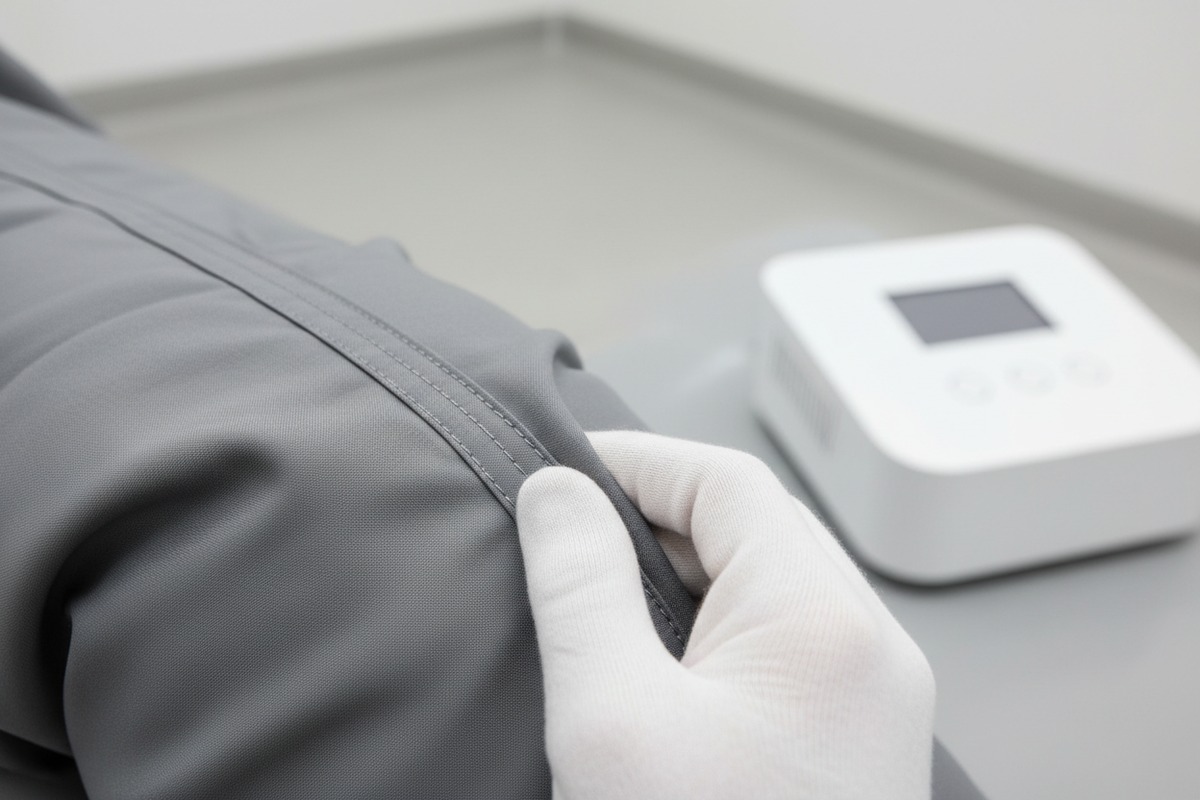
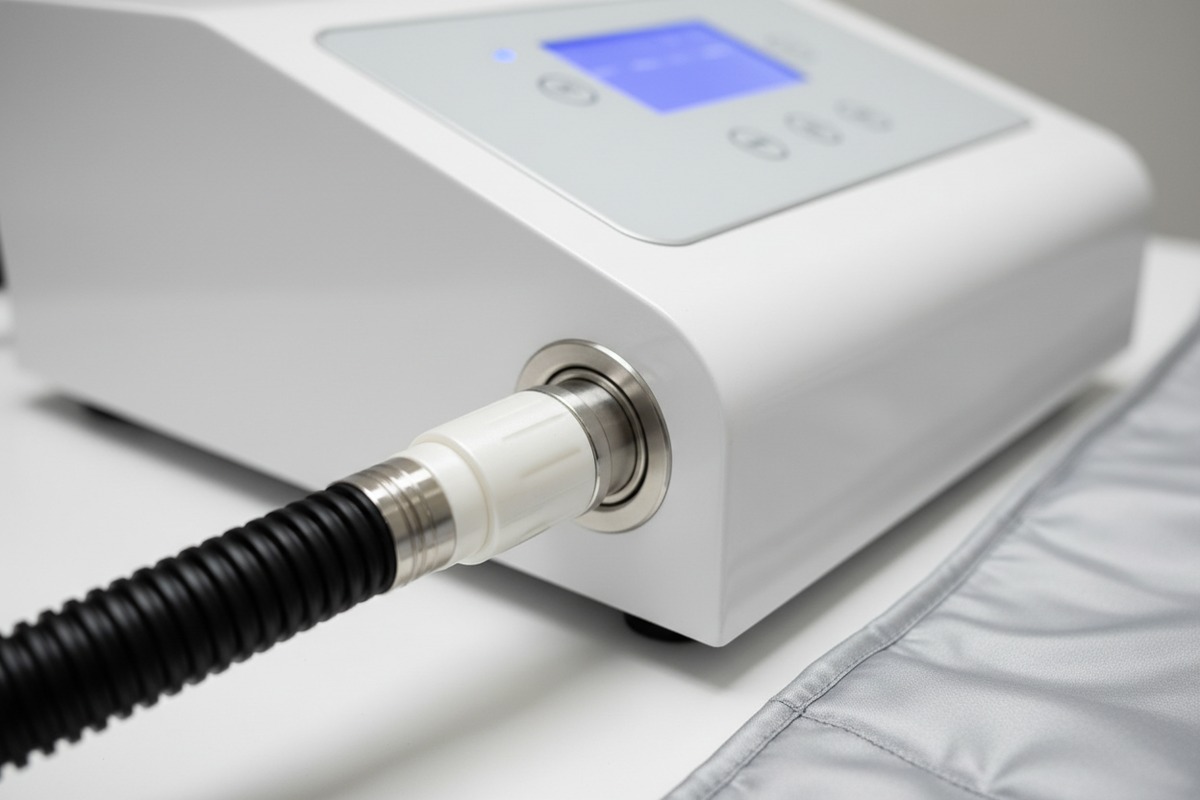
A professional pressotherapy system must look and feel durable. When your managers arrive for an inspection, they should first evaluate the external casing of the control unit. In our production line, we use high-grade matte white plastic that resists yellowing and impact. If the casing feels thin or has uneven gaps at the seams, the internal components are likely just as compromised.
Managers need to inspect the compression suit itself. High-end suits are typically made from medical-grade polyurethane 2 or double-layered nylon. These materials must be rated for at least 10,000 inflation cycles. Any signs of fraying at the zippers or loose stitching are immediate grounds for rejection.
The Component Integrity Audit
The air connectors are the most common point of failure. Managers should plug and unplug the air hoses multiple times. If the fit is too loose, the machine will lose pressure. If it is too tight, the plastic will eventually crack. We recommend metal-reinforced or high-density plastic connectors to ensure longevity.
Technical Specification Verification
Your team must cross-reference the physical machine with the technical datasheet 3 provided by the supplier. This prevents "spec-padding" where a supplier claims a machine has 24 chambers but only delivers 16.
| Inspection Category | Critical Checkpoint | Target Standard |
|---|---|---|
| Housing | Surface finish and gap alignment | No gaps > 0.5mm; no scuffs |
| Sleeve Material | Tear resistance and cleaning ease | Medical-grade PU; wipeable |
| Connectors | Attachment security | Snug fit; no air hissing |
| Display | Touch screen responsiveness | Instant reaction; no dead pixels |
| Chamber Count | Internal air bag distribution | 24 independent zones (pro-grade) |
Functional Logic and Safety
The user interface (UI) should be intuitive. If a manager cannot figure out how to start a standard lymphatic drainage cycle within 60 seconds, the machine will be too difficult for salon staff to use. Furthermore, safety features like an emergency "stop" button or auto-deflation during power loss must be tested. Our R&D team prioritizes these fail-safes because they protect both the client and the salon owner from liability.
What specific performance tests should my team prioritize to ensure the machine’s pressure output is stable?
When we calibrate our control units, we aim for a deviation of no more than ±3 mmHg. Inconsistent pressure is not just a technical flaw; it is a safety risk for clients with sensitive circulation.
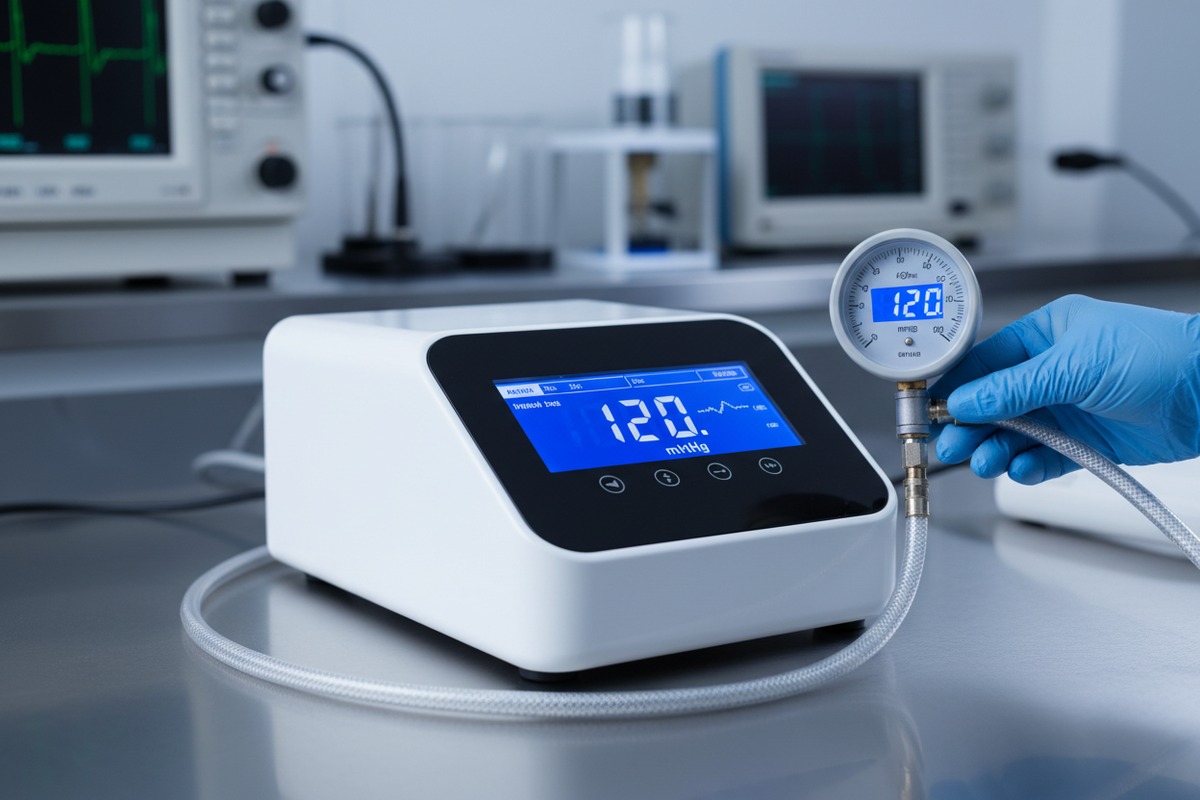
Prioritize the Inflation Stability Test at 40-200 mmHg, the Dwell Time Accuracy check (10-45 seconds), and the Leak Detection Test for all air hoses. Verification against a calibrated external pressure meter ensures the digital readout matches the actual physical pressure output precisely.
The Pressure Calibration Trial
The most critical test is verifying the actual pressure against the displayed value. Many low-end machines show "100 mmHg" on the screen while only delivering 80 mmHg. This 20% deviation makes treatments ineffective. Managers should use an external digital manometer to check at least three points: 40 mmHg (the clinical gold standard), 120 mmHg (medium), and 200 mmHg (maximum).
Dwell Time and Cycle Sequences
Pressotherapy relies on specific "dwell times"—the period the air remains in the chamber before moving to the next. According to clinical protocols, this should stay between 10 and 45 seconds. Your managers should use a stopwatch to ensure the software holds the pressure accurately. If the machine cycles too fast, the lymphatic fluid does not have time to move. If it is too slow, it can cause discomfort or "pooling."
Leak Detection Protocol
A small leak in one chamber can degrade the performance of the entire suit. Managers should run the machine at maximum pressure and then pause it. They must listen for hissing sounds and watch the pressure gauge. If the pressure drops more than 5 mmHg in one minute while the system is paused, there is a leak in the valves or the air bags.
Managing Integrated Technologies
Many modern units include Far-Infrared (FIR) heating 5. This needs its own performance check. The heat should be consistent across all zones and reach specific levels without fluctuating.
| Heat Level | Temperature Range | Intended Use |
|---|---|---|
| Level 1 | 39°C | Sensitive skin / Initial warm-up |
| Level 2 | 41°C | Standard relaxation |
| Level 3 | 43°C | Deep muscle warming |
| Level 4 | 45°C | Intense detoxification |
Long-Run Durability Test
Don’t just turn the machine on and off. Have the managers run a full 30-minute cycle at 70% capacity. This reveals if the air pump overheats or if the internal cooling fans are working. A high-quality pump, like the ones we source for our mid-to-high-end models, should remain relatively quiet and cool even after multiple back-to-back sessions.
How do I guide my managers to evaluate the supplier’s packaging to prevent damage during international shipping?
Shipping a heavy beauty machine from our Guangzhou factory to the United States involves multiple handling points and extreme vibrations. If the packaging is insufficient, the internal air pumps can shift and break.
Guide managers to look for double-walled corrugated boxes, high-density PE foam inserts, and moisture-proof vacuum sealing. They should insist on a 1.5-meter drop test and ensure the internal components are secured with custom-fitted molds to prevent shifting during transit.
Evaluating the Primary Container
The outer box is the first line of defense. Managers should check the "Bursting Test" rating on the cardboard. For international freight, we always use 5-layer or 7-layer double-wall corrugated fiberboard. The box should be sealed with reinforced water-activated tape rather than standard clear tape, which can peel off in humid cargo holds.
Internal Bracing and Cushioning
The most expensive part of the machine—the air pump and the motherboard—are sensitive to impact. Managers should open a packed unit to see how it is secured. High-density Polyethylene (PE) foam 6 is superior to cheap Styrofoam because it doesn't crumble. The foam should be "custom-molded" to the shape of the machine so there is zero movement inside the box.
Environmental Protection
Ocean freight exposes electronics to high humidity and salt air, which causes corrosion on circuit boards. Every pressotherapy machine should be wrapped in a thick, anti-static plastic bag with multiple desiccant (silica gel) packets inside. For high-end orders, we often use vacuum-sealed foil bags to provide an absolute moisture barrier.
| Packaging Element | Requirement for Export | Why it matters |
|---|---|---|
| Outer Carton | 7-layer Double Wall | Prevents crushing under other pallets |
| Internal Foam | Molded EPE Foam | Absorbs shocks from drops and bumps |
| Palletizing | Plastic or Heat-Treated Wood | Facilitates safe forklift handling |
| Corner Guards | Rigid Plastic or Thick Cardboard | Prevents the box edges from collapsing |
Documentation and Labeling
Managers must ensure all boxes have clear "This Side Up," "Fragile," and "Keep Dry" icons. Furthermore, the packing list and commercial invoice should be in a waterproof sleeve on the outside of the box. Missing documentation at customs can lead to weeks of delays and potential damage as officials handle the goods.
What steps should my team take to confirm that our private-label branding and custom features are correctly implemented?
When we handle OEM projects for US distributors, we know that a misspelled word on a logo or a slightly off-color screen is a dealbreaker. These details reflect your brand’s authority.
Teams must compare the final product against the approved Golden Sample. They should verify logo color matching (Pantone), screen-printing durability, and custom software splash screens. Checking the localized manual and specific feature additions like infrared modes ensures the product matches your brand identity.
The Golden Sample Comparison
The "Golden Sample 7" is the perfectly executed unit that was approved before mass production began. Managers must bring this sample to the inspection. They should place the new production units side-by-side with the sample to check for color shifts in the plastic or changes in the logo placement. If the logo is even 5mm off-center, it looks unprofessional to the salon owner.
Software and UI Customization
If you have commissioned custom software, the "About" screen should display your brand name and support contact information. Managers should power on every machine to ensure the splash screen loads your logo. They should also verify that all menu items are correctly translated. We have seen suppliers use automated translation tools that result in confusing or hilarious errors on the screen, which undermines the "high-end" feel.
Private Label Durability
The logo shouldn't just be there; it should stay there. Managers should perform a "3M Tape Test 8" or a "Rub Test" using 70% isopropyl alcohol on the printed logo. If the ink smears or peels, it was not cured properly. In our factory, we use UV-cured inks or laser engraving to ensure the branding lasts as long as the machine.
Manual and Accessory Check
Your private label extends to the instruction manual. Managers should check that the manual is printed on high-quality paper and contains your company's logo and contact details. It should not contain the original manufacturer's name anywhere. Additionally, any custom-branded carrying bags or client robes must be inspected for fabric quality and logo accuracy.
Functional Customization Audit
If you requested specific hardware changes—such as longer air hoses or a modified pressure range—these must be tested on the spot. Don't assume the factory updated the internal components just because they said they did. A manager should physically measure hose lengths and verify the maximum pressure settings in the technician's menu.
Conclusion
Guiding branch managers through a rigorous self-inspection process ensures every pressotherapy machine enhances your brand's reputation for quality and safety. High standards today prevent expensive returns and client complaints tomorrow.
Footnotes
1. Explains what pressotherapy is and its benefits. ↩︎
2. Describes properties and applications of medical-grade polyurethanes. ↩︎
3. Defines and explains the applications of a technical datasheet. ↩︎
4. Replaced with a working page from the original authoritative source (BSI) that explains ISO 13485. ↩︎
5. Explains how Far-Infrared (FIR) technology works. ↩︎
6. Describes the characteristics and uses of polyethylene foam. ↩︎
7. Explains the concept and importance of a golden sample in manufacturing. ↩︎
8. Refers to the ASTM standard for tape adhesion testing, relevant for logo durability. ↩︎

 English
 Español de México
 Deutsch
 Français
 العربية
 Русский
