

When our production team first heard about the 3M Prevena Plus therapy unit recall 1 in early 2025, we gathered for an urgent meeting. Leak alarms were causing premature therapy interruptions Device Master Record (DMR) 2. Customers had to quarantine units and wait for replacements. This was a Class II medical device recall 3—and it reminded us how critical supplier recall planning is for anyone sourcing pressotherapy machines.
To evaluate a supplier’s recall contingency plan, verify their regulatory certifications (FDA 510(k), CE Mark, ISO 13485), demand a written recall protocol with clear roles, confirm product traceability systems, assess financial capacity for large-scale returns, and request technical documentation that enables rapid defect resolution and root cause analysis.
This guide walks you through each step of evaluating your pressotherapy machine supplier’s recall readiness product liability insurance coverage 4. We cover quality control checks, brand protection protocols, logistics capacity, and the technical documents you must demand. Let’s dive into what separates a reliable supplier from one that puts your brand at risk.
How do I evaluate if a supplier's quality control is robust enough to avoid a pressotherapy machine recall?
At our Guangzhou facility, we've learned that recalls rarely happen overnight. They usually stem from weak quality control processes that let defects slip through production lines. When sourcing pressotherapy machines—devices that apply air compression for lymphatic drainage at 70-80 mmHg pressure—your supplier's QC system is your first line of defense.
A robust supplier quality control system includes ISO 13485 certification, documented inspection procedures using AQL sampling standards, incoming material verification, in-process testing, and final inspection protocols. Request audit reports, CAPA records, and evidence of design controls to confirm consistent manufacturing quality.
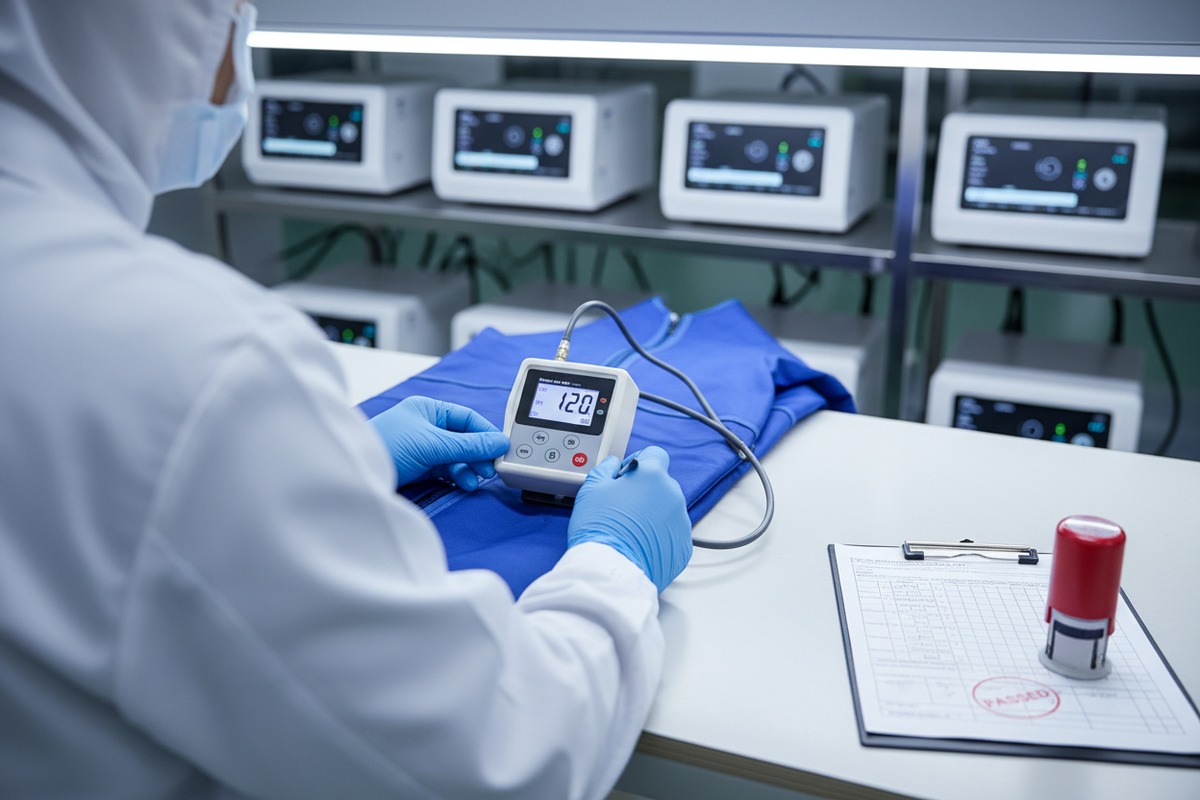
Understanding Pressotherapy Machine Classification
Pressotherapy machines are classified as Class II medical devices under FDA regulations. They require 510(k) clearance before marketing in the United States. This classification means the FDA considers them moderate-risk devices that need proven safety and effectiveness.
When we evaluate component suppliers for our beauty machines, we start by asking: Does this supplier understand their regulatory obligations? A supplier who treats pressotherapy machines like consumer electronics will likely have gaps in their quality system.
Key Certifications to Verify
| Certification | What It Proves | How to Verify |
|---|---|---|
| ISO 13485:2016 | Quality management system for medical devices | Request certificate and check issuing body accreditation |
| FDA 510(k) Clearance 5 | Device is substantially equivalent to a predicate | Search FDA 510(k) database for clearance letter |
| CE Mark (MDR) | Meets European medical device requirements | Request Declaration of Conformity and Notified Body certificate |
| ISO 14971 | Risk management processes are documented | Ask for risk management file 6 summary |
Inspection Standards That Matter
Our engineers follow ISO 2859-AQL sampling standards 7 for incoming inspections. This standard defines acceptable quality limits and sampling sizes. A supplier using AQL 1.0 for critical defects will catch more problems than one using AQL 4.0.
Ask your supplier these questions:
- What AQL level do you use for critical, major, and minor defects?
- How do you verify incoming components from sub-tier suppliers?
- What in-process checks occur during assembly?
- Who has authority to stop the production line?
Design Controls and CAPA Systems
FDA's Quality System Regulation requires design controls for Class II devices. This means your supplier should have documented design inputs, design outputs, design verification, and design validation. Without these controls, defects can be designed into products from the start.
Corrective and Preventive Action (CAPA) systems show how a supplier learns from problems. Request CAPA statistics—how many CAPAs opened in the past year? How quickly were they closed? A supplier with zero CAPAs is either hiding problems or not looking for them.
What specific protocols should be in my manufacturer's recall plan to protect my brand's reputation?
Running our export operations, we've seen how a poorly managed recall can destroy years of brand-building. When a customer in the US receives a faulty pressotherapy unit, they don't blame the Chinese manufacturer—they blame the brand on the label. Your recall plan must protect your reputation from day one.
Your manufacturer's recall plan should include a designated recall coordinator, health hazard classification procedures, product traceability down to lot/serial level, notification templates for regulators and customers, quarantine and return logistics, root cause analysis protocols, and defined timelines for each recall phase. Demand written SLAs with response time commitments.
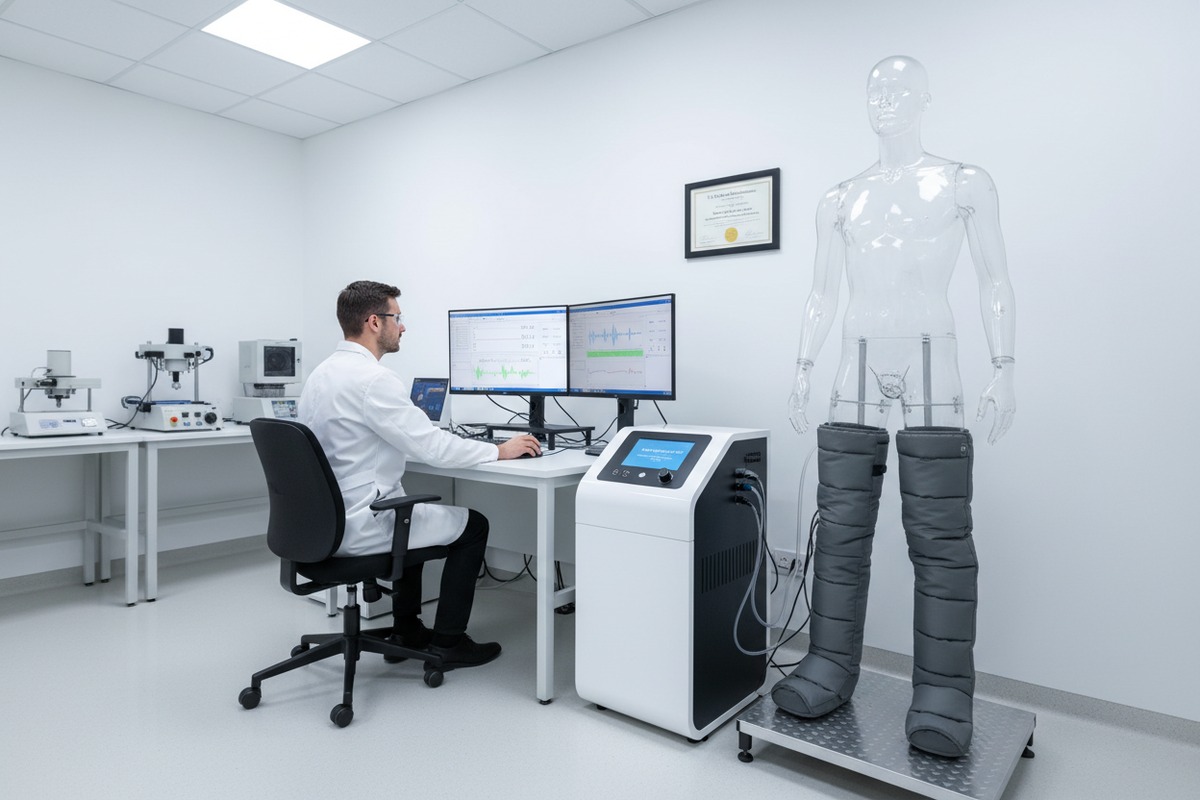
The Anatomy of a Proper Recall Plan
A recall plan is not a single document. It's a system with multiple interconnected procedures. Here's what we require from our own supply chain partners:
1. Recall Team Structure
The plan must name specific people—not just job titles. Who leads the recall? Who contacts regulators? Who handles customer communications? Our experience shows that vague responsibility assignments cause delays when recalls happen.
2. Health Hazard Evaluation Process
FDA classifies recalls into three classes based on health risk. Class I recalls involve products that could cause serious harm or death. Class II recalls involve products that may cause temporary health problems. Class III recalls involve products unlikely to cause health issues.
Your supplier needs a documented process to evaluate hazards and classify recalls correctly. This evaluation should consider documented injuries, likelihood of harm, and affected populations.
Communication Protocols That Save Brands
| Communication Type | Timeline | Responsible Party | Template Required? |
|---|---|---|---|
| Internal alert | Within 24 hours of defect discovery | Quality Manager | Yes |
| FDA/regulatory notification | Within 10 working days | Regulatory Affairs | Yes |
| Distributor notification | Within 48 hours of recall decision | Sales/Operations | Yes |
| End-user notification | Within 72 hours of recall decision | Marketing/PR | Yes |
| Press release (if needed) | Before public disclosure | Executive Team | Yes |
Traceability Requirements
FDA requires manufacturers to use sufficient coding of regulated products to make possible positive lot identification. This means every pressotherapy machine should have a traceable lot number or serial number.
When we ship our beauty machines, we record which serial numbers went to which customer, on which date, via which shipping method. If a recall happens, we can tell within hours exactly which units are affected and where they are.
Ask your supplier:
- Can you provide a distribution list within 24 hours of a recall request?
- How far back do your traceability records go?
- Do your records identify sub-component lot numbers?
Mock Recall Drills
The worst time to test a recall plan is during an actual recall. We conduct annual mock recall drills with our key suppliers. These drills reveal gaps in traceability, communication delays, and unclear responsibilities.
Request evidence that your supplier has conducted mock recalls. Ask for the drill reports. Did they achieve 100% traceability within their target timeframe? If not, what corrective actions did they implement?
How can I confirm my supplier has the financial and logistical capacity to manage a large-scale return?
One of the hardest lessons we learned early in our business was that a supplier's willingness to manage a recall means nothing without the capacity to execute. A pressotherapy machine recall could involve hundreds or thousands of units spread across multiple countries. The logistics and financial burden can overwhelm underprepared suppliers.
To confirm recall capacity, verify your supplier's product liability insurance coverage (minimum $2-5 million recommended), review their reverse logistics network, negotiate warranty terms (12-24 months standard), establish financial penalties for non-compliance in contracts, and require evidence of spare parts inventory commitments. Suppliers should demonstrate cash reserves or credit facilities for recall-related expenses.
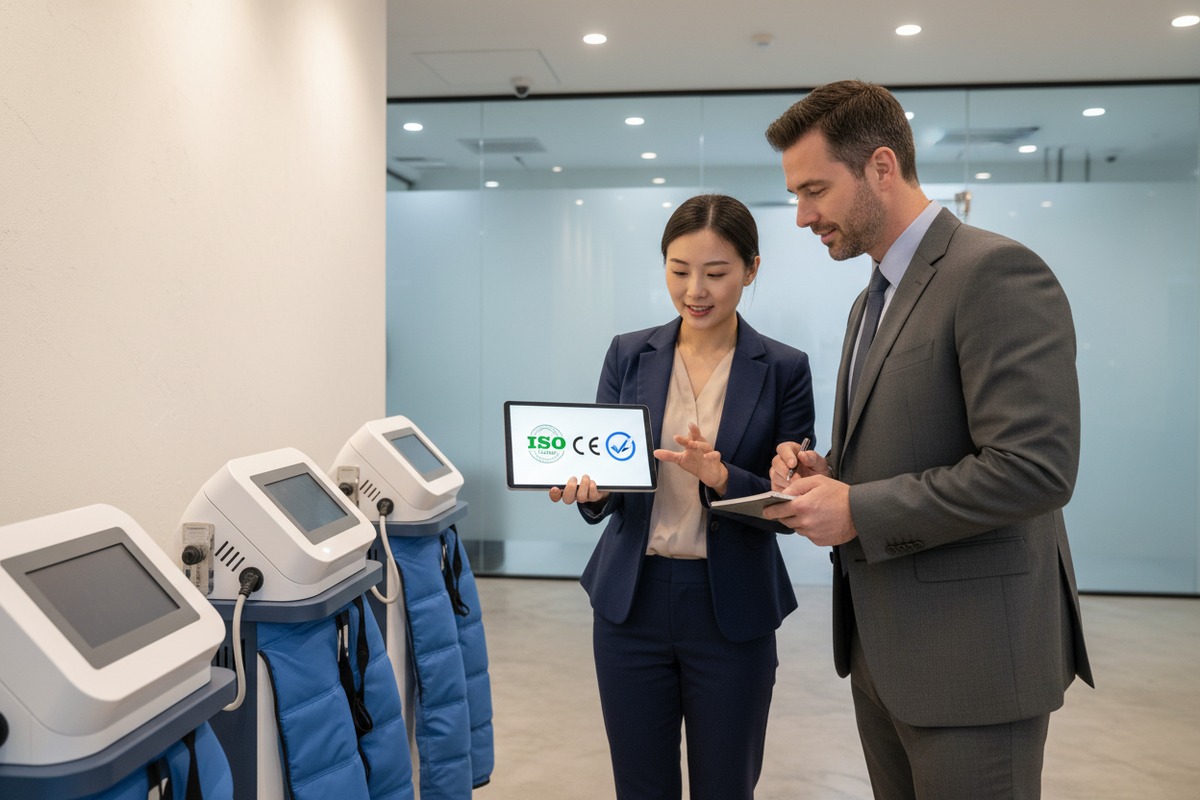
Financial Capacity Assessment
A recall involves direct costs that can quickly add up:
- Return shipping (often international)
- Inspection and testing of returned units
- Repair, replacement, or refund costs
- Customer support staffing
- Regulatory compliance activities
- Legal fees
When we negotiate contracts with overseas suppliers, we ask for evidence of financial stability. This might include audited financial statements, bank references, or proof of insurance coverage.
Insurance Requirements
| Insurance Type | Minimum Coverage | What It Protects Against |
|---|---|---|
| Product Liability | $2-5 million | Claims from device-related injuries |
| General Liability | $1-2 million | Third-party property damage, general claims |
| Professional Liability | $1 million | Errors in professional services |
| Recall Insurance | Varies by volume | Costs of executing a recall |
Recall insurance is often overlooked. This coverage specifically addresses the costs of retrieving, repairing, or replacing defective products. Not all suppliers carry it. Ask directly.
Reverse Logistics Network
Managing returns from multiple countries requires infrastructure. Questions to ask:
Domestic returns: Does the supplier have a designated return center? What is the address? Who receives and inspects returned units?
International returns: Does the supplier work with freight forwarders who handle recall shipments? What are the customs procedures for returned medical devices?
Quarantine procedures: Where are returned units stored? How are they segregated from production inventory?
Warranty and SLA Negotiation
Our standard contracts include these protections:
- Warranty period: 12-24 months is standard for professional pressotherapy machines
- Spare parts commitment: Supplier must maintain spare parts availability for 5+ years
- Response time SLA: Maximum 48 hours to acknowledge a quality complaint
- Replacement timeline: Maximum 2-4 weeks for replacement units
- Financial penalties: Percentage discount on future orders for SLA breaches
Capacity Reservation Agreements
For bulk purchases, we negotiate capacity reservations. This means the supplier commits to holding production capacity and spare parts inventory for potential replacement needs. Lead times of 6-16 weeks are common for pressotherapy machines. Without reserved capacity, a recall could leave customers waiting months for replacements.
What technical documentation should I demand to ensure my supplier can resolve product failures quickly?
When our engineers troubleshoot a returned unit, the speed of diagnosis depends entirely on documentation quality. Poor documentation turns a simple repair into weeks of guesswork. For pressotherapy machines with electronic control units, software, and pneumatic systems, comprehensive technical documentation is essential.
Demand these technical documents: complete design history files, risk management files (per ISO 14971), device master records, manufacturing process specifications, software documentation (if applicable), component specifications with approved supplier lists, test protocols and acceptance criteria, and service manuals with troubleshooting flowcharts. This documentation enables rapid root cause analysis and defect resolution.

Essential Documentation Categories
Technical documentation serves multiple purposes: regulatory compliance, manufacturing consistency, service support, and recall investigation. Here's what each document type should contain:
Design History File (DHF)
The DHF records the design and development process. Design History File (DHF) 9 For pressotherapy machines, this includes:
- User needs and design inputs
- Design specifications (pressure ranges, chamber timing, safety limits)
- Design verification testing (did the design meet specifications?)
- Design validation (does the device work for intended users?)
- Design reviews at each development stage
Risk Management File
ISO 14971 requires a risk management file that documents all identified hazards, their severity and probability, and the controls implemented to reduce risks. For pressotherapy machines, common risks include:
- Excessive pressure causing tissue damage
- Electrical hazards from the control unit
- Tubing disconnection causing therapy interruption
- Software malfunctions affecting pressure delivery
Device Master Record (DMR)
The DMR contains everything needed to manufacture the device consistently:
| DMR Component | Contents |
|---|---|
| Device specifications | Complete technical specifications |
| Production process specs | Step-by-step manufacturing procedures |
| Quality assurance procedures | Inspection points and acceptance criteria |
| Packaging and labeling specs | Materials, artwork, languages |
| Installation and service procedures | Setup and maintenance instructions |
Software Documentation
Modern pressotherapy machines include microprocessors that control pressure delivery, timing, and alarms. If your supplier's device has software, demand:
- Software requirements specification
- Software design specification
- Software verification and validation reports
- Cybersecurity risk assessment
- Procedures for deploying software updates
The 3M Prevena Plus recall highlighted software-related issues—leak alarms activating without actual leaks. Proper software documentation helps identify such issues quickly.
Troubleshooting Support
Beyond design documentation, you need service documentation that enables field repairs:
Service manual contents:
- Exploded view diagrams of all assemblies
- Troubleshooting flowcharts for common symptoms
- Calibration procedures
- Replacement part numbers and sources
- Electrical schematics and pneumatic diagrams
Remote diagnostic capability: Some modern pressotherapy machines support remote diagnostics. If connected to telehealth platforms, the supplier should document how to identify affected devices remotely and whether firmware can be updated over-the-air.
Data Privacy Considerations
Pressotherapy machines may store treatment parameters or usage history. If the device collects any user data, the recall plan must address data security during returns. Devices should be wiped before disposal or refurbishment. The supplier must document these procedures.
Conclusion
Evaluating supplier recall contingency plans is not optional when sourcing pressotherapy machines. From verifying ISO 13485 certification to demanding complete technical documentation, each step protects your brand and your customers. Use this guide as your recall-proof sourcing checklist. The time to prepare is before you sign the contract—not after a recall notice arrives.
Footnotes
1. Provides official details of the 3M Prevena Plus therapy unit recall, including the reason and actions. ↩︎
2. Replaced with the direct FDA regulation (21 CFR Part 820.181) on Device Master Record. ↩︎
3. Explains the FDA’s classification of medical device recalls, including Class II, based on health hazard. ↩︎
4. Replaced with a reputable insurance agency providing product liability insurance for medical devices. ↩︎
5. Explains FDA 510(k) clearance as a premarket notification process for medical devices to ensure safety and effectiveness. ↩︎
6. Replaced with an authoritative source (BSI) discussing ISO 14971 and risk management for medical devices. ↩︎
7. Replaced with an authoritative source (BSI) for ISO 2859-1, avoiding PDFs. ↩︎
8. Defines ISO 13485 as an international standard for quality management systems in the medical device industry. ↩︎
9. Replaced with the direct FDA regulation (21 CFR Part 820.30) on Design Controls, which includes DHF requirements. ↩︎

 English
 Español de México
 Deutsch
 Français
 العربية
 Русский
