

In our years of developing aesthetic technology, we have seen enthusiasm for new devices turn into frustration when shipments get stuck at borders due to paperwork errors NANDO database 1. Sourcing advanced equipment requires more than just finding a good price; it demands a partner who understands the complex web of international compliance.
To evaluate supplier certification support, you must verify the authenticity of their documents against official government databases, confirm that the scope of their certification covers your intended use, and assess their ability to provide technical files like EMC reports and biocompatibility data. A reliable supplier will actively guide you through regulatory hurdles rather than just sending a PDF.
Let’s examine the specific steps you need to take to ensure your investment is safe and compliant.
How can I verify if a supplier's pressotherapy machine certifications are authentic and valid for my specific market?
When we assist new clients who have previously struggled with other vendors, we often find that their “certified” machines were backed by expired or forged documents EMC (Electromagnetic Compatibility) Test Report 2. Real compliance is verifiable, and we always encourage buyers to look behind the curtain of a digital certificate.
You can verify authenticity by requesting the unique certificate number and cross-referencing it with the issuing body’s official online database, such as the FDA Device Listing or the NANDO database for European CE marks. Never accept a screenshot; always demand the full PDF report and independently validate the testing laboratory’s accreditation.
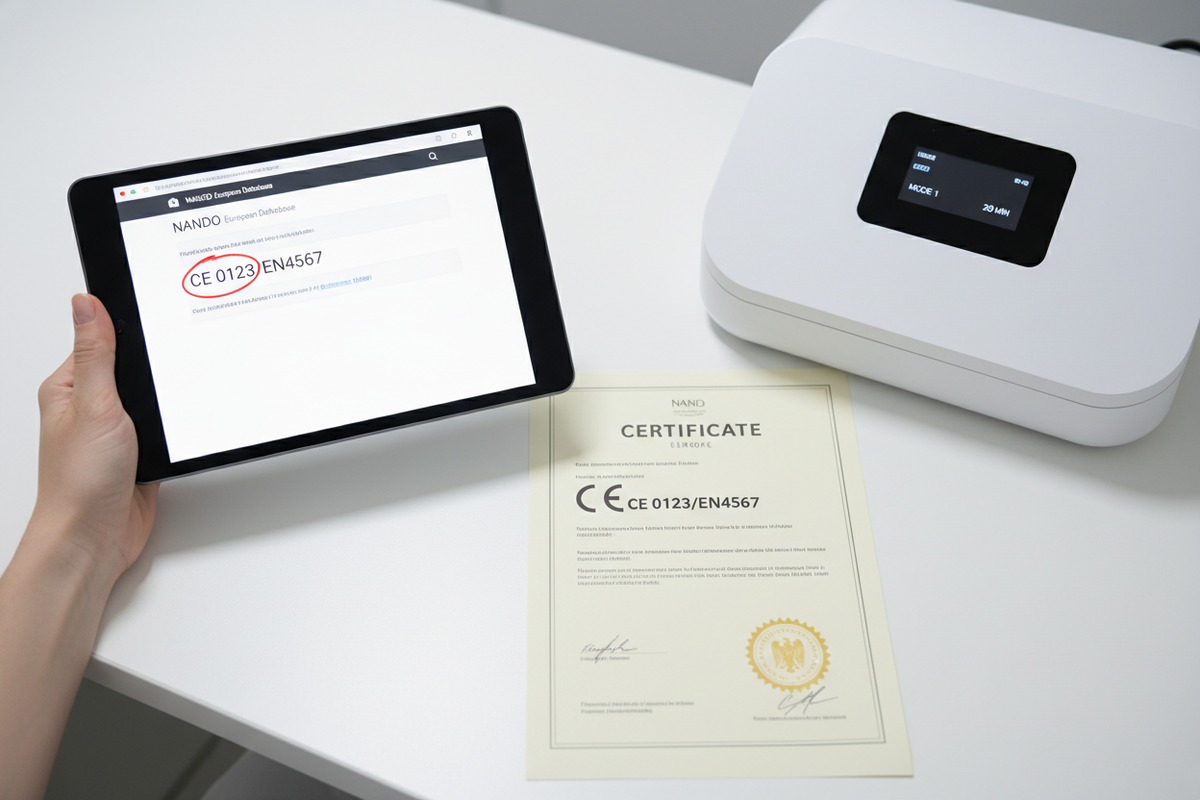
The Danger of "Photoshop Compliance"
In the medical and aesthetic device industry, "fake certificates" are unfortunately common LVD (Low Voltage Directive) Safety Report 3. A supplier might send you a document that looks official, stamped with a generic "CE" or "FDA" logo, but it may hold no legal weight. Authentic certification is not just a piece of paper; it is a digital footprint in a regulatory body's system Biocompatibility Reports (ISO 10993) 4.
To protect your business, you must perform due diligence. We recommend a three-step verification process for every pressotherapy unit you intend to import.
Step 1: Identify the Notified Body or Agency
For European markets, a CE certificate is issued by a "Notified Body 5" (NB). Each NB has a four-digit identification number (e.g., CE 0123). If a supplier sends you a Declaration of Conformity 6 without a Notified Body number for a medical device, it is a red flag. For the US market, the FDA does not issue "certificates" in the traditional sense; they issue registration numbers and 510(k) clearance letters.
Step 2: Use Official Verification Portals
Do not rely on a link provided by the supplier. Go directly to the source.
Table 1: Official Verification Databases for Major Markets
| Region | Certification Type | Official Database / Verification Method | What to Search |
|---|---|---|---|
| USA | FDA Registration | FDA Establishment Registration & Device Listing Database | Owner/Operator Number or Proprietary Name |
| USA | FDA 510(k) | FDA 510(k) Premarket Notification Database | 510(k) Number (usually starts with K) |
| EU | CE (Medical) | NANDO (New Approach Notified and Designated Organisations) | Notified Body Number on the cert |
| EU | CE (LVD/EMC) | Issuer's Website (e.g., TUV, SGS, Intertek) | Certificate Number or Test Report Number |
| Canada | MDL | Health Canada MDALL (Medical Devices Active License Listing) | Company Name or Device Name |
Step 3: Check the Scope and Model Name
A common trick is for a supplier to show a valid certificate for "Model A" while selling you "Model B," claiming they are the same series. Regulatory bodies are strict about this. If the model number on your invoice does not match the model number on the certificate or test report, customs can seize the goods. We ensure our technical files list every variation of our pressotherapy systems to prevent this exact issue.
Distinguishing Between Medical and Non-Medical
Pressotherapy machines often straddle the line between "wellness" and "medical."
- Medical CE (MDR): Required if the device claims to treat specific diseases (e.g., lymphedema).
- Standard CE (LVD/EMC): Sufficient for general wellness or beauty devices that do not make medical claims.
- FDA Class I vs. II: Most simple massagers are Class I (exempt from 510k), but devices with specific compression cycles for medical therapy are Class II.
If a supplier claims their device cures medical conditions but only provides a standard Low Voltage Directive (LVD) certificate, they are non-compliant.
Will my private label brand be fully covered under the manufacturer’s existing pressotherapy certifications?
Many of our OEM partners assume that simply putting their logo on our standard chassis automatically transfers our regulatory approval to their brand. This is a dangerous misconception that we clarify early in the design phase to avoid legal liabilities down the road.
Your private label brand is not automatically covered; usually, you must act as a “Own Brand Labeler” or “Private Label Distributor.” This requires either establishing a contractual relationship where the manufacturer’s certificate extends to your brand or filing a new listing that references the manufacturer’s original master file.
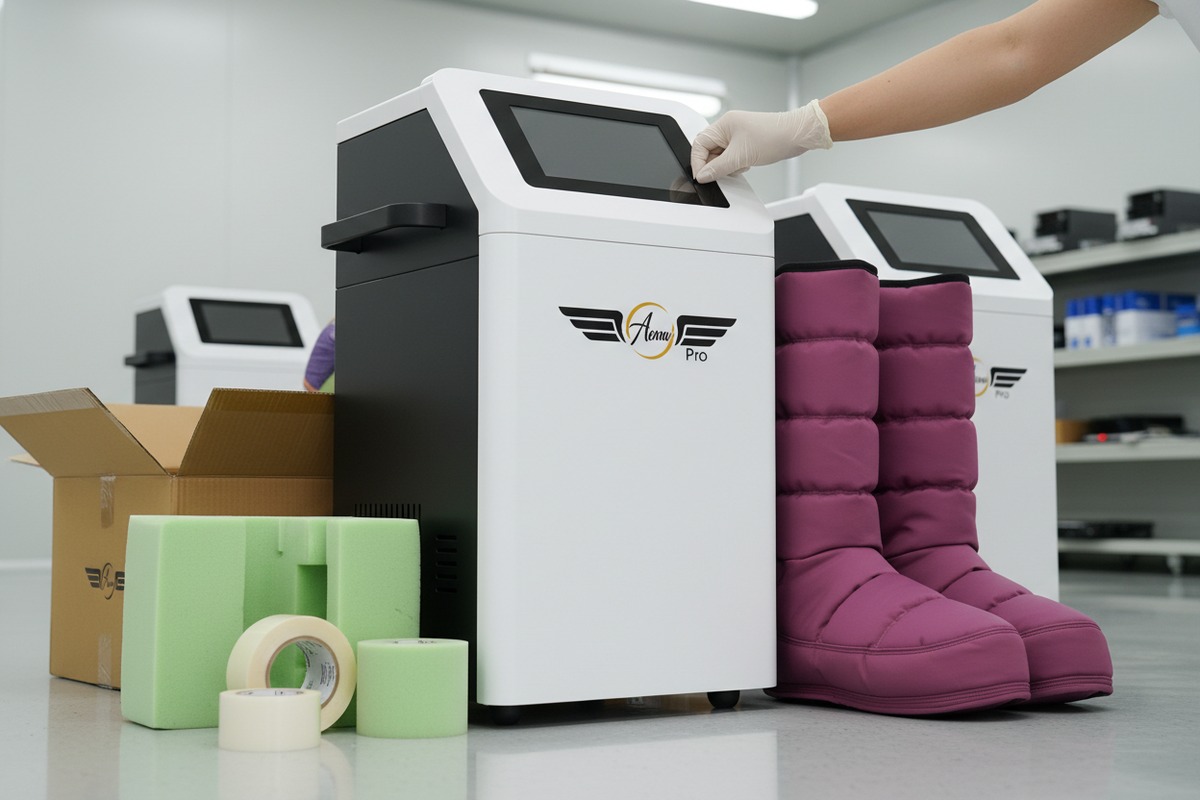
The "Own Brand Labeling" (OBL) Concept
When you import a machine and place your brand name on it, you become the "manufacturer" in the eyes of the law, even if you did not tighten a single screw. This means you assume responsibility for the device's safety.
If you use our existing KMSLASER certifications, the documentation at customs must link your brand to our manufacturing facility. If the paperwork shows "YourBrand Inc." as the manufacturer but the certificate belongs to "KMSLASER Co., Ltd.," customs officers will flag the discrepancy.
Three Common Pathways for Private Label Compliance
-
Direct Import (Distributor Model):
You keep the manufacturer's brand or model name on the back label (rating label), even if the front logo is yours. The user manual and box list the original manufacturer. This is the easiest path as the original certificates apply directly. -
Multiple Listing (USA – FDA):
For FDA Class II devices, we can authorize a "Multiple Listing." This allows you to sell the device under your own trade name and model number, while linking back to our 510(k) clearance number. This creates a legal bridge between your brand and our regulatory approval. -
OBL Agreement (Europe – CE):
Under the new Medical Device Regulation (MDR) 7, OBL has become much stricter. You typically need your own Quality Management System (ISO 13485) 8 and must hold the full technical file. Simply "borrowing" the factory's CE mark is no longer as simple as it was under the old MDD directives.
Responsibility Matrix
It is crucial to define who handles what. We use a responsibility matrix with our partners to ensure no gaps exist.
Table 2: Manufacturer vs. Brand Owner Regulatory Responsibilities
| Responsibility | Original Manufacturer (Factory) | Private Label Brand Owner (You) |
|---|---|---|
| Technical File Creation | Responsible (Design & Testing) | Must ensure access/availability |
| Device Listing (FDA) | Registers the facility | Registers as the "Initial Importer" |
| User Manual | Provides base content | Customizes (Must not change safety claims) |
| Adverse Event Reporting | Investigates root cause | First point of contact for users |
| Certificate Renewal | Pays for annual audits | Verifies status annually |
Marketing Claims vs. Certified Scope
A common pitfall occurs when a private label brand changes the marketing language. If our pressotherapy machine is certified for "improving circulation," but you market it for "weight loss" or "cellulite reduction," you have altered the "Intended Use."
Changing the intended use voids the original certification. The regulatory approval is tied specifically to the claims made during testing. As a supplier, we provide the "Intended Use Statement" that was cleared by regulators. Your marketing materials must align strictly with this statement to remain covered by our certification.
What specific regulatory documentation should I demand to ensure my imported machines meet US and European safety standards?
We train our sales team to proactively offer a “Technical Compliance Pack” before a client even asks, because we know that scrambling for documents during a customs hold is a nightmare. A professional buyer knows exactly which files to demand to prove the equipment is safe and legal.
You should strictly demand a complete technical dossier including the EMC (Electromagnetic Compatibility) Test Report, LVD (Low Voltage Directive) Safety Report, the Declaration of Conformity (DoC) signed by the manufacturer, and for the US market, proof of FDA Establishment Registration and Device Listing.

The Core Technical Trinity: EMC, LVD, and RoHS
For any electrical beauty equipment entering the US or EU, three pillars of safety testing are non-negotiable.
1. EMC Report (Electromagnetic Compatibility)
This proves that your pressotherapy machine won't interfere with other electronics (like Wi-Fi or medical monitors) and won't be disrupted by them.
- Why you need it: Customs often request this to ensure the device meets FCC (USA) or CE-EMC (Europe) standards.
2. LVD Report (Low Voltage Directive) / Electrical Safety
This is the most critical safety document. It verifies that the machine won't electrocute the client or catch fire. It covers insulation, grounding, and power supply safety.
- What to look for: Ensure the report cites the correct standard (e.g., IEC 60601-1 for medical devices or IEC 60335 for household/beauty appliances).
3. RoHS (Restriction of Hazardous Substances)
This certifies that the materials (plastic, paint, circuit boards) do not contain lead, mercury, or other toxic heavy metals. RoHS (Restriction of Hazardous Substances) 9
- Why you need it: Essential for entering the EU market; increasingly requested in US states like California (Prop 65).
ISO 13485: The Quality Standard
While ISO 13485 is a company-level certification, not a product-level one, it is vital. It proves the factory has a quality management system specifically for medical devices. If a supplier only has ISO 9001 (general manufacturing), they may lack the strict traceability required for medical-grade aesthetic equipment.
Documentation Checklist by Region
Different markets speak different regulatory languages. We use the following checklist to ensure our shipments clear borders smoothly.
Table 3: Essential Regulatory Document Checklist
| Document Name | Purpose | USA Requirement | EU Requirement |
|---|---|---|---|
| Declaration of Conformity (DoC) | Manufacturer's legal promise of compliance | Not standard (uses FDA Listing) | Mandatory |
| 510(k) Summary | Proof of FDA clearance for Class II devices | Mandatory (if Class II) | N/A |
| FDA Device Listing | Proof the specific item is registered | Mandatory | N/A |
| IEC 60601-1 Test Report | Electrical safety test data | Optional (but recommended) | Mandatory (for CE Medical) |
| Clinical Evaluation Report (CER) | Proof of clinical efficacy/safety | FDA Data | Mandatory (MDR) |
| User Manual | Instructions for safe use | Must be in English | Must be in local language |
Biocompatibility Reports
Since pressotherapy involves sleeves (garments) that touch the skin directly, you should also ask for Biocompatibility Reports (ISO 10993). This ensures the fabric and plastics do not cause skin irritation, sensitization, or allergic reactions. Many low-cost suppliers skip this test, but it is critical for liability protection if a client develops a rash.
How does a supplier’s certification support help me minimize risks during customs clearance and quality inspections?
We recall a situation where a new customer came to us after their previous shipment was detained for three weeks because the HS code didn’t match the product description. Efficient logistics isn’t just about shipping speed; it’s about the precision of the compliance data attached to that shipment.
A proactive supplier minimizes risk by providing accurate Harmonized System (HS) codes linked to valid certifications, offering 24/7 response to customs inquiries, and preparing “Compliance Bundles” that preemptively answer inspector questions, thereby avoiding costly storage fees and rejection.
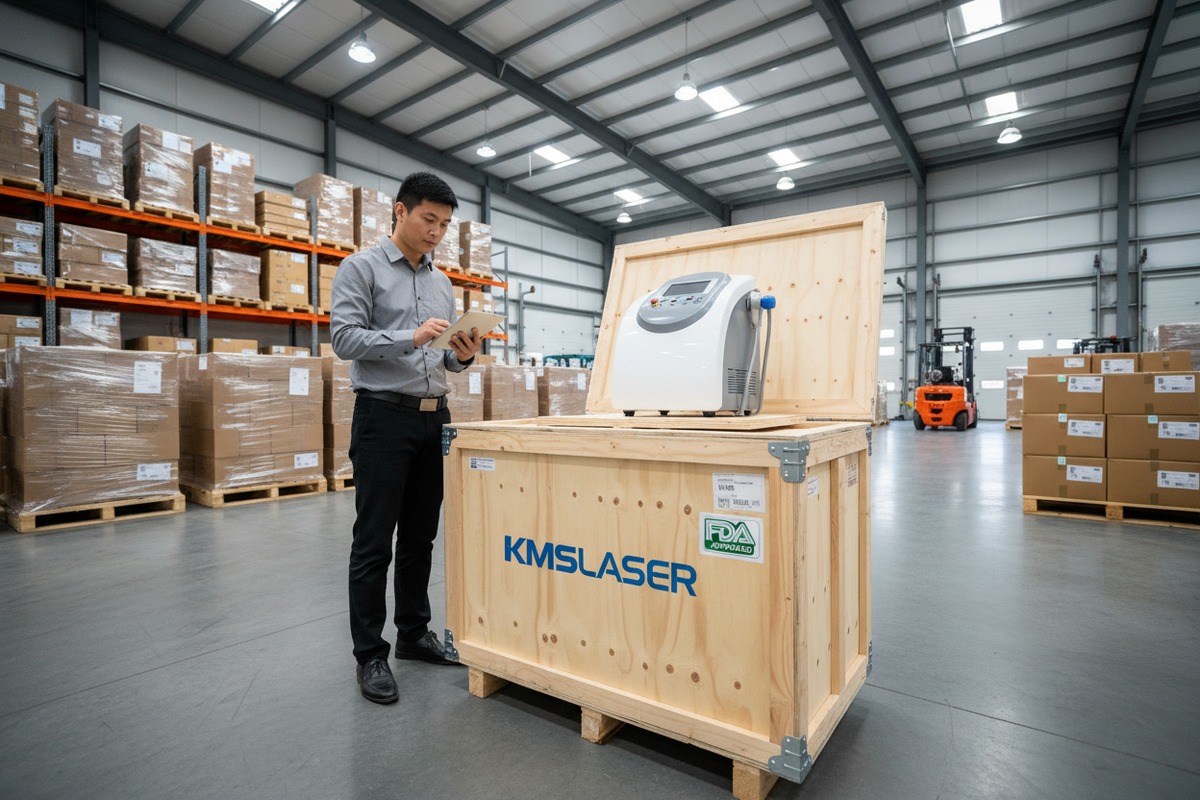
The High Cost of Customs Holds
When a container is flagged by customs (e.g., US Customs and Border Protection or EU Customs), it goes into a "hold." During this time, you are charged daily storage fees. If the FDA or CE compliance cannot be proven within a short window (usually 5-10 days), the goods may be seized or returned to origin at your expense.
A supplier with strong certification support prevents this by:
- Correct HS Code Classification: Pressotherapy machines can be tricky. Are they "Massage Apparatus" (9019.10) or "Medical Instruments" (9018.90)? The classification determines the duty rate and the required certifications. We advise clients on the code that matches the device's certified intended use to avoid "misclassification" fines.
- Pre-Alerting Compliance: We attach the FDA Device Listing 10 number and the Manufacturer’s Registration number directly to the commercial invoice and packing list. This allows customs officers to validate the shipment electronically before physically inspecting the box.
Handling Quality Inspections
Sometimes, customs will physically inspect the goods to see if the product matches the paperwork.
- Labeling Consistency: The most common reason for rejection is bad labeling. The back label on the machine must match the invoice exactly. If the invoice says "Pressotherapy System S1" but the machine label says "Lymph Drainage Unit," it gets stuck.
- Traceability: If an inspector opens a box, they look for serial numbers. A good supplier uses a robust serial number system that traces back to the production batch and the specific quality control (QC) report.
The "Crisis Response" Capability
Even with perfect paperwork, questions arise.
- Scenario: An FDA officer asks, "Does this device emit radiation?"
- Weak Supplier: Takes 3 days to reply or says "I don't know." Result: Shipment delayed.
- Strong Supplier: Replies within 2 hours with the EMC report showing zero emission risk.
We maintain a digital archive of every shipped unit. If a client calls from the port saying, "They need the battery safety sheet (MSDS) right now," we can email it instantly. This responsiveness is part of the "certification support" package. It is not just about having the document; it is about accessing it when the clock is ticking.
Third-Party Inspection Support
Many of our wholesale clients hire agencies like SGS or Intertek for pre-shipment inspections. A supportive supplier welcomes these inspections. We provide the inspectors with the "Master Sample" and the technical files so they can verify that the mass production units match the certified prototype. If a supplier refuses a third-party inspection or claims "trade secrets" to hide the internal components, it is a major warning sign that the certification might not apply to the actual goods being shipped.
Conclusion
Sourcing pressotherapy machines involves more than selecting a sleek design; it requires a rigorous evaluation of the regulatory framework supporting that device. By verifying the authenticity of certificates via official databases, ensuring your private label is legally connected to the manufacturer’s approvals, and demanding a full suite of technical reports (EMC, LVD, RoHS), you protect your business from legal risks and customs disasters. A supplier who offers transparent, organized, and rapid certification support is not just a vendor but a strategic partner in your long-term growth.
Footnotes
1. Official European Commission database for Notified Bodies and CE marks. ↩︎
2. Explains the purpose, contents, and importance of an Electromagnetic Compatibility (EMC) test report. ↩︎
3. Official European Union directive ensuring electrical equipment safety within specified voltage limits. ↩︎
4. Explains ISO 10993 standards for biological evaluation and biocompatibility testing of medical devices. ↩︎
5. Explains the role of a Notified Body in EU conformity assessment and CE marking. ↩︎
6. Official EU portal page explaining the EU Declaration of Conformity. ↩︎
7. Official European Union regulation governing the manufacturing and distribution of medical devices. ↩︎
8. Explains ISO 13485, the international standard for quality management systems in medical devices. ↩︎
9. Official European Union directive restricting hazardous substances in electrical and electronic equipment. ↩︎
10. Official FDA database for verifying medical device establishment registration and device listings. ↩︎

 English
  Español de México
  Deutsch
  Français
  العربية
  Русский