

When our engineering team first started developing pressotherapy systems over a decade ago, we quickly realized that the chassis is not just a shell—it is the foundation of every machine’s reliability Design for Manufacturability (DFM) consultation 1. Many buyers focus on the sleeves or the control panel, but without a robust, precisely engineered chassis, the entire system fails under daily spa use. The problem is clear: a weak chassis leads to air leaks, misaligned components, and costly warranty claims.
To evaluate custom chassis tooling capability, demand ISO 13485 certification, verify CNC machining tolerances of ±0.005 mm or tighter, request prototype samples before mass production, and ensure the supplier offers Design for Manufacturability (DFM) consultation. A capable supplier integrates precision engineering with scalable production to deliver durable, brand-ready pressotherapy machine frames.
This guide breaks down the key evaluation criteria for custom chassis sourcing ISO 9001 certification 2. You will learn how to assess engineering precision, explore mold customization options, establish quality control checkpoints, and prepare your chassis for safe international shipping.
How do I evaluate the engineering precision of a supplier's custom chassis tooling for my pressotherapy machines?
In our experience exporting to the US and Europe, we have seen buyers receive chassis parts that simply do not fit Quality Management System (QMS) 3. Mounting holes are misaligned. Sealing surfaces warp under pressure. These are signs of poor tooling precision. The result? Delayed production and frustrated end users.
Evaluate engineering precision by reviewing the supplier’s CNC machining tolerances, verifying ISO 13485 or ISO 9001 certification, requesting first-article inspection reports, and testing prototype chassis for fit with pumps, valves, and control boards. Tolerances of ±0.005 mm or better ensure reliable assembly and long-term performance.

Why Tolerances Matter in Pressotherapy Chassis
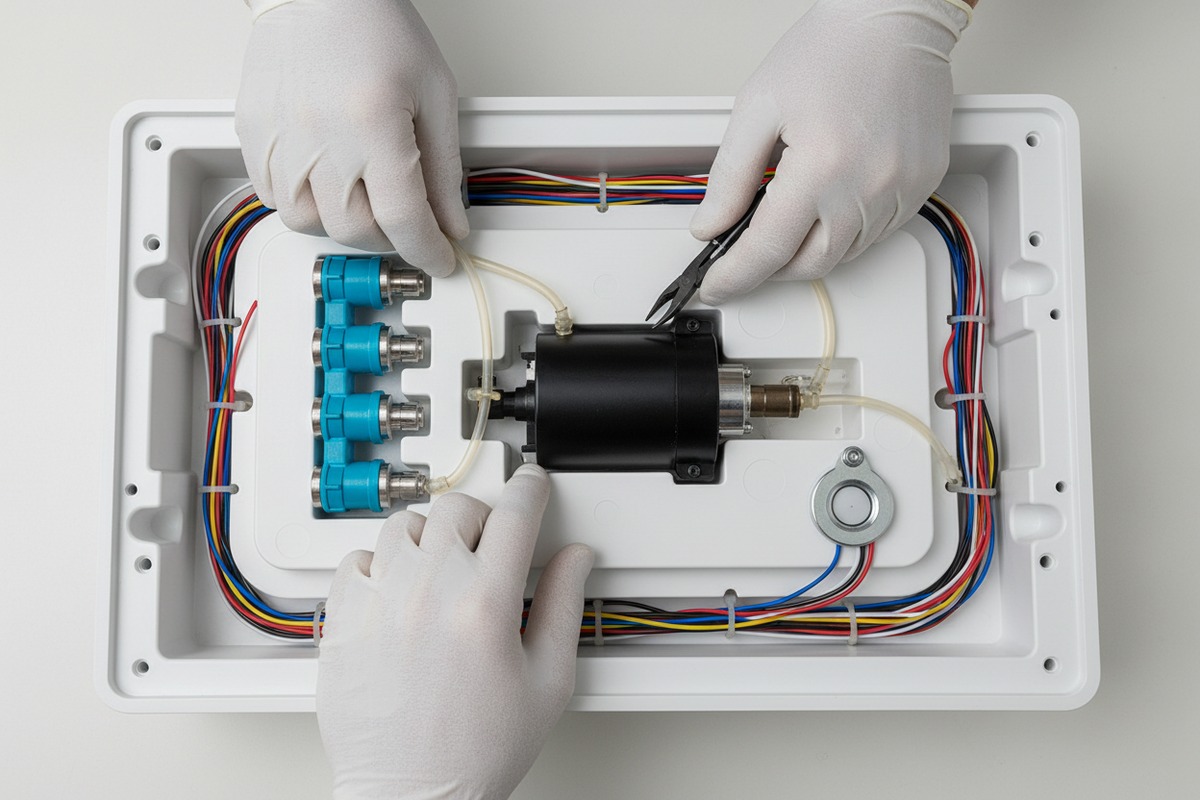
A pressotherapy machine houses pumps, valves, control boards, and pneumatic connectors. Each component must fit precisely. If the chassis holes are off by even 0.5 mm, the pump may vibrate loose. If sealing surfaces are uneven, air leaks occur. Patients feel inconsistent pressure. Clinics lose trust in your brand.
Modern CNC machining achieves tolerances as tight as ±0.0005 inches, with medical applications often demanding ±0.005 mm or better. These tolerances ensure that mounting holes align within ±0.005 inches and sealing surfaces remain flat within 0.010 inches. This level of precision directly impacts patient safety and device functionality.
Key Certifications to Verify
| Certification | What It Covers | Why It Matters |
|---|---|---|
| ISO 13485 | Medical device quality management | Ensures compliance with medical device regulations |
| ISO 9001 | General quality management | Indicates process control and documentation |
| CE Marking 4 | European safety standards | Required for EU market entry |
| FDA Registration 5 | US medical device compliance | Needed for US distribution |
Our manufacturing facility has achieved ISO 13485 and MDSAP certifications, which demonstrates adherence to the strictest medical device standards. When you source from a certified supplier, you gain traceability, documented processes, and consistent quality.
The Prototype Test: Your First Line of Defense
Never skip the prototype stage. Request a first-article sample before committing to mass production. Test the prototype with your actual components—pumps, control boards, air connectors. Check these points:
- Do mounting holes align without forcing?
- Is the sealing surface flat under a precision gauge?
- Can you assemble the unit without modification?
- Does the chassis fit within your packaging dimensions?
When we calibrate our tooling, we run dimensional inspections using coordinate measuring machines (CMM) 6. This ensures every critical interface dimension stays within ±0.005 inches.
Material Selection for Medical-Grade Durability
Medical device enclosures demand materials that withstand daily use, cleaning, and occasional impacts. Common choices include:
| Material | Properties | Common Use |
|---|---|---|
| Aluminum 6061/7075 | Lightweight, corrosion-resistant, machinable | Enclosures, structural frames |
| Stainless Steel 316L | Corrosion-resistant, surgical-grade | High-durability housings |
| ABS/Polycarbonate | Impact-resistant, cost-effective | Plastic covers, panels |
| PEEK | Chemical-resistant, heat-tolerant | High-performance components |
All materials should come with full material certificates. Our processes include deburring, ultrasonic cleaning, and passivation to meet medical hygiene standards.
Can I customize the chassis mold to ensure my brand stands out in the market?
We often hear from brand owners who want their machines to look unique, not like every other white-label product on Alibaba. They want their logo etched into the chassis, custom colors, and distinctive shapes. The question is: can suppliers deliver true customization, or just stickers on generic shells?
Yes, you can fully customize the chassis mold. Capable suppliers offer logo etching on the machine body and startup screen, custom colors through anodizing or powder coating, unique enclosure geometries, and branded interface panels. Work with suppliers who provide DFM consultation to balance aesthetics with production cost.
Branding Options for Custom Chassis
Your chassis is the face of your brand. Here are the customization options available:
Logo Integration
- Laser etching on metal surfaces
- Embossing on plastic panels
- Startup screen customization
Color and Finish
- Anodizing for aluminum (multiple colors)
- Powder coating for durability
- Electropolishing for hygienic stainless steel surfaces
Geometry Customization
- Custom enclosure shapes
- Unique port configurations
- Ergonomic handle placements
Your logo can be elegantly integrated into the device's startup screen and etched onto the machine's body, creating a cohesive brand identity that distinguishes your products from competitors.
Injection Molding vs. CNC Machining for Customization
| Factor | Injection Molding | CNC Machining |
|---|---|---|
| Initial Cost | High (mold tooling) | Low to moderate |
| Per-Unit Cost | Low at high volumes | Higher per unit |
| Design Flexibility | Limited after mold creation | Highly flexible |
| Best For | 1,000+ units | Prototypes, low volumes |
| Lead Time | Longer (mold fabrication) | Shorter |
For low to medium volumes (100-500 units), CNC machining offers flexibility without the upfront mold investment. For high volumes (1,000+), injection molding reduces per-unit costs but requires committing to a fixed design.
Design for Manufacturability (DFM) Consultation
A good supplier does not just build what you ask. They improve your design. DFM consultation identifies potential issues before production:
- Can the design be machined efficiently?
- Are wall thicknesses consistent for injection molding?
- Do cooling channels allow proper thermal management?
- Can assembly be simplified?
This collaboration helps you avoid costly redesigns after tooling is complete. When we focus on tooling design and manufacturing strategy, we provide an optimal solution for each product.
Modularity for Future Upgrades
Design your chassis with modularity in mind. A modular chassis allows you to:
- Add FIR (Far Infrared) or EMS modules later
- Upgrade control boards without new enclosures
- Replace components for service without full disassembly
This extends product life and reduces re-tooling costs. Consider standardized mounting points and removable panels from the start.
What quality control steps should I demand to ensure the custom chassis is durable?
On our production line, we have seen what happens when quality control is weak. A batch ships. Three months later, clinics report cracked housings, stripped threads, and air leaks. Warranty claims pile up. Your brand reputation suffers. The root cause? Skipped inspections and inconsistent processes.
Demand a comprehensive Quality Management System (QMS) with documented procedures, in-process inspections at key stages, final dimensional verification using CMM, material traceability, and destructive testing on sample units. Require inspection reports with each shipment and establish clear acceptance criteria before production begins.

The QMS Foundation
A robust QMS ensures consistent quality across every batch. Key elements include:
- Process validation: Proves the manufacturing process consistently produces compliant parts
- Statistical process control: Monitors critical parameters during production
- Change control procedures: Prevents unauthorized modifications
- Full traceability: Links raw materials to finished components
Medical injection molding requires stringent quality management systems (ISO 13485:2016 certified) with comprehensive documentation and traceability throughout production. This same rigor applies to chassis machining.
In-Process Inspection Checkpoints
Quality is not just a final check. It is built into every step:
| Production Stage | Inspection Point | What to Check |
|---|---|---|
| Raw Material Receiving | Material certification review | Alloy composition, hardness |
| Machining Setup | First-article inspection | Critical dimensions |
| Mid-Production | Sampling inspection | Dimensional drift |
| Post-Machining | Surface finish verification | Ra value (roughness) |
| Assembly | Fit and function test | Component compatibility |
| Final | CMM full dimensional scan | All critical features |
All Canta Esthetic machines go through a stringent quality control process and come with a 36-month warranty. This level of commitment requires inspections at every stage.
Destructive Testing for Durability
Some tests require sacrificing sample units. These tests reveal weaknesses that visual inspection misses:
- Pressure cycling: Simulates years of inflation/deflation cycles
- Drop testing: Verifies impact resistance during shipping
- Vibration testing: Ensures components stay secured under transport conditions
- Thermal cycling: Tests dimensional stability across temperature ranges
For pressotherapy chassis that must withstand 30-240 mmHg pressure, vibrations, and daily use, these tests are essential.
Documentation You Should Receive
With every shipment, request:
- Certificate of Conformance (CoC): States the batch meets specifications
- Inspection Report: Includes measurements for critical dimensions
- Material Certificates: Proves material composition
- Process Records: Documents production parameters
- Photos: Visual evidence of inspection points
This documentation supports your regulatory compliance and provides defense if issues arise.
Setting Acceptance Criteria
Before production, agree on specific acceptance criteria:
| Feature | Specification | Tolerance |
|---|---|---|
| Mounting hole position | Per drawing | ±0.005" |
| Sealing surface flatness | 0.010" max | Per spec |
| Wall thickness | 3.0 mm | ±0.25 mm |
| Surface finish | Ra 0.8 μm | Max |
| Thread depth | 8 mm | -0/+0.5 mm |
Clear criteria prevent disputes and ensure everyone agrees on what "acceptable" means.
How will a custom-designed chassis impact my door-to-door shipping and packaging safety?
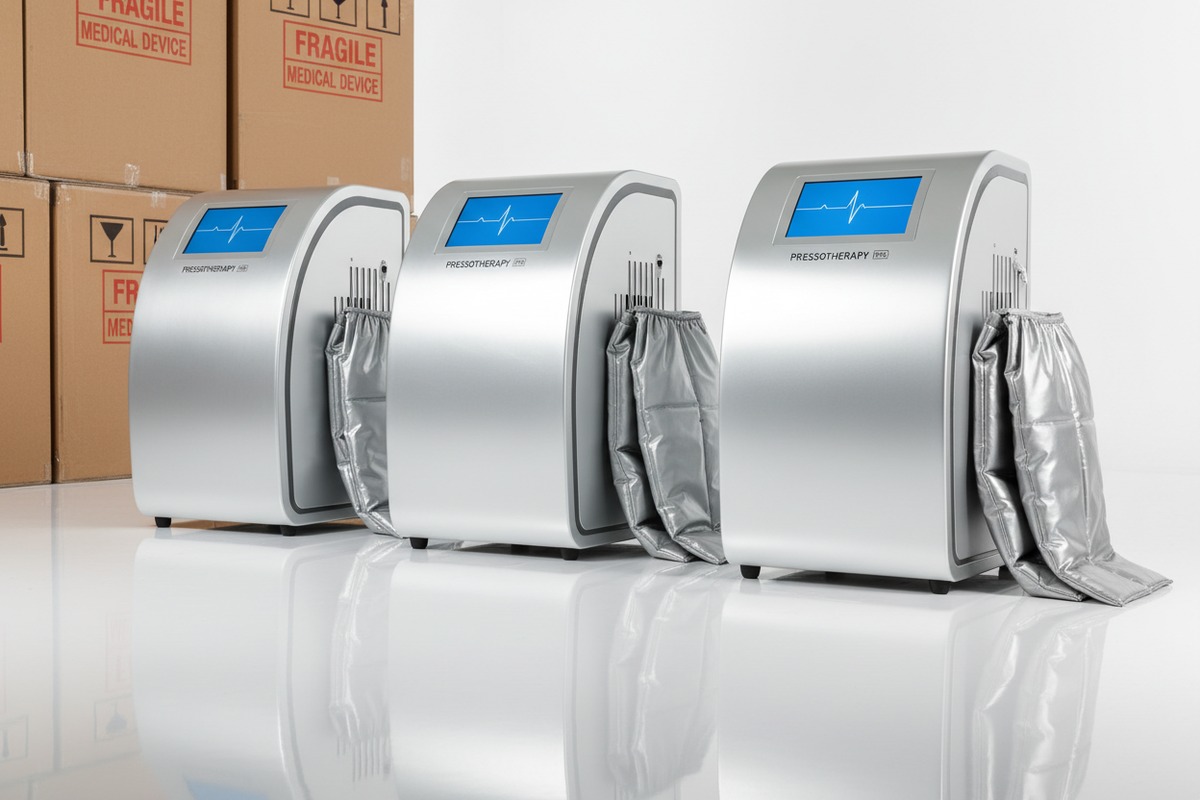
We have shipped thousands of pressotherapy machines to the US, Canada, and Europe. When packaging is wrong, we hear about it—dented enclosures, cracked panels, machines that arrive non-functional. Shipping damage destroys customer trust faster than any other issue. And with custom chassis designs, the packaging challenge becomes more complex.
A custom chassis requires custom packaging. Design foam inserts to match the exact chassis geometry, use corrugated boxes rated for the gross weight, include shock and tilt indicators, and comply with ISPM-15 for international wood packaging. Test packaging through simulated drop and vibration tests before full production shipments.
The Link Between Chassis Design and Packaging
Your chassis shape directly affects packaging requirements. Consider these factors during chassis design:
- External dimensions: Determine box size and shipping costs
- Weight distribution: Affects cushioning placement
- Fragile features: Protruding controls, screens, or connectors need extra protection
- Stacking strength: Can boxes be stacked without crushing?
Right-sizing minimizes material usage and protects equipment during shipping. A chassis designed with packaging in mind saves money on materials and freight.
Packaging Materials for Pressotherapy Machines
| Material | Application | Benefits |
|---|---|---|
| Custom foam inserts | Direct chassis protection | Exact fit, excellent shock absorption |
| Corrugated cardboard | Outer box structure | Lightweight, recyclable, impact-resistant |
| Bubble wrap | Secondary cushioning | Flexible, fills voids |
| Air pillows | Void fill | Lightweight, prevents shifting |
| VCI film | Corrosion protection | Prevents moisture damage |
Foam inserts can be custom-cut to fit the shape of the device, offering excellent cushioning and insulation. This snug fit minimizes movement and absorbs shocks.
Shock and Vibration Protection
Medical shipments face rough handling. Protect your chassis by:
- Custom cushioning: Minimum 2" foam on all sides for fragile electronics
- Double-wall corrugated: For machines over 15 kg
- Shock indicators: Reveals if the package experienced excessive impact
- Tilt indicators: Shows if the box was mishandled during transport
Cushioning and padding serve as a protective barrier, absorbing shocks and vibrations that could otherwise damage the devices.
International Shipping Compliance
For door-to-door shipping to the US and EU, ensure:
- ISPM-15 compliance: Heat-treated wood pallets and crates
- Clear labeling: "Fragile," "This Side Up," handling instructions
- Customs documentation: HS codes, commercial invoices, packing lists
- Temperature considerations: If shipping to extreme climates, add thermal insulation
Without proper compliance, medical shipments can be delayed, rejected, or even destroyed at customs—making it essential to integrate certified packaging solutions from the start.
Drop Test and Vibration Simulation
Before committing to production packaging, test it:
| Test Type | Standard | Purpose |
|---|---|---|
| Drop test | ISTA 2A | Simulates warehouse drops from handling height |
| Vibration test | ASTM D4728 | Simulates truck/rail transport vibration |
| Compression test | ASTM D4169 | Verifies stacking strength |
| Climate test | ASTM D4332 | Tests moisture and temperature effects |
These tests prove your packaging protects the chassis through real shipping conditions. We provide custom crating solutions tailored to meet the unique demands of each product.
Optimizing Dimensions for Freight Cost
Shipping costs are calculated by dimensional weight or actual weight—whichever is greater. A poorly designed chassis with awkward proportions inflates freight costs. Design with these principles:
- Minimize external dimensions while maintaining internal space
- Avoid overhanging features that require oversized boxes
- Balance weight distribution to prevent damage during stacking
- Use modular packaging that nests efficiently on pallets
By considering packaging during chassis design, you reduce per-unit shipping costs and improve delivery reliability.
Conclusion
Evaluating custom chassis tooling capability is critical for pressotherapy machine quality. Verify engineering precision through tolerances and certifications. Explore full customization options for brand differentiation. Demand rigorous quality control at every stage. Design chassis with packaging and shipping safety in mind. The right supplier combines all these capabilities to deliver reliable, market-ready machines.
Footnotes
1. Explains the engineering practice of designing products for easier, cheaper manufacture. ↩︎
2. Official ISO standard for general quality management systems. ↩︎
3. Defines QMS and its importance in ensuring consistent product quality. ↩︎
4. Official information on CE marking for products sold in the European Economic Area. ↩︎
5. Official FDA guidance on medical device registration requirements in the US. ↩︎
6. Provides a comprehensive overview of CMM technology and applications. ↩︎
7. Authoritative source for ISO 13485 medical devices quality management system. ↩︎
8. Explains the methodology of using statistical methods to monitor and control a process. ↩︎
9. Official international standard for regulating wood packaging material in trade. ↩︎

 English
 Español de México
 Deutsch
 Français
 العربية
 Русский
