Working with overseas distributors on OEM and private-label shockwave projects, my team and I often need to prepare formal brand and authorization documents for customs and regulators.
Shockwave therapy machine suppliers can provide brand-licensing documentation, but it is not automatic. Buyers should request clear authorization letters and licensing terms that specify brand ownership, territories, usage scope, and renewal rules to protect both regulatory compliance and commercial rights.
In the sections below, I will explain which documents to request, how to secure legal brand use, what risks to avoid, and how to keep your paperwork up to date.
Does the Shockwave Therapy Machine Supplier Provide Brand-Licensing Documentation?
In many ODM and OEM projects we support, branding is a core topic from the very first call, especially when buyers plan to register devices or sell under a private label.
Most serious suppliers are willing to issue brand-licensing documentation, such as authorization letters and OEM/ODM agreements, but buyers usually need to ask for it explicitly and clarify whether they are using the supplier’s brand, their own brand, or a dual-branding model.

Typical Situations We See in Practice
For shockwave therapy machines, there are usually three branding models:
-
Original Brand Sales
You sell machines under the supplier’s existing brand. -
Private Label / OEM
You place your own brand on the device and packaging. Private Label Rights (PLR) 1 refer to these rights. -
Co-Brand or “Powered by” Model
Your brand dominates the device; the supplier’s brand appears as “powered by” or on the nameplate.
Each model needs a slightly different licensing approach.
When Suppliers Usually Provide Documentation
Most factories are ready to prepare documents when:
- You plan to register the device in your local authority.
- Local customs or regulators require a letter of authorization from the manufacturer, which is a critical document for customs clearance 2.
- You are acting as exclusive or main importer in your territory.
At this stage, you should also align on market protection, annual volume, and who is listed as manufacturer, brand owner, and importer on the paperwork.
Example: When You Must Ask for Brand-Licensing Papers
| Scenario | Needed Documents |
|---|---|
| You sell under supplier’s brand | Brand authorization letter, distribution agreement |
| You sell under your own brand (OEM) | OEM agreement, private-label authorization |
| You register device in your authority | LOA, regulatory support letter, technical files list |
If you never raise the topic, the supplier may assume you only need standard commercial invoices and packing lists, which is not enough once authorities start asking questions.
What Documentation Should You Request for Branding and Licensing?
When we prepare new projects with buyers, I usually suggest a minimum documentation package so they can pass audits, registrations, and marketplace checks with confidence.
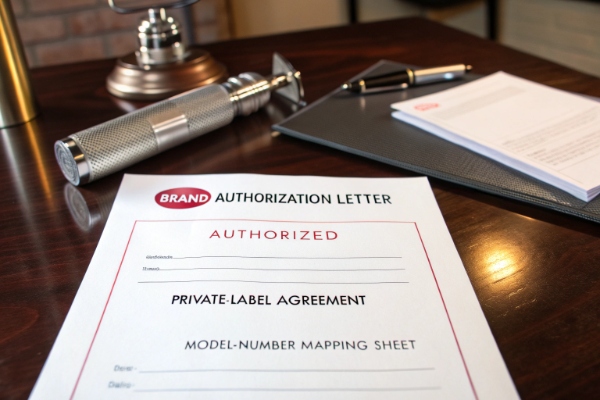
Buyers should request, at minimum, a brand authorization letter 3, an OEM/ODM or licensing agreement that clarifies trademark ownership, and clear model-number mapping showing which brand appears on which product, label, and certificate for each market.
Core Documents to Ask For
1. Brand Authorization Letter (Letter of Authorization, LOA)
This is a formal letter, on the manufacturer’s letterhead, confirming:
- Your company’s legal name and address
- The brand you are allowed to use
- The product models covered
- Territories and validity period
2. OEM / Private-Label Agreement
This contract clarifies:
- Who owns the trademark (usually you)
- How the factory can print and apply your brand
- Whether the supplier can use your brand as a reference in other markets
3. Licensing / Distribution Agreement
If you use the supplier’s brand, this agreement gives you:
- Rights to represent their brand in specified territories
- Rules for logo usage, marketing content, and online listings
Table: Typical Brand-Licensing Document Set
| Document Type | Who Issues It | Main Purpose |
|---|---|---|
| Brand Authorization Letter | Supplier | Prove you are authorized to sell that brand |
| OEM / Private-Label Agreement | Supplier + Buyer | Allow factory to use your brand on the device |
| Licensing / Distribution Contract | Supplier + Buyer | Define brand use, territory, and obligations |
| Logo Guideline / CI Manual | Brand Owner | Keep visual identity consistent |
Extra Files That Help in Real Life
Beyond legal text, it is useful to request:
- High-resolution logo files and fonts
- Brand usage guidelines (colors, proportions)
- Signed PDFs rather than just editable Word files
These reduce misprints and protect your visual branding across batches.
How Can Buyers Ensure They Have the Legal Right to Use Branding or Private Label?
During many private-label projects, the most sensitive point is not technical at all. It is about who legally owns what—and who can prove it if a platform or regulator challenges the listing.
To secure legal brand use, buyers must confirm trademark ownership, align how the manufacturer will use the brand, and ensure agreements explicitly grant rights for labeling, marketing, and online listings in the target territories, with clear wording that matches trademarks and company names exactly. 4
Step 1: Clarify Whose Brand It Is
There are two simple questions:
- Is this your own registered trademark or still in application?
- Is the supplier’s brand appearing anywhere on the device, packaging, or documents?
If it is your brand, you should own or be applying for the trademark in key markets. If it is the supplier’s brand, the contract should clearly grant you usage rights.
Step 2: Match Names Across All Documents
One common issue we see:
- Company name on trademark certificate
- Company name on contract
- Company name on invoice
do not match exactly (Ltd vs LLC, missing middle names, etc.). This can trigger questions from authorities and platforms.
Step 3: Align Rights for Online and Offline Use
Modern distributors often sell through:
- Local clinics and wholesalers
- E-commerce platforms
- Social media and paid ads
Your agreement should say that you may:
- Use brand name and logo in marketing materials
- Use product photos supplied or created
- List products under that brand in defined channels
Table: Checklist for Legal Brand Use
| Checkpoint | What to Confirm |
|---|---|
| Trademark ownership | Registered owner matches contract party |
| Scope of licensed use | Label, packaging, website, online platforms |
| Geographical coverage | List of countries or regions |
| Co-branding rules | How supplier’s brand appears alongside yours |
If these items are missing, your legal right to use the brand remains “soft”. This is risky once your sales volume grows and competitors start to pay attention.
What Are the Risks If Brand-Licensing Paperwork Is Missing or Incomplete?
From what I have seen, missing brand documents usually cause no problems at the very beginning—but later, they can suddenly block growth when you upgrade to bigger tenders, top platforms, or more regulated markets.
Without complete brand-licensing documents, buyers risk customs holds, platform takedowns, trademark disputes, warranty confusion, and loss of negotiation power with both regulators and competitors, especially once sales volumes and visibility increase. 5

Typical Problems That Show Up Later
1. Customs or Regulator Questions
Authorities may ask:
- Are you really authorized by this manufacturer?
- Are you allowed to use this brand name on the label?
If you cannot show a clear LOA or contract, shipments may be delayed or blocked. Penalties can include substantial fines and cease-and-desist orders 6.
2. Platform or Competitor Complaints
On major online platforms, competitors can report:
- Brand misuse
- Infringement of logo or product photos
If you have no written proof of brand rights, platforms may side with the complainant, even if you have a real partnership behind the scenes.
3. Warranty and After-Sales Confusion
If your branding and documentation are inconsistent, clinics may not know whether:
- They should contact you or the supplier for claims
- The warranty under your brand is recognized by the manufacturer
Risk Overview Table
| Risk Type | Example Outcome |
|---|---|
| Customs hold | Shipment stuck until proof is provided |
| Platform takedown | Product listing removed due to brand dispute |
| Trademark challenge | Forced rebranding, legal costs |
| Warranty confusion | Disputes between clinic, distributor, factory |
Practical Insight
The higher your annual turnover, the more likely it becomes that someone challenges your brand usage. Proper paperwork is a relatively small upfront effort compared with the cost of being forced to rebrand after you have already invested in marketing and stock.
How Often Should Brand Authorization Documents Be Renewed or Updated?
In ongoing distributor relationships, we periodically refresh brand documents for key partners, especially when regulations or company information change.
Most brand authorization letters and distribution licenses should be renewed every one to three years, or whenever there are changes in company names, trademarks, territories, or regulatory status; regular updates keep your documentation aligned with current reality and help pass audits smoothly. 7

Typical Renewal Cycles
Common patterns we see:
- LOA Validity: 1–3 years, sometimes tied to contract term.
- Distribution Agreements: Often 2–5 years, with performance reviews.
- OEM Agreements: Renewed when major product or branding changes occur.
It is easier to refresh on a schedule than to scramble when authorities demand “something recent”.
When You Should Update Immediately
You should not wait for the formal expiry date if:
- Your company name or address changes.
- The trademark registration is updated or extended to new classes.
- The territory in which you operate expands or shrinks.
- Authorities in your country update their documentation format requirements.
In these cases, ask the supplier to reissue the letter or update annexes to your contract.
Suggested Renewal Matrix
| Document Type | Renewal Frequency | Trigger for Early Update |
|---|---|---|
| Brand Authorization Letter | Every 1–3 years | Name, address, or territory change |
| Distribution Agreement | Every 2–5 years | Change in performance or strategy |
| OEM / Private-Label Agreement | On major product changes | New model family or new certifications |
| Logo / CI Guidelines | As the brand evolves | Rebranding or visual identity update |
Simple Routine That Works Well
Many professional distributors schedule a yearly compliance review with their suppliers:
- Check license validity dates
- Confirm model list and territories
- Update brand and regulatory documents
This habit keeps both sides aligned and makes future tenders and registrations much smoother.
Conclusion
With the right brand-licensing documents 8 in place—kept current and aligned with your real business—you can grow your shockwave machine brand confidently, without surprises from regulators, platforms, or competitors.
Footnotes
1. Legal resource defining Private Label Rights (PLR) and the specific contractual terms needed to protect brand identity when selling a manufacturer’s product under a different name. ↩︎
2. Article explaining the purpose of a Brand Authorization Letter and why it is a mandated document for customs clearance and product verification in international trade. ↩︎
3. Guide for brands on issuing authorization letters, including template structure and the importance of defining the validity period and scope of authorization. ↩︎
4. WIPO resource explaining the different types of intellectual property (patents, trademarks, copyright) and how they protect creations, which is central to brand ownership. ↩︎
5. Reference to the critical role of the Brand Authorization Letter in preventing customs holds and product seizures due to suspected trademark violation. ↩︎
6. Analysis of the severe enforcement and penalties, including large fines and operational halts, for manufacturers and distributors operating without required state licenses. ↩︎
7. Legal guidance on negotiating distribution agreements, advising on setting shorter contract durations (1-3 years) to maintain supplier flexibility and ensure performance reviews. ↩︎
8. Legal analysis of risks in distribution and licensing, emphasizing that clear contractual provisions are essential to avoid IP disputes and non-compliance issues. ↩︎
9. Overview of the importance of developing and enforcing strict brand guidelines to prevent misuse or misrepresentation by licensees. ↩︎
10. Guide to intellectual property protection strategies for corporations, emphasizing the need to identify, register, and manage trademarks, copyrights, and design rights. ↩︎

 English
  Español de México
  Deutsch
  Français
  العربية
  Русский