Working closely with brands on product development, I often see buyers ask whether they can create a completely new housing design for shockwave machines through custom moulds.
Yes, most established shockwave therapy machine suppliers accept new-mould development, especially for OEM/ODM buyers who need unique industrial designs. However, costs, lead-times, and mould ownership terms vary widely between suppliers, and buyers must prepare clear documentation and understand project risks before committing.
Let’s go step by step so you know what to expect before starting a mould project.
What are the typical lead-times and costs for custom mould development in shockwave machines?
When supporting clients with product redesigns, the question that causes the most hesitation is the actual investment needed for new moulds—especially for full-body casings.
Custom mould development for shockwave machines usually requires 45–75 days 1 depending on complexity, and the total cost often ranges from USD 100,000 to USD 300,000 for a full housing set. Smaller moulds for partial components can cost far less and reduce project risk and MOQ.
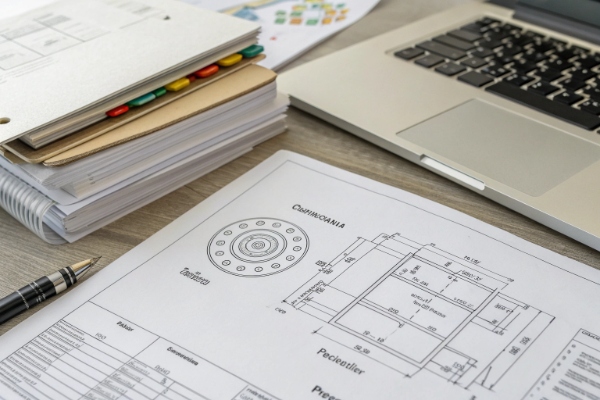
Typical Lead-Time Breakdown
Design Stage (10–20 days)
Includes 3D drawing, structure evaluation, parting-line planning, and DFM. 2
Mould Fabrication (25–40 days)
Tool steel machining, cavity manufacturing, and initial assembly.
Testing & Revisions (10–15 days)
T1/T2 samples, adjustments, cooling-system optimization, and QC.
Table: Typical Mould Cost Ranges
| Mould Type | Typical Cost | Notes |
|---|---|---|
| Full machine housing (front + back) | $100k–$300k | High complexity |
| Handpiece casing | $8k–$20k | Smaller scale |
| Decorative side panels | $5k–$12k | Low complexity |
| Control-panel frame | $10k–$25k | Requires precision |
Practical Insight
Many buyers assume a new mould requires an all-in redesign. In reality, you can start by customizing one or two high-visibility parts to reduce investment while still achieving a fresh design.
How should you document requirements and IP when requesting a new mould?
When collaborating with brands on moulded components, I notice many teams struggle with documentation—not because they lack ideas, but because the format is unclear.
You should prepare clear design documentation including industrial design drawings, function notes, assembly constraints, and a written IP declaration. A proper OEM/ODM brief prevents disputes, protects ownership, and ensures the final mould fits internal components 3 and safety standards.
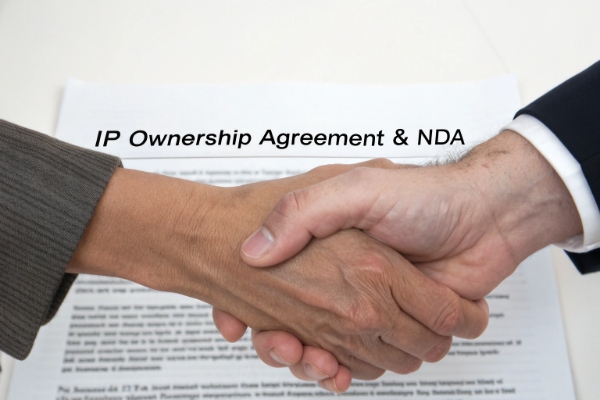
Essential Documents to Prepare
1. Industrial Design (ID) Drawings
2D sketches or 3D concept models to show appearance.
2. Mechanical Requirements
Internal structure zones, screw positions, ventilation needs, and component space.
3. Functional Notes
Touchscreen size, handpiece placement, cable routing.
4. Branding Elements
Logo placement and finishing options.
Table: Key IP Documentation Items
| Document Type | Purpose | Why It Matters |
|---|---|---|
| IP Ownership Agreement | Defines who owns the mould | Prevents factory reuse |
| NDA | Protects early design files | Ensures confidentiality |
| Engineering Change Record | Tracks revisions | Avoids disputes |
| CAD File License | Specifies use rights | Limits unauthorized edits |
Practical Advice
The clearer your documentation, the lower your mould-revision cost. Many revisions result from unclear device-assembly rules, not design defects.
What risks should buyers be aware of when working with suppliers on custom moulds?
From past projects, I’ve seen that buyers new to mould development often underestimate risks, which can lead to cost overruns or delays.
Key risks include unclear ownership of the mould, unexpected MOQ commitments, mould revisions that extend delivery, and the possibility of suppliers reusing designs. Buyers should evaluate contract terms 4, QC checkpoints, and revision policies before approving mould fabrication.

Main Risk Areas
Ownership Ambiguity
If the contract does not clearly state ownership, the supplier may reuse your mould.
MOQ Lock-In
Some suppliers require very high annual purchase quantities.
Extended Lead-Times
T1/T2 revisions often add 1–3 weeks.
Fitment Problems
If internal components are not aligned properly, the mould may require expensive rework.
Table: Common Risks vs Prevention Measures
| Risk | Impact | Prevention |
|---|---|---|
| Unclear mould ownership | Supplier reuses design | Add mould-ownership clause |
| High MOQ commitment | Cash-flow pressure | Negotiate phased orders |
| Poor DFM review | Repeated revisions | Require DFM before machining |
| Incomplete documentation | Misaligned parts | Provide mechanical drawings |
Practical Insight
Before paying for tooling, always request:
- A DFM report
- Material shrinkage calculations
- A test-sample schedule
These prevent costly surprises later.
How do OEM/ODM buyers protect exclusivity when a new mould is developed?
Exclusivity is a common concern, especially for brands investing six-figure budgets in industrial design.
Buyers protect exclusivity by securing mould ownership contracts, limiting factory usage rights, registering design IP, and requiring the supplier to store moulds separately. Most reputable suppliers accept exclusivity clauses when the buyer funds the mould in full.

Ways to Protect Exclusivity
Exclusive Mould Agreement
Defines that the mould is for one buyer only.
Physical Mould Labeling
Mould engraved with your company name and ID.
Dedicated Storage
Stored in a locked cage or controlled area.
Controlled Production Records
Factory logs each batch using that mould.
Table: Exclusivity Protection Methods
| Method | Strength | Notes |
|---|---|---|
| Legal mould-ownership contract | Very strong | Mandatory for custom projects |
| Supplier usage-rights restriction | Strong | Prevents unauthorized runs |
| Design registration | Medium–Strong | Helps enforce IP |
| Physical mould control | Medium | Practical safeguard |
Practical Advice
Always pay for the mould in your company’s name and request the invoice to show mould ownership. This becomes a key legal proof if disputes arise.
What is the difference between open-source and proprietary mould designs?
When considering a new mould, buyers should distinguish between designs based on proprietary chassis and those based on common, open-source designs.
Proprietary mould designs—which buyers pay for—offer exclusivity and unique industrial design (ID), whereas open-source mould designs, which are often used in the ODM model, save money but mean the same machine shell can be used by multiple competing brands.
Choosing the Right Mould Strategy
- Proprietary (New Mould Funded by Buyer): High cost and long lead-time, but delivers 100% unique brand identity and IP protection 6. Ideal for large, established brands.
- Open-Source/Common Mould (ODM): Low to zero mould cost; fast market entry. Excellent for startups or testing a new market with minimal investment 7.
- Modified Common Mould: Customizing a single part (e.g., front panel) of an open chassis to reduce cost while adding a unique brand element 8.
Costs Comparison Table
| Mould Type | Upfront Cost | Exclusivity | Market Speed |
|---|---|---|---|
| Proprietary | High ($100k+) | Exclusive | Slow |
| Modified Common | Low ($5k–$20k) | Partial | Medium |
| Open-Source | None | None | Fast |
Legal Note on Open-Source Designs
While using an open-source mould saves money, buyers must ensure the supplier is complying with all relevant safety standards and that the base design does not infringe on existing patents or designs 9.
Conclusion
New-mould development is possible and powerful, but it requires careful planning, strong documentation, and clear ownership terms to control cost and protect your product design IP 10.
Footnotes
1. Detailed manufacturing timeline for custom injection molding, indicating the 45-75 days required for design, tooling, and first sample production. ↩︎
2. Guide to Design for Manufacturing (DFM) principles, which are essential for structural evaluation and preventing costly revisions in the mould design stage. ↩︎
3. Principles of Design for Assembly (DFA), stressing the importance of considering internal component fit and assembly constraints in initial design documentation. ↩︎
4. Guide for businesses on how to structure contracts with molding suppliers to ensure clear mould ownership and prevent intellectual property risks. ↩︎
5. Information resource from WIPO on the purpose and procedures for registering industrial designs to protect aesthetic intellectual property. ↩︎
6. WIPO resource detailing how patents and design protection can be enforced to protect unique product designs from unauthorized use. ↩︎
7. Analysis of the differences between OEM, ODM, and CM models, noting that ODM typically utilizes common, non-exclusive moulds to minimize cost. ↩︎
8. Discussion on how modifying existing moulds can offer a compromise between full custom development and using off-the-shelf designs. ↩︎
9. WIPO resource explaining the role of patents in protecting inventions, which is a key legal safeguard in product development. ↩︎
10. Information on intellectual property protection mechanisms, including design rights, for complex industrial products like medical devices. ↩︎

 English
  Español de México
  Deutsch
  Français
  العربية
  Русский