
 <sup id=](https://kmslaser.com/wp-content/uploads/2026/01/v2-article-1768827219176-1.jpg) 1 device connector on cloth surface (ID#1)” class=”top-image-square”>
We frequently encounter clinic owners frustrated by equipment downtime during peak hours. When we engineer our production lines [ISO 13485 quality standards](https://www.iso.org/standard/59752.html) 2, we focus on eliminating these costly interruptions through rigorous stress testing.
Evaluate lifespan by checking the total pulse rating (typically 2–5 million), duty cycle [definition of duty cycle](https://en.wikipedia.org/wiki/Duty_cycle) 3 limits, and the availability of user-serviceable overhaul kits. Durable handpieces maintain energy consistency without overheating during 10-minute high-intensity sessions and feature replaceable bullets and tubes rather than requiring full unit replacement.
To ensure you choose a device that withstands daily commercial demands, consider these critical durability factors.
How many shots can I realistically expect from a professional shockwave handpiece bullet?
When we validate our internal components, we simulate years of usage to ensure reliability. However, having unrealistic expectations often leads to sudden operational failures that disrupt patient schedules.
You can realistically expect between 1 million and 2 million shots from a high-quality professional bullet before replacement is necessary. While the handpiece body may last 5 million pulses or more, the internal projectile is a consumable part that wears down due to constant mechanical impact.
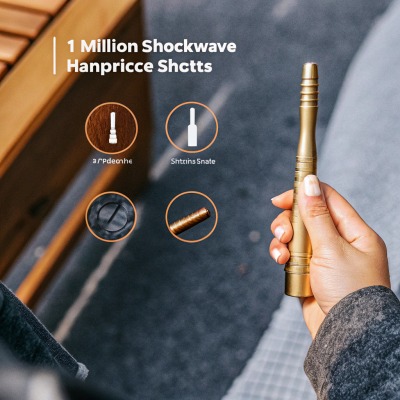
Understanding Pulse Ratings and Consumables
In the professional beauty and medical equipment industry medical device classification 4, "lifespan" is rarely measured in years. Instead, it is measured in "shots" or pulses. When we discuss the durability of a shockwave handpiece, we must distinguish between the chassis of the handpiece and the consumable internals. The "bullet" (or projectile) is a small metal component that is pneumatically accelerated back and forth to create the shockwave.
Because this part experiences extreme physical impact up to 20 times per second (20 Hz), it is physically impossible for it to last forever. Physics dictates that friction will eventually degrade the dimensions of the bullet. In our testing labs, we observe that performance remains stable for the first 1 million shots. Between 1 million and 2 million shots, the energy output may drift slightly, but it is usually acceptable. Beyond 2 million shots, the risk of failure increases significantly.
Converting Frequency to Time
Buyers often struggle to visualize what "2 million shots" means in terms of time. It is helpful to convert this into hours of trigger time. If you run a treatment at an average frequency of 15 Hz, you are generating 900 shots per minute.
- 1 minute of treatment = 900 shots
- 10 minutes of treatment = 9,000 shots
- 111 treatments = ~1 million shots
If your clinic sees 5 patients a day for shockwave therapy, a single bullet kit might last you about a month or two of heavy use. This is why we emphasize that the availability of the bullet is just as important as its lifespan. If a manufacturer claims a bullet lasts "forever," they are likely misrepresenting the physics of radial shockwave generation.
Radial vs. Focused Durability
It is also crucial to distinguish between radial and focused shockwave technologies. Radial systems (ballistic) rely on the physical collision radial shockwave technical data 5 of the bullet against the transmitter. This creates significant mechanical wear. hand-arm vibration standards 6 Focused systems use electromagnetic or piezoelectric generation, which involves fewer moving parts but creates higher thermal stress. Generally, radial handpieces require more frequent maintenance (bullet swaps), whereas focused handpieces run longer but are significantly more expensive to repair when they eventually fail.
Component Lifespan Breakdown
To help you budget for maintenance, we have compiled a table based on average industry standards for professional-grade equipment.
| Component | Expected Lifespan (Pulses) | Typical Maintenance Action |
|---|---|---|
| Projectile (Bullet) | 1,000,000 – 2,000,000 | Replace via Overhaul Kit |
| Guide Tube | 1,000,000 – 2,000,000 | Replace via Overhaul Kit |
| O-Rings/Seals | 500,000 – 1,000,000 | Replace (often included in kit) |
| Handpiece Body | 5,000,000+ | Factory Service or Replacement |
| Transmitter Head | 2,000,000+ | Inspect for pitting; Replace if worn |
What internal cooling features should I check to prevent premature handpiece failure?
Overheating is the number one enemy of the pneumatic systems we build for heavy-duty use. Ignoring thermal management specifications frequently results in seized pistons and frustrated operators seeking warranty repairs.
Check for active air cooling systems with dedicated fans and unobstructed vents that allow continuous operation for at least 15 minutes at high energy. Superior handpieces utilize heat-resistant alloys and smart sensors to pause operation before thermal expansion causes internal friction or permanent seal damage.
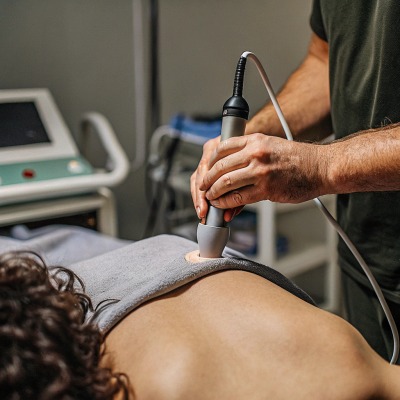
The Physics of Heat in Shockwave Systems
Heat is an unavoidable byproduct of kinetic energy. When a projectile slams into a transmitter head at high velocity, a portion of that energy becomes sound principles of shock waves 7 (the shockwave), but a significant portion becomes heat. In our engineering department, we have found that if this heat is not dissipated effectively, the metal components inside the handpiece expand.
This thermal expansion reduces the tolerance gap between the bullet and the guide tube. If the gap becomes too small, friction increases exponentially. This leads to a "death spiral" for the handpiece: friction creates more heat, which creates more expansion, eventually causing the bullet to seize inside the tube. This is a catastrophic failure that often requires a complete handpiece replacement.
Identifying Robust Ventilation
When evaluating a machine, look closely at the handpiece design. Does it have visible air vents? Are they placed where the operator's hand might block them during use? A well-designed handpiece will have intake and exhaust vents positioned away from the grip area.
Furthermore, listen to the device. High-end units often contain a micro-fan inside the handpiece itself, not just in the main console. You should hear a faint hum of airflow when the device is active. Passive cooling (relying solely on the metal casing to dissipate heat) is rarely sufficient for busy clinics that run back-to-back sessions.
Duty Cycle Limits and Sensors
Durability is also a matter of software protection. We program our machines with thermal sensors that monitor internal temperatures. If the handpiece gets too hot, the system will prevent the user from firing until it cools down. While this might seem annoying, it is a critical safety feature that protects your investment.
A "duty cycle" refers to the ratio of active time to rest time. A durable commercial machine should handle a high duty cycle. For example, a 10-minute continuous run at high energy (4 Bar / 180 mJ) followed by a short cooling period is standard for professional contexts. Consumer-grade devices often require 20 minutes of cooling for every 5 minutes of use, which is impractical for a salon or clinic.
Cooling System Comparison
The following table outlines what to look for based on your anticipated usage volume.
| Feature | Entry-Level / Home Use | Professional / Commercial | Premium / Hospital Grade |
|---|---|---|---|
| Cooling Method | Passive (Heat Sink) | Active Air (Single Fan) | Active Air (Dual Fan) or Liquid |
| Continuous Runtime | 5 – 10 Minutes | 20 – 30 Minutes | 60+ Minutes |
| Thermal Protection | Basic Shutdown | Temp Sensor & Warning | Real-time Temp Monitoring |
| Ventilation | Minimal / None | Rear Exhaust Vents | Side & Rear Flow Channels |
| Handle Material | Plastic | Aluminum Alloy | Titanium / High-Grade Alloy |
How do I judge if the applicator materials are durable enough for heavy commercial use?
We source specific metal alloys because cheaper alternatives pit and crack under repetitive stress. Using inferior applicators not only risks patient safety but also destroys energy transfer efficiency over time.
Judge durability by inspecting the applicator head for high-grade stainless steel or titanium alloys that resist pitting and corrosion. Heavy commercial use requires materials that withstand repetitive cavitation stress without surface deformation, ensuring consistent energy transmission over millions of pulses without cracking or flaking.
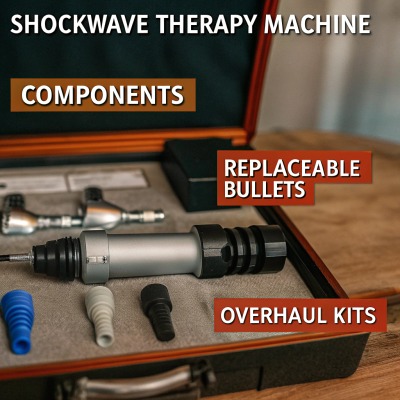
Material Science in Applicators
The applicator head (or transmitter) is the point of contact with the patient. It endures the direct impact of the internal bullet. If the material is too soft, the impact surface will deform, becoming concave over time. This deformation absorbs the energy of the bullet rather than transferring it to the patient, rendering the treatment ineffective.
In our manufacturing process, we typically use medical-grade stainless steel or titanium alloys for these components. Titanium is lighter and harder, offering better energy transmission and longevity, but it increases the cost. Stainless steel is the industry standard, but it must be hardened correctly.
Visual Inspection for Quality
When you are evaluating a sample unit or inspecting your current equipment, look for "pitting." Pitting appears as tiny dots or rough patches on the flat surface of the transmitter head. This is caused by cavitation—the rapid formation and collapse of bubbles in the ultrasound gel.
Cavitation erosion is powerful enough to eat away at metal. Cavitation erosion is powerful enough 8 A durable applicator will have a smooth, polished finish that resists this erosion. If you see signs of pitting after only a few weeks of use, the material quality is likely insufficient for commercial application.
Chemical Resistance and Housing
Durability isn't just about the metal; it's also about the plastic housing. In a clinic, you are constantly wiping down equipment with disinfectants. Some plastics are susceptible to Environmental Stress Cracking (ESC) when exposed Environmental Stress Cracking (ESC) 9 to alcohol or ammonia-based cleaners.
We have seen many handpieces where the casing cracks near the screw holes or seams, not from dropping, but from chemical reaction. A durable handpiece should use high-density engineering plastics (like ABS or Polycarbonate blends) that are chemically resistant. Always ask the supplier which cleaning agents are safe to use.
Cable and Strain Relief
The most common failure point isn't actually the bullet or the head—it's the cable. The connection point where the cable enters the handpiece is twisted and pulled hundreds of times a day.
Durability Checklist for Buyers
Use this checklist to assess the build quality of a prospective purchase:
- Weight: Does it feel substantial? Too light often means cheap plastic internals.
- Strain Relief: Is the rubber guard at the cable base flexible and long (>2 inches)?
- Finish: Is the metal applicator mirror-polished or dull? (Mirror is better for cleaning and wear).
- Connection: Is the connector to the machine metal or plastic? (Metal pins are more durable).
How often will I need to replace the projectile and tube to maintain treatment consistency?
Our service team frequently receives units with worn tubes that severely degrade performance. Delaying this maintenance reduces treatment results and can permanently damage the expensive handpiece body.
You will generally need to replace the projectile and guide tube every 1 million to 1.5 million shocks to maintain therapeutic consistency. Continued use beyond this interval causes energy drop-off, increased noise, and internal debris buildup that can permanently damage the expensive handpiece transmitter.

The Economics of Maintenance Kits
For a business owner, the "Overhaul Kit" or "Revision Kit" is a vital part of the ROI calculation. A shockwave handpiece is like a car engine; you don't throw away the car when the oil needs changing. Similarly, you shouldn't have to buy a new $2,000 handpiece just because the bullet is worn.
We strongly advise purchasing a machine that supports user-replaceable kits. This means you can unscrew the cap, pull out the old tube and bullet, insert the new ones, and resume working in under 5 minutes. If a manufacturer requires you to ship the handpiece back to the factory for this basic maintenance, you will face downtime and shipping costs that eat into your profits.
Signs You Need to Replace Parts
How do you know it's time to swap the kit if you haven't been tracking the exact pulse count? There are three main indicators:
- Energy Drop-off: You find yourself needing to turn the power up higher to get the same patient response.
- Sound Change: The crisp "snap" of the shockwave turns into a dull "thud" or a rattling sound.
- Stuttering: The frequency becomes inconsistent, skipping beats during a rapid-fire session.
Ignoring these signs is dangerous. As the bullet wears, it produces fine metal dust. This dust mixes with the lubricant to form an abrasive paste form an abrasive paste 10 that grinds away the inside of the handpiece body. If you wait too long, the damage spreads from the replaceable tube to the non-replaceable housing.
Cost Per Shot Analysis
To truly evaluate the value, you must calculate the cost per shot including maintenance.
- Scenario A: Cheap machine, non-replaceable handpiece. Dies after 2 million shots. Cost: $1,000. Cost/Shot: $0.0005.
- Scenario B: Professional machine, replaceable kits. Handpiece costs $500, Kit costs $100 (every 1M shots). Total life 10M shots.
- Initial: $500
- 9 Kits: $900
- Total: $1,400 for 10M shots.
- Cost/Shot: $0.00014.
The professional machine with replaceable parts is significantly cheaper in the long run.
Maintenance Schedule Example
| Usage Level | Treatments/Week | Est. Weekly Pulses | Kit Replacement Interval |
|---|---|---|---|
| Light | < 10 | ~20,000 | Every 12 – 18 Months |
| Medium | 10 – 30 | ~60,000 | Every 6 – 9 Months |
| Heavy | 30 – 50 | ~100,000 | Every 3 – 5 Months |
| Clinic | 50+ | ~150,000+ | Every 2 – 3 Months |
Conclusion
Evaluating a shockwave handpiece requires looking beyond the price tag to the engineering beneath the casing. By prioritizing total pulse ratings, active cooling features, high-grade materials, and user-friendly maintenance kits, you ensure consistent clinical results and a superior return on investment.
Footnotes
1. Supports the importance of maintenance protocols for medical equipment longevity. ↩︎
2. References the international standard for medical device manufacturing quality management. ↩︎
3. Clarifies the technical term duty cycle used to measure machine performance. ↩︎
4. Provides context on how medical devices are categorized by regulatory bodies. ↩︎
5. Offers technical specifications from a leading manufacturer for industry comparison. ↩︎
6. Links mechanical wear to occupational health standards for vibrating hand-held tools. ↩︎
7. Defines the physical properties of shock waves mentioned in the text. ↩︎
8. Validates the destructive capability of cavitation on metal surfaces. ↩︎
9. Technical definition of plastic failure caused by chemical exposure. ↩︎
10. Explains the mechanism of three-body abrasion causing internal damage. ↩︎

 English
 Español de México
 Deutsch
 Français
 العربية
 Русский
