Working on full ODM shockwave projects with overseas brands, my team and I often see confusion about timelines, stages, and who owns which part of the design.
The ODM development cycle for a shockwave therapy machine usually moves through concept, engineering design, prototyping, testing, pilot run, and mass production. Each stage has clear deliverables, engineering reviews, and documents so buyers can track progress, control risk, and plan launch timelines.
In the following sections, I will walk you through the main phases, how to monitor them, what usually causes delays, and which files should be agreed at every step.
What phases (concept → prototype → testing → production) are included in an ODM development timeline?
On most shockwave ODM projects my team supports, we first map the whole journey on one page so the buyer can see how concept decisions affect tooling, testing, and launch dates.
A typical ODM timeline for a shockwave machine includes concept and feasibility, architecture and detailed design, prototype and engineering validation, design validation and certification, pilot runs, and final mass production. Each phase builds on the last with defined reviews and sign-offs.
Overview of Main ODM Phases
For shockwave therapy machines, the ODM cycle is structured but flexible. The actual dates change by project, but the logic is similar:
-
Concept & Feasibility
You define target users, markets, and key functions. We check if the idea matches existing platforms or needs a new architecture. This is often called the Product Definition phase 1. -
Architecture & Detailed Design
Mechanical layout, electronics, user interface, and safety structure are defined. We lock high-level specs like energy range, frequency, and cooling method. This involves Design for Manufacturing (DFM) 2. -
Prototype & Engineering Validation (EVT)
First working samples are built. Here we find most technical issues: noise, overheating, unstable output, or handpiece problems. -
Design Validation & Certification (DVT)
We build more units, run reliability tests, and prepare documents for CE, FDA 3, or other local rules. This includes clinical trial preparation if required. -
Pilot Run & NPI
Small batches confirm that assembly, calibration, and test steps are stable before mass production. This is often the Manufacturing Transfer phase 4. -
Mass Production & Life-Cycle Support
Orders run under a stable process, and feedback drives firmware or mechanical updates. This involves adherence to Good Manufacturing Practices (GMP) 5.
Example Timeline for a Mid-Complexity Project
| Phase | Typical Duration | Main Output |
|---|---|---|
| Concept & Feasibility | 2–4 weeks | URS, product brief, risk sketch |
| Architecture & Detailed Design | 4–8 weeks | 3D files, schematics, system spec |
| EVT (Prototypes) | 6–10 weeks | Working samples, test reports |
| DVT & Certification Preparation | 8–12 weeks | Golden sample, reliability data |
| Pilot Run / NPI | 4–8 weeks | Validated process, first small batch |
| Mass Production | Ongoing | Regular shipments, life-cycle updates |
Why This Structure Matters
Each phase has a different goal. Concept phase answers “what and why”. Design phase answers “how”. EVT and DVT answer “does it really work and is it safe”. Pilot and MP confirm “can we build it every day with the same quality”.
If these borders are blurry, projects tend to loop. So the first step for any serious buyer is to agree a phase map like this and attach it to the purchase or development agreement.
How can buyers monitor progress and ensure milestones are met in ODM projects?
When we run international ODM projects, time zone and communication gaps can easily turn a 9-month plan into a 14-month delay if there is no clear monitoring structure.
Buyers can monitor ODM progress by agreeing on a stage-gate plan, using shared timelines with dated milestones, joining regular engineering calls, reviewing samples and test reports, and signing formal approvals at each phase instead of relying only on informal updates.
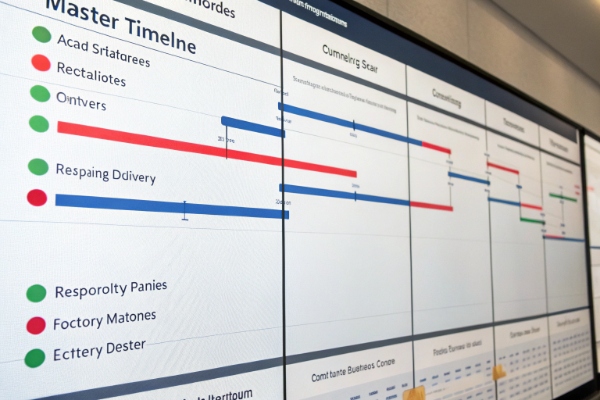
Build a Stage-Gate Plan, Not Just a Gantt Chart
Many buyers ask for a schedule but not for “gates”. A stage-gate plan means every major phase ends with three items:
- A clear deliverable (for example, EVT sample set)
- A review meeting
- A formal sign-off document
Without these, it is easy to slide into the next phase with half-open issues.
Recommended Monitoring Tools and Routines
1. Master Timeline with Owners
Create a simple shared timeline with columns:
| Milestone | Target Date | Responsible Party | Output for Buyer |
|---|---|---|---|
| Freeze URS | Week 2 | Buyer + Factory | Signed URS document |
| Confirm 3D & Schematics | Week 6 | Factory | Final 3D, PDF schematics |
| EVT Sample Delivery | Week 12 | Factory | 2–4 test units, test report |
| DVT Testing Complete | Week 20 | Factory | Reliability report, golden sample |
| Pilot Run Approved | Week 26 | Buyer + Factory | NPI report, process capability summary |
2. Regular Engineering Calls
Short, focused calls work better than long emails. Typical agenda:
- Open issues list
- Risk items (for example, mould delivery, key chips)
- Next 2–3 week goals
Buyers who show up on these calls get fewer surprises later.
3. Sample and Report Reviews
When you receive prototypes, do not only test “feel”. Also check:
- Output energy vs specification
- Noise level
- Handpiece temperature after continuous operation
- UI logic and error messages
Then send structured feedback. This keeps both sides aligned and avoids emotional debates later.
Formal Approvals at Each Stage
At the end of each phase, sign a short approval form or email template. It should list:
- What was checked
- Which deviations are accepted
- Which points must be fixed in the next phase
Clear approvals protect both sides if disputes happen later.
What factors often cause ODM development delays in medical/aesthetic equipment?
Across many medical and aesthetic equipment projects, including shockwave machines, the most painful delays almost never come from a single big mistake. They come from a chain of small decisions made too late.
ODM development for medical and aesthetic equipment is often delayed by unclear specifications, late design changes, under-estimated certification time, component shortages, mould issues, and weak project control. Many delays start in the concept phase but only appear during tooling or testing.

Typical Delay Sources You Should Watch
1. Unclear or Moving Specifications
If target energy, frequency range, treatment modes, or safety features are not frozen early, the design team keeps “adjusting” during EVT or even DVT. Each change touches electronics, firmware, and sometimes casing. This falls under the risk of poorly formulated inputs 6.
2. Under-Estimated Certification and Testing
Medical safety tests, EMC tests, and documentation reviews often take longer than promised. Third-party labs have queues. If timelines ignore this, your launch date slips even when development went well. EU MDR approvals, for example, can be lengthy 7.
3. Tooling and Mould Problems
For custom housings, moulds can cost from tens of thousands up to well over one hundred thousand USD. If there is a mistake in the 3D or DFM review, mould changes are expensive and slow.
4. Component Shortages
Key components like power modules, displays, or special valves sometimes go into shortage. This hits pilot runs and early mass production. This is often due to reliance on a struggling supply chain 8.
Delay Factors vs Mitigation
| Delay Factor | When It Appears | How to Reduce Risk |
|---|---|---|
| Vague URS | Concept / Design | Freeze URS and use change-control |
| Late feature change | EVT / DVT | Ask for impact analysis before confirming |
| Lab lead-time | DVT / Certification | Book test slots early, keep buffer in schedule |
| Mould rework | Tooling / EVT | Strong DFM review, sample confirmation before cut |
| Part shortage | NPI / MP | Approved vendor list, second sources where possible |
How to Keep Control as a Buyer
The buyer cannot remove all risks, but you can:
- Challenge unrealistic timelines very early
- Ask for a risk register and mitigation plan
- Tie payment terms to clear phase outputs, not only dates
Most important: avoid last-minute “marketing” changes (screen size, colour, shape) in the late phases. These look small, but they often change key parts and hit both tooling and documentation.
What documentation or design files should be agreed upon during each ODM stage?
In shockwave ODM projects, we see smooth cooperation when documents are clear and signed. We also see painful conflicts when someone says, “But we thought you would include this feature,” a few weeks before mass production.
At each ODM stage, both sides should agree on specific files: user needs and URS 9 in concept, 3D and schematics in design, BOM and test plans in validation, and work instructions, QC standards, and service manuals before mass production.

Key Files by Stage
Concept & Feasibility
- URS (User Requirement Specification)
- Target markets and regulations (for example, EU MDR, FDA Class II)
- Basic risk analysis and use scenarios
Architecture & Detailed Design
- 3D mechanical files (step/igs)
- PCB schematics and layout
- System block diagram
- Display and UI flow charts
EVT / DVT (Prototypes and Validation)
- Updated BOM with vendor list
- Electrical and mechanical test plans
- Reliability test matrix (life test, drop, temperature)
- Firmware version list and change log
Pilot Run / Mass Production
- Work instructions (WI) for assembly
- Incoming quality standards for key parts
- End-of-line test procedure
- User manual and service manual drafts
Example: Document Map for One Project
| Stage | Main Buyer Focus | Main Factory Focus |
|---|---|---|
| Concept / URS | Clinical use, features, budget | Feasibility, platform choice |
| Design / 3D & Schematics | Layout, branding, ergonomics | Safety, manufacturability |
| EVT / DVT | Function, performance, user feel | Stability, test coverage |
| Pilot & MP Prep | Serviceability, training | Yield, cycle time, packaging |
Why Documentation Protects Both Sides
Good documentation is not only a “paper shield”. It also:
- Speeds up future variants and upgrades
- Reduces engineer turnover risk
- Makes certification audits smoother
- Supports after-sales troubleshooting
As a buyer, you do not always need all source files. But you should at least have access to clear PDFs and version lists so you are not locked in without visibility.
Conclusion
A clear ODM roadmap 10, milestone control, and agreed documentation let you turn a shockwave concept into a reliable product while keeping delays, rework, and budget risk under control.
Footnotes
1. Explanation of the "Product Definition" phase in medical device development, emphasizing market research and defining user needs. ↩︎
2. Guide for Original Equipment Manufacturers (OEMs) on integrating Form, Fit, and Function (FFF) and Design for Manufacturing (DFM) into the product lifecycle. ↩︎
3. Overview of the medical device development timeline, including the Design Validation Testing (DVT) phase and regulatory submission to bodies like the FDA. ↩︎
4. Reference to the "Validation and Manufacturing Transfer" phase, which involves scaling up production after design is finalized and validated. ↩︎
5. Information on the final stage of medical device development, which includes product launch and adherence to Good Manufacturing Practices (GMP). ↩︎
6. Analysis of common reasons why medical device projects are delayed, often stemming from poorly defined initial requirements (URS). ↩︎
7. Discussion on the challenges in medical product development, including the lengthy timelines required for complex regulatory approvals like the EU MDR. ↩︎
8. Explanation of how supply chain disruptions, especially for specialized electronic components, cause significant delays in medical device manufacturing. ↩︎
9. Detailed guide on how to write a GMP-compliant User Requirement Specification (URS), ensuring all system expectations are clear and testable. ↩︎
10. Summary of the key stages in New Product Development (NPD), providing a roadmap from ideation through commercialization for B2B products. ↩︎

 English
  Español de México
  Deutsch
  Français
  العربية
  Русский