

When our production line ships pressotherapy machines overseas, one document causes more customs delays than any other: the Declaration of Conformity 1. Importers lose weeks waiting at the border. Shipments get held. Costs pile up. The problem? Most people don’t know what this document needs to contain.
To prepare a Declaration of Conformity for pressotherapy machine customs clearance from China, you must include your company details, device identification, risk classification, applicable standards like IEC 60601-1, conformity assessment route, Notified Body information if required, and an authorized signature. The EU-based importer holds legal responsibility for this document.
This guide walks you through the exact steps. We cover what information goes into your DoC, how to verify your Chinese supplier’s test reports, whether you can use your own brand, and the documentation errors that cause customs holds ISO 14971 2. Let’s dive in.
What specific information must I include in a Declaration of Conformity for my pressotherapy machine imports?
Our engineering team has helped clients prepare hundreds of DoC documents over the years. The most common problem we see? Importers missing required fields. Customs officials check every detail. One missing element stops your shipment at the border.
Your Declaration of Conformity must include the manufacturer name and address, device name and intended purpose, risk classification, Basic UDI-DI, list of applied harmonized standards, conformity assessment procedure, Notified Body details if applicable, compliance statement, and an authorized signature with date and place of signing.
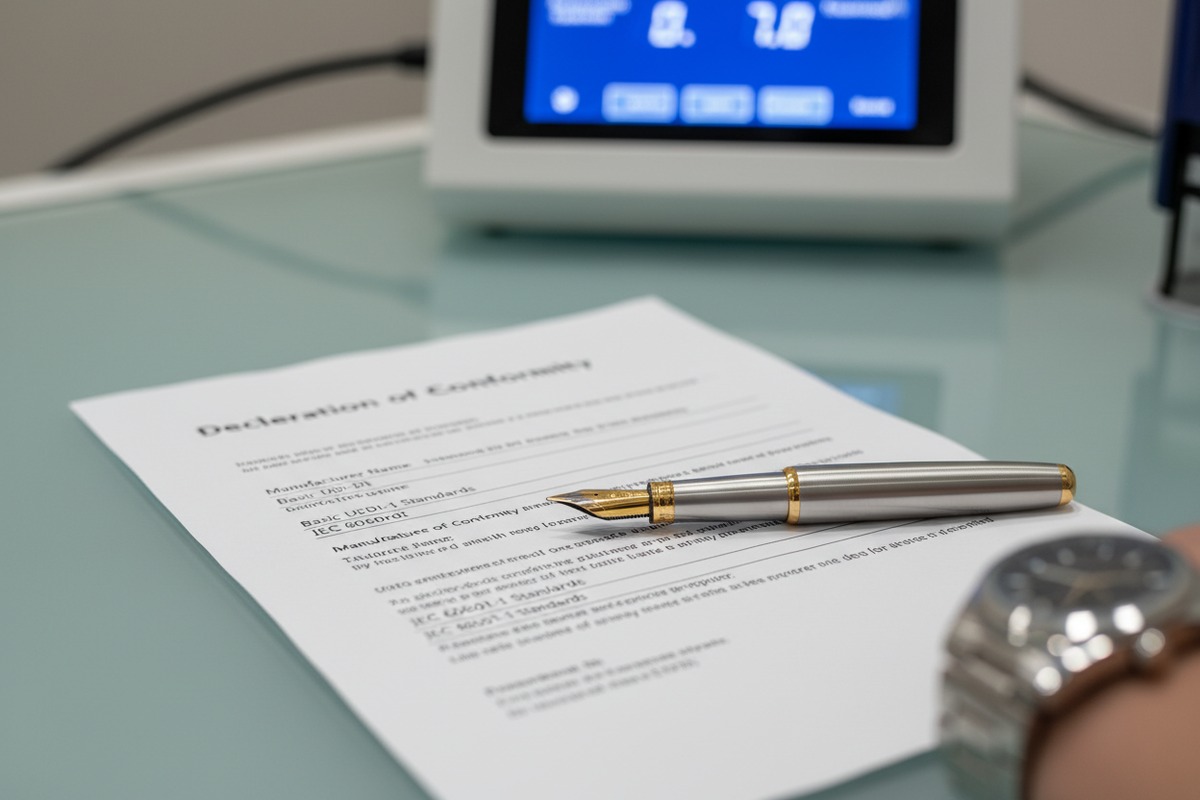
Core Elements Required by EU MDR Annex IV
The DoC must contain: a statement that it is issued under the sole responsibility of the manufacturer, the Basic UDI-DI 3 as referred to in Part C of Annex VI, and product and trade name, product code, catalogue number or other unambiguous reference allowing identification and traceability of the device.
Key contents include: name and full address of the manufacturer, medical device name, brand name if applicable, device risk classification, list of harmonized standards applied, declaration statement, European Authorized Representative name and contact information, Notified Body name and address (not applicable for Class I devices), name and designation of the authorized person, signature, and date and place of signing.
Understanding Device Classification for Pressotherapy
Pressotherapy machines typically fall into Class I or Class IIa categories under the EU MDR. For lower-risk devices (Class I), manufacturers can self-certify, but for higher-risk devices (Class IIa, IIb, III), a Notified Body must be involved.
| Classification | Notified Body Required? | Self-Certification Allowed? | Typical Pressotherapy Devices |
|---|---|---|---|
| Class I | No | Yes | Basic compression massage units |
| Class I (sterile/measuring) | Yes (limited) | Partial | Sterile accessories |
| Class IIa | Yes | No | Lymphatic drainage therapy systems |
| Class IIb | Yes | No | Advanced medical compression devices |
Standards You Must Reference
The DoC must confirm that the device conforms to the essential requirements set out in the MDR, including safety, performance, and risk management standards. If the device has been tested against harmonized European standards, the DoC must reference the specific standards.
Common standards for pressotherapy machines include:
- IEC 60601-1: Electrical safety requirements
- ISO 14971: Risk management for medical devices
- ISO 13485: Quality management systems
- IEC 62304: Software lifecycle processes (if software-enabled)
Document Format and Language Requirements
The EU MDR DOC must be on the company's official letterhead. It should be translated into an official EU language or languages required by the Member State(s) in which the device is made available.
The DoC is a document in which the manufacturer declares that the medical device complies with the requirements of MDR/IVDR and all Union legislation applicable to the device. The DOC needs to be continuously updated by the manufacturer.
How do I verify that my Chinese manufacturer's test reports match the requirements for my local customs?
In our experience exporting to the US and EU markets, we've seen test reports get rejected at customs for simple mismatches. The lab tested one thing. Customs wanted proof of something else. This creates expensive delays that could have been avoided with proper verification upfront.
To verify Chinese manufacturer test reports, cross-check that all referenced standards match your destination country's requirements, confirm the testing lab holds proper accreditation (ISO 17025), ensure test report numbers appear correctly on the DoC, and verify that tested product models match the exact variants you are importing.
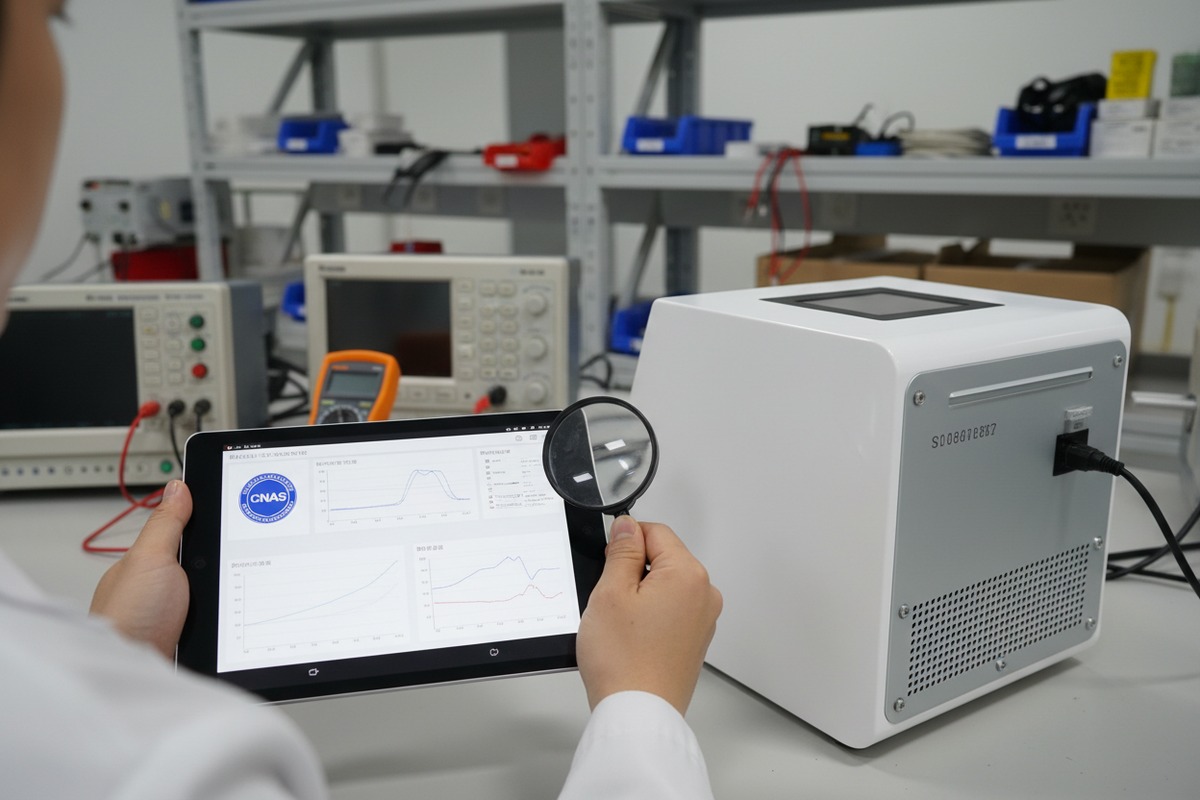
Matching Standards Between Markets
CE marking 5 is not equivalent to FDA approval. CE marking signifies that the device conforms to applicable EU regulatory requirements for marketing within the European Economic Area (EEA). FDA approval 6 or clearance is based on separate premarket pathways under 21 CFR Parts 800–898 for distribution in the United States.
| Destination | Required Standards | Regulatory Body | Key Test Requirements |
|---|---|---|---|
| European Union | IEC 60601-1 7, ISO 14971, MDR 2017/745 | Notified Bodies | Electrical safety, risk management, clinical evaluation |
| United States | 21 CFR Part 820, FDA 510(k) | FDA | Quality System Regulation, substantial equivalence |
| United Kingdom | UK MDR 2002, UKCA | MHRA | Similar to EU MDR with UK-specific requirements |
Verifying Lab Accreditation
Not all test reports are equal. Customs authorities look for reports from accredited laboratories. The CE marking is about providing evidence that the product complies with the applicable requirements. In the case you have to involve a test laboratory or certification body, it is better to use a well-established, reputable company than a cheap unknown company. Because when your product's CE compliance is challenged, its acceptance by authorities and your customers depend on the reliability of the certificate and report.
Common Verification Checkpoints
When reviewing test reports from your Chinese supplier, verify these elements:
- Test lab accreditation certificate is current and valid
- Product model numbers on reports match your import documentation exactly
- Test dates are recent enough for current regulatory requirements
- Standard versions referenced are the current editions (not outdated versions)
- Test scope covers all applicable requirements for your device classification
Cross-Referencing with Your DoC
As a manufacturer, you have to maintain the conformity assessment as part of the technical documentation and be able to present it at any time upon request. A lot of manufacturers even publish them on their website. Importers, distributors, and authorized representatives must have the declarations of conformity.
Your DoC should reference the same standards that appear in your test reports. Any discrepancy creates a red flag for customs officials.
Can I list my own brand as the manufacturer on the Declaration of Conformity for OEM beauty machines?
When we work with brand owners who private-label our pressotherapy machines, this question comes up constantly. The answer involves understanding who carries legal responsibility. It's not just about putting a name on a document. It's about accepting compliance obligations.
Yes, you can list your own brand as the manufacturer on the DoC if you act as the legal manufacturer under EU MDR. This means you take full responsibility for compliance, maintain technical documentation, ensure quality management systems are in place, and accept liability for the device's safety and performance—regardless of who physically manufactured it.
Understanding the Legal Manufacturer Concept
When the entire manufacturing is outsourced, the subcontractor under the EU MDR is known as Private Label Manufacturer (PLM) or "own brand labeller" (OBL). A private label manufacturer that markets, under its own name or trademark, a device manufactured by a third party is therefore to be regarded as the legal manufacturer within the meaning of the MDR.
The device should be labelled with the legal manufacturer's (PLM or OBL) name and address and they must also issue the Declaration of Conformity, which states that the device meets all applicable EU requirements.
Responsibilities of the Legal Manufacturer
By drawing up the EU declaration of conformity, the manufacturer shall assume responsibility for compliance with the requirements of this Regulation and all other Union legislation applicable to the device.
| Responsibility | OEM (Physical Manufacturer) | Legal Manufacturer (Brand Owner) |
|---|---|---|
| Physical production | Primary responsibility | Oversight and verification |
| Quality management system | Must maintain ISO 13485 8 | Must maintain ISO 13485 compliant system |
| Technical documentation | Provides production records | Compiles and maintains all documentation |
| Declaration of Conformity | Does not sign | Signs and takes legal responsibility |
| Post-market surveillance | Supports with data | Primary responsibility |
| Regulatory submissions | N/A | Files and maintains |
Required Quality System Alignment
The Legal manufacturer (PLM or OBL) shall have a well-documented Quality Management System in place complying with the requirements of ISO 13485 and EU MDR. The QMS should demonstrate adequate control over the design, manufacturing, and post-market surveillance activities. The QMS of the OEM should also align with the QMS of the legal manufacturer. The manufacturer is also responsible to have control and also inspect the OEM's processes to ensure compliance with regulatory standards.
Documentation You Must Maintain
It is the responsibility of the legal manufacturer to collect or prepare and maintain important technical documentation needed to demonstrate compliance with the EU MDR. This will include design files, manufacturing related documents, risk assessments, clinical evaluations, usability studies, post-market surveillance documents (PMS, PSUR, PMCF) and other related quality management system and technical data. Regardless of these activities being performed by the OEM, the legal manufacturer is responsible for compiling and maintaining these documents.
Contract Requirements Between OEM and Brand Owner
Agreement/contract has to be in place between the OEM and the subcontractor (PLM or OBL) defining roles, responsibilities, and obligations.
This contract should clearly specify:
- Quality standards and testing requirements
- Document access and retention policies
- Incident reporting procedures
- Audit rights and frequency
- Liability allocation
What are the most common documentation errors I should avoid to prevent my shipment from being held at customs?
Our logistics team handles dozens of shipments monthly. We see the same mistakes repeatedly. Importers who learn from others' errors save time and money. Customs holds are expensive. Prevention is always cheaper than delays.
The most common documentation errors include mismatched product descriptions between DoC and commercial invoice, incorrect or missing HS codes, outdated test reports, missing translations, inconsistent model numbers, absent Notified Body certificates for Class IIa devices, missing EU Authorized Representative details, and incomplete risk classification statements.

Documentation Mismatch Errors
The invoice, packing list, certificate of origin, and other documents must match each other and correspond to the goods. When discrepancies arise in quantities, measurements, or tariff codes, customs authorities suspend the process until the matter is clarified.
22% of delays are caused by Harmonized Tariff Schedule 9 (HTS) code errors, 21% by value and description discrepancies, 16% by inaccurate descriptions, and 9% due to incorrect country of origin.
| Error Type | Frequency | Typical Delay | Prevention Method |
|---|---|---|---|
| HTS code errors | 22% | 1-3 weeks | Pre-verify codes with customs broker |
| Value/description discrepancies | 21% | 1-2 weeks | Cross-check all documents before shipping |
| Inaccurate product descriptions | 16% | 1-2 weeks | Use technical specifications, not marketing names |
| Wrong country of origin | 9% | 1-3 weeks | Verify with supplier documentation |
| Missing certifications | Variable | 2-6 weeks | Prepare all certificates before shipping |
Missing Required Certifications
Missing required certifications: Goods such as medical devices, cosmetics, electronics, and children's products will often require FDA, FCC, or CPSIA documents. If these are absent, the goods are seized or re-exported.
In Europe, pressotherapy machines must have a CE marking. This certification indicates that the product complies with the European Union's safety, health, and environmental protection requirements.
Translation and Language Errors
Don't forget to translate the declarations of conformity. The MDR requires in Article 19: The EU Declaration of Conformity shall be translated into one or more official languages of the Union as required by the Member State(s) in which the device is made available.
Critical Errors Checklist
Before shipping your pressotherapy machine, verify:
- DoC product name matches commercial invoice exactly
- Model numbers are consistent across all documents
- HS codes are correct for medical/beauty device classification
- CE mark appears on product and packaging
- Notified Body number (if applicable) is correct and valid
- EU Authorized Representative details are complete
- Test report dates are current
- Translations are provided for destination country
Understanding Customs Hold Timelines
Even compliant shipments may be selected for random inspection: VACIS X-ray (1–3 days), Tailgate Exam (3–7 days), Intensive Exam (7–21 days): Full unpacking at a CFS warehouse, which is the highest cost and longest delay.
An import clearance delay may range from 24 hours to several weeks, depending on the country, type of goods, and the complexity of the issue. Regulatory inspections and missing documentation are common causes of extended holds.
How to Resolve a Customs Hold
If the customs officials are holding your shipment for an unreasonably long time: Contact the Carrier to determine what's causing the delay. They can often give you specific and accurate reasons for the delay. Check Documentation to ensure there are no errors. If there are mistakes, rectify the issue quickly and resubmit the documents to customs.
Work closely with a customs broker who is experienced in medical device imports. Ensure that all customs documentation is complete and accurate. Pre-clear shipments with CBP if possible.
Conclusion
Preparing a Declaration of Conformity for pressotherapy machine imports requires attention to detail. Include all required elements per EU MDR Annex IV. Verify your supplier's test reports match destination country standards. If you private-label, accept full legal manufacturer responsibilities. Finally, ensure all documents match perfectly to avoid costly customs delays.
Footnotes
1. Official EU document outlining requirements for the Declaration of Conformity. ↩︎
2. Provides guidance on risk management for medical devices, a key regulatory requirement. ↩︎
3. Explains the purpose and requirements of the Basic UDI-DI in medical device regulation. ↩︎
4. Provides the official requirements for the EU Declaration of Conformity under the MDR. ↩︎
5. Official information on CE marking requirements for medical devices in the EU. ↩︎
6. Official FDA resource for medical device approvals and clearances in the United States. ↩︎
7. Official standard for basic safety and essential performance of medical electrical equipment. ↩︎
8. Standard for quality management systems specific to the medical device industry. ↩︎
9. Official source for the Harmonized Tariff Schedule of the United States. ↩︎

 English
 Español de México
 Deutsch
 Français
 العربية
 Русский
