
You have just finalized the specs for your new blue and white shockwave therapy devices, and the excitement of launching them in your market is building. However, when our logistics team presents the shipping quote, you might pause—the air freight cost seems to eat up a huge chunk of your margin. We see this hesitation often when working with our partners in the US and Europe who are balancing urgent demand against budget constraints.
For orders under 100 units or urgent needs, air freight maximizes turnover speed despite higher costs. However, for orders exceeding 100 units or volumes over 1 cubic meter, sea freight is the superior choice to significantly lower landed costs per unit.
To help you decide which method fits your current business stage, let’s analyze the specific trade-offs involved.
How much can I save on shipping costs by choosing sea freight over air cargo?
When we calculate landed costs for our distributors, the price difference between air and sea quotes is usually the first thing that jumps out. We often see clients shocked that shipping a single pallet by air can cost four times as much as sending it by sea.
Sea freight typically saves you 70% to 80% on shipping expenses compared to air cargo. While air transport often costs $20 to $40 per kilogram, sea rates usually drop to between $5 and $15 per kilogram, drastically improving your profit margins.
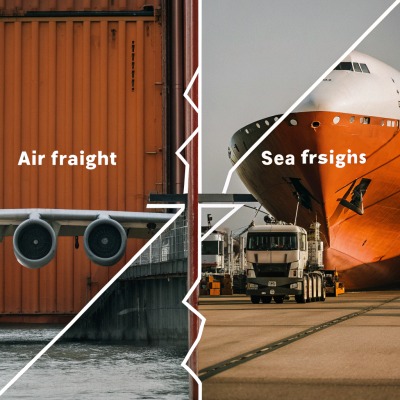
To understand the real savings, we need to look at how freight is charged. Shockwave therapy machines, especially the clinical models with touchscreens and heavy compressors, are dense but also require bulky protective packaging.
Air freight carries a premium because you are paying for speed Air freight carries a premium 1 and the limited capacity of the aircraft. Carriers charge based on the greater of actual actual weight or volumetric weight 2 weight or volumetric weight. volumetric weight 3 Since we pack our machines in foam-lined boxes to protect the delicate applicators and screens, the volume often pushes the price up.
Sea freight, on the other hand, is all about volume. If you are shipping Less than Container Load (LCL), you pay per cubic meter (CBM). The cost per unit drops dramatically once you fill even a small portion of a container.
The Cost Breakdown
Let’s look at a realistic example for a standard batch of 20 units of our portable radial shockwave machines.
Table 1: Cost Comparison for 20 Shockwave Machines (Approx. 400kg Total)
| Cost Factor | Air Freight (Express/Cargo) | Sea Freight (LCL – DDP) | Estimated Savings |
|---|---|---|---|
| Freight Cost | $4,500 – $6,000 | $800 – $1,200 | ~$3,300+ |
| Customs & Duty | Paid separately upon arrival | Often included in DDP | Variable |
| Inland Trucking | Included in Express | Included in DDP | Neutral |
| Cost Per Unit | $225 – $300 | $40 – $60 | ~$200 per unit |
Why Volumetric Weight Matters
Even if a machine is relatively light, the box dimensions can kill your budget in air freight. A standard box for a clinical device might measure 50x40x40cm.
- Actual Weight: 15kg.
- Volumetric Weight (Air): (50x40x40)/5000 = 20kg.
- You pay for 20kg, not 15kg.
In sea freight, that same box is just 0.08 CBM. You would need to ship 12 of them to even reach 1 CBM. This is why we always advise our partners: if you can wait, the ocean is your best friend for profitability.
Will choosing air freight significantly reduce my lead time for urgent inventory replenishment?
There is nothing worse than telling a waiting clinic that their machine is stuck at a port in Long Beach. When our production lines finish a batch, we know that getting it into your hands quickly is often more valuable than saving a few hundred dollars on shipping.
Yes, air freight reduces lead times to 5–10 days, whereas sea freight requires 30–45 days. This speed is critical for preventing stockouts during high-demand periods, ensuring your clinic setup or inventory replenishment happens without costly operational delays.
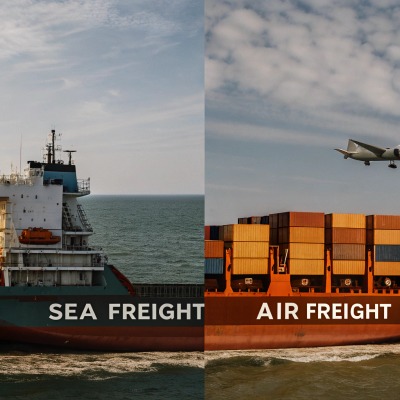
Time is money, especially when you have pre-orders. If you sell a shockwave therapy machine for $3,000, being out of stock for a month means lost revenue shockwave therapy machine 4 that far exceeds the cost of air shipping.
The Transit Timeline
Air freight is straightforward. A courier like DHL or FedEx picks up the machines from our Guangzhou warehouse, flies them to a hub (like Anchorage or Memphis), clears customs electronically, and delivers them to your door.
Sea freight is a complex chain. The goods must move from our factory to the port, wait for the vessel, sail across the ocean, wait for a berth at your local port, clear customs, get unloaded, and then finally get trucked to you.
Table 2: Estimated Transit Times from China to US West Coast
| Shipping Method | Port-to-Port Time | Door-to-Door Estimate | Best Use Case |
|---|---|---|---|
| Air Express (DHL/UPS) | 3-5 Days | 5-7 Days | Samples, Urgent Orders |
| Economy Air Cargo | 7-10 Days | 10-15 Days | Mid-sized urgent batches |
| Fast Sea (e.g., Matson) | 11-14 Days | 18-22 Days | Restocking popular items |
| Standard Sea Freight | 25-35 Days | 40-50+ Days | Bulk inventory, low cost |
The "Hybrid" Strategy
We often suggest a middle ground to our clients. If you order 50 machines, you don't have to ship them all the same way.
- Ship 10 units by Air: This stocks your inventory immediately (within 7 days).
- Ship 40 units by Sea: These arrive 4-5 weeks later to replenish stock at a much lower cost.
This approach keeps your cash flow healthy (by using cheaper sea freight for the bulk) while keeping your customers happy (by having immediate stock). It prevents the "out of stock" label on your website that drives buyers to competitors.
Is there a higher risk of damage to my shockwave machines with sea freight compared to air transport?
We treat every device, especially those with sensitive touchscreens and pneumatic valves, with extreme care on our assembly floor. Naturally, we worry about how they will handle a month-long journey across the ocean compared to a smooth, short flight.
Sea freight carries higher risks of moisture corrosion and physical impact due to long transit times and container handling. However, using vacuum-sealed bags and ISPM 15 wooden crates effectively mitigates these dangers, making sea transport safe for bulk orders.
The environment inside a shipping container can be harsh. Known as "container rain," temperature fluctuations can cause cause condensation to form 5 condensation container rain 6 to form on the ceiling of the container and drip onto your cargo. For a medical device containing electronic boards and pneumatic pumps, moisture is the enemy. medical device 7
Protecting the Internals
Air freight is generally safer because the handling is quicker and the environment is more controlled. However, sea freight is perfectly safe if the packaging is done right. We don't just put a machine in a cardboard box and hope for the best.
Our Packaging Protocol for Sea Freight:
- Moisture Barrier: We wrap the machine in a heavy-duty plastic bag with desiccant packs (silica gel) inside to absorb humidity.
- Physical Protection: The blue and white housing of the device is prone to scratches. We use custom-molded foam that suspends the unit, ensuring it doesn't touch the outer box walls.
- External Armor: For sea shipments, we often palletize boxes or use wooden cases (plywood) to prevent crushing.
Risk Comparison Table
You need to know what you are up against so you can insure your shipment properly.
Table 3: Risk Factors – Air vs. Sea
| Risk Type | Air Freight | Sea Freight | Prevention Strategy |
|---|---|---|---|
| Moisture/Corrosion | Low | High (Salt air, humidity) | Vacuum sealing + Desiccants |
| Physical Shock | Moderate (Conveyor belts) | High (Crane loading, rough seas) | High-density foam + Palletizing |
| Theft/Loss | Very Low | Low | Insurance (110% of value) |
| Temperature | Controlled | Uncontrolled (unless Reefer) | Avoid shipping in extreme heat waves |
For the specific skeletal figure touchscreen on your device, the risk of cracking is actually similar in both modes if the box is dropped. The key difference is stacking. In sea containers, heavy items might be stacked on top of your goods. That is why we insist on using "Do Not Stack" labels or reinforced crates for sea shipments.
At what order volume does it make financial sense for me to switch from air to sea shipping?
We often review past invoices with our long-term partners to optimize their supply chain. There is a specific “tipping point” where the fixed costs of sea shipping are diluted enough to make it the clear winner over air transport.
It makes financial sense to switch from air to sea shipping when your total shipment weight exceeds 35kg or approximately 5 to 10 units. Below this threshold, minimum port charges and documentation fees for sea freight often negate any potential savings.
Many buyers assume sea freight is always cheaper, but that is not true for small shipments. Sea freight has high fixed costs at both the origin and destination ports.
The Hidden Costs of Small Sea Shipments
If you ship just one shockwave machine (approx. 15kg) by sea, you still have to pay:
- Export documentation fees ($50+)
- Bill of Lading fees ($50+) Bill of Lading 8
- Destination handling charges ($100+)
- Customs clearance fees ($100+)
Suddenly, shipping that one machine by sea costs you $300+, and it takes 40 days. An air courier might charge you $250 and get it there in 5 days.
Determining Your Break-Even Point
In our experience, the magic number is around 35kg to 50kg (or roughly 0.5 Cubic Meters).
- 1-4 Units: Stick to Air Express (DHL/FedEx). The speed justifies the cost, and it is hassle-free (door-to-door).
- 5-15 Units: This is the "grey zone." Air freight is expensive, but LCL (Less than Container Load) sea freight has high minimums. We often recommend "Fast Sea" (like Matson to the US) or Air Cargo (airport-to-airport) here.
- 20+ Units: Sea freight is the undisputed winner. You have enough volume to dilute the fixed port fees, bringing your per-unit shipping cost down to rock bottom.
Strategic Planning for 2025
Given the current global logistics climate, we advise planning your orders quarterly. Instead of ordering 5 machines every month via air, try to order 15 machines once a quarter via sea. You will likely save enough on freight to pay for the cost of one entire machine. This "freight dividend" can be reinvested into your marketing or used to offer competitive pricing to your downstream salons.
Conclusion
Choosing between air and sea freight for your shockwave therapy machines is not just about the price tag; it is about aligning your logistics with your business speed. If you are in the launch phase or need urgent stock, air freight is an investment in speed and customer satisfaction. Once you stabilize and your volume grows past 10 units, switching to sea freight—especially with DDP terms—will unlock DDP terms 9 significant profit margins. By understanding these trade-offs, you can turn your supply chain from a cost center into a competitive advantage. supply chain 10
Footnotes
1. Authoritative industry body explaining air cargo economics. ↩︎
2. Official industry standard for calculating chargeable weight. ↩︎
3. IATA sets global standards for air cargo weight and volume calculations. ↩︎
4. Clinical guidance on shockwave therapy from the UK’s National Institute for Health. ↩︎
5. Background on the physical process of condensation which affects cargo in containers. ↩︎
6. Technical explanation of moisture condensation risks in shipping. ↩︎
7. ISO 13485 is the international standard for medical device quality management systems. ↩︎
8. Official government definition of this required shipping document. ↩︎
9. Official source for Incoterms definitions and obligations. ↩︎
10. Academic definition of supply chain management from NC State University. ↩︎

 English
  Español de México
  Deutsch
  Français
  العربية
  Русский