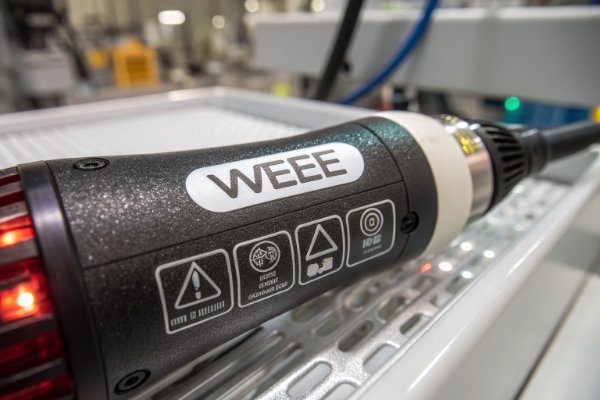
Working on the production side of shockwave therapy systems, I often notice buyers are unsure whether these devices must follow the EU WEEE rules, especially when entering European markets for the first time.
Yes, shockwave therapy machines must comply with the EU WEEE Directive because they are reusable electrical medical devices, and therefore fall within the WEEE scope unless they meet very specific exclusions that apply only to certain infective single-use medical devices.
Understanding this compliance early prevents shipment delays, customs issues, and legal problems for distributors across EU Member States.
What responsibilities do manufacturers have under WEEE regulations?
From the perspective of a company that designs and produces electrical medical equipment, we regularly review WEEE obligations because European buyers expect clear documentation and proof of compliance before importing.
Manufacturers must comply with the full set of obligations defined in Directive 2012/19/EU on Waste Electrical and Electronic Equipment 1.

Manufacturers must follow detailed responsibilities when selling electrical equipment in the EU. These responsibilities ensure environmental management throughout the product’s life cycle, especially at disposal.
Producer registration obligations
Manufacturers must register as a “producer of EEE” in every EU Member State where the device is sold. This requirement is outlined in EU producer responsibility rules for electrical equipment 2. Registration cannot be done once centrally; it must be done individually in each country.
Financial responsibility for end-of-life
Producers must financially support or organize the recycling and safe disposal of devices placed on the market. This aligns with the financial obligations defined by EU Extended Producer Responsibility (EPR) systems 3.
Design and environmental responsibility
Manufacturers must consider recyclability during product development. Requirements for environmentally responsible design are described in EU eco-design and recyclability guidance for EEE 4.
Manufacturer responsibility table
| Responsibility Type | Requirement Description | Applies to Shockwave Machines? |
|---|---|---|
| Registration | National WEEE producer registration per country | Yes |
| WEEE marking | Crossed-out wheeled bin symbol | Yes |
| Annual reporting | Amount of EEE placed on the market | Yes |
| Financing recycling | Pay for collection and treatment | Yes |
| Design for recycling | Make dismantling and material separation easier | Yes |
| User instructions | Provide disposal and recycling guidance | Yes |
What labeling and documentation are required for compliance?
Because our team supports many EU distributors, we prepare WEEE labeling and documentation packages to ensure smooth audits and customs clearance.
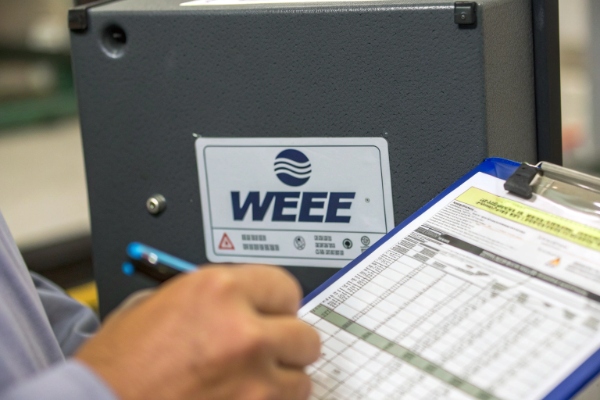
WEEE compliance requires several elements defined in European Commission guidance on WEEE marking and information 5.

Manufacturers cannot simply place a sticker on the packaging. WEEE marking must be physically on the device and visible.
Key labeling requirements
- Crossed-out wheeled bin symbol
Rules for symbol size and format appear in EU symbol requirements for electrical equipment 6. - Bar marking under the bin
- Manufacturer identification
- Durability of marking
Required documentation
Buyers should expect:
- WEEE compliance declaration
- Producer registration proof
- Disposal instructions
- Waste-handling guidance
- Annual reporting summaries
These requirements align with EU documentation and conformity responsibilities for EEE 7.
How can buyers verify that suppliers meet WEEE obligations?
Buyers can verify compliance by checking registration numbers, inspecting WEEE marking, reviewing documentation, confirming recycling scheme participation, and checking government registries.
This process is supported by official national databases such as WEEE Europe’s producer registration directory 8.
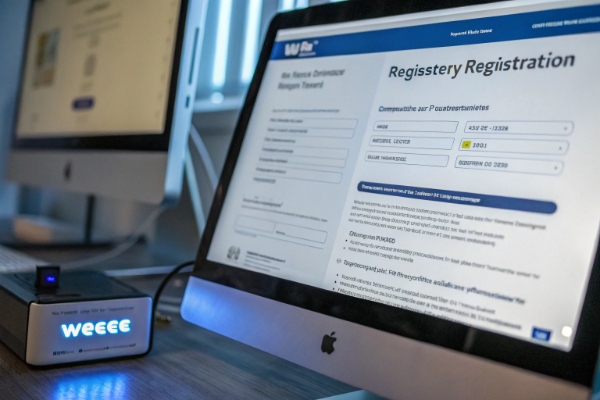
EU Member States also maintain individual registries, and many link through the European Recycling Platform (ERP) 9.
Does WEEE compliance affect long-term product disposal and recycling?
WEEE compliance ensures shockwave therapy machines follow controlled end-of-life handling and recycling processes, preventing improper disposal.
These processes reflect the framework described by the European Environment Agency’s e-waste management overview 10.
Conclusion
Shockwave therapy machines must comply with the EU WEEE Directive because they are reusable electrical medical devices, and compliance ensures legal placement on the market, proper labeling, full producer responsibility, and safe long-term disposal through certified recycling pathways.
Footnotes
1. EU WEEE Directive legal text and scope. ↩︎
2. EU guidance on producer responsibilities. ↩︎
3. Overview of EU Extended Producer Responsibility. ↩︎
4. EU recyclability and eco-design guidance for EEE. ↩︎
5. Official WEEE marking and documentation rules. ↩︎
6. EU symbol requirements for WEEE compliance. ↩︎
7. EU technical documentation requirements for EEE. ↩︎
8. WEEE Europe producer compliance portal. ↩︎
9. European Recycling Platform official site. ↩︎
10. EU environmental agency e-waste management overview. ↩︎

 English
  Español de México
  Deutsch
  Français
  العربية
  Русский