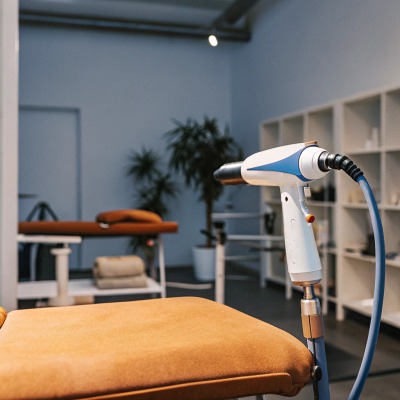
Nothing frustrates a clinic owner more than equipment failure during a busy day. We build our systems to prevent [prevent burns](https://www.ncbi.nlm.nih.gov/books/NBK539716/) 1 the embarrassing downtime that occurs when cheap cooling components overheat and shut down mid-treatment.
Verifying cooling standards requires checking for IEC 60601 thermal safety reports and confirming the presence of active monitoring sensors. You must ensure the device maintains surface temperatures below 40°C and features automatic cool-down protocols to protect internal components during heavy clinical workloads.
To ensure your investment lasts, you must understand the specific operational limits of the cooling architecture.
How long can the shockwave machine run continuously without overheating?
Our engineering team tests runtimes rigorously because we know that unexpected pauses destroy patient trust. If a machine overheats after just ten minutes, it disrupts your revenue flow and damages your professional reputation.
Professional shockwave machines should run continuously for at least 20 to 30 minutes, or roughly 6,000 pulses, without triggering a thermal shutdown. This duration covers most complex treatments, ensuring the device handles high-volume patient turnover without forcing clinicians to wait for cool-down cycles.
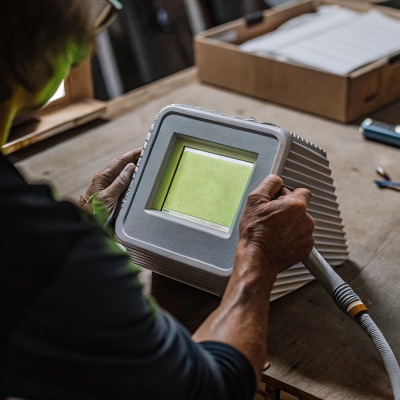
Understanding Duty Cycles in Clinical Settings
When we design the thermal management for a new model, we simulate a "busy clinic" scenario. In a real-world setting, a therapist might treat three distinct areas on a patient—such as the shoulder, lower back, and knee—in a single session. This often requires 6,000 to 8,000 shocks delivered in rapid succession. If the cooling system is under-engineered, the device will hit its thermal limit halfway through the second area.
The "Duty Cycle" is the ratio of operating time to resting time. A high-quality professional unit usually boasts a duty cycle that allows for continuous operation at typical clinical frequencies (e.g., 10Hz to 15Hz). Lower-end units often require a "1:1" ratio, meaning if you run the machine for 10 minutes, you must let it rest for 10 minutes. This is unacceptable for a profitable practice.
The Role of Smart Sensors
Reliability comes from intelligence inside the machine. We integrate Negative Temperature Coefficient (NTC) thermistors directly into the handpiece coils Negative Temperature Coefficient (NTC) thermistors 2 and the main power supply. These sensors provide real-time data to the central processor.
If the coil temperature exceeds a critical threshold—typically around 80°C—the firmware should automatically trigger a "Safety State." However, a superior system uses "Thermal Throttling" before shutting down. It might slightly reduce the frequency to maintain operation while the fans ramp up to maximum speed. This ensures the treatment continues without a hard stop, which is much better for the patient experience.
Critical Temperature Thresholds
You should ask your supplier for the specific trigger points of their safety mechanisms. Here is the standard we aim for in production to ensure safety without frequent interruptions:
| Component | Normal Operating Range | Warning Threshold | Shutdown Threshold | Consequence of Overheating |
|---|---|---|---|---|
| Handpiece Coil | 30°C – 60°C | 75°C | > 80°C | Pulse generation stops; risk of insulation melting. |
| Air Compressor | 40°C – 65°C | 70°C | > 75°C | Pressure loss; inconsistent shock energy. |
| Power Board | 35°C – 55°C | 80°C | > 85°C | Total system shutdown to prevent capacitor failure. |
Is an air-cooled or water-cooled system better for professional shockwave devices?
When we source components for our production lines, we constantly weigh the trade-offs between complexity and performance. Choosing the wrong cooling type can lead to loud, distracting noise or messy fluid leaks that ruin your workspace.
Water-cooled systems are generally better for high-power, focused shockwave devices used in busy clinics due to superior heat dissipation. However, air-cooled systems remain the standard for radial shockwave therapy because they are lighter, portable, and require significantly less maintenance than liquid-based alternatives.

The Mechanics of Heat Dissipation
The choice between air and water cooling largely depends on the technology generating the shockwave.
Radial Shockwave (Ballistic):
Most radial systems, like the blue and white units commonly seen in clinics, use a projectile accelerated by compressed air or an electromagnetic field. These generate heat primarily through friction and coil resistance. Here, Air Cooling is standard. We utilize high-speed Pulse Width Modulation (PWM) fans that pull air Pulse Width Modulation (PWM) fans 3 over an aluminum heat sink surrounding the barrel.
- Pros: No liquid to change, lighter handpiece, lower cost.
- Cons: The fans can be noisy (often >60dB), and the handpiece can get warm to the touch after 4,000 shots.
Focused Shockwave (Electromagnetic/Piezoelectric):
Focused waves require significantly higher energy density. The coils in these applicators generate immense heat rapidly. Water Cooling is essential here. A closed-loop circuit circulates chilled water or a coolant mixture through the handpiece and back to a radiator in the main unit.
- Pros: extremely efficient; keeps the handpiece cold even during high-energy treatments; quieter operation at the handpiece.
- Cons: Heavy, expensive, and risky. If a seal fails during shipping or use, water can damage the electronics. It also requires annual maintenance to flush the system.
Which One Fits Your Business Model?
If you are a mobile therapist traveling to patient homes, an air-cooled radial system is your only logical choice. The risk of water leaks during transport is too high with water-cooled units. However, for a stationary clinic treating chronic, deep-tissue conditions all day, a water-cooled focused unit offers the consistency needed for heavy workloads.
Comparative Analysis of Cooling Types
| Feature | Air-Cooled System | Water-Cooled System | Hybrid / Oil-Cooled |
|---|---|---|---|
| Best Application | Radial Shockwave (Physio/Chiro) | Focused Shockwave (Ortho/Urology) | High-End Radial |
| Maintenance | Low (Clean dust filters monthly) | High (Refill/Flush coolant yearly) | Medium (Sealed system) |
| Noise Level | Moderate to High (Fan whir) | Low (Pump hum) | Low to Moderate |
| Portability | Excellent | Poor (Risk of leaks) | Good |
| Cost | $ – $$ | $$$ – $$$$ | $$ – $$$ |
What specific stress tests should I request to prove the cooling system's reliability?
We encourage buyers to look beyond the brochure and demand tangible proof of performance. Datasheets can be exaggerated, but a live stress test in the lab reveals the true capabilities of the machine immediately.
Request a maximum-energy stress test where the unit runs 2,000 to 3,000 pulses at top frequency. Demand real-time temperature readings of the applicator surface to prove it stays cool, and verify that the acoustic energy output remains consistent without fading due to heat stress.
The "8,000 Pulse" Challenge
Do not settle for a 500-shot demo. When we perform quality assurance checks before shipping to the US, we run the "8,000 Pulse Challenge." quality assurance checks 4 This simulates a very heavy treatment session.
Ask your supplier to set the machine to:
- Pressure/Energy: Maximum (e.g., 5 Bar or 190mJ)
- Frequency: High (e.g., 15 Hz or 20 Hz)
- Duration: Continuous run until 8,000 shocks are delivered.
During this test, observe the following:
- Does the machine stop? It should not pause for cooling.
- Does the sound change? A "fading" sound indicates the compressor or coil is losing power due to heat.
- Is the handle holdable? The operator should not be shifting their grip due to heat.
Verifying Surface Temperature
The IEC 60601-1 standard dictates that parts applied to the patient IEC 60601-1 standard dictates 5 (Applied Parts) must not exceed 43°C IEC 60601-1 standard 6 (ideally <40°C) to prevent burns.
During the video demo, ask the supplier to use an infrared thermometer gun. Measure the metal cap of the applicator before the test and immediately after the 2,000 or 8,000 pulse run.
- Pass: Temperature rises from room temp (22°C) to roughly 35°C.
- Fail: Temperature exceeds 45°C. This indicates the internal heat sink is saturated and cannot move heat away fast enough.
The Thermal Recovery Rate
Another critical metric is how fast the machine recovers. After a heavy session, does it need 10 minutes to cool down, or is it ready in 60 seconds?
Test Protocol for Buyers:
- Run the machine until the fan speed hits maximum.
- Stop the pulses but leave the machine on (standby).
- Time how long it takes for the internal temperature reading (if displayed) to drop back to baseline.
- A high-quality cooling system with efficient airflow should recover 10°C within 2 minutes. Poor ventilation designs will trap heat, taking 10+ minutes to recover.
How does the cooling mechanism affect the overall lifespan of the handpiece and main unit?
We analyze returned units to understand why they failed, and heat is consistently the primary killer of electronics. Efficient cooling isn’t just about comfort; it preserves the internal seals and circuit boards, protecting your financial investment.
The cooling mechanism directly dictates the longevity of the handpiece projectile and internal seals. Superior heat dissipation prevents thermal expansion from warping the barrel, potentially doubling the bullet’s lifespan from one million to two million shocks and protecting the main unit’s power board.

Thermal Expansion and Mechanical Wear
In radial shockwave devices, a projectile moves back and forth inside a tube (barrel) at high speeds. radial shockwave devices 7 This creates friction. If the heat is not removed, two things happen:
- The Barrel Expands: Even a microscopic expansion changes the tolerance between the projectile and the tube. This leads to air leakage and a drop in impact energy.
- The Projectile Swells: The bullet itself gets hot. If it expands too much, it starts to scrape against the barrel wall, creating metal dust. This dust mixes with lubricant to form an abrasive paste that destroys the handpiece from the inside.
Effective air cooling keeps these metal components within a stable temperature range, maintaining tight tolerances. metal components 8 In our testing, a well-cooled handpiece can last for 2 million to 4 million shocks. A poorly cooled one often seizes up or loses power after just 1 million shocks.
Protecting the Electronics
The heat doesn't stay in the handpiece; it travels up the cable to the main unit. The capacitors on the power supply board have a rated lifespan that decreases drastically as temperature rises.
For every 10°C rise in operating temperature, the life of an electrolytic life of an electrolytic capacitor 9 capacitor is roughly halved. electrolytic capacitor 10 A machine with a "Smart Fan" system that actively monitors and cools the motherboard will likely last 5–7 years. A cheap unit with passive cooling (no fans or poor vents) may suffer a power board failure in 12–18 months.
Cost Analysis: Cooling vs. Spares
Investing in a machine with a superior cooling system saves money on consumables.
| Component Affected | Lifespan with Poor Cooling | Lifespan with Good Cooling | Estimated Replacement Cost |
|---|---|---|---|
| Projectile/Bullet | 1 Million Shocks | 2+ Million Shocks | $50 – $150 (Kit) |
| Applicator Barrel | 1 Million Shocks | 3+ Million Shocks | $200 – $400 |
| O-Rings/Seals | 2-3 Months | 6-12 Months | $20 (Maintenance) |
| Handpiece Total | Replace every year | Replace every 2-3 years | $800 – $1,500 |
By ensuring the cooling system meets high standards, you are essentially pre-paying for longevity and reducing the frequency of buying expensive replacement kits.
Conclusion
Verifying the cooling system is the single most effective way to predict the reliability of a shockwave machine. By demanding stress test data and checking for active thermal sensors, you ensure your clinic avoids costly downtime.
Footnotes
1. Medical reference on skin temperature thresholds and thermal injury prevention. ↩︎
2. Technical details on the specific sensors used for thermal monitoring. ↩︎
3. Explains the technical mechanism for controlling fan speed and noise. ↩︎
4. Official FDA regulations for quality assurance in medical device manufacturing. ↩︎
5. Official international standard for medical electrical equipment safety. ↩︎
6. Official international standard for the safety and performance of medical electrical equipment. ↩︎
7. General background on the mechanics and types of shockwave therapy devices. ↩︎
8. Research on the thermal stability of metal components in mechanical systems. ↩︎
9. Manufacturer data confirming the impact of temperature on capacitor lifespan. ↩︎
10. Information on the construction and thermal sensitivity of electrolytic capacitors. ↩︎

 English
  Español de México
  Deutsch
  Français
  العربية
  Русский