
In our experience coordinating international shipments for beauty equipment distributors, we frequently see buyers focus entirely on the machine’s technical specs while overlooking the logistics of safe delivery. Ignoring the specifics of packaging terms in the initial negotiation often leads to damaged equipment or unexpected invoices upon arrival at the destination port.
In most standard quotes for shockwave therapy machines, basic cardboard packaging is included in the unit price. However, robust options like aluminum flight cases or wooden crates often incur additional fees ranging from $50 to $150. You must explicitly verify if "Standard Export Packing" refers to a carton or a reinforced case.
Understanding these hidden variables is the key to calculating your true landed cost 1 and ensuring your investment survives the journey.
How can I confirm if packaging is included in the total price of the Shockwave Therapy Machine?
When our logistics team drafts Proforma Invoices for US partners, we meticulously itemize every cost to ensure transparency. Unfortunately, not all suppliers follow this practice, leaving room for expensive misunderstandings regarding what "FOB" actually covers.
You should verify packaging inclusion by requesting a detailed Proforma Invoice (PI) that lists "Packing" as a line item or explicitly states "Inclusive of Standard Export Packaging." Additionally, ask the supplier if the quoted price covers just the inner carton or the necessary outer protection for international pallet shipping.

Decoding the Supplier’s Quote
When you receive a quotation from a supplier, it typically looks like a simple price list. However, in the B2B beauty equipment industry, the unwritten details are often where the risk lies. A quote that simply states "FOB Price: $1,200" might technically include packaging, but "packaging" could mean a single-wall cardboard box that is insufficient for ocean freight consolidation.
To confirm what you are actually getting, you need to look beyond the final dollar figure. You must dissect the terms and conditions section of the Proforma Invoice 2. We often advise our clients to look for specific terminology that defines the "scope of supply."
Key Terms to Look For
- "Nude Packing": This means the machine is merely wrapped in bubble wrap and placed in a container. While rare for electronics, it happens with some bulk components. This is unacceptable for shockwave machines.
- "Standard Export Carton": This usually means a double-walled cardboard box with foam inserts. This is the industry standard for air express but carries higher risks for LCL (Less than Container Load) sea shipments where boxes are stacked.
- "Wooden Case / Flight Case Included": This is the gold standard we aim for. If the quote doesn’t explicitly say this, you should assume you are getting standard cardboard.
The "Free Shipping" Trap
Some suppliers offer "Free Shipping" to North America. Be very careful here. To offset the shipping cost, they often use the cheapest, lightest packaging possible to reduce the volumetric weight. This significantly increases the risk of your machine arriving with a cracked screen or misaligned pneumatic compressor due to rough handling.
Questions to Ask Your Sales Rep
Don’t be afraid to be direct. We appreciate it when educated buyers ask us these specific questions about Incoterms 3:
- "Does the EXW/FOB price include an aluminum flight case, or just a cardboard box?"
- "If I require a wooden crate for extra protection during LCL shipping, what is the surcharge?"
- "Will you provide photos of the packaging before the goods leave your factory?"
Comparative Quote Analysis
Here is how two different suppliers might quote the same machine, and how the packaging cost is hidden:
| Quote Component | Transparent Quote Structure | Hidden Cost Quote Structure |
|---|---|---|
| Unit Price | $1,500 | $1,450 |
| Packaging Line Item | Included (Aluminum Case) | Included (Standard Box) |
| Upgrade Option | N/A | +$80 for Flight Case |
| Total Real Cost | $1,500 | $1,530 (after upgrade) |
| Risk Level | Low | High (if not upgraded) |
What type of packaging is provided by the supplier for safe transport?
Our warehouse staff spends hours testing different foam densities because shockwave machines contain sensitive pneumatic components that do not react well to impact. A simple drop can misalign the internal projectile mechanism if the padding is insufficient.
Suppliers typically provide three tiers of packaging: standard 5-ply cardboard cartons for air express, aluminum flight cases for frequent transport or mobile clinics, and plywood crates for sea freight consolidation. For shockwave machines, an aluminum case with high-density EVA foam inserts is the recommended standard to prevent internal calibration shifts.

The Anatomy of Safe Packaging
Shockwave therapy machines are structurally different from diode lasers or cryotherapy devices. They contain a mechanical "gun" or handpiece that generates physical impact. Inside the main unit, there is often an air compressor (for pneumatic systems) that is heavy and mounted on rubber dampers. If the packaging doesn’t secure this compressor, it can tear loose during the violent vibrations of transit.
Tier 1: The Cardboard Carton (The "Standard")
This is what you get if you don’t ask for an upgrade.
- Structure: 5-layer or 7-layer corrugated cardboard.
- Inner Material: Usually white Styrofoam (EPS).
- The Risk: Styrofoam is brittle. One hard impact cracks the foam, leaving your machine rattling around inside the box. We generally only recommend this for small, handheld home-use devices, not professional clinic equipment.
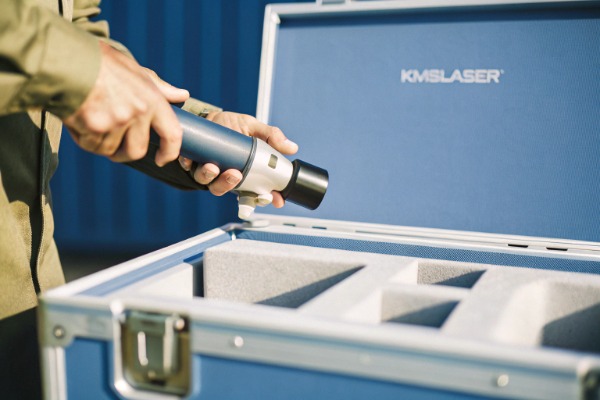
Tier 2: The Aluminum Flight Case (The "Professional")
This is the option we recommend for 90% of our US clients, particularly distributors.
- Structure: Plywood covered in aluminum sheets, reinforced with steel ball corners.
- Inner Material: EVA foam 4. This is the black, rubbery foam that bounces back. It absorbs shock much better than Styrofoam.
- The Benefit: Aluminum flight cases 5 are reusable. If you are a distributor, you can ship the machine to your customer in the same case. If you are a mobile therapist, you can wheel it into clinics.
Tier 3: The Plywood Crate (The "Tank")
If you are shipping via LCL 6 (Less than Container Load) sea freight, you need a wooden crate.
- Structure: Non-fumigation plywood (compliant with ISPM 15 7 regulations).
- The Benefit: It prevents other heavy cargo from crushing your machine.
- The Downside: It is heavy and requires a crowbar to open. It is not reusable.
Are there extra charges for customized or branded packaging?
We frequently collaborate with brand owners to create an "unboxing experience" that rivals consumer electronics, but this level of detail requires custom manufacturing. It is rarely free unless your order volume is substantial enough to offset the tooling costs.
Yes, customized packaging almost always incurs extra charges unless you meet a Minimum Order Quantity (MOQ), typically around 50 units. Common costs include a one-time setup fee for printing plates (approx. $100) and a per-unit surcharge for custom-cut EVA foam or full-color box printing.

The Cost of Building Your Brand
For our distributor clients in the US, the machine is just the hardware; the brand is the product. You want your customer to see your logo the moment the truck drops off the pallet. For medical devices, standard export packing 8 should always be the baseline before adding aesthetic branding.
Logo Printing vs. Full Customization
There is a big difference between slapping a sticker on a box and designing a custom enclosure.
- Silk Screen Printing: We can print your logo on the aluminum flight case.
- Cost: Usually free for orders over 5-10 units. For single units, there might be a small setup fee.
- Lead Time: Adds 2-3 days to the production schedule.
- Custom Carton Design: Full-color printing on the outer cardboard box.
- MOQ: Box manufacturers usually require a run of 500 boxes.
- Workaround: If you only order 50 machines, you still have to pay for 500 boxes. We can store the leftovers in our warehouse for your future orders.
- Custom Foam Inserts: If you want to include extra gel bottles or a second handpiece in the box, we need to cut a new foam mold.
- Mold Fee: A one-time fee of $100-$300 depending on complexity.
How do packaging costs affect my overall purchasing budget?
Our shipping department calculates "Volumetric Weight" daily, and it is the single biggest factor that surprises clients when they see the final logistics invoice. A better box protects your machine but also expands your freight bill significantly.
Packaging costs affect your budget in two ways: the direct cost of the case ($50–$150) and the indirect increase in shipping fees due to higher volumetric weight. Upgrading to a flight case can increase the billable weight by 10-15kg, potentially adding $100+ to air freight costs.

The Hidden Multiplier: Volumetric Weight
Shipping companies (DHL, FedEx, UPS) do not just weigh the box. They measure the size. Understanding volumetric weight 9 is critical because the formula is usually (Length x Width x Height) / 5000.
- Scenario: A shockwave machine weighs 15kg.
- In Cardboard: The box is tight. Volume weight might be 18kg. You pay for 18kg.
- In Flight Case: The case adds bulk and padding. Volume weight might jump to 28kg.
- The Impact: If air freight is $8/kg, the cardboard shipping is $144. The flight case shipping is $224.
- The Reality: You are paying an extra $80 for shipping plus the $100 cost of the case. Total extra cost: $180.
Is It Worth It?
As a purchasing manager, you have to balance the budget. Is that $180 worth it?
- If you are a distributor: YES. A broken machine damages your brand reputation. The cost of processing a return, sending parts, and calming an angry doctor is far higher than $180.
- If you are a salon owner (User): MAYBE. If you are buying a single unit for a permanent spot in a room, you might risk the cardboard option (if it is reinforced) to save money. However, ensure you have insurance.
Balancing Protection vs. Cost
There is a middle ground. For bulk orders (sea freight consolidation 10), volumetric weight matters less because you pay by the cubic meter (CBM).
- Strategy: For sea freight, use the flight case. The shipping cost difference is negligible, and you get the reusable case for free storage.
- Strategy: For air freight, ask us for "Reinforced Carton" packing. We use the standard box but add plastic corner guards and wrap it in a waterproof membrane. It offers 80% of the protection of a flight case without the volume penalty.
Conclusion
Packaging is not just a disposable wrapper; it is the insurance policy for your shockwave therapy machine. While basic costs are often bundled, professional flight cases and branding will increase your budget. Always verify the specific packaging type in your quote and calculate the volumetric weight impact on shipping to ensure your procurement budget is accurate and your equipment arrives safe and sound.
Footnotes
1. Calculation of the total cost of a product once it has arrived at the buyer’s door. ↩︎
2. Guide to understanding the specific terms and usage of proforma invoices in trade. ↩︎
3. Official rules for the interpretation of international commercial trade terms. ↩︎
4. Technical properties of EVA foam used for high-impact protective packaging. ↩︎
5. Comparison of hard shipping cases for the safe transit of high-value goods. ↩︎
6. Explanation of Less than Container Load shipping for smaller international orders. ↩︎
7. Global standard for treating wood packaging to prevent the spread of pests. ↩︎
8. Requirements and standards for professional export-grade packaging materials. ↩︎
9. How shipping carriers calculate costs based on package volume versus actual weight. ↩︎
10. Logistics overview of combining multiple shipments into a single container for efficiency. ↩︎

 English
  Español de México
  Deutsch
  Français
  العربية
  Русский