We know the feeling: you negotiated a great factory price, paid the shipping invoice, and eagerly awaited your new equipment. Then, just days before delivery, you receive a confusing bill from FedEx or a customs broker demanding hundreds of dollars in "fees." In our experience supporting US distributors, this is the single most common frustration for first-time importers.
Yes, importing a shockwave therapy machine typically triggers additional fees upon delivery, including Customs Duties (tariffs), Merchandise Processing Fees (MPF), Harbor Maintenance Fees (HMF) for sea freight, and carrier brokerage charges. Unless you specifically negotiated "DDP" (Delivered Duty Paid) terms, these costs are the buyer’s legal responsibility and are billed separately from the supplier’s invoice.
Understanding these costs upfront turns a nasty surprise into a manageable line item on your budget.
What types of extra charges might I encounter when my Shockwave Therapy Machine arrives?
When our logistics team prepares export documents for a US-bound shipment, we see exactly what the US Customs and Border Protection 1 (CBP) looks for. It is not just about the "tariff"; it is a stack of administrative fees that can add up quickly.
Common extra charges include the standard Import Duty based on the HS Code, the "Section 301" additional tariff on Chinese goods (currently 25% for many medical devices), the Merchandise Processing Fee (MPF) charged by Customs, and the Customs Brokerage Fee charged by the courier (DHL/FedEx) for processing the paperwork on your behalf.

1. Customs Duty and Section 301 Tariffs
This is usually the biggest chunk.
- Standard Duty: Based on the HS Code 2. For massage or physical therapy apparatus, the standard rate might be low (e.g., 2-3%).
- Section 301 Tariff: This is a specific tariff action 3 on Chinese goods. Depending on the exact classification, this can add a significant 25% tax.
- Manufacturer Insight: We often see clients misclassify machines to save money. Be careful—CBP audits are expensive.
2. Merchandise Processing Fee (MPF)
This is an administrative fee charged by the US government.
- Formal Entry (Value > $2,500): Starting October 1, 2025, the MPF minimum 4 for formal entries is $33.58, and the maximum is $651.50, while the rate remains 0.3464%.
- Informal Entry: For lower-value shipments, the fee is approximately $2.69.
3. Harbor Maintenance Fee (HMF)
If you chose sea freight to save money, this fee applies.
- Cost: The HMF rate 5 is 0.125% of the cargo value.
- Applicability: Only applies to ocean freight imports arriving at US ports. Air freight is exempt.
4. Carrier Brokerage Fees
DHL, FedEx, and UPS are not just driving the truck; they act as your customs broker.
- Complex Entry: Since these are medical devices, the courier charges an FDA clearance fee 6, usually ranging from $20 to $50.
- Disbursement Fee: If the courier pays the duty for you in advance, they charge a fee (usually 2-3% of the duty amount).
How can I estimate total landed costs before placing an order?
We believe that a "cheap" machine with expensive hidden fees is not a good deal. To calculate your Return on Investment (ROI) accurately, you need to calculate the landed cost 7—the final price of the machine sitting in your clinic.
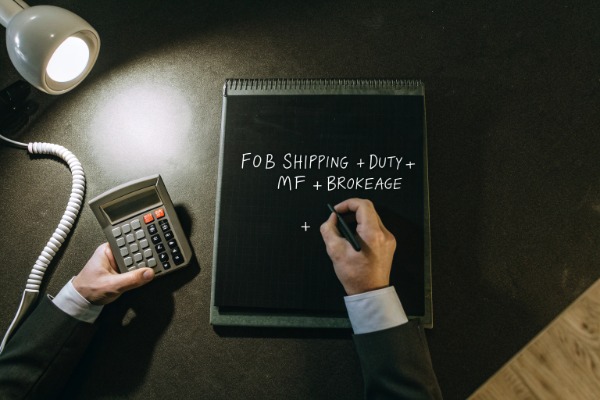
To estimate total landed costs, use this formula: FOB Price + Shipping Cost + (Customs Value × Duty Rate) + (Customs Value × 0.3464% MPF) + Brokerage Fees. You must ask your supplier for the exact HS Code (typically 9018.90 or 9019.10) to look up the correct rate.
Step 1: Get the HS Code
The Harmonized System code determines your tax rate.
- Common Codes: 9019.10 (Massage/Mechano-therapy) or 9018.90 (Electro-medical instruments).
Step 2: Determine the Value
Customs duties are calculated on the declared value of the goods (FOB value), not including shipping in the US.
Step 3: Check the Section 301 List
Search the US International Trade Commission 8 (USITC) website to see if your code currently carries the 25% penalty tariff.
Who is responsible for paying any additional fees at delivery?
In international trade, assumptions are expensive. Many buyers assume "Shipping Included" means "To My Door, All Paid." This is rarely the case unless clearly specified.
Under standard Incoterms like EXW, FOB, CIF, or DAP, the buyer (Importer of Record) is legally responsible for paying all duties and taxes. The only exception is if you negotiate "DDP" (Delivered Duty Paid) terms, in which case the supplier handles the payment to US Customs directly.
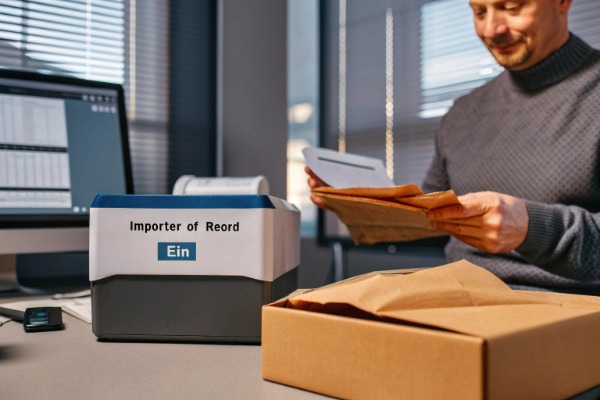
The "Importer of Record" (IOR)
You will need to provide your Employer Identification Number 9 (EIN) to the carrier to clear the goods.
DDP: The "Hassle-Free" Option
We offer DDP shipping to many US clients. We calculate the total landed cost 10 in advance and add it to your invoice. The package arrives like a standard local delivery.
How do I avoid unexpected charges when importing Shockwave Therapy Machines?
We have seen shipments stuck in customs accumulating storage fees simply because a phone number was missing. Avoiding these "stupid taxes" requires attention to detail.
To avoid unexpected charges, ensure your supplier includes the correct HS Code and your Tax ID (EIN) on the commercial invoice. Additionally, for sea freight, ensure the "ISF 10+2" filing is submitted 24 hours before the ship leaves China to avoid a mandatory $5,000 fine from US Customs.

The ISF Filing (Sea Freight Only)
Import Security Filing (ISF 10+2) must be filed 24 hours before the cargo is loaded in China. Failure to do so results in a $5,000 fine.
The "FDA Hold" Trap
Shockwave machines are medical devices. If the invoice lacks an FDA 510(k) 11 registration number, customs will hold it.
Conclusion
Importing directly from a manufacturer is the best way to secure high-quality equipment at a competitive price, but it requires navigating logistics costs. By understanding the difference between DDP and DAP and ensuring compliance documents like ISF filings are handled, you can ensure your final landed cost remains profitable. Plan ahead, and the process will be seamless.
Footnotes
1. US Customs guidance on de minimis rules and import documentation requirements. ↩︎
2. Database of HS codes and import prices for shockwave therapy equipment. ↩︎
3. Latest updates on Section 301 tariffs applied to Chinese medical imports. ↩︎
4. Official notice on the 2025 Merchandise Processing Fee (MPF) adjustments. ↩︎
5. Summary of current HMF and MPF rates for US customs brokers. ↩︎
6. Updated 2025-2026 medical device user fees for FDA clearance and registration. ↩︎
7. Economic definition and impact of landed cost in international procurement. ↩︎
8. Official Harmonized System overview for global trade classification standards. ↩︎
9. IRS guide on obtaining and using an EIN for business and import activities. ↩︎
10. DHL guide to calculating landed costs for international e-commerce. ↩︎
11. FDA premarket notification requirements for medical devices entering the US. ↩︎
Would you like me to help you verify the specific HS code and Section 301 tariff status for your specific machine model?

 English
  Español de México
  Deutsch
  Français
  العربية
  Русский