At KMSLASER, we understand that a stalled shipment means stalled revenue for your salon business. Delays can disrupt your launch schedule and frustrate your clients. Let’s explore how to resolve these bottlenecks effectively.
To handle delays effectively, immediately identify the root cause—whether it is a production lag or a logistics bottleneck. Negotiate a partial shipment strategy where urgent units are sent via air freight while the remainder travels by sea. Always reference your contract’s penalty clauses to enforce accountability and secure compensation for lost time.
Don’t panic when the timeline slips; instead, use these proven strategies to get your inventory moving again.
What Steps Should I Take If My Shockwave Therapy Machine Shipment Is Delayed?
When our production team encounters a supply chain hiccup, we prioritize transparency to help you adjust. Ignoring a delay only compounds the damage to your reputation and bottom line.
If your shipment is delayed, first verify the specific status of the goods to determine if they are stuck in production or customs. Request a "split shipment" solution: fly a small batch of machines via air freight to meet immediate demand, while shipping the bulk of the order via ocean freight to save costs.

Diagnosing the Root Cause
The moment you suspect a delay, you must move from passive waiting to active investigation. A delay is rarely just "bad luck"; it usually stems from one of three areas: production shortages, logistics congestion, or regulatory holds.
If the delay is at the factory level, it often means they are missing a specific component, such as the pneumatic ballistic handle for the shockwave unit. If the goods have left the factory, the delay might be at the port (common in Ningbo or Shanghai) or due to a lack of shipping containers.
You need to ask your supplier for the exact status. Do not accept "it is coming soon." Ask for:
- Photos of the current production stage.
- The booking confirmation number (SO) from the forwarder.
- The specific component causing the hold-up.
The Split Shipment Strategy
This is the most effective tactical move you can make. If you have an order of 50 shockwave therapy machines stuck, you likely don’t need all 50 tomorrow. You might only need 5 to fulfill pending pre-orders or to equip a new salon branch.
We often suggest this to our partners: Air freight the critical quantity.
- Step 1: Calculate your immediate need (e.g., 5 units).
- Step 2: Ask the supplier to ship these 5 units via DHL/FedEx or Air Cargo (3–7 days transit).
- Step 3: Ship the remaining 45 units via Ocean Freight (30–45 days transit).
This approach solves your "stockout" crisis without forcing you to pay the exorbitant cost of air freighting the entire order. It buys you time while the bulk inventory makes its way across the ocean.
Regulatory and Customs Holds
Sometimes the delay happens after the goods arrive in the US. For medical devices like shockwave machines, FDA clearance is the biggest hurdle. If your supplier did not provide the correct 510(k) clearance or if the HS code was misclassified (usually 9018.90 for therapy devices), Customs and Border Protection (CBP) will hold the shipment.
Check if your supplier provided a valid Device Listing Number and Registration Number. Without these, your goods could sit in a warehouse for weeks, accruing storage fees.
Comparison of Shipping Remediation Options
| Option | Speed | Cost Impact | Best Use Case |
|---|---|---|---|
| Full Air Freight | Fastest (5-7 days) | Very High (5x-10x ocean) | Critical launch deadline; penalty for missing it exceeds shipping cost. |
| Split Shipment | Fast for partial stock | Moderate (High for air portion, Low for sea) | mitigating stockouts while preserving margins on bulk inventory. |
| Expedited Sea (Matson) | Moderate (12-18 days) | Medium (2x standard ocean) | When air is too expensive but standard ocean is too slow. |
| Standard Ocean | Slow (30-60 days) | Lowest | Restocking inventory with no immediate urgency. |
How Do I Communicate With My Supplier About Delivery Issues?
Our sales engineers appreciate clients who communicate clearly and professionally via WhatsApp or email. Vague complaints rarely speed up the line, but precise demands drive action.
Communicate effectively by demanding specific evidence of progress, such as photos of the assembly line or raw materials, rather than accepting vague verbal promises. Schedule a video call to visually verify the status of your order. If delays persist, escalate the issue to senior management and reference potential financial penalties.
Moving Beyond "Don’t Worry"
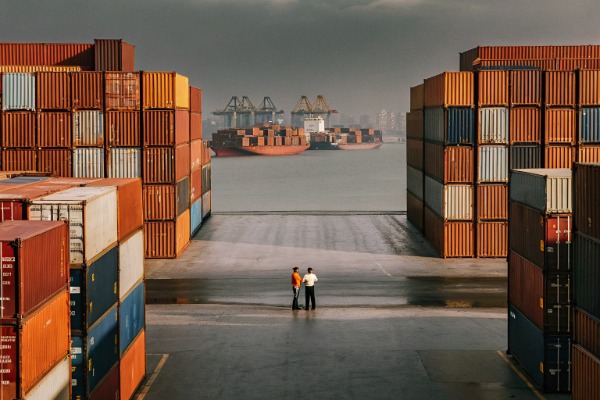
In Chinese business culture, suppliers often try to "save face" by hiding bad news until the last possible minute. They might say "don’t worry, it will ship soon" even if they haven’t started production. To break through this, you need to change your communication style from asking when to asking to see.
Instead of emailing "When will it ship?", try this:
"Please send me a photo of the 20 units on the aging test rack today. I need to show my boss that production is moving."
Cargo Insurance 2
Visual proof is harder to fake than a text message. If they cannot send a photo today, you know production is not where they claim it is.
Safety Stock 3
The Escalation Ladder
If your contact person (usually a sales representative) is giving you the runaround, you must escalate. The sales rep often has limited power over the production manager.
- Level 1: The Sales Rep. Ask for daily updates.
- Level 2: The Sales Manager. If the rep delays twice, copy their manager on the email. State clearly: "We are at risk of missing our launch. I need your intervention."
- Level 3: The Owner/CEO. For smaller factories, finding the owner on LinkedIn or asking for their WeChat is possible. A message to the boss usually gets the factory floor moving.
Leveraging Future Business
Suppliers prioritize customers who offer long-term growth. If you are a Purchasing Manager like Elizabeth, you have leverage. Remind them of the "Big Picture."
"We have a projection for 200 units next year, but we cannot proceed with a supplier who misses deadlines on the first batch. Help me fix this so we can grow together."
This shifts the dynamic from a transaction to a partnership. We, as manufacturers, are much more willing to pay for overtime labor or expedited shipping if we believe it secures a loyal, high-volume client.
Red Sea crisis 4
Communication Channels: WhatsApp vs. Email
For urgent delays, WhatsApp is king in China. Emails can be ignored for 24 hours; WeChat or WhatsApp messages pop up on our phones instantly.
Communication Protocol for Delays
| Communication Step | Channel | Tone | Objective |
|---|---|---|---|
| Initial Inquiry | Casual but firm | Get a quick status update and confirm the delay. | |
| Formal Notice | Professional | Document the delay officially for contract purposes. | |
| Evidence Request | WhatsApp/Video Call | Skeptical | Verify physical progress (photos/video). |
| Escalation | Email (CC Management) | Serious | Demand a remediation plan and revised timeline. |
Are There Contractual Protections For Late Deliveries?
We advise all our OEM partners to sign clear contracts before the deposit is paid. A well-structured agreement is your best insurance policy against indefinite delays.
Force Majeure 5
Contractual protections should include a penalty clause charging 1% of the total order value for every week of delay, capped at 10%. Additionally, include a "Time is of the Essence" clause and clearly defined Incoterms to establish liability for shipping delays and ensure the supplier prioritizes your production.

The Power of the Penalty Clause
A penalty clause is not just about getting money back; it is a tool to force prioritization. When a factory is overloaded, the production manager decides whose order gets made first. They will prioritize the client who has a penalty clause over the client who does not.
Recommended Clause Structure:
- Trigger: Penalty starts 7 days after the agreed ex-factory date.
- Rate: 1% of the total order value per week of delay.
- Cap: Maximum 10% of the total order value.
- Enforcement: The penalty amount is deducted from the final balance payment (the 70%).
Why this works: It hits the supplier where it hurts—the profit margin. If a supplier knows they will lose 5% of their revenue by being late, they will pay their workers overtime to finish your shockwave machines on time.
Incoterms Matter
Your choice of Incoterms (International Commercial Terms) dictates who is responsible for delays during transit.
- EXW (Ex Works): You are responsible as soon as goods leave the factory floor. If the truck to the port is delayed, that is your problem.
- FOB (Free on Board): The supplier is responsible until the goods are loaded onto the ship. If Chinese customs holds the goods, the supplier must fix it. We recommend FOB for most importers.
- DDP (Delivered Duty Paid): The supplier handles everything to your door. While convenient, you lose control over the shipping method. If the supplier chooses a cheap, slow carrier to save money, you can’t do much about it.
Force Majeure Loopholes
Be careful with the "Force Majeure" clause. Suppliers often try to claim that a power outage or a busy season is "Force Majeure." It is not.
Force Majeure should be strictly defined as unforeseeable events: war, natural disasters (earthquakes, floods), or government-mandated shutdowns (like COVID lockdowns). "High production volume" or "material shortage" is not Force Majeure; that is poor management. Ensure your contract explicitly states that raw material shortages do not excuse delays.
Essential Contract Clauses for Delays
| Clause Type | Purpose | Key Detail to Include |
|---|---|---|
| Late Delivery Penalty | Financial motivation for timeliness | "1% deduction per week of delay, deducted from final balance." |
| Time is of the Essence | Legal standing | States that timely delivery is a core condition of the contract. |
| Inspection Right | Quality control | "Buyer reserves the right to inspect goods before shipment." |
| Force Majeure | Limit excuses | Explicitly exclude "material shortages" or "labor disputes." |
What Can I Do To Minimize The Impact Of Shipping Delays On My Business?
Our experience shows that the most successful distributors don’t just hope for the best; they plan for the worst. Resilience is built into your inventory strategy, not just your shipping method.
HS code 7
Minimize impact by maintaining a safety stock buffer of 4–6 weeks to absorb supply chain shocks. Diversify your supplier base to avoid reliance on a single manufacturer, and utilize trade assurance programs or cargo insurance to protect your capital against financial losses caused by prolonged shipping disruptions.
Building an Inventory Buffer
The "Just-in-Time" (JIT) model is dangerous for international imports of medical equipment. The Red Sea crisis and port strikes have shown us that transit times can jump from 35 days to 60 days overnight.
You should aim for a Safety Stock of at least 4–6 weeks. This means if you sell 10 shockwave machines a month, you should always have 10–15 units in your warehouse before you place your next order. This buffer allows you to survive a month-long delay without having to tell your customers "out of stock."
Diversifying Your Supply Chain
Relying on a single factory is risky. While we love being your primary partner, a smart Purchasing Manager like Elizabeth often keeps a backup supplier warm.
- Primary Supplier (80% volume): Offers the best price and customization (e.g., KMSLASER).
- Secondary Supplier (20% volume): Maybe slightly more expensive but has stock ready to ship.
If your primary supplier has a COVID lockdown or a raw material crisis, you can ramp up orders with your secondary supplier immediately.
Customs and Border Protection (CBP) 9
Managing Downstream Expectations
If a delay is inevitable, how you tell your customers matters. Do not promise a specific delivery date if you aren’t sure.
- Under-promise, Over-deliver: If the ship is due in 10 days, tell your customer 14 days.
- Pre-selling Strategy: If you are pre-selling machines that haven’t arrived, be transparent. Offer a small discount or a free accessory (like an extra transmitter head) in exchange for their patience. This keeps the customer happy and prevents cancellations.
Financial Protection: Insurance and Payment Terms
Finally, protect your cash flow.
- Cargo Insurance: Always insure your goods for 110% of the value. Standard carrier liability is pennies per pound. If a container falls off a ship or is damaged during a delay, you need full replacement value plus profit margin (the extra 10%).
- Payment Leverage: Never pay 100% upfront unless it is a sample. The standard is 30% deposit and 70% before shipment. However, for long-term partners, we often negotiate Net 30 or 70% against the Bill of Lading (B/L). This means you don’t pay the balance until the goods are actually on the boat. This keeps the supplier motivated to get the goods shipped so they can get paid.
Conclusion
Handling delays requires proactive communication, contractual leverage, and flexible logistics. By splitting shipments, enforcing penalties, and maintaining safety stock, you can protect your business from supply chain volatility.
Ocean Freight 10
Footnotes
- Explains the critical shipping document used for payment release. ↩︎
- Explains the importance of insuring freight against loss. ↩︎
- Explains inventory management strategy to prevent stockouts. ↩︎
- Context on geopolitical events disrupting global shipping. ↩︎
- Legal definition of unforeseeable events in contracts. ↩︎
- Official rules defining responsibilities in international trade. ↩︎
- Explains the classification system used for import duties. ↩︎
- FDA requirements for marketing medical devices in the US. ↩︎
- Official US agency regulating imports and border security. ↩︎
- Explains ocean shipping logistics and transit times. ↩︎

 English
  Español de México
  Deutsch
  Français
  العربية
  Русский