When we finalize contracts for our distributors in the US, I often see critical mistakes regarding maintenance clauses. maintenance clauses 1 Our production team knows that overlooking specific component lifespans can destroy your profit margins once clinical use begins.
You must prioritize main unit duration, specific pulse-count limits for handpieces, and clear shipping liability terms. Ensure the contract explicitly defines wear-and-tear exclusions and validates whether labor or just parts are covered during the warranty period.
Let’s break down the critical clauses that protect your investment and ensure your operation runs smoothly.
Does the warranty cover high-wear consumables like the shockwave handpiece and bullets?
Our engineers frequently test handpieces to failure to establish realistic lifespan data for our technical sheets. Buyers frequently overlook that these high-stress components fail faster than the main unit, leading to unexpected replacement costs.
Most standard warranties exclude high-wear consumables like bullets and tubes or limit them to a specific pulse count, typically 1 to 3 million shocks. Always check if the handpiece coverage is time-based or strictly usage-based to avoid coverage gaps.
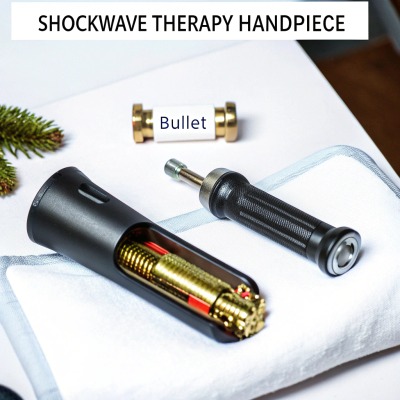
The blue and white shockwave unit sitting in your treatment room is designed for durability, but the physics of the technology dictates that certain parts will degrade. The handpiece contains a projectile—often called a "bullet"—that physically strikes a transmitter tip to generate the therapeutic wave generate the therapeutic wave 2. therapeutic wave 3 This metal-on-metal impact happens millions of times. When we draft technical documentation, we distinguish clearly between the control unit (the machine with the screen displaying the skeletal system) and the applicator.
The Pulse Count Trap
Many purchase contracts state a "1-Year Warranty" on the handpiece. However, you must read the fine print. In the industry, this is often capped by a usage metric: the pulse count. A common standard is "1 year or 2 million shocks, whichever comes first."
For a busy clinic treating 10 patients a day with 2,000 shocks per session, that equals 20,000 shocks daily. At this rate, 2 million shocks are consumed in just 100 working days—barely over three months. If your contract relies solely on time without a high pulse allowance, you might find yourself paying for repairs long before the year is up. We recommend negotiating a pulse count that matches your projected patient volume.
Defining "Wear" Versus "Defect"
It is vital to distinguish between a manufacturing defect and standard wear. manufacturing defect 4 A defect might be a sensor failure in the blue grip of the applicator or a connection error on the main screen. Wear, however, is the physical deformation of the bullet or tube. Most contracts strictly exclude wear parts.
You should request a "Consumable Life Expectancy" chart in your contract annex. This document should define exactly which parts are considered consumables. If the transmitter tip breaks after 50,000 shocks, that is likely a defect. If it wears down after 2 million, that is maintenance. Without this definition, suppliers can categorize every handpiece failure as "wear and tear" to deny your claim.
Component Coverage Breakdown
To help you visualize what to look for, we have compiled a typical coverage breakdown based on industry standards.
| Component | Standard Warranty Duration | Common Usage Limit (Pulse Count) | Nature of Coverage |
|---|---|---|---|
| Main Control Unit | 24–36 Months | None | Covers motherboard, screen, and power supply defects. |
| Handpiece Body | 12 Months | 2–5 Million Shocks | Covers internal wiring and mechanism, excluding wear parts. |
| Projectile (Bullet) | None / DOA Only | 1–2 Million Shocks (Life expectancy) | Usually considered a consumable; no warranty once used. |
| Transmitter Head | None / DOA Only | N/A | Consumable item; covered only if damaged upon arrival. |
Who bears the shipping costs for sending replacement parts or returning defective units?
Shipping heavy medical equipment from the US back to our China facility is expensive medical equipment 5 and administratively complex. Ignoring logistics terms in the contract often leads to bitter disputes when urgent repairs are needed.
Generally, the buyer pays for shipping defective units to the manufacturer, while the supplier covers the return cost of repaired items. However, negotiated contracts often require the supplier to cover all shipping fees for defects found within the first month.
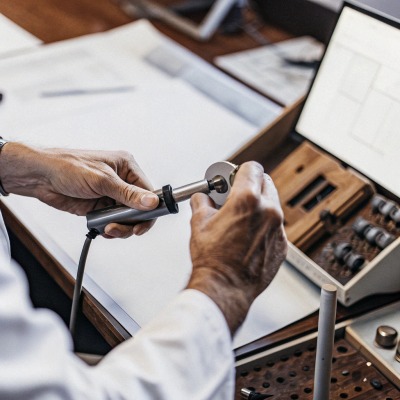
When we export machines to North America, the logistical reality of warranty claims is a major cost factor. If a machine malfunctions, the cost to air-freight a 20kg unit back to the factory can exceed $500. Who pays this bill is often the most contentious part of after-sales support.
The "Dead on Arrival" (DOA) Clause
Your contract must have a specific clause for DOA units. If you open the box and the screen displaying the skeletal diagram does not light up, or the casing is cracked, you should not pay a cent for shipping. A strong contract dictates that the supplier bears 100% of the shipping costs—both ways—if a defect is reported within the first 30 days of receipt. Without this, you risk paying shipping fees to fix a mistake that occurred before the machine even reached your warehouse.
Modular Repair vs. Full Unit Return
Modern shockwave machines are modular. shockwave machines 6 Instead of shipping the whole unit back, it is often more efficient to ship specific parts. We design our machines so that components like the screen interface or the pneumatic generator can be swapped out easily.
Your warranty terms should explicitly state that the supplier agrees to ship replacement parts via express courier (like DHL or FedEx) at their expense during the warranty period. This is faster and cheaper than returning the machine. You need to ensure the contract does not force you to "return the unit to the factory for inspection" for every minor issue, as this results in weeks of downtime.
Duties and Taxes on Warranty Parts
Another hidden cost is customs duty customs duty 7. customs duty 8 When a replacement handpiece is shipped to you, customs may treat it as a new purchase and charge tariffs. You should require the supplier to declare warranty replacements correctly on commercial invoices—often as "Warranty Replacement – No Commercial Value"—to minimize your tax liability. Clarifying this responsibility in the purchase agreement saves administrative headaches later.
| Shipping Scenario | Buyer Responsibility | Supplier Responsibility | Best Practice Negotiation |
|---|---|---|---|
| DOA (First 30 Days) | None | 100% Shipping (Both ways) | Strict 30-day window for full coverage. |
| In-Warranty Repair | Ship to Factory | Ship back to Customer | Supplier sends parts; Buyer installs locally. |
| Out-of-Warranty | 100% Shipping | None | Negotiate discounted shipping rates using supplier's account. |
Is it possible to extend the standard warranty period for my bulk orders?
When we process large orders for our US distributors, standard terms rarely suffice for their business models. Bulk buyers face higher total risk, making standard one-year agreements insufficient for their downstream commitment.
Yes, manufacturers are highly willing to extend warranty periods for bulk orders, often adding one to two years for a surcharge or volume commitment. You can leverage your order quantity to negotiate extended coverage for critical components like the generator.

For a purchasing manager importing machines to private label, the standard warranty clock starts ticking the moment the goods leave our factory. However, those machines might sit in your warehouse for three months before being sold to a salon. This gap eats into the warranty time you can offer your customers.
Leveraging Volume for Time
If you are ordering 50 or 100 units, you have significant leverage. We are often willing to extend the main unit warranty from the standard 12 months to 24 or even 36 months to secure a bulk contract. This costs us relatively little in terms of parts but adds immense value to your brand.
You should ask for the warranty start date to be tied to the "Installation Date" or "Resale Date" (up to a maximum limit, say 6 months post-shipment). This ensures that the time your inventory spends in transit or storage does not penalize your warranty coverage.
Spare Parts Instead of Extended Time
Sometimes, instead of a longer warranty on paper, it is more practical to negotiate a "Free Spare Parts Ratio." For a bulk order, you might ask for 2% free spare parts—extra handpieces, screens, or control boards included with the shipment.
This allows you to handle warranty claims from your customers instantly without waiting for us to ship parts from China. It improves your service speed and reduces downtime for the salons using your equipment. This is often more valuable than a theoretical warranty extension that still involves shipping delays.
The "Guaranteed Parts Availability" Clause
Beyond the warranty period, you need to know that parts will still be available. The blue and white design of your machine might look modern today, but in five years, models changes.
Your contract should include a clause guaranteeing that the manufacturer will keep compatible spare parts in stock for at least 5 to 7 years after the model is discontinued. This protects you from obsolescence, ensuring you can service the machines you sold even after the warranty expires.
Service Level Agreements (SLA)
For large contracts, consider adding an SLA adding an SLA 9. This defines not just what is covered, but how fast the support must be provided.
- Response Time: Supplier must respond to technical tickets within 24 hours.
- Shipment Time: Replacement parts must be dispatched within 48 hours of defect confirmation.
- Training: Supplier provides video training for your local technicians to perform repairs.
What is the specific procedure for claiming warranty support from an overseas supplier?
Dealing with time zones can delay urgent repairs and frustrate your team. Our service team knows that a vague claims process causes unnecessary friction when your equipment is down and patients are waiting for treatment.
The procedure typically requires submitting a written claim with photos, video evidence, and the serial number within seven days of the defect. You must explicitly clarify whether the supplier requires the physical return of parts before shipping replacements.

The most frustrating delays in warranty support usually stem from unclear communication protocols. When a salon reports a broken machine to you, you need a streamlined path to get a resolution from the factory. A "handshake agreement" on support is not enough; you need a defined process in the contract.
The Evidence Requirement
Manufacturers require proof before releasing free parts. In your contract, define exactly what constitutes "proof of defect." Usually, this includes:
- High-resolution photos of the damage.
- A short video showing the malfunction (e.g., the screen is on but the handpiece isn't impacting).
- The Serial Number tag located on the back of the device.
We recommend agreeing on a "Video Diagnosis Protocol." This means if we can confirm the fault via video call or recorded video, we send the part immediately without waiting to receive the broken part first. This saves weeks of shipping time.
Troubleshooting vs. Claiming
The contract should differentiate between technical support and a warranty claim. Often, an issue is just a software glitch or a loose cable that can be fixed remotely. Ensure the contract obligates the supplier to provide "Remote Troubleshooting Support" via WhatsApp or email before requiring a return.
For the shockwave machine, the interface displaying the skeletal system is software-driven. Sometimes a simple firmware update file sent via email can resolve freezing issues. Your contract should stipulate that software support is free for the lifetime of the device software support 10, not just during the hardware warranty period.
Language and Communication Channels
Do not assume support will be easy. Specify the communication channel. Email is standard for formal claims, but for urgent technical questions, instant messaging (like WhatsApp or WeChat) is far more efficient.
Ensure the contract designates a specific "After-Sales Engineer" or contact person who speaks fluent English. You do not want your urgent technical queries to go through a general sales email address that might not be monitored on weekends or holidays.
Step-by-Step Claim Flow
To avoid ambiguity, include a flowchart or a step-list in the contract annex:
| Step | Action Required | Timeframe Limit |
|---|---|---|
| 1. Notification | Buyer sends fault report (Video + SN) to Supplier. | Within 7 days of defect discovery. |
| 2. Diagnosis | Supplier engineering team reviews evidence. | Within 24 hours. |
| 3. Approval | Supplier confirms warranty status and solution (Part vs. Unit). | Within 48 hours. |
| 4. Shipment | Supplier dispatches replacement part with tracking. | Within 3 working days. |
| 5. Return | Buyer returns defective part (if requested). | Within 30 days of receiving replacement. |
Conclusion
Securing the right warranty terms is just as important as the price negotiation. By focusing on pulse-count transparency, shipping cost allocation, and bulk order extensions, you protect your bottom line from hidden maintenance costs. Always define the claim procedure clearly to ensure that when a breakdown happens, your supply chain remains resilient and your customers remain satisfied.
Footnotes
1. WHO technical series on medical device maintenance programs and management strategies. ↩︎
2. Validates the physical mechanism of shockwave generation via projectile impact. ↩︎
3. Wikipedia entry explaining the physical principles and medical applications of extracorporeal shockwave therapy. ↩︎
4. ISO 13485 specifies requirements for a quality management system where an organization needs to demonstrate its ability. ↩︎
5. FDA regulations ensure medical equipment meets safety and performance standards for clinical environments. ↩︎
6. Storz Medical provides technical documentation for high-end shockwave machines used in orthopedic therapy. ↩︎
7. Official US government guidance on determining import duty rates. ↩︎
8. Official UK government guidance on importing goods and understanding customs duty liabilities. ↩︎
9. Defines the business concept of Service Level Agreements (SLA). ↩︎
10. Wikipedia overview of software maintenance and its role in the lifecycle of technical devices. ↩︎

 English
  Español de México
  Deutsch
  Français
  العربية
  Русский