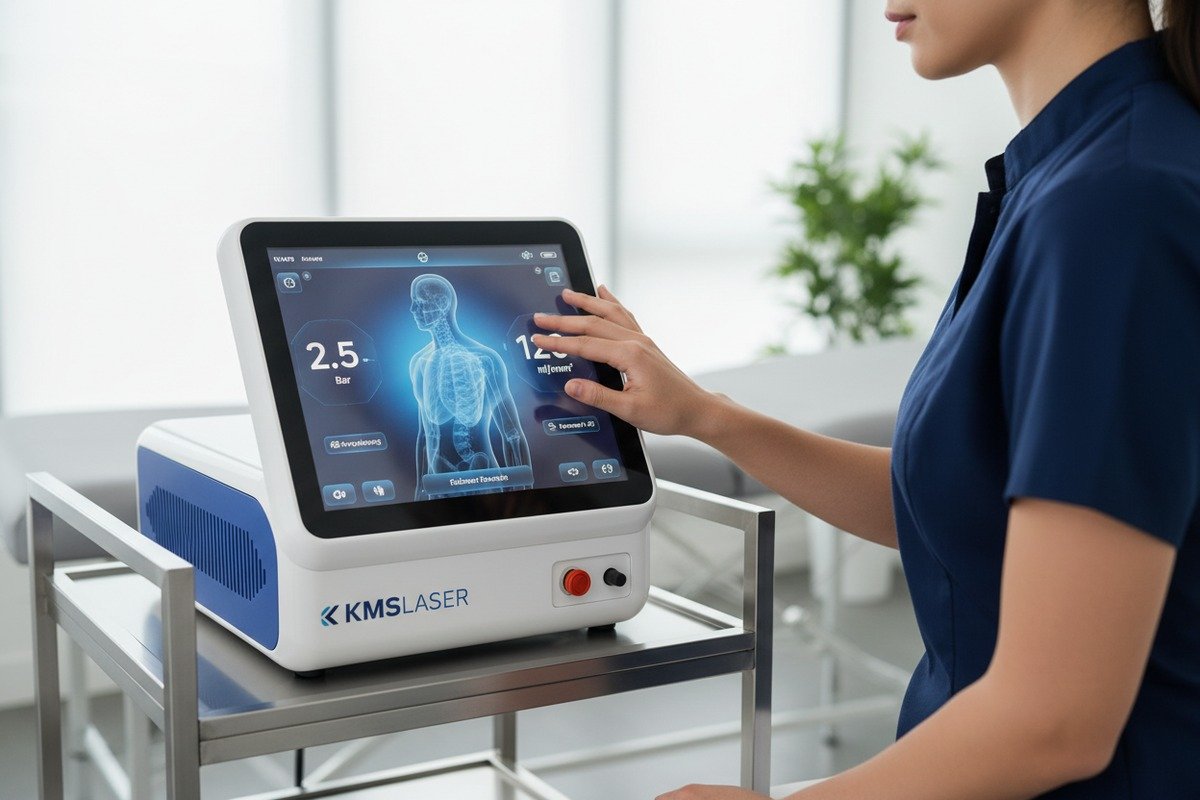
Every week, our engineering team receives emails from distributors asking the same question: “What’s the standard wattage I should look for?” shockwave therapy machine 1 The confusion is understandable. You’ve seen machines ranging from 50W to 1000W, and sales pages throw around numbers without context. Without clarity, you risk buying equipment that’s either underpowered for your clinic’s needs or overpriced for features you’ll never use.
There is no single standard wattage for shockwave therapy machines. Radial (pneumatic) devices typically consume 50W–350W, while focused (electromagnetic) models range from 200W–1000W. The therapeutic effect depends on pressure (bar) or energy flux density (mJ/mm²), not wattage alone.
This guide breaks down everything you need to know about wattage—what it actually means, how to compare suppliers, and what specifications matter most for your business Radial (pneumatic) devices 2. Let’s clear up the confusion once and for all.
How do I choose the correct wattage for my professional shockwave therapy equipment?
When we calibrate our shockwave units on the production line, wattage is just one piece of a larger puzzle focused (electromagnetic) models 3. Many buyers focus on the highest number, thinking more power equals better results. This approach often leads to overspending on features that don't improve patient outcomes musculoskeletal treatments 4.
To choose the correct wattage, first identify your primary application. Radial devices at 150W–350W suit most clinical practices for musculoskeletal treatments. Focused devices at 500W–1000W serve specialized deep-tissue therapies. Match wattage to your voltage requirements and daily usage volume.
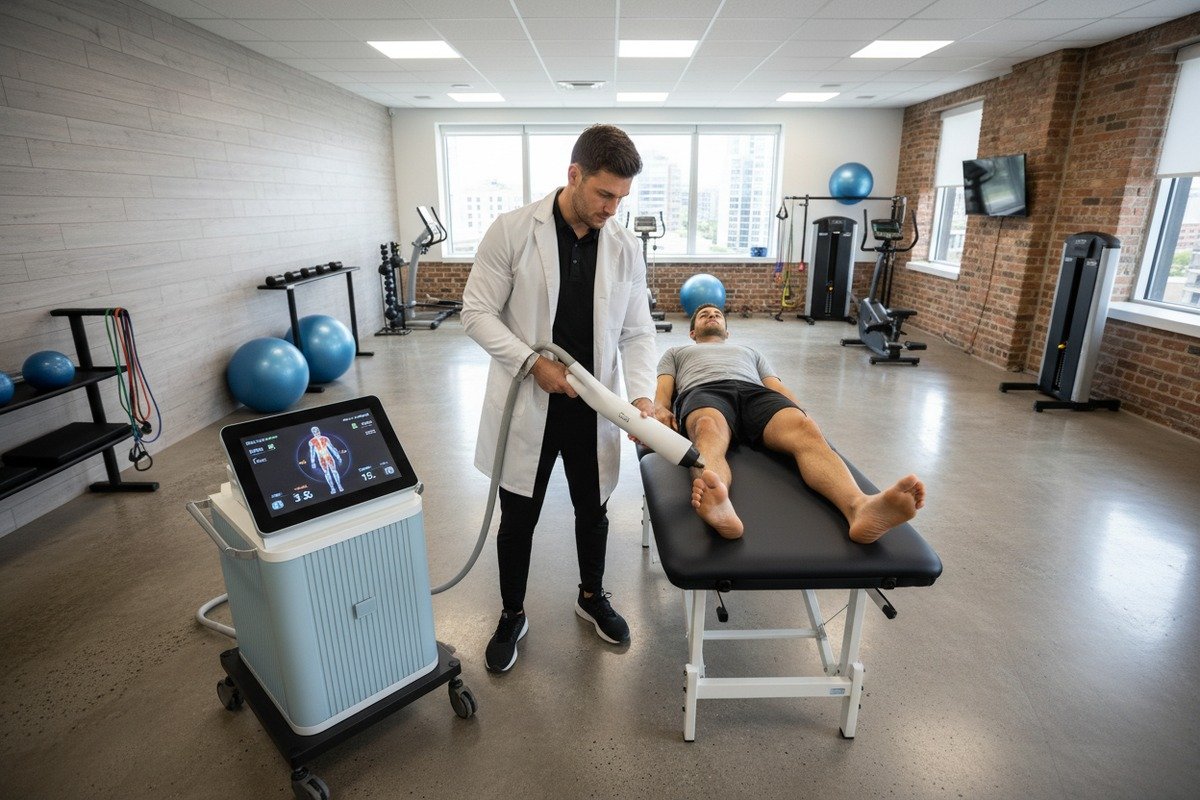
Understanding What Wattage Actually Measures
Wattage tells you how much electrical power a machine consumes. It does not directly measure therapeutic strength. A 500W machine is not automatically twice as effective as a 250W unit. The real therapeutic metrics are different.
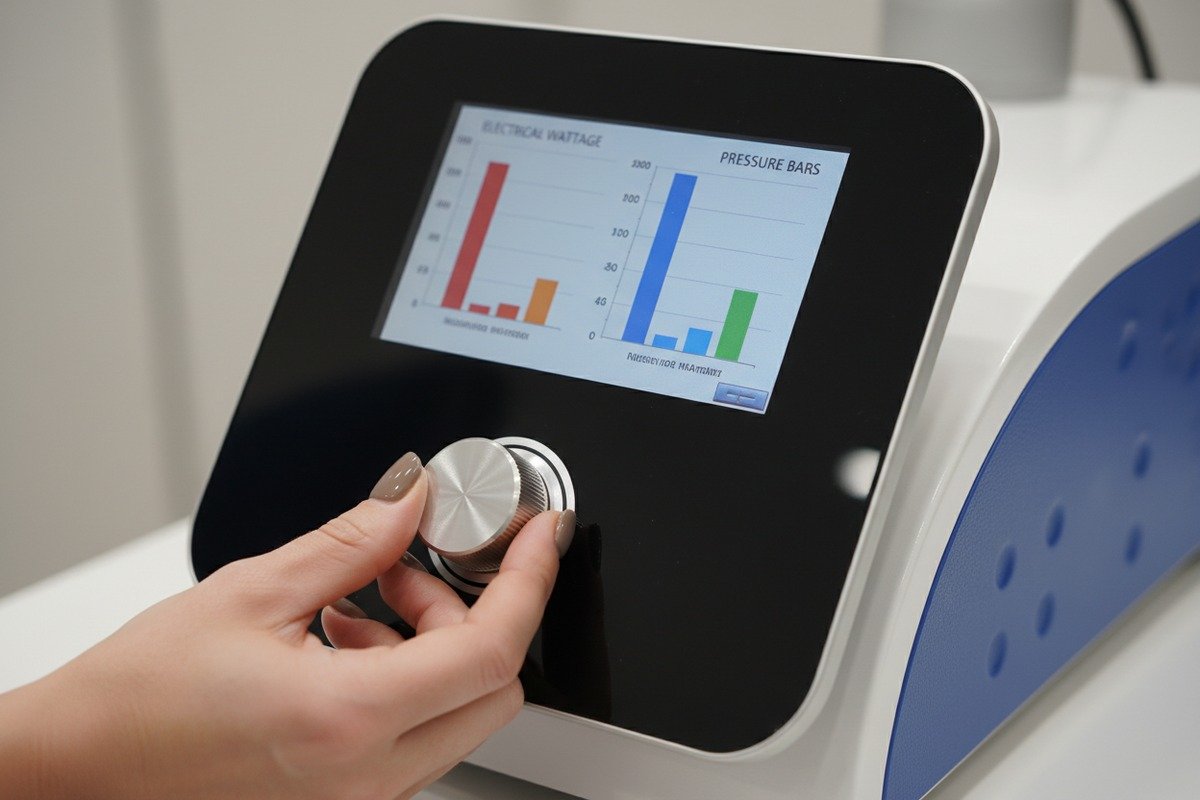
For radial shockwave devices, pressure measured in bar determines treatment intensity. Clinical protocols typically use 1–3 bar, even though machines may offer up to 5 bar. For focused devices, energy flux density (EFD) measured in mJ/mm² matters most. Effective treatments usually range from 0.10–0.30 mJ/mm².
Matching Wattage to Your Practice Type
Your daily patient volume and treatment focus should guide your choice. Here's a breakdown based on common practice scenarios:
| Practice Type | Recommended Wattage | Device Type | Typical Use Case |
|---|---|---|---|
| Small clinic (5-10 patients/day) | 50W–150W | Portable radial | General pain management, basic rehab |
| Mid-size clinic (10-25 patients/day) | 150W–350W | Standard radial | Tendinopathies, plantar fasciitis, trigger points |
| Sports medicine center | 300W–500W | High-end radial | Athletes, chronic conditions, high throughput |
| Specialized rehab facility | 500W–1000W | Focused electromagnetic | Deep tissue, calcific tendinitis, precision work |
Key Factors Beyond the Wattage Number
Our quality control team checks several specifications that impact real-world performance. These include the stability of energy output across sessions, heat management during continuous use, and the voltage compatibility 5 with your region's electrical standards.
A machine rated at 350W but designed for 220V will require a transformer in North American markets. This adds cost and potential failure points. We always recommend verifying input voltage specifications before ordering.
The built-in compressor quality also matters for radial units. A cheap compressor in a "high wattage" machine will fail faster than a quality compressor in a mid-wattage unit. Ask suppliers about compressor brands and expected service life.
Can I request a custom power range for my private-label shockwave machine?
Our OEM clients frequently ask about customizing power specifications. private-label shockwave machines 7 Some want lower wattage for portable devices. Others need higher power for specialized applications. The answer depends on what you're trying to achieve.
Yes, custom power ranges are possible for private-label shockwave machines, but within engineering limits. Radial devices can typically be adjusted between 50W–500W. Focused devices offer more flexibility from 200W–1000W. Customization requires minimum order quantities and longer lead times.
What Can Be Customized
Power customization involves several interconnected components. When you change the wattage range, you may also need to adjust the transformer, cooling system, and housing design. Here's what our engineering team can typically modify:
| Component | Customization Options | Impact on Wattage | MOQ Requirement |
|---|---|---|---|
| Transformer | 100V/110V/220V/240V input | Determines regional compatibility | 50 units |
| Compressor (radial) | Standard, high-flow, or portable grade | Directly affects max power output | 100 units |
| Generator (focused) | Electromagnetic, piezoelectric | Sets base power range | 50 units |
| Cooling system | Passive, fan-assisted, liquid | Enables sustained high power | 30 units |
| Control board | Fixed or adjustable output | User-selectable power levels | 20 units |
The Trade-offs You Should Know
Requesting higher wattage isn't always better for your product line. Increased power consumption means:
More heat generation during treatments. This requires better cooling, which adds weight and cost. Larger power supplies that may limit portability. Higher component costs that affect your profit margins.
On the other hand, lower wattage devices offer advantages for certain markets. They're lighter, cheaper to produce, and easier to ship. For home-use devices or portable clinical tools, 50W–150W units often perform adequately while keeping retail prices competitive.
Realistic Timelines for Custom Orders
When clients request custom power specifications, we schedule a technical consultation first. Our engineers evaluate whether the modification is feasible within your target price point. Standard customization takes 8–12 weeks from approval to first production samples.
Major power system redesigns—like converting a radial unit to focused technology—require 16–24 weeks and significant development investment. Most buyers find that adjusting power within an existing platform delivers faster results.
Does the wattage impact the long-term durability of my imported beauty machines?
In our experience shipping to clinics across North America and Europe, durability complaints often trace back to power-related stress. High-wattage machines running at maximum output for extended periods face more wear than lower-wattage units used moderately. This relationship is more nuanced than most buyers realize.
Yes, wattage impacts durability through heat generation and component stress. Machines consistently operated near maximum wattage degrade faster. A 500W device used at 300W will outlast the same device pushed to 500W daily. Cooling system quality, compressor grade, and transformer ratings determine real lifespan more than peak wattage.
How Heat Affects Component Life
Every watt of power generates heat. Our testing shows that internal temperatures rise 15–25°C during continuous operation. Components have temperature ratings, and exceeding these ratings accelerates failure.
The most vulnerable parts in high-wattage shockwave machines include:
Compressors in radial devices run hot under load. Quality compressors rated for 10,000+ hours perform better than budget models rated for 3,000 hours. The difference isn't visible in specifications—you need to ask suppliers directly.
Capacitors in focused devices store and release energy rapidly. Higher wattage means more charge cycles. Industrial-grade capacitors cost more but last 3–5 times longer than consumer-grade alternatives.
Control boards manage power distribution. Cheap boards fail from heat cycling—the expansion and contraction that occurs as the machine heats up and cools down.
Durability Comparison by Wattage Class
| Wattage Class | Typical Lifespan | Service Interval | Common Failure Points |
|---|---|---|---|
| Low (50W–150W) | 5–7 years | Annual checkup | Handpiece cables, display |
| Medium (150W–350W) | 4–6 years | 6-month checkup | Compressor seals, filters |
| High (350W–500W) | 3–5 years | Quarterly checkup | Compressor, cooling fans |
| Very High (500W–1000W) | 2–4 years | Monthly checkup | Capacitors, transformers, cooling system |
What We Recommend for High-Volume Clinics
If your clinic runs 25+ treatments daily, you have two good options. First, buy a medium-wattage machine and operate it within comfortable limits. Second, invest in a high-wattage machine with premium cooling and budget for more frequent maintenance.
We've seen clinics save money long-term by purchasing two medium-power units instead of one high-power unit. This approach provides backup capacity and distributes wear across devices.
For import buyers, always request the manufacturer's recommended duty cycle. A machine rated "500W" might be designed for 20-minute sessions with 10-minute rest periods. Running it continuously will void warranties and shorten life.
How do I compare wattage specifications across different Chinese OEM suppliers?
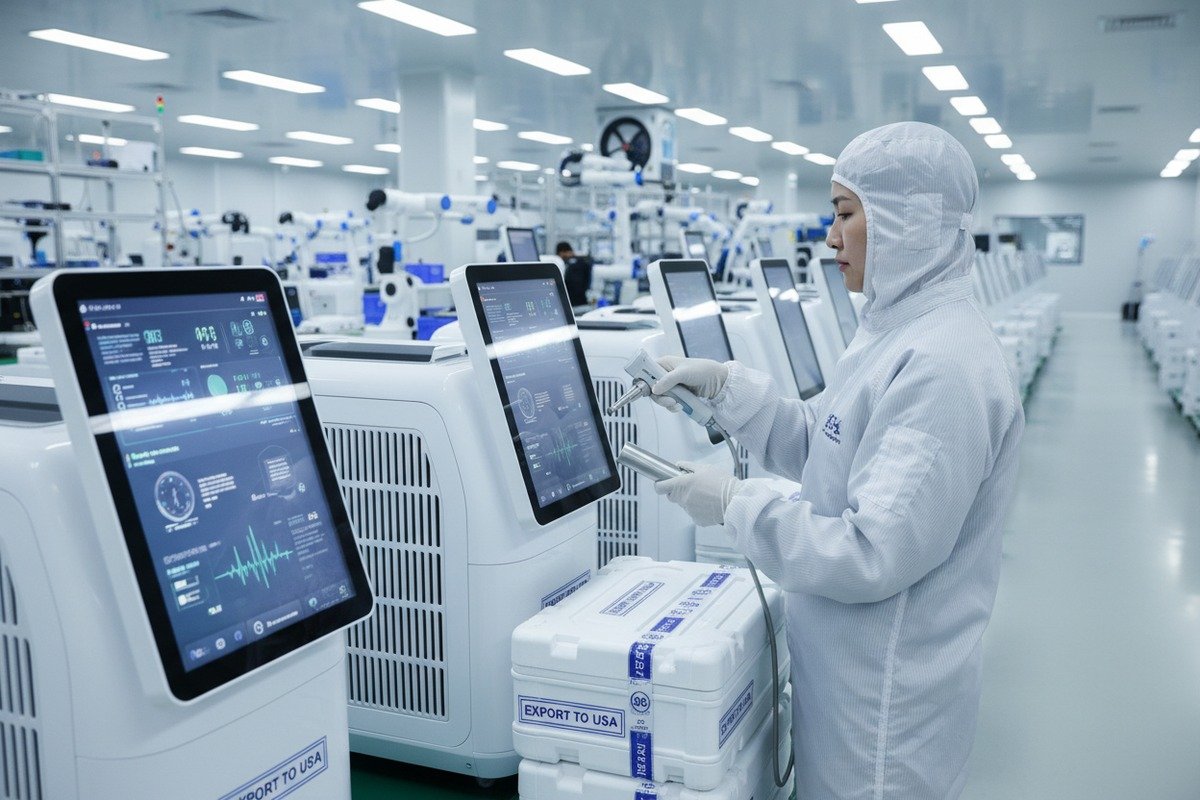
When our clients source from multiple factories, they quickly discover that wattage specifications aren't standardized. One supplier's "350W" unit may perform differently from another's. The numbers alone don't tell the whole story, and savvy buyers know to look deeper.
To compare wattage across suppliers, request identical test conditions: input voltage, ambient temperature, and operational mode. Ask for peak versus continuous wattage ratings. Verify whether listed wattage includes all components (compressor, display, cooling) or just the generator. Request efficiency metrics and thermal performance data.
Why Specifications Vary Between Suppliers
Chinese OEM factories use different measurement standards. Some list peak wattage—the maximum momentary draw. Others list continuous wattage—sustainable power during operation. The difference can be 30–50%.
Additionally, some suppliers measure only the shockwave generator's consumption. Others include the compressor, touchscreen, and cooling system. A "200W" machine from Supplier A might consume the same total power as a "350W" machine from Supplier B—they're just measuring different things.
Questions to Ask Every Supplier
Before comparing quotes, send each supplier the same technical questionnaire. Here are the essential questions:
- Is the listed wattage peak or continuous rating?
- What components does the wattage figure include?
- What input voltage was used for measurement?
- What is the power factor of the machine?
- What is the thermal derating—how does output change as the machine heats up?
Creating an Apples-to-Apples Comparison
We recommend building a standardized comparison table like this one:
| Specification | Supplier A | Supplier B | Supplier C | Your Requirements |
|---|---|---|---|---|
| Peak wattage | 500W | 450W | 550W | 400W minimum |
| Continuous wattage | 350W | 380W | 400W | 300W minimum |
| Input voltage | 220V | 110V/220V | 220V | 110V needed |
| Components included | Generator + compressor | Generator only | All components | All components |
| Cooling method | Fan | Passive | Liquid | Fan minimum |
| Thermal derating | 15% at 60 min | 25% at 60 min | 10% at 60 min | <20% preferred |
| Certifications | CE | CE, FDA 510(k) | CE | FDA required |
Red Flags in Wattage Claims
Watch for suppliers who can't answer technical questions or provide test reports. Legitimate manufacturers have engineering documentation for their power systems.
Be skeptical of unusually high wattage claims at low prices. If Supplier D offers "1000W" at half the price of similar units, either they're measuring differently or using inferior components. Ask for independent lab reports.
Also verify that the stated wattage matches the power supply components. A machine claiming 500W should have a transformer, cables, and plugs rated for that load. Our QC team checks these details during pre-shipment inspection.
Conclusion
Wattage matters, but it's not the whole story. For radial devices, 150W–350W handles most clinical needs. For focused devices, 500W–1000W serves specialized applications. Always verify measurement conditions, match specifications to your actual usage, and prioritize component quality over peak numbers.
Footnotes
1. Provides a comprehensive overview of shockwave therapy devices and applications. ↩︎
2. Explains radial ESWT, its mechanism, and applications in musculoskeletal disorders. ↩︎
3. Details how electromagnetic focused shockwave therapy machines work and their benefits. ↩︎
4. Explains how shockwave therapy helps heal various musculoskeletal injuries and conditions. ↩︎
5. Comprehensive guide on medical power supply requirements and relevant standards like IEC 60601-1. ↩︎
6. Provides a detailed explanation of energy flux density and its role in shockwave therapy. ↩︎
7. Explains private label medical devices and relevant regulatory considerations in the US. ↩︎
8. Provides a comprehensive explanation of electronics thermal management and its importance. ↩︎

 English
  Español de México
  Deutsch
  Français
  العربية
  Русский