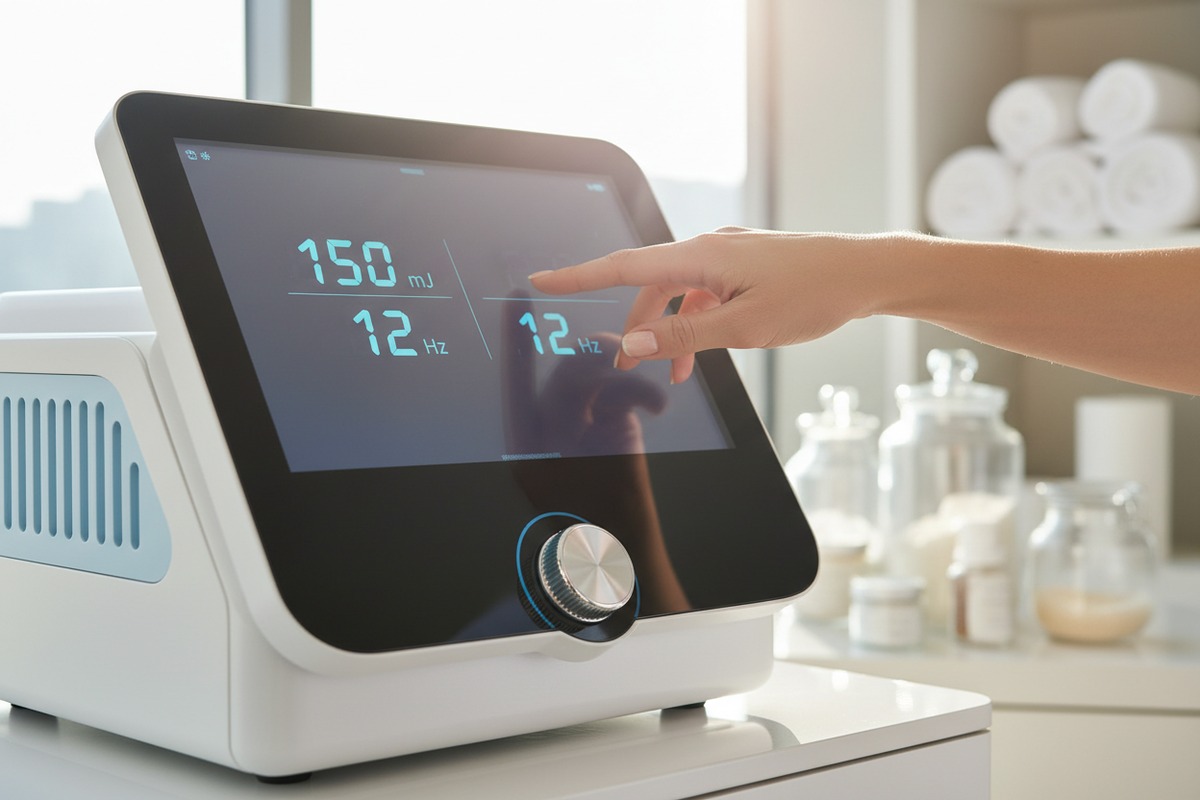
When our engineering team first developed shockwave therapy machines 1 for export, we faced a puzzling question from buyers worldwide. Everyone asked about “standard” energy ranges, yet nobody could agree on what standard actually meant Radial devices 2. This confusion costs salon owners money and leads to ineffective treatments for their clients.
There is no single universal standard output energy range for shockwave therapy machines. Radial devices typically output 10-200 mJ per pulse, while focused devices use Energy Flux Density (EFD) measured at 0.01-0.6 mJ/mm². The appropriate range depends on device type, treatment area, and clinical application.
Understanding these energy specifications matters for your business success factory calibration certificates 3. Let me walk you through everything you need to know about energy ranges, from technical specifications to practical buying decisions.
How do I determine the standard energy range for my brand's shockwave therapy machines?
Every quarter, our quality control team 4 reviews energy specifications from dozens of competing machines. The inconsistency we find surprises even experienced buyers contraindications 5. Without clear standards, how do you know what specifications to request for your private label products?
To determine the standard energy range for your brand's shockwave machines, first identify whether you need radial or focused technology. Radial machines should offer 10-200 mJ at 1-25 Hz. Focused machines require EFD of 0.08-0.6 mJ/mm². Match specifications to your target treatment applications.

Understanding the Two Main Energy Metrics
The shockwave therapy industry uses two primary measurements that often confuse buyers. Total energy, measured in millijoules (mJ) 6, tells you how much energy each pulse delivers. Energy Flux Density (EFD) 7, measured in mJ/mm², describes how concentrated that energy is at the target tissue.
Our production team explains it this way: total energy is like the amount of water in a bucket. EFD is like how hard that water hits when you pour it through different sized funnels. A 200 mJ pulse spread over a large area delivers less intensity than a 50 mJ pulse focused on a small point.
For radial shockwave machines, which dominate the salon and clinic market, manufacturers typically report total energy in mJ and pressure in Bar. Most quality devices offer ranges from 10 mJ to 200 mJ with pressure settings between 1 and 5 Bar.
Radial vs. Focused: Key Specification Differences
| Specification | Radial Shockwave | Focused Shockwave |
|---|---|---|
| Energy Metric | Total mJ (10-200) | EFD mJ/mm² (0.01-0.6) |
| Pressure Range | 1-5 Bar (up to 30 MPa) | 10-150 MPa |
| Frequency Range | 1-25 Hz | 1-10 Hz |
| Penetration Depth | 3-5 cm | Up to 12 cm |
| Best Applications | Musculoskeletal pain, cellulite | Calcifications, deep tissue |
| Price Point | Lower | Higher |
When specifying machines for your brand, consider your end customers. Most salon owners need radial technology for common treatments like plantar fasciitis 8, tennis elbow, and muscle recovery. Our sales data shows 85% of B2B orders request radial machines due to their versatility and lower price point.
Setting Your Brand's Energy Specifications
Work with your manufacturer to establish minimum and maximum energy parameters. We recommend these baseline specifications for competitive positioning:
| Application Category | Minimum Energy | Maximum Energy | Recommended Frequency |
|---|---|---|---|
| Superficial (skin, fascia) | 10-50 mJ | 100 mJ | 15-25 Hz |
| Medium depth (tendons) | 50-100 mJ | 150 mJ | 10-18 Hz |
| Deep tissue (muscle) | 100-150 mJ | 200 mJ | 8-15 Hz |
| Bone adjacent | 150-180 mJ | 200 mJ | 5-12 Hz |
These ranges align with clinical protocols and give your customers flexibility. Machines offering less than 150 mJ maximum output limit treatment options and may disappoint professional users.
Can I customize the energy levels for my private label shockwave machine?
During a recent factory tour with a Canadian distributor, she asked if we could limit maximum energy output for liability reasons. Another client wanted higher ranges than our standard models offered. These requests happen frequently, and the answer involves both technical and practical considerations.
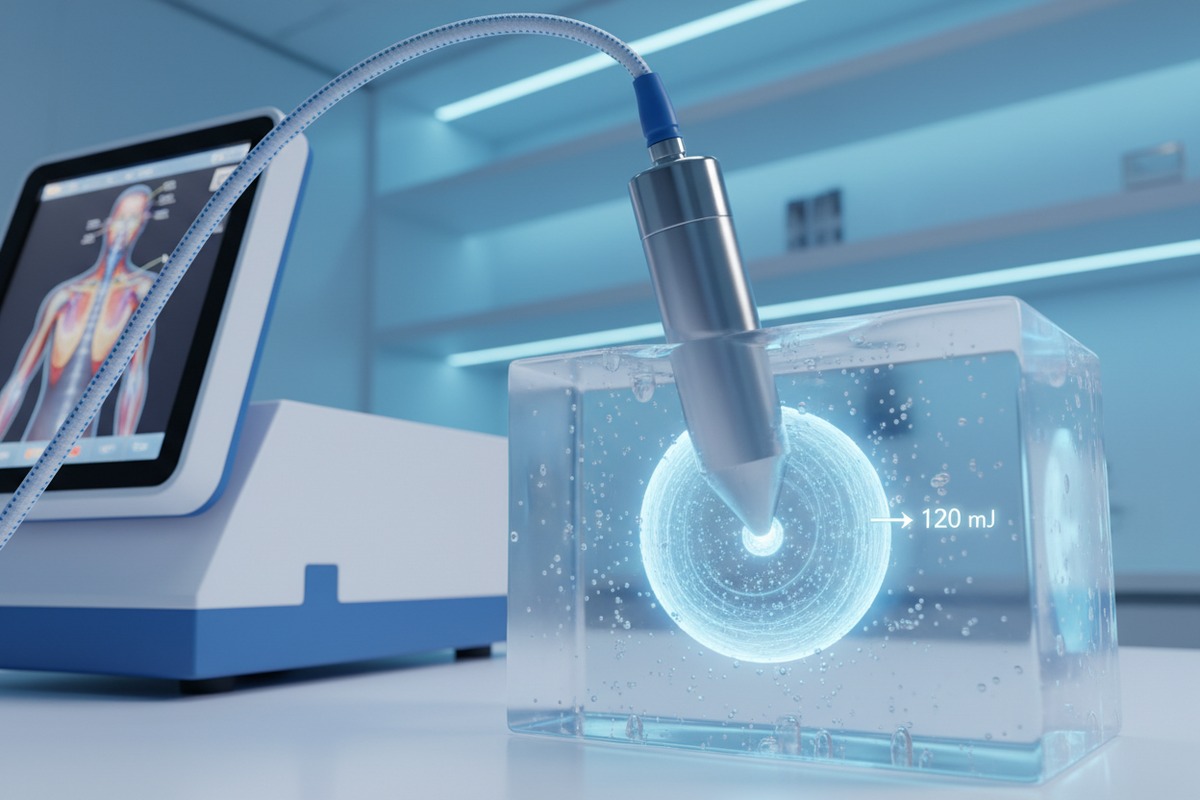
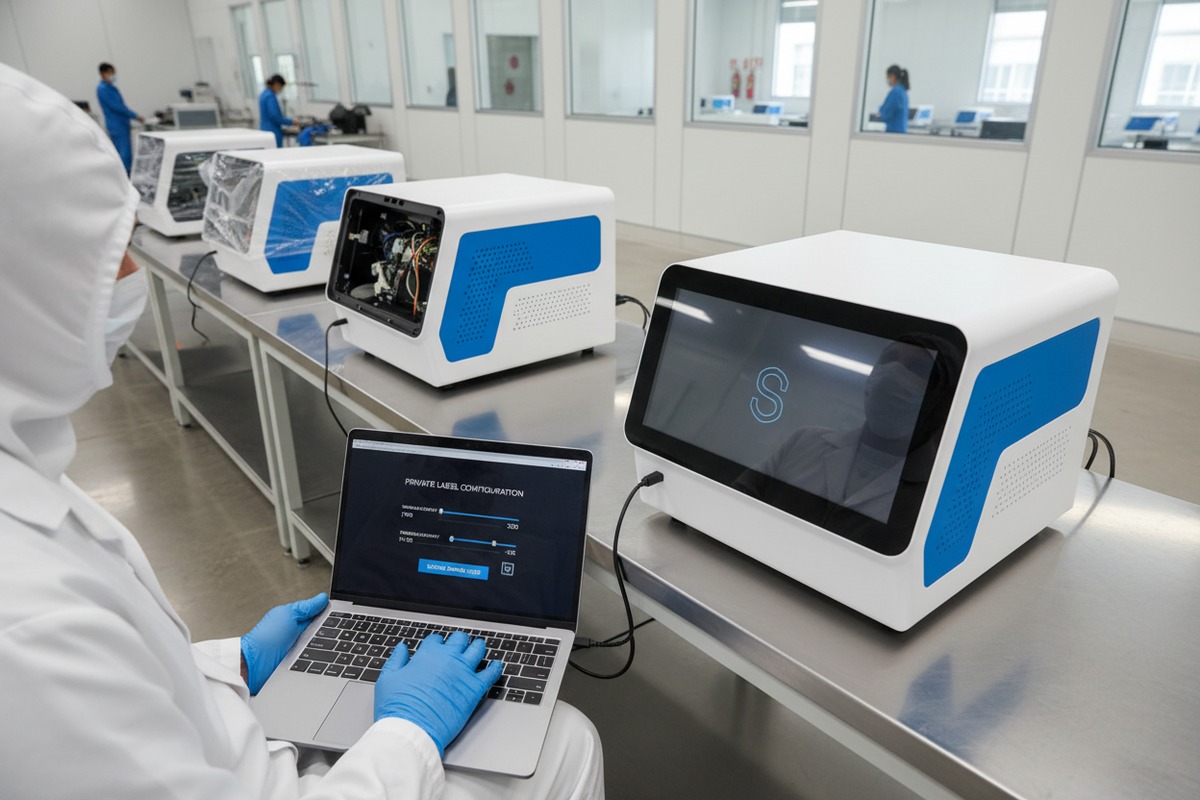
Yes, energy levels can be customized for private label shockwave machines. Manufacturers adjust software parameters to set custom minimum/maximum energy, frequency ranges, and preset protocols. Hardware modifications enable higher outputs but require additional testing. Most customization happens through software within existing hardware limits.
Software-Based Customization Options
Modern shockwave machines use digital control systems that make software customization straightforward. Our engineering team can modify several parameters without hardware changes:
Energy step increments represent one common customization. Standard models might offer 10 mJ steps (10, 20, 30 mJ, etc.). Some brands prefer finer 5 mJ increments for precise protocol matching. Others want larger 25 mJ steps for simpler user interfaces.
Maximum energy limits protect against misuse and liability. We can cap output at 150 mJ instead of 200 mJ if your market requires conservative settings. Conversely, professional-grade models for experienced practitioners might unlock full hardware capabilities.
Frequency ranges also accept customization. While hardware typically supports 1-25 Hz, software can restrict ranges. Some buyers request 5-20 Hz to prevent inexperienced users from selecting extreme settings.
Hardware Modifications for Extended Ranges
When software adjustments cannot meet requirements, hardware modifications become necessary. These changes require longer development timelines and minimum order quantities.
| Customization Type | Timeline | MOQ Impact | Cost Impact |
|---|---|---|---|
| Software parameters | 2-4 weeks | None | Minimal |
| Interface language/graphics | 3-6 weeks | 50+ units | Low |
| Applicator head design | 8-12 weeks | 200+ units | Medium |
| Generator power upgrade | 12-16 weeks | 500+ units | High |
| Complete system redesign | 6-12 months | 1000+ units | Very high |
Electromagnetic generators 9 offer more customization flexibility than pneumatic systems. Our electromagnetic models maintain consistent output across energy ranges, while pneumatic systems may drop efficiency at high-energy, high-frequency combinations.
Creating Custom Treatment Protocols
Beyond energy levels, we help brands develop preset treatment protocols loaded into machine software. These protocols combine energy, frequency, pulse count, and applicator recommendations for specific conditions.
Popular preset categories include:
- Pain management: Lower energy (50-100 mJ), higher frequency (15-20 Hz), 2000-3000 pulses
- Trigger point release: Medium energy (100-150 mJ), medium frequency (10-15 Hz), 500-1000 pulses
- Cellulite treatment: Variable energy (80-120 mJ), high frequency (18-22 Hz), 3000-4000 pulses
- Sports recovery: Progressive energy (starting 50 mJ, increasing to 150 mJ), 8-12 Hz, 1500-2500 pulses
Custom protocols add value to your brand and differentiate from competitors using generic settings. We recommend developing 8-12 protocols based on your market's common treatment requests.
How can I ensure the energy output is stable across all my imported units?
A U.S. distributor once told me about receiving a shipment where three machines produced noticeably different treatment intensities despite identical settings. Her customers complained, and she lost credibility. This quality inconsistency destroys brands faster than almost any other issue.
Ensure stable energy output across imported units by requiring factory calibration certificates, specifying tolerance limits (±5% is industry standard), requesting pre-shipment testing data, and choosing electromagnetic over pneumatic generators for better consistency. Regular calibration schedules maintain stability over the machine's lifespan.

Factory Calibration Standards
Every machine leaving our production line undergoes calibration against reference standards. We measure actual energy output at multiple settings and adjust until readings fall within specified tolerances.
Calibration protocols should include:
- Multi-point testing: Measurements at low (25%), medium (50%), high (75%), and maximum (100%) energy settings
- Frequency variation: Testing at minimum, medium, and maximum frequency with each energy level
- Temperature stability: Measurements after cold start and after 30 minutes of continuous operation
- Applicator verification: Testing with each included applicator head
Request calibration certificates showing actual measured values, not just pass/fail results. Our certificates include test equipment identification, measurement conditions, recorded values, and tolerance compliance.
Generator Technology and Consistency
Generator type significantly affects output stability. Understanding the differences helps you specify appropriate technology for your quality requirements.
| Generator Type | Output Stability | Consistency Over Time | Maintenance Needs |
|---|---|---|---|
| Pneumatic (compressed air) | ±8-12% typical | Decreases with compressor wear | Regular compressor service |
| Electromagnetic | ±3-5% typical | Stable over millions of pulses | Minimal |
| Piezoelectric | ±2-4% typical | Excellent long-term stability | Minimal |
| Electrohydraulic | ±5-8% typical | Moderate (electrode wear) | Periodic electrode replacement |
Electromagnetic generators dominate the mid-to-high-end market segment because they balance cost, performance, and reliability. Our flagship models guarantee consistent output over 3 million pulses before any degradation occurs.
Pre-Shipment Inspection Protocols
Beyond factory calibration, implement pre-shipment inspection protocols for every order. Our quality team performs these checks, but you can also hire third-party inspection services.
Essential pre-shipment tests include:
- Visual inspection: Housing integrity, screen quality, control responsiveness
- Power-on test: Boot sequence, software loading, error codes
- Energy output verification: Spot-check 3-5 units per batch at standard settings
- Accessory completeness: All applicators, cables, manuals present
- Packaging condition: Box integrity, padding adequacy, moisture protection
Document everything with photographs and test data. When issues arise, documentation speeds resolution and protects both parties.
Long-Term Stability Maintenance
Energy output can drift over time without proper maintenance. Include these recommendations in your customer documentation:
- Annual calibration check: Professional verification of output accuracy
- Applicator inspection: Check for wear, damage, or contamination
- Software updates: Install manufacturer updates that may include calibration refinements
- Operating environment: Stable temperature and humidity preserve component accuracy
Machines with built-in self-diagnostic features help users monitor output stability. Our touchscreen interface displays real-time energy readings and alerts users when calibration checks are recommended.
What energy range is most effective for the treatments my salon customers provide?
When training our distributor partners, we always address this practical question. Knowing technical specifications means nothing if you cannot match them to real treatment outcomes. Your salon customers need machines that perform effectively for their daily cases.
For salon treatments, radial shockwave machines with 50-150 mJ output at 10-20 Hz frequency serve most applications effectively. Musculoskeletal pain responds to 80-120 mJ at 12-15 Hz. Cellulite and aesthetic treatments use 60-100 mJ at 15-22 Hz. Total pulses of 2000-4000 per session optimize results.
Matching Energy to Common Salon Treatments
Different conditions require different energy approaches. Higher energy penetrates deeper but increases discomfort. Lower energy treats superficial issues with better patient tolerance.
| Treatment Type | Energy Range | Frequency | Pulses per Session | Sessions Needed |
|---|---|---|---|---|
| Plantar fasciitis | 80-150 mJ | 10-15 Hz | 2000-3000 | 3-6 |
| Tennis/golfer's elbow | 60-120 mJ | 12-18 Hz | 1500-2500 | 4-6 |
| Trigger points | 100-150 mJ | 8-12 Hz | 500-1000 per point | 2-4 |
| Cellulite | 60-100 mJ | 18-25 Hz | 3000-4000 | 6-12 |
| Muscle tension | 50-100 mJ | 15-20 Hz | 2000-3000 | 1-3 |
| Scar tissue | 40-80 mJ | 12-18 Hz | 1000-2000 | 4-8 |
These protocols represent starting points. Experienced practitioners adjust based on patient feedback, tissue response, and treatment progression.
The Frequency-Energy Relationship
Frequency does not change energy per pulse, but it significantly affects treatment experience and efficiency. High frequency (18-25 Hz) delivers more pulses per minute, shortening treatment time. However, rapid pulses feel more intense to patients even at the same energy level.
Our recommendation for salon environments:
- New patients: Start with moderate frequency (10-15 Hz) to assess tolerance
- Maintenance sessions: Higher frequency (15-20 Hz) speeds treatments
- Sensitive areas: Lower frequency (8-12 Hz) improves comfort
- Deep tissue work: Lower frequency allows tissue recovery between pulses
Machines offering broad frequency ranges (1-25 Hz) give practitioners maximum flexibility. Avoid models limited to narrow ranges that restrict treatment options.
Safety Considerations for Salon Use
Salons operate differently than medical clinics. Practitioners may have less formal training, and liability concerns require conservative approaches.
Safety guidelines for salon shockwave therapy:
- Avoid high-energy focused waves: EFD above 0.28 mJ/mm² requires medical supervision
- Limit maximum radial energy: 150 mJ maximum provides effectiveness with safety margin
- Require training: Minimum 8 hours hands-on instruction before independent use
- Document contraindications: Pregnancy, blood clotting disorders, malignancy, open wounds
- Start conservative: Begin new patients at 50% intensity, increase based on response
Machines designed for salon markets often include safety features like locked maximum settings, mandatory training prompts, and contraindication checklists in the software.
Applicator Selection and Energy Delivery
The applicator head significantly affects how energy reaches target tissues. Different sizes and shapes distribute energy differently, even at identical machine settings.
Common applicator types and their applications:
- Large flat (15-20mm): General muscle work, broad areas, lower intensity per area
- Medium convex (10-15mm): Standard treatments, good tissue coupling
- Small focused (5-10mm): Trigger points, tendons, precise targeting
- D-actor/vibration: Warm-up, lymphatic work, sensitive patients
Quality machines include multiple applicator options. Our standard package provides three heads covering most treatment needs, with additional specialized applicators available separately.
Conclusion
Shockwave therapy energy ranges vary by device type and application, with no universal standard. Understanding specifications, customization options, quality control, and treatment matching helps you make informed purchasing decisions. Work closely with your manufacturer to specify machines that serve your market's needs while maintaining safety and effectiveness.
Footnotes
1. Provides an overview of extracorporeal shockwave therapy and its medical applications. ↩︎
2. Explains radial shockwave therapy and its mechanism of action compared to focused. ↩︎
3. The National Institute of Standards and Technology (NIST) is the authoritative government source for calibration, and this page provides an overview of their calibration services, which would include information related to calibration certificates. ↩︎
4. Offers a comprehensive overview of quality control processes and their importance in manufacturing. ↩︎
5. Lists common contraindications for extracorporeal shockwave therapy to ensure patient safety. ↩︎
6. Explains the joule and its sub-units, including millijoules, as a unit of energy. ↩︎
7. Wikipedia provides a clear and concise definition of Energy Flux, explicitly mentioning Energy Flux Density as a synonym, which is suitable for the context. ↩︎
8. Provides detailed information on plantar fasciitis, its causes, symptoms, and treatment options. ↩︎
9. Describes electromagnetic shockwave generation as one of the main types of ESWT devices. ↩︎

 English
  Español de México
  Deutsch
  Français
  العربية
  Русский