
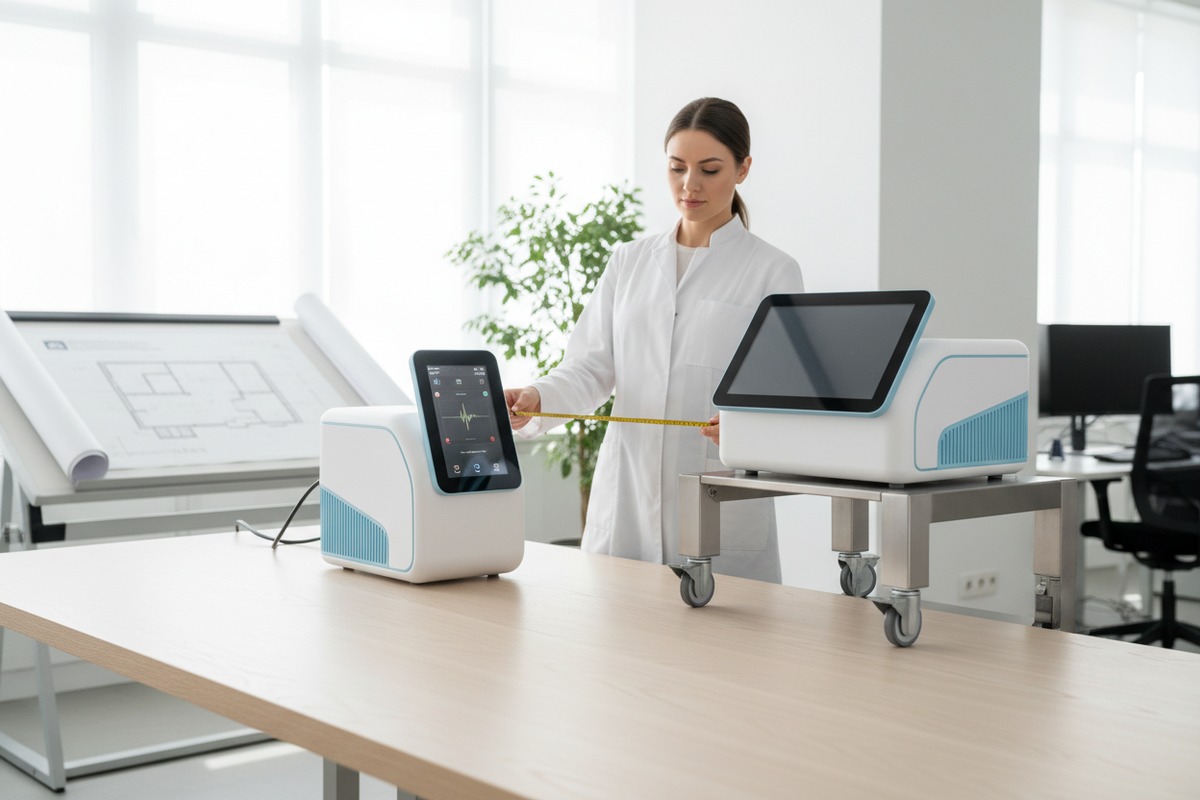
When our engineering team first designed shockwave therapy machines 1, clients kept asking one simple question: “What size should I expect?” The truth surprised many buyers. There is no universal standard.
Shockwave therapy machines have no universal standard dimensions or weight. Portable radial units typically measure 250-400 mm per dimension and weigh 2-10 kg. Larger focused or cart-based systems range from 450-590 mm wide and 15-60 kg. Size depends on technology type, power output, and manufacturer design choices.
Understanding these variations helps you plan for shipping costs, clinic space, and therapist comfort. Let me walk you through the key factors that determine machine size and weight.
How will the machine's weight and dimensions affect my total landed shipping costs?
Every gram matters when shipping internationally. Our logistics team has seen freight quotes double because buyers underestimated packaging weight. This hidden cost catches many first-time importers off guard.
Machine weight directly impacts your landed costs through freight charges, packaging requirements, and handling fees. A 3 kg portable unit may cost $150-300 to ship by air, while a 60 kg cart-based system could exceed $800-1,500 for the same route. Always request gross weight including packaging before calculating budgets.
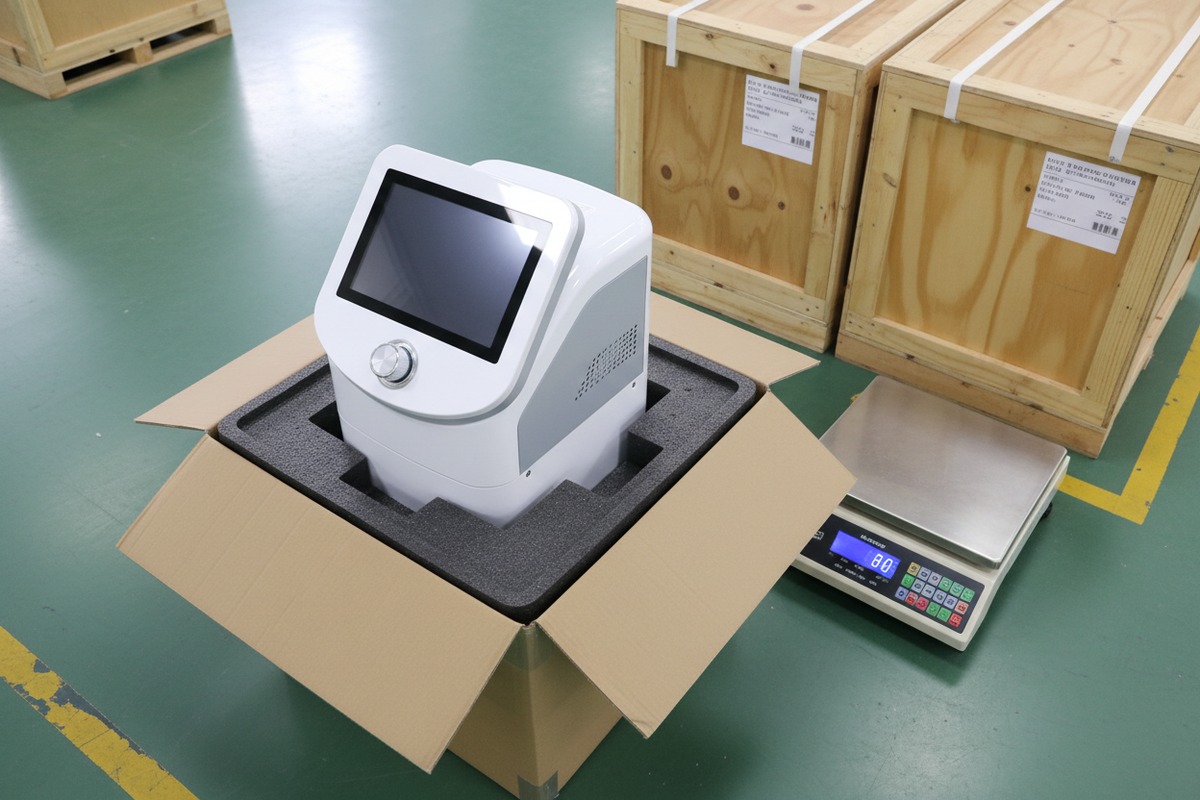
Breaking Down Shipping Cost Factors
Shipping costs depend on two main measurements: actual weight and dimensional weight 2. Carriers charge whichever is higher. A lightweight but bulky machine may cost more to ship than a compact heavy one.
When we prepare shipments at our facility, we calculate both metrics. Dimensional weight uses a formula: Length × Width × Height ÷ 5000 (for air freight in cm). This means a machine measuring 40 × 40 × 35 cm has a dimensional weight of 11.2 kg, even if the actual weight is only 6 kg.
Cost Comparison by Machine Type
| Machine Type | Typical Net Weight | Gross Weight (with packaging) | Estimated Air Freight (US) | Estimated Sea Freight (US) |
|---|---|---|---|---|
| Ultra-portable radial | 2-4 kg | 4-7 kg | $120-250 | $80-150 |
| Standard portable | 5-10 kg | 8-15 kg | $200-400 | $120-220 |
| Dual-channel tabletop | 10-20 kg | 15-30 kg | $350-600 | $180-320 |
| Cart-based focused | 40-60 kg | 55-80 kg | $800-1,500 | $350-600 |
Hidden Costs to Consider
Reinforced packaging adds 30-50% to net weight. Our quality control team insists on foam-lined cases and double-wall cartons for machines over $5,000. This protects your investment but increases shipping fees.
Customs duties often depend on declared value, not weight. However, inspection fees and handling charges scale with package size. Large cart-based units may require special equipment for unloading, adding $50-150 per shipment.
Insurance rates also climb with weight. Heavy equipment faces higher damage risks during transit. Most carriers charge 1-3% of declared value for comprehensive coverage.
Tips for Reducing Shipping Costs
First, request detailed specifications before ordering. Our sales team provides net weight, gross weight, and carton dimensions for every model. Second, consider sea freight for non-urgent orders. The savings often exceed 50% compared to air. Third, consolidate orders when possible. Shipping three units together costs less per unit than shipping separately.
What are the typical dimensions I should expect for a portable versus a vertical shockwave unit?
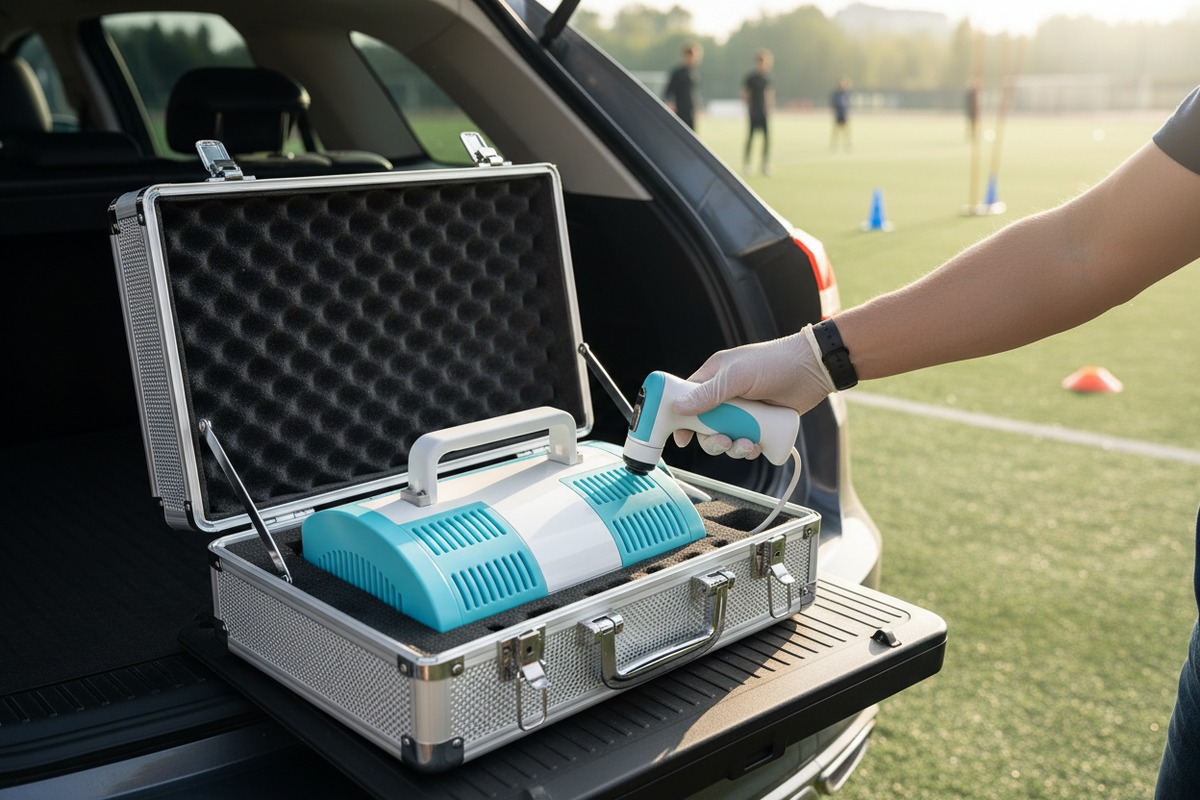
Choosing between portable and vertical units shapes your entire business model. Our clients in mobile sports therapy need machines that fit in a car trunk. Hospital buyers want imposing equipment that impresses patients. The right choice depends on your workflow.
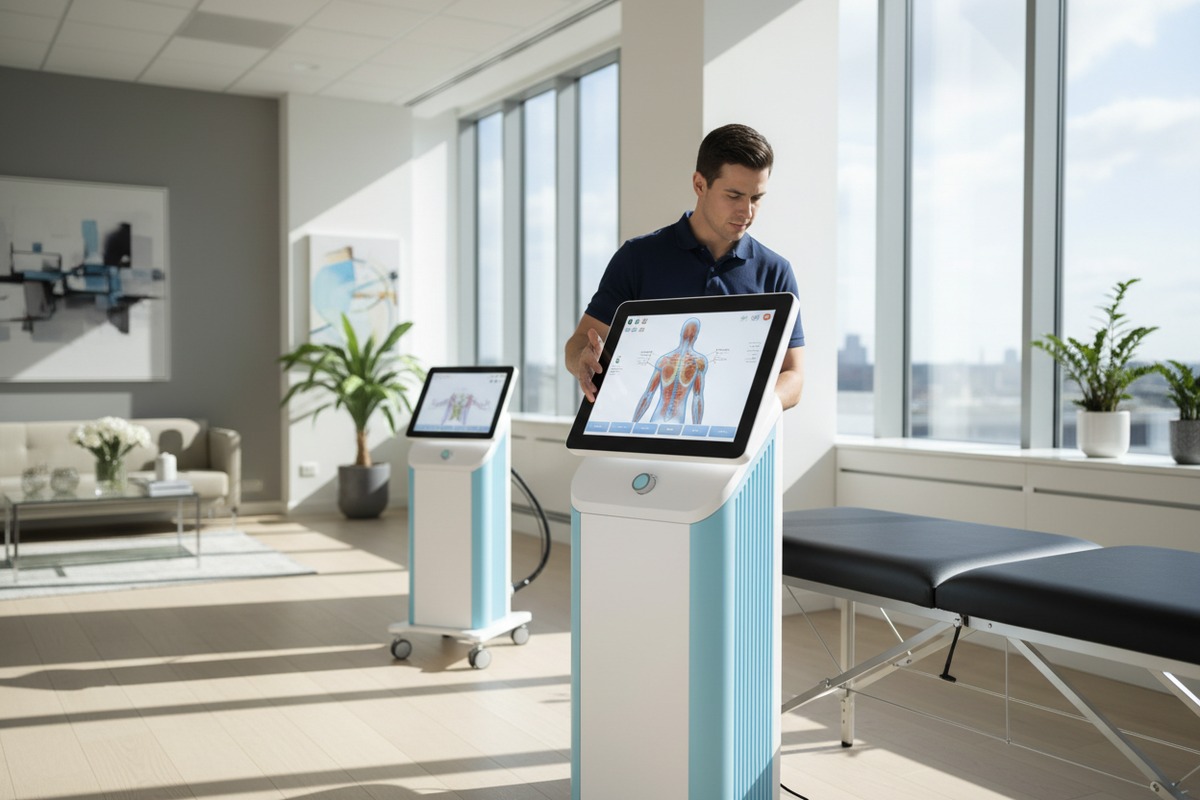
Portable shockwave units typically measure 250-400 mm per dimension and weigh 2-10 kg, fitting easily on treatment tables. Vertical or cart-based units range from 450-600 mm wide, 600-1300 mm tall, and 15-60 kg. Portable models suit mobile practitioners; vertical units serve high-volume clinics requiring stability and professional presentation.
Portable Unit Specifications
Portable machines prioritize compactness and low weight. Our most popular portable model measures 320 × 225 × 126 mm and weighs just 2.7 kg. This fits comfortably in a standard carry-on bag.
The shift toward electromagnetic technology 3 has enabled dramatic weight reduction. Older pneumatic models required heavy compressors, pushing weights to 15-20 kg. Modern compressor-free designs achieve similar energy output at one-third the weight.
Battery-powered options add convenience for truly mobile therapy. These models typically add 200-500 grams for lithium-ion cells but eliminate power cord requirements.
Vertical Unit Specifications
Cart-based systems offer stability and professional aesthetics. These units typically feature touchscreens measuring 12-15 inches, integrated storage compartments, and adjustable handpiece holders.
The Storz Duolith SD1 4, a benchmark in professional settings, measures 590 × 1261 × 660 mm and weighs approximately 60 kg including the trolley. Such dimensions require dedicated floor space and doorway clearance planning.
Detailed Size Comparison Table
| Specification | Ultra-Portable | Standard Portable | Tabletop Plus | Cart-Based Vertical |
|---|---|---|---|---|
| Width | 250-320 mm | 320-400 mm | 380-450 mm | 450-600 mm |
| Depth | 150-230 mm | 230-350 mm | 300-400 mm | 400-700 mm |
| Height | 100-150 mm | 150-250 mm | 250-400 mm | 800-1300 mm |
| Net Weight | 2-4 kg | 4-8 kg | 8-15 kg | 20-60 kg |
| Screen Size | 3-5 inches | 5-8 inches | 8-12 inches | 12-15+ inches |
| Power Source | Battery/AC | AC | AC | AC |
| Best For | Home visits, sports | Small clinics | Medium clinics | Hospitals, high-volume |
Space Planning Considerations
When our installation team visits client sites, we always measure doorways, treatment room layouts, and storage areas. Cart-based units need at least 800 mm door clearance. Portable units require secure storage to prevent theft.
Consider therapist ergonomics 5 as well. Heavy machines cause fatigue during extended sessions. Our research shows practitioners handling machines over 8 kg report 40% higher arm strain after full workdays.
The trend toward sub-3 kg battery models reflects this concern. These ultra-light units enable therapists to treat multiple patients without physical exhaustion.
Can I request custom housing dimensions to better align with my brand's existing product line?
Brand consistency matters in competitive markets. One of our US distributors needed machines matching their existing blue-and-white aesthetic. Stock configurations simply would not work for their showroom. This request opened an important conversation about customization limits.
Yes, manufacturers offering OEM services can customize housing dimensions within engineering constraints. Common modifications include adjusted panel heights, relocated control interfaces, and resized display cutouts. Significant structural changes require tooling investments of $5,000-20,000 and minimum order quantities of 100-500 units. Minor aesthetic changes like colors and branding cost less.
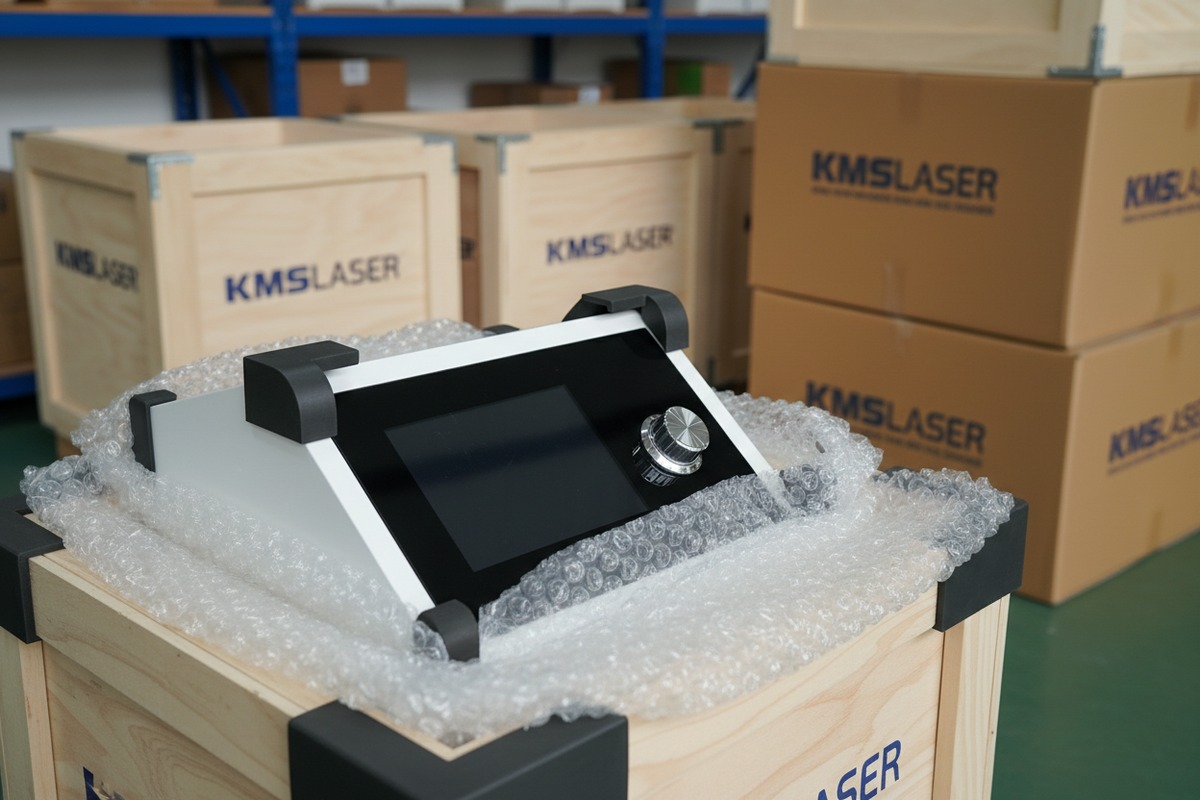
What Customization Is Possible?
Our OEM clients frequently request three types of modifications: cosmetic changes, interface adjustments, and structural alterations. OEM services 6
Cosmetic changes include housing color, logo placement, and finish texture. These require minimal tooling and can often be applied to orders as small as 20 units. Our production line accommodates custom Pantone colors 7 with 2-3 week lead time additions.
Interface adjustments involve screen positioning, control knob placement, and port locations. These modifications require updated injection molds, typically adding $3,000-8,000 in tooling costs.
Structural alterations change overall dimensions significantly. Shortening or extending the housing by more than 20% usually requires complete mold redesign, new internal component layouts, and extensive testing.
Cost and MOQ Structure for Custom Dimensions
| Customization Level | Typical Changes | Tooling Cost | MOQ | Lead Time Addition |
|---|---|---|---|---|
| Level 1 – Cosmetic | Colors, logos, labels | $0-500 | 20 units | 1-2 weeks |
| Level 2 – Minor | Screen bezel, button layout | $3,000-8,000 | 50-100 units | 4-6 weeks |
| Level 3 – Moderate | Panel dimensions (±10%) | $8,000-15,000 | 100-200 units | 8-12 weeks |
| Level 4 – Major | Complete housing redesign | $15,000-30,000 | 200-500 units | 12-20 weeks |
Engineering Constraints to Consider
Internal components set hard limits on size reduction. The handpiece mechanism, power supply, and display module require minimum clearances for heat dissipation. Our engineers typically cannot reduce housing dimensions below 85% of standard without compromising reliability.
Expansion offers more flexibility. Adding height for larger screens or width for additional handpiece storage rarely affects core functionality. However, increased dimensions impact shipping costs and clinic space requirements.
Working With Your Manufacturer
Start by sharing your existing product line photos and measurements. Our design team creates 3D mockups showing how the shockwave unit would appear alongside your current offerings. This visual helps both parties agree on feasible modifications before committing tooling investments.
Request samples before full production. Even small dimensional changes can affect assembly precision and durability. Our quality team runs modified units through 500-hour stress tests before approving new configurations.
Beyond product dimensions, consider packaging customization. Custom boxes with your branding cost $2-5 per unit for orders over 100. This creates a cohesive unboxing experience that reinforces brand identity.
Does the gross weight include reinforced packaging to ensure my order arrives without cosmetic damage?
Damaged shipments destroy profits and client relationships. Our customer service team handled a case where a buyer received machines with scratched housings. The replacement cost exceeded $2,000. Proper packaging prevents these nightmares.
Yes, gross weight includes all packaging materials: inner foam inserts, protective film, accessories boxes, and outer carton. Quality manufacturers use reinforced packaging adding 30-50% to net weight. Always confirm packaging specifications in writing before ordering. Request photos of actual packed units if cosmetic condition is critical for your market.
Understanding Weight Terminology
The industry uses several weight terms that confuse first-time buyers. Net weight refers to the machine alone. Gross weight includes standard packaging. Shipping weight may add pallets or crating for large orders.
Our packing lists clearly separate these figures. For example, our LC-320 dual-channel unit shows net weight 6 kg, gross weight 8 kg, and shipping weight 9.5 kg (including pallet share for consolidated shipments).
Standard vs. Premium Packaging Comparison
Standard packaging protects against normal handling. Premium packaging guards against rough freight treatment, humidity, and extended storage.
| Packaging Component | Standard Option | Premium Option | Weight Addition |
|---|---|---|---|
| Inner foam | Single-layer EPE | Double-layer EPE + EVA | +200-400g |
| Protective film | Basic PE wrap | Anti-static + scratch-resistant | +50-100g |
| Inner box | Single-wall cardboard | Double-wall with reinforced corners | +300-500g |
| Outer carton | Standard corrugated | Heavy-duty with moisture barrier | +400-700g |
| Accessories protection | Bubble wrap | Custom-fitted foam compartments | +150-300g |
| Total weight addition | +1.1-2.0 kg | +1.8-3.5 kg | – |
Requesting Packaging Verification
Before confirming orders, ask your supplier for packaging specifications in writing. Our sales team provides detailed packaging drawings showing layer construction and material grades. We also send photos of packed units upon request.
For high-value orders, consider requesting drop-test certificates 8. Our quality lab performs 60 cm and 90 cm drop tests on packaged units. Units passing these tests survive typical courier handling without damage.
Insurance and Claims Considerations
Even perfect packaging cannot prevent all damage. Our logistics team recommends comprehensive shipping insurance for orders exceeding $3,000. Document your packaging standards in purchase agreements. This documentation supports insurance claims if damage occurs.
Upon receiving shipments, photograph packages before opening. Document any external damage immediately. Our claims process requires photos within 48 hours of delivery to process damage reports.
Beyond physical damage, consider the importance of professional presentation. Medical equipment buyers expect pristine unboxing experiences. Scuffed boxes or dusty foam inserts create negative first impressions, even if machines function perfectly.
Online training videos and video tutorials represent another significant value-add when selecting suppliers. Given the complexity of shockwave therapy machine operation, comprehensive remote training materials save both parties time and ensure proper equipment use from day one.
Conclusion
Shockwave therapy machines lack universal size standards, but clear patterns exist. Portable units measure 250-400 mm and weigh 2-10 kg. Cart-based systems reach 450-600 mm wide and 15-60 kg. Understanding these specifications helps you plan shipping costs, clinic space, and brand alignment.
Footnotes
1. Provides a general overview and definition of extracorporeal shockwave therapy. ↩︎
2. Explains how dimensional weight is calculated and its importance in shipping costs. ↩︎
3. Details the principles of electromagnetic shockwave generation used in medical devices. ↩︎
4. Official product page for a specific, professional shockwave therapy unit mentioned. ↩︎
5. Discusses the role of physical therapists in applying ergonomic principles in the workplace. ↩︎
6. Provides a comprehensive definition and explanation of Original Equipment Manufacturer (OEM) services. ↩︎
7. Replaced with the Wikipedia page for Pantone, providing an authoritative overview of the Pantone Color Matching System. ↩︎
8. References the International Safe Transit Association (ISTA) standards for packaging drop testing. ↩︎

 English
  Español de México
  Deutsch
  Français
  العربية
  Русский