
As a manufacturer exporting globally, I review inspection reports weekly. I want them clear, test-driven, and defensible for regulators and insurers.
A complete inspection report for imported shockwave therapy machines should document identification, documentation checks, safety compliance, performance data, durability evidence, software and labeling verification, and packaging tests, ending with a clear pass/conditional accept/reject recommendation and traceable raw data.
That level of structure protects your margins, reduces rework, and speeds customs clearance. Below I break down what to include and how to present it so purchasing, QA, and regulators can all sign off fast.
What Should Be Included in the Quality Inspection Report?
When I audit third-party inspectors, gaps usually appear in traceability and test evidence. Missing serial links or raw data tables cause delays and disputes.
Your report should include traceability (PO, lot, serials), documentation verification, visual/mechanical checks, electrical safety, EMC evidence, software/firmware details, performance test results, nonconformities with photos, corrective actions, and a signed summary decision.
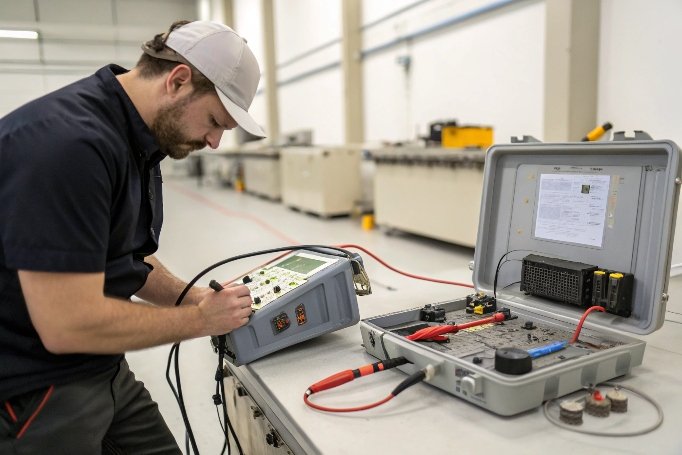
To satisfy medical-electrical requirements, reference IEC 60601-1 safety testing 1 and IEC 60601-1-2 EMC 2 where applicable. For quality system alignment, cite ISO 13485 3. If using external labs, confirm they are ISO/IEC 17025–accredited 4.
The Core Blueprint Everyone Can Follow
| Section | What It Proves | Typical Evidence |
|---|---|---|
| IDs & Shipment Details | Traceability and chain of custody | PO, invoice, lot/serial list, inspector ID, date & site |
| Documentation Review | Regulatory and contractual readiness | CE DoC, 510(k) or dossier, ISO 13485, manuals, calibration certs |
| Visual & Mechanical Inspection | Workmanship and completeness | Photo set, accessory checklist, labeling and markings |
| Electrical Safety (IEC 60601-1) | Patient/user protection | Ground continuity, leakage, dielectric strength results |
| EMC (IEC 60601-1-2) | Immunity/emissions compliance | Test report references or screening test outcomes |
| Functional & Performance | Clinical output meets spec | Energy, frequency, pulse count accuracy, UI checks |
| Software & Cybersecurity | Correct version and integrity | Firmware version, checksums, access controls, logs |
| Packaging & Transit Readiness | Shipping survivability | ISTA/ASTM drop, vibration, seal integrity |
| Nonconformities & CAPA | Transparency and closure plan | NCR list, severity, root cause, corrective action & retest plan |
| Sign-off & Recommendation | Accountability | Pass/conditional/reject, signatures, timestamps |
Should Reports Cover Safety Compliance?
Yes. Reports must cover electrical safety per IEC 60601-1 and show EMC evidence per IEC 60601-1-2. Include measured leakage current, insulation resistance, ground continuity, dielectric strength, and references to EMC test reports or screening results.

Also verify labeling symbols per ISO 15223-1 5 and record any U.S.-market identifiers like UDI device labeling 6 when relevant.
Electrical Safety Block
- Protective Earth (PE) Continuity: Record resistance from PE pin to chassis at multiple points.
- Insulation Resistance: Mains to accessible parts at specified voltage and duration.
- Leakage Currents: Earth, touch, and patient leakage in normal and single-fault conditions.
- Dielectric Withstand (HiPot): Mains to enclosure and patient circuit per rating.
EMC Evidence Block
- Emission/Immunity Statement: Attach accredited lab certificate or full report reference number.
- Field Screening (when full lab report is pre-existing): Record quick checks for ESD and radiated immunity if your receiving country requests incoming verification.
Usability & Alarms
- Emergency Stop Test: Confirm immediate shutdown and error log entry.
- Over-temp/Over-pressure Interlocks: Force and record trip points and recovery behavior.
Do Reports Include Performance Results?
Yes. The report should include measured output across the claimed operating range: energy/pressure, frequency accuracy, pulse count accuracy, focal depth verification (for focused systems), and repeatability/stability over time.
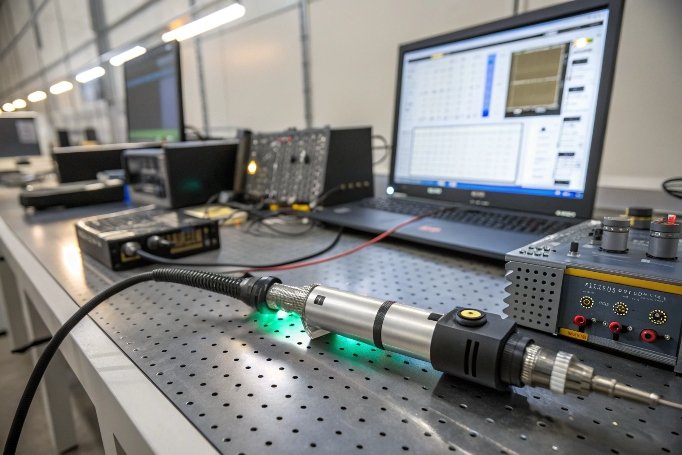
Where energy calibration requires acoustic verification, document the method and lab credentials (preferably ILAC MRA-recognized) 7.
Field-Ready Performance Matrix (What To Measure)
| Parameter | Method / Tool | Acceptance Example |
|---|---|---|
| Peak Pressure / EFD | Hydrophone tank or calibrated pressure sensor | Within ±10% of spec across setpoints |
| Frequency Accuracy | Optical/acoustic sensor + timer capture | ±0.2 Hz or per spec |
| Pulse Count Accuracy | Compare device counter vs external counter | ±1% over 10,000 pulses |
| Focal Depth / Beam Profile | Tissue-equivalent phantom or positioning jig | Within labeled depth tolerance |
| Output Stability (Drift) | 30–60 min endurance sweep at fixed settings | Drift ≤5% from baseline |
Is Durability Testing Part of Reports?
Yes. Include durability evidence appropriate to the device class: pulse-life checks on handpieces, thermal cycles, connector stress tests, and limited endurance runs. You do not need lifetime testing at intake, but you should present representative stress results and wear-part inspection.

Include corrective actions within a formal CAPA process 8 and link findings to your QMS.
Usage-Based Endurance
- Pulse-Life Sampling: Apply 100k–200k pulses at clinical settings on sample units; record drift and noise.
- Wear-Part Check: Inspect bullet, guide tube, O-rings, and applicator faces under magnification; photograph wear marks.
Thermal & Duty Cycle
- Duty Cycle Simulation: 10 minutes on / 5 minutes off for 20 cycles; record max chassis temperature and any throttling events.
- Fan/Heatsink Cleanliness Check: Verify airflow and temperature rise vs spec.
Cable & Connector Stress
- Bend/Strain Test: 200 cycles at specified radius; visual check for cracks and continuity test.
- Connector Insertions: 200 mate/unmate cycles; verify latch function and contact wear.
Should Packaging Tests Be Included?
Yes. Include packaging verification with drop, vibration, compression, and seal integrity tests. Reference ISTA or ASTM methods where possible, and record results with damage photos and shock/tilt indicator readings.
For transit robustness, align with ISTA 3A 9 for packaged-product testing, and use ASTM D642 compression 10 for stacking resistance.
Packaging Qualification Snapshot
| Test Type | Purpose | Typical Method / Level | Pass Criteria |
|---|---|---|---|
| Drop (parcel/pallet) | Shock survivability | ISTA 3A/2A; edge/corner/face drops | No functional damage; minor scuffs acceptable |
| Random Vibration | Transit vibration endurance | ISTA 3A table-top or pallet profile | No loose parts; no drift in calibration |
| Compression | Stacking resistance | ASTM D642 equivalent | Carton passes specified load without collapse |
| Seal Integrity | Moisture/dust ingress protection | Edge-crush (ECT), tape seal, desiccant check | Seals intact; indicator card color within range |
Extra Elements That Strengthen Any Report
Software & Cyber Hygiene: Note firmware version, checksum, change log reference, password policy, and whether diagnostics mode is locked.
Labeling & UDI: Confirm device labels, UDI/serials, manufacturing date, warnings, and symbols per ISO 15223-1.
Multilingual Manuals: Check language matches purchase contract; confirm consistency between UI language and manual screenshots.
Open Issues & CAPA: List NCRs with severity (critical/major/minor), proposed corrective actions, owners, and retest dates.
Signatures: Inspector, QA approver, and supplier representative. Time-stamped.
Conclusion
Strong reports prove safety, performance, durability, and packaging resilience, so you accept with confidence—or reject with evidence. Build them once, use them across brands, and protect both patients and profit.
Footnotes
1. IEC 60601-1 defines core medical-electrical safety tests. ↩︎
2. IEC 60601-1-2 covers EMC emissions and immunity evidence. ↩︎
3. ISO 13485 outlines QMS expectations for medical devices. ↩︎
4. ISO/IEC 17025 accreditation assures competent testing labs. ↩︎
5. ISO 15223-1 standardizes medical device labeling symbols. ↩︎
6. FDA UDI system improves traceability and recalls. ↩︎
7. ILAC MRA recognition increases global report acceptance. ↩︎
8. FDA CAPA framework structures corrective actions. ↩︎
9. ISTA 3A provides parcel drop/vibration test methods. ↩︎
10. ASTM D642 measures package compression resistance. ↩︎

 English
  Español de México
  Deutsch
  Français
  العربية
  Русский