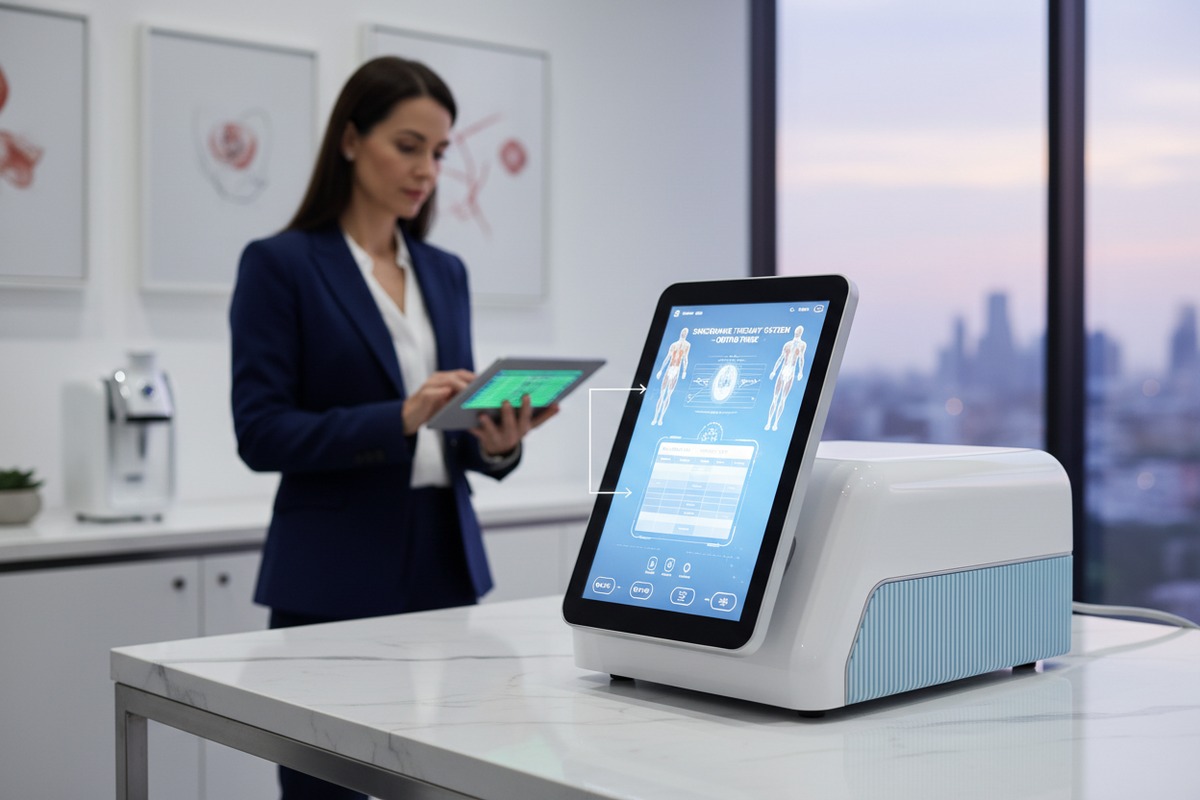
Every week, our sales team receives dozens of inquiries about shockwave machine pricing. Buyers often feel confused by the massive price gap they see online. Some machines cost $500, while others exceed $30,000. This frustration is real and valid.
Imported shockwave therapy machines typically range from $500 to $39,000 USD. Entry-level radial models from China start at $500 to $5,000, mid-range units cost $7,000 to $15,000, and high-end focused machines from premium brands exceed $25,000. Your final price depends on technology type, features, and brand origin.
Understanding this price spectrum helps you make smarter purchasing decisions. Let me break down the key factors that determine what you will actually pay.
How much should I budget for a high-end shockwave therapy machine imported from China?
When we design our premium shockwave units at our Guangzhou facility, we balance advanced technology with competitive pricing. Many buyers assume Chinese imports mean low quality. That assumption costs them thousands in overpayment elsewhere.
For a high-end shockwave therapy machine imported from China, budget between $3,000 and $8,000 for premium radial units and $8,000 to $15,000 for advanced focused models. These prices include professional-grade features like touchscreen interfaces, multiple applicators, and robust build quality suitable for busy clinics.

Understanding the Technology Tiers
Not all shockwave machines work the same way. The technology inside directly affects your budget.
Radial shockwave machines 1 use pneumatic pressure to generate waves. These waves spread outward from the applicator tip. They work well for superficial treatments like plantar fasciitis 2 and muscle trigger points. Our production line offers radial units starting at $2,500 for basic models up to $6,000 for fully-featured versions.
Focused shockwave machines 3 create concentrated energy beams. These penetrate deeper into tissue—up to 65mm in some cases. They treat conditions like erectile dysfunction and chronic tendinopathy more effectively. Focused technology costs more to manufacture, so prices start around $4,000 and climb to $15,000 for advanced configurations.
Price Comparison by Technology Type
| Technology Type | Price Range (China Import) | Best Applications | Depth Penetration |
|---|---|---|---|
| Radial (Entry) | $500 – $2,500 | Basic physio, home use | 0-30mm |
| Radial (Professional) | $2,500 – $6,000 | Clinic treatments, sports therapy | 20-40mm |
| Focused (Standard) | $4,000 – $8,000 | ED treatment, deep tissue | 40-65mm |
| Focused (Advanced) | $8,000 – $15,000 | Multi-application, high-volume clinics | 50-65mm+ |
What Features Justify Higher Prices?
Our engineers have identified the features that separate budget machines from premium ones. A touchscreen interface adds $300-$500 to production costs but dramatically improves user experience. Pre-programmed treatment protocols save training time and reduce errors.
Higher energy output matters too. Budget machines often max out at 4 Bar pressure. Professional units reach 8 Bar, enabling treatment of larger muscle groups and deeper conditions. Frequency range also differs—premium machines offer 1-21 Hz adjustment versus 1-10 Hz on cheaper models.
Build quality affects longevity. We use medical-grade plastics and reinforced internal components on our mid-to-high-end models. These machines handle 20,000+ treatment sessions without major issues. Budget alternatives often fail within 5,000 sessions.
What factors will determine the total landed cost of my shockwave equipment order?
In our experience exporting to the US and Europe, buyers often underestimate total costs. The machine price is just the starting point. Several hidden expenses can add 20-40% to your final investment.
Your total landed cost includes the machine price plus shipping ($33-$350 per unit), import duties (typically 0-10% for medical devices), customs clearance fees ($150-$400), insurance, and any regulatory compliance costs. For a $5,000 machine, expect total landed cost between $5,800 and $7,000 depending on destination country.

Shipping and Logistics Breakdown
Shipping costs depend on machine weight, dimensions, and delivery speed. Our standard shockwave units weigh 15-35kg and ship in cartons measuring approximately 60x50x45cm.
Air freight costs $8-15 per kilogram for standard delivery. Express services like DHL or FedEx charge $15-25 per kilogram but arrive in 5-7 days. Sea freight costs much less—around $200-400 per cubic meter—but takes 25-40 days.
We recommend air freight for single units and sea freight for orders of five or more machines. The per-unit savings become significant with larger orders.
Complete Cost Breakdown Table
| Cost Component | Typical Range | Notes |
|---|---|---|
| Machine Price | $500 – $15,000 | Depends on technology and features |
| Air Shipping | $120 – $350 | 5-10 day delivery |
| Sea Shipping | $50 – $150 | 25-40 day delivery |
| Import Duty (US) | 0-5% | Medical devices often duty-free |
| Import Duty (EU) | 0-8% | Varies by specific classification |
| Customs Clearance | $150 – $400 | Broker fees included |
| Insurance | 1-2% of value | Highly recommended |
| FDA Registration 4 | $5,000+ | Required for US medical claims |
Regulatory Compliance Costs
This factor surprises many first-time importers. If you plan to market shockwave machines for medical purposes in the US, FDA registration is mandatory. The 510(k) clearance process costs $5,000-$15,000 and takes 6-12 months.
For aesthetic-only applications, requirements are less strict. However, CE marking 5 for European sales and other certifications add costs. Our team handles these certifications for OEM clients, which saves significant time and expense compared to doing it independently.
Tips for Reducing Total Costs
You can negotiate free accessories with your supplier. Many manufacturers include extra applicator heads, gel, and spare parts at no additional charge. During our last trade show, we offered buyers who placed orders an extra set of treatment heads worth $400.
Consolidating shipments with other importers reduces per-unit logistics costs. Some buyers join purchasing groups to split container shipping fees. This approach works especially well for smaller distributors.
How does custom OEM branding affect the unit price of my imported beauty machines?
Our OEM services transform generic machines into branded products. This process adds value for distributors but also adds costs. Understanding these costs helps you price your products competitively.
Custom OEM branding typically adds $50 to $500 per unit to your shockwave machine cost. Basic branding (logo stickers and packaging) adds $50-$100. Custom housing colors add $150-$300. Full custom interfaces with your brand throughout add $300-$500. Minimum order quantities usually apply for deeper customization levels.

Levels of OEM Customization
Not all branding costs the same. We offer tiered customization to match different budgets and order volumes.
Level one involves simple logo placement. We apply your logo to the machine housing and packaging. This works for orders as small as 5-10 units. Cost per unit: $50-$100.
Level two includes custom color options. We can produce machines in your brand colors—white, black, pink, or custom Pantone matches. Minimum order: 20-50 units. Cost per unit: $150-$300.
Level three covers full software customization. Your brand appears on the startup screen, throughout the interface, and in all documentation. We modify treatment protocol names and add your contact information to the system. Minimum order: 50-100 units. Cost per unit: $300-$500.
OEM Pricing Structure
| Customization Level | What's Included | MOQ | Price Addition |
|---|---|---|---|
| Basic | Logo sticker, branded packaging | 5 units | $50-$100/unit |
| Standard | Custom colors, branded manual | 20 units | $150-$300/unit |
| Advanced | Custom UI, branded software | 50 units | $300-$500/unit |
| Full Custom | Modified features, exclusive design | 100 units | $500-$1,500/unit |
Why OEM Branding Makes Financial Sense
Despite the added cost, OEM branding 6 increases your profit margins. Generic Chinese imports compete solely on price. Branded products command premium positioning.
A $3,000 generic shockwave machine might retail for $4,500. The same machine with your branding can retail for $6,000-$8,000. Your $300 branding investment generates $1,500-$3,500 in additional margin.
Brand recognition builds customer loyalty too. Clinics that buy your branded equipment become repeat customers for accessories, service, and upgrades. This lifetime value far exceeds the initial branding cost.
Protecting Your Investment
We recommend registering your brand in key markets before ordering OEM products. Trademark protection prevents competitors from copying your branding. We have seen cases where unscrupulous competitors ordered identical OEM products with confusingly similar brands.
Our contracts include exclusivity clauses for custom designs. Once we develop a unique configuration for your brand, we do not sell identical products to others. This protection requires minimum annual purchase commitments but secures your market position.
When our engineering team tests competitor products, we often find concerning shortcuts. Budget machines look similar but perform differently. The differences matter for your business reputation and client outcomes.
High-end shockwave machines justify their premium through superior energy delivery, longer lifespan, better treatment outcomes, and lower total ownership cost. While budget models cost $500-$2,000, they typically fail within 2-3 years and produce inconsistent results. Premium machines costing $5,000-$15,000 last 7-10 years and deliver reliable clinical outcomes.

Performance Differences That Matter
Energy consistency separates premium from budget machines. We tested a $600 Alibaba shockwave unit against our $4,500 model. The budget machine delivered 3.2 Bar actual pressure when set to 4 Bar. Our machine delivered 3.95 Bar—within 2% of the setting.
This inconsistency affects treatment outcomes. Clinics using unreliable machines see higher failure rates. Patients need more sessions. Some never achieve satisfactory results. Your reputation suffers.
Penetration depth varies too. Budget machines advertise 40mm depth but often achieve only 25mm. This limitation excludes certain treatment applications entirely.
Total Cost of Ownership Analysis
The purchase price tells only part of the story. Total Cost of Ownership 7 Consider what happens over five years of ownership.
Budget machines require more frequent repairs. Compressors fail, control boards malfunction, and applicator connections loosen. We estimate $500-$1,000 annual repair costs for cheap imports.
Premium machines need minimal maintenance. Budget $100-$300 annually for routine service. Applicator replacement costs similarly across price tiers—about $200-$400 every 2-3 years per head.
Five-Year Ownership Cost Comparison
| Cost Category | Budget Machine | Premium Machine |
|---|---|---|
| Purchase Price | $1,500 | $6,000 |
| Annual Repairs | $750 × 5 = $3,750 | $200 × 5 = $1,000 |
| Replacement Applicators | $600 | $600 |
| Downtime Losses | $2,000+ | $500 |
| Total 5-Year Cost | $7,850+ | $8,100 |
The numbers reveal a surprising truth. Premium machines cost nearly the same over five years. But premium machines also generate more revenue through better outcomes and less downtime.
Clinical and Business Reputation Impact
Client satisfaction drives referrals. A clinic using premium equipment achieves 85-90% positive outcomes. Budget equipment users report 65-75% satisfaction rates.
Each dissatisfied client tells others. Negative reviews damage your business more than the savings from buying cheap equipment. We have heard from distributors who switched to our premium line specifically because client complaints were destroying their reputation.
Regulatory risks also differ. Ultra-cheap machines sometimes lack proper safety certifications. Operating uncertified medical devices creates liability exposure. Our products include all necessary CE, FDA, and regional certifications.
Conclusion
Imported shockwave therapy machines 8 range from $500 to $39,000 depending on technology, features, and brand. Budget wisely by calculating total landed cost. Consider OEM branding to maximize margins. Premium machines cost more upfront but deliver better value over time.
Footnotes
1. Provides a comparison and explanation of radial shockwave therapy machines. ↩︎
2. Provides comprehensive information on plantar fasciitis diagnosis and treatment. ↩︎
3. Describes focused shockwave therapy and its targeted treatment approach. ↩︎
4. Official FDA page detailing medical device registration and listing requirements. ↩︎
5. Explains CE marking for medical devices and its importance for European market access. ↩︎
6. Authoritative Wikipedia definition of Original Equipment Manufacturer, which covers OEM branding. ↩︎
7. Authoritative Wikipedia definition of Total Cost of Ownership. ↩︎
8. Provides a general overview of shockwave therapy and its benefits. ↩︎

 English
  Español de México
  Deutsch
  Français
  العربية
  Русский