

When we first started helping beauty brands source pressotherapy equipment from our Guangzhou production line, we noticed a pattern lymphatic drainage machines 1. Buyers often struggled with technical jargon. Manufacturers throw around terms like “sequential compression 2” and “gradient pressure.” This confusion leads to wrong orders and costly returns.
When sourcing lymphatic drainage machines, you must understand key terms including air chamber count, sequential compression, pressure range (mmHg), gradient settings, interval timing, hold duration, peristaltic compression modes, and certifications like CE or FDA. Knowing these terms helps you select machines that match your brand’s clinical and cosmetic requirements.
Below, we break down everything you need to know pressure range (mmHg) 3. We cover chamber counts, technical specs, quality verification, and logistics terms. This guide will help you speak confidently with any supplier.
How many compression chambers should I look for in a high-end lymphatic drainage machine?
Our engineering team tests dozens of pressotherapy prototypes each year FDA registration 4. The number one question we hear from US distributors: “How many chambers do I actually need?” The answer depends on your target market and treatment goals.
High-end lymphatic drainage machines typically feature 20 to 48 air chambers for full-body suits. Professional salon machines commonly use 24 chambers. Medical-grade devices designed for limb-specific treatment often use 4 to 8 chambers per cuff. More chambers mean more precise, wave-like compression patterns.

Understanding Chamber Count Categories
Chamber count directly affects treatment precision. Let me explain the main categories based on what we see in the market.
Entry-level home devices support 4-chamber cuffs and generate pressure in the range of 20-220 mmHg. These work well for basic circulation support.
Professional systems like the Zemits Sisley feature 24-chamber compression suits with adjustable settings and four compression power levels. This is the sweet spot for most spas and esthetic clinics.
Top-tier professional devices can include up to 48 air chambers made of high-quality elastic material for the most comprehensive full-body treatments.
Chamber Count Comparison Table
| Chamber Count | Use Case | Target Market | Precision Level |
|---|---|---|---|
| 4-8 chambers | Limb-specific treatment | Home use, rehabilitation | Basic |
| 20-24 chambers | Full-body wellness | Spas, esthetic clinics | Professional |
| 44-48 chambers | Comprehensive sculpting | Med spas, medical clinics | Medical-grade |
Why More Chambers Matter
8-chamber cuffs make the massage extremely effective because they allow finer control over the compression sequence. Thanks to intelligent gradient function, interval, hold, and setting individual pressure for each chamber, advanced devices allow you to adjust parameters to the needs of each patient.
However, more is not always better. A 48-chamber suit costs more to manufacture and maintain. For most cosmetic applications, 24 chambers provide excellent results without excessive complexity.
What Our Production Data Shows
When we manufacture pressotherapy machines, we track failure rates across chamber configurations. Units with fewer chambers have simpler pneumatic systems. They fail less often. But they also deliver less precise treatments.
Manufacturers with 22+ years of experience note that excellent manufacturing processes and strict quality inspection ensure low failure rates. This matters when you choose your supplier.
What technical specifications do I need to understand for my private-label pressotherapy brand?
When we customize machines for private-label clients, they often underestimate the technical details. Specifications matter beyond aesthetics. They affect treatment outcomes and client satisfaction.
For private-label pressotherapy brands, understand these core specifications: pressure range (20-250 mmHg), gradient settings (1-4 mmHg between chambers), interval timing (0-3 seconds), hold duration (2-3 seconds), compression modes (sequential, peristaltic, pulsatile), and safety voltage (36V recommended). These settings determine treatment effectiveness and safety.

Core Technical Specifications Explained
Let me break down each specification so you can discuss them confidently with any manufacturer.
Pressure Range (mmHg): This measures the air pressure delivered to chambers. Professional devices generate pressure in the range of 20-220 mmHg. Some systems offer pressure up to 187mmHg as their standard range. Higher pressure is not always better. Adjustable ranges matter more.
Gradient Settings: Programs characterized by high gradient (4mmHg) between chambers ensure directional lymph flow. Gradient refers to the pressure difference between adjacent chambers. This creates the "wave" effect that pushes fluid toward the body's center.
Sequential Compression: Pressotherapy equipment functions as a compression system that delivers air at varying pressure. It functions similarly to lymphatic drainage massage, but unlike massage, pressotherapy is provided by a machine that consistently delivers the precise amount of pressure.
Technical Specifications Quick Reference
| Specification | Typical Range | Why It Matters |
|---|---|---|
| Pressure Range | 20-250 mmHg | Treatment intensity control |
| Gradient | 1-4 mmHg | Directional lymph flow |
| Interval | 0-3 seconds | Pause between chamber inflations |
| Hold Time | 2-3 seconds | Duration pressure maintained |
| Safety Voltage | 36V | User protection |
| Air Outlets | 8-24 | Treatment zones supported |
Compression Modes You Must Know
There are numerous varieties of pressotherapy depending on technique. Pneumatic compression uses a mechanical drainage method through compression and decompression phases to stimulate venous and lymphatic circulation.
Sequential Compression: Chambers inflate one after another, creating a wave from feet to torso.
Peristaltic Compression: A pumping, wave-like motion for toxin removal and fluid clearance. peristaltic compression 5
Pulsatile Compression: Rhythmic, intermittent pressure targeting localized swelling.
Integration Features for Modern Spas
High-quality machines feature easy-clean wearable accessories made of PU material with durable double-layer design. Modern devices integrate three main functions: Air Pressure, Far Infrared, and EMS (Electrical Muscle Stimulation).
When sourcing for your brand, consider these combined functions. They add value for your end customers without requiring multiple machines.
OEM and Private Label Considerations
Many manufacturers offer free private label service. This includes logo placement on startup screens and machine bodies. OEM is available from established manufacturers, allowing you to customize specifications for your target market.
How can I verify the durability and quality control of a Chinese pressotherapy manufacturer?
Our factory undergoes multiple audits each year from US and European clients. We understand why buyers worry about quality. Not all Chinese manufacturers meet international standards. Here is how you can verify a supplier before placing large orders.
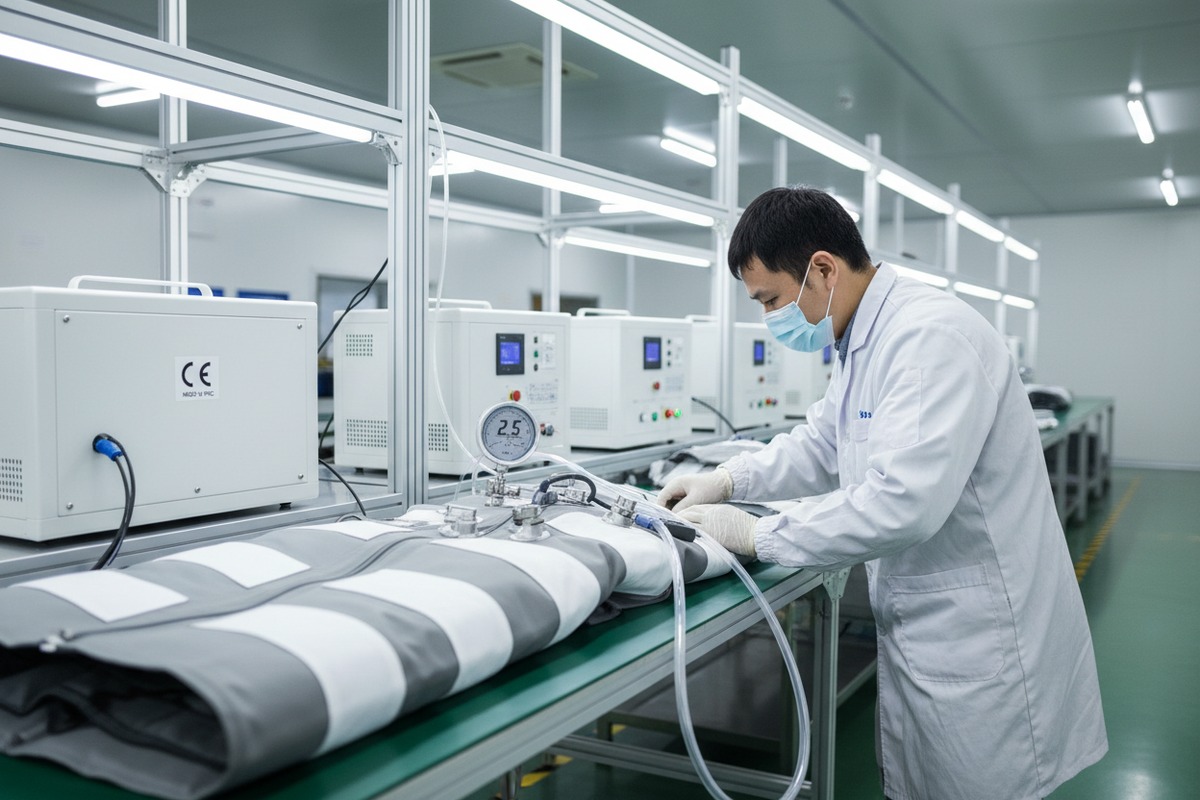
Verify Chinese pressotherapy manufacturers through pre-shipment inspections (PSI), factory audits, ISO 9001 certification checks, CE or FDA documentation review, and third-party quality control services. Request sample units for testing. Ask for production line photos and defect rate data. Reputable suppliers welcome transparency.

Third-Party Inspection Services
Professional quality control inspection companies in China offer third-party inspection services and quality control solutions to simplify sourcing business and reduce risk.
Several established inspection companies operate throughout China. You can inspect your product before it leaves your supplier's factory and prevent quality problems down the line. Some companies guarantee on-site inspections within 48 hours of booking and same-day delivery of reports.
Types of Quality Inspections
Pre-shipment inspection (PSI) 6 is conducted once your order is 100% produced and at least 80% packaged. It verifies that products meet your quality standards before the manufacturer ships them overseas.
| Inspection Type | When Conducted | What It Covers |
|---|---|---|
| Initial Production Check | 0-20% complete | Raw materials, early samples |
| During Production Inspection | 20-80% complete | Process compliance, progress |
| Pre-Shipment Inspection | 80-100% complete | Final product quality |
| Container Loading Supervision | At shipping | Packaging, quantity verification |
Key Certifications to Verify
Many buyers assume that a supplier with a wide range of certificates is automatically a safe choice. While certifications such as ISO 9001, BSCI, or CE marking can be important indicators, they do not guarantee consistent quality. BSCI relates to social compliance but does not assess product quality or manufacturing processes.
Always request copies of:
- CE marking documentation 7 (for European market)
- FDA registration (for US market)
- ISO 9001 certification 8 (quality management)
- Product test reports from accredited labs
Factory Audit Essentials
Supplier quality audits provide a one-day on-site assessment covering primary quality management system components. Each audit report covers management, quality control methods, non-conforming materials, corrective action, and inspection and test equipment.
When auditing a pressotherapy manufacturer, check these areas:
- Air compressor quality – Core component affecting machine lifespan
- Pneumatic tubing materials – Must withstand repeated inflation cycles
- Garment stitching – Weak seams lead to air leaks
- Electronic component sourcing – Branded vs. generic parts
- Testing procedures – How they validate each unit before shipping
Red Flags to Watch For
Companies that place orders with unknown manufacturers may face severe loss if problems are not prevented in time. Quality and inspection service providers are essential for clients placing orders with Chinese manufacturers.
Avoid suppliers who:
- Refuse factory visits or video tours
- Cannot provide test reports
- Have no clear warranty terms
- Quote prices far below market average
- Cannot explain their QC process
What logistics terms should I know to ensure door-to-door delivery of my beauty equipment?
We ship pressotherapy machines to over 30 countries. Logistics can make or break your import experience. Understanding the right terms helps you avoid surprise fees and delays.
Essential logistics terms for beauty equipment import include: DDP (Delivered Duty Paid), FOB (Free on Board), CIF (Cost Insurance Freight), FCL (Full Container Load), LCL (Less than Container Load), customs clearance, bill of lading, HS codes, and door-to-door shipping. DDP offers the most hands-off experience for buyers.
Understanding Shipping Terms
Many people assume that door-to-door shipping and DDP (Delivered Duty Paid) 9 are the same thing, but they are not always interchangeable. DDP is an international shipping term where the seller assumes responsibility for all costs, including duties, taxes, and customs clearance. Door-to-door shipping focuses on the logistics journey itself and may or may not include duties and taxes.
Common Shipping Terms Explained
| Term | Full Name | Who Pays What |
|---|---|---|
| DDP | Delivered Duty Paid | Seller pays all costs including import duties |
| FOB | Free on Board | Buyer pays from port of origin |
| CIF | Cost Insurance Freight | Seller pays to destination port |
| EXW | Ex Works | Buyer pays everything from factory gate |
| DDU | Delivered Duty Unpaid | Buyer pays import duties |
Door-to-Door Shipping Process
For international shipments, the door-to-door process follows a streamlined sequence: Pickup from your location, export customs clearance, transportation via ocean or air freight, import customs clearance, and final delivery straight to the recipient's door.
For pressotherapy machines, we typically recommend:
- Air freight for samples or urgent orders (5-10 days)
- Ocean freight for bulk orders (25-35 days)
- Express courier for small parts or accessories (3-7 days)
Key Documents You Will Need
Make sure you understand all the local market's rules and regulations before sending your first shipment. Otherwise, you might end up with unexpected licensing costs, delays, or even having shipments turned back at the border.
Essential shipping documents include:
- Commercial invoice
- Packing list
- Bill of lading or airway bill
- Certificate of origin
- CE or FDA documentation (for compliance)
- Product test reports
Customs Tips for Beauty Equipment
Working with a single door-to-door agent simplifies matters if a dispute occurs. Many customs hassles can be avoided by exporting to a local distributor. Distributors can typically provide more industry-specific advice than authorities may be able to. They help SMEs take advantage of existing processes that speed up market entry.
Shipping Cost Factors
Several factors affect your shipping costs for pressotherapy machines:
| Factor | Impact on Cost |
|---|---|
| Machine weight | Heavy units cost more |
| Package dimensions | Volumetric weight calculations |
| Destination country | Duties and taxes vary |
| Shipping speed | Express vs. standard rates |
| Insurance coverage | Recommended for equipment |
Working with Reliable Freight Partners
Multimodal transport tailored to product includes FTL, LTL, express, sea containers (FCL and LCL), and intermodal services with door-to-door solutions for time-sensitive shipments.
When selecting a freight partner, ask about:
- Experience with beauty equipment
- Customs clearance support
- Insurance options
- Tracking capabilities
- Return handling procedures
Conclusion
Mastering pressotherapy terminology empowers you to source better machines. From chamber counts to shipping terms, each detail affects your business success. Use this guide as your reference when speaking with manufacturers. If you need help navigating the sourcing process, our team at KMSLASER is ready to support your next project.
Footnotes
1. Defines lymphatic drainage machines and their function in stimulating lymph flow. ↩︎
2. Explains how sequential compression devices improve circulation. ↩︎
3. Details recommended pressure ranges for effective pressotherapy treatments. ↩︎
4. Details the FDA’s requirements for medical device establishment registration and listing. ↩︎
5. Explains peristaltic pneumatic compression and its benefits in medical settings. ↩︎
6. Defines pre-shipment inspection as a final quality check before goods are shipped. ↩︎
7. Explains CE marking as a prerequisite for medical devices in the EU. ↩︎
8. Explains ISO 9001 as a leading quality management system standard. ↩︎
9. Clarifies DDP as an Incoterm where the seller bears all costs and risks. ↩︎

 English
 Español de México
 Deutsch
 Français
 العربية
 Русский
