

When our production line released its first pressotherapy system, a European distributor quickly asked us about contraindication labels Pacemaker or ICD 1. That single question opened our eyes: beauty machine brands face real liability if they ignore safety warnings. Your clients trust you. If they harm an end user due to missing information, your brand reputation suffers.
Pressotherapy machine contraindications you must communicate include pregnancy, deep vein thrombosis, severe heart conditions, active infections, open wounds, pacemakers, and uncontrolled hypertension. Additional warnings cover cancer, kidney failure, and neurological conditions affecting sensation. Proper documentation protects both your brand and your downstream customers.
Below, we break down exactly which medical conditions belong in your safety documentation, how to advise salon clients on screening, whether you can customize OEM warnings, and which health risks matter most to distributors FDA oversight 2. Let us help you build a safer, more trustworthy product line.
What medical conditions should I include in my pressotherapy machine's safety documentation?
We learned from our own QC audits that vague warning labels confuse end users. Salons and spas need clear lists. Regulatory bodies in the US and EU require specific disclosures. If your documentation is incomplete, you risk product recalls and legal trouble.
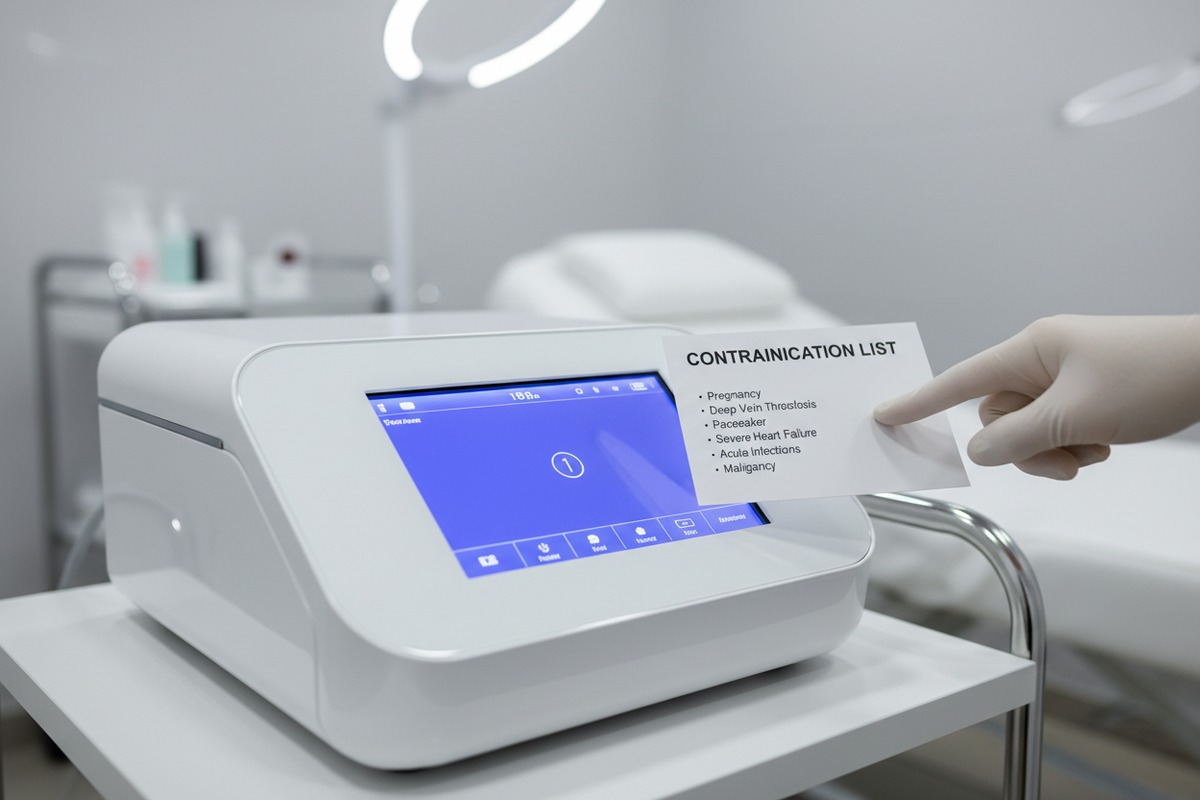
Your safety documentation should include absolute contraindications like pregnancy, deep vein thrombosis, acute heart failure, pacemakers, open wounds, and severe arterial disease. Relative contraindications—such as diabetes, osteoporosis, epilepsy, and cancer—require a doctor's approval before treatment.
Absolute Contraindications: Never Use the Machine
Certain conditions demand a strict "no treatment" rule. These are called absolute contraindications. If an end user has any of these, they must not use the pressotherapy machine.
| Condition | Why It's Dangerous |
|---|---|
| Pregnancy | Potential risks to fetal circulation and maternal health |
| Deep Vein Thrombosis 3 (DVT) | Compression can dislodge clots, causing embolism |
| Acute Heart Failure 4 | Increases cardiovascular strain |
| Pacemaker or ICD | Risk of device interference |
| Open Wounds or Recent Surgery | Can cause infection or delayed healing |
| Severe Arterial Hardening 5 | Pressure may worsen blockages |
Pregnancy is a clear example. Pressotherapy sessions are not recommended during pregnancy due to potential risks for both mother and fetus. Similarly, thrombosis is extremely dangerous. The action of pressotherapy may aggravate the condition by potentially displacing a blood clot. This could lead to pulmonary embolism 6, which is life-threatening.
Relative Contraindications: Doctor Approval Required
Some conditions do not automatically disqualify treatment. But they require medical clearance. Your documentation should tell users to consult a physician first.
| Condition | Concern |
|---|---|
| Diabetes | Poor wound healing, neuropathy 7 may mask injury |
| Osteoporosis | Excessive pressure risks bone damage |
| Epilepsy | Avoid head/neck areas due to seizure risk |
| Cancer at Treatment Site | May interfere with treatment protocols |
| Fever or Active Infection | Risk of systemic spread |
| Severe Varicose Veins | Could worsen swelling |
Diabetes patients need extra caution. If they have neuropathy, they may not feel excessive pressure. This can lead to tissue damage without warning. Cancer patients should only receive treatment within approved protocols.
Neurological and Sensory Impairments
Individuals with neurological conditions that impair limb sensation face unique risks. They cannot accurately perceive discomfort or excessive pressure during treatment. Your documentation should flag this clearly. Advise users to avoid treatment if they have numbness or unexplained pain in their limbs.
Why Comprehensive Documentation Matters
Incomplete warnings expose your brand to liability. Spas, salons, and physical therapy centers using uncertified or poorly documented equipment could face legal repercussions and damage to their reputation. CE marking 8 in Europe and FDA oversight in the US both require clear contraindication disclosures. Make your manual thorough and easy to understand.
How do I advise my salon clients on screening for pressotherapy contraindications?
Our engineering team often fields questions from salon owners about client intake forms. They want to know: what questions should we ask? How do we protect ourselves legally? The answer starts with a simple screening process.
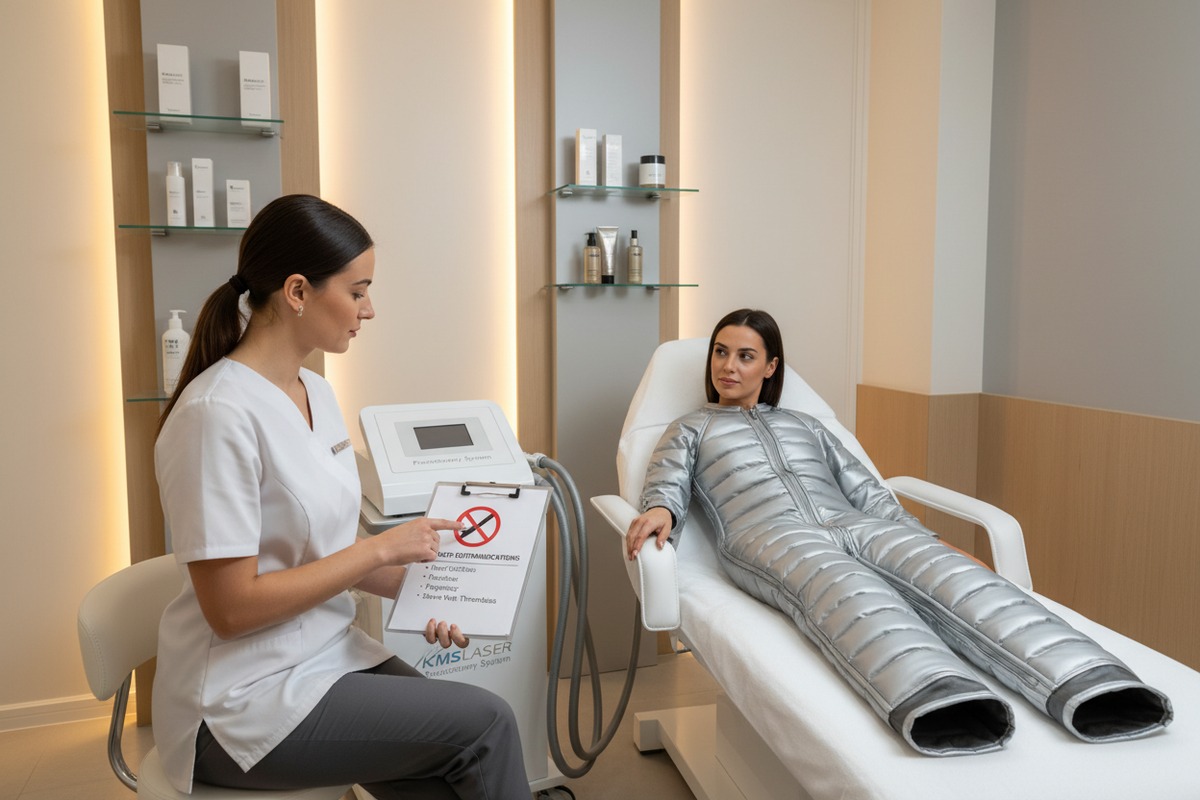
Advise salon clients to use a written pre-treatment questionnaire covering heart conditions, blood clots, pregnancy, diabetes, recent surgeries, implants, and skin infections. Require clients to sign a waiver acknowledging they have read and understood the contraindications. Train staff to recognize warning signs.
Building an Effective Screening Questionnaire
A good questionnaire asks direct, simple questions. It should cover all major contraindications. Here is a sample structure:
| Question | Purpose |
|---|---|
| Are you pregnant or trying to become pregnant? | Screen for pregnancy |
| Do you have a history of blood clots or DVT? | Identify clot risks |
| Do you have heart disease, a pacemaker, or recent heart attack? | Cardiac safety |
| Do you have diabetes or poor circulation? | Wound healing concerns |
| Have you had surgery in the treatment area recently? | Healing status |
| Do you have any open wounds, infections, or skin rashes? | Infection risk |
| Do you have cancer or are you receiving cancer treatment? | Protocol compliance |
| Do you experience unexplained pain, swelling, or numbness? | Hidden conditions |
Ask clients to answer yes or no. Any "yes" answer should trigger a follow-up conversation. For relative contraindications, require written doctor approval before proceeding.
Training Salon Staff
Your salon clients need trained staff. Even the best questionnaire fails if staff cannot interpret results. Advise them to:
- Read the user manual completely before operating the machine.
- Start all new clients at low pressure settings.
- Monitor client sensations during treatment. If clients feel pain, stop immediately.
- Never extend sessions beyond recommended times.
Medical sources stress consulting a doctor beforehand. Salon staff should never diagnose conditions. Their role is to screen and refer.
Legal Protection Through Waivers
A signed waiver adds legal protection. The waiver should state that the client has disclosed all relevant health conditions. It should confirm they understand the contraindications. Keep waivers on file for at least three years.
Ongoing Communication
Encourage salons to check in with returning clients. Health conditions change. A client who was healthy six months ago may now have a new diagnosis. Update intake forms annually. Remind clients to disclose any changes before each session.
Can I customize the safety warnings on my OEM pressotherapy machines to protect my brand?
When we develop OEM products for overseas brands, customization requests always include labels and manuals. Brand owners want their logo, their colors, and their language. But they also ask: can we change the safety warnings?
Yes, you can customize safety warning formats, layouts, and translations on OEM pressotherapy machines. However, the core contraindication content must remain accurate and complete. Regulatory compliance requires specific disclosures. Work with your manufacturer to ensure custom warnings meet CE, FDA, and ISO standards.

What You Can Customize
Brand owners have flexibility in how they present safety information. You can adjust:
- Language: Translate warnings into your target market's language.
- Layout: Use your brand's fonts, colors, and design style.
- Format: Choose digital manuals, printed booklets, or in-app warnings.
- Placement: Add warnings on product packaging, machine labels, and marketing materials.
- Supplementary Content: Include additional tips, FAQs, or regional requirements.
Many of our clients add localized content. For example, US distributors may add specific FDA-related language. European clients emphasize CE compliance.
What You Cannot Change
The medical facts must remain accurate. Never remove or minimize contraindications. Do not claim the machine is "safe for everyone." This contradicts medical evidence. Wellness blogs sometimes make such claims, but medical sources counter this, stressing individual health variability.
Certifications also impose limits. CE marking indicates compliance with EU safety, health, and environmental requirements. FDA approval confirms the device meets US regulatory standards. Altering certified content may void compliance.
Working With Your Manufacturer
Request your manufacturer's standard contraindication list. Compare it against regional regulations. Add any market-specific requirements. Then work with designers to integrate warnings into your brand identity.
Quality manufacturers will provide:
- Master contraindication lists
- Editable manual templates
- Label artwork files
- Compliance certificates
At our facility, we supply complete documentation packages. Clients can rebrand without losing regulatory compliance.
Protecting Your Brand Long-Term
Clear safety warnings build trust. They show distributors and end users that you prioritize their wellbeing. If an incident occurs, comprehensive documentation demonstrates due diligence. This can shield your brand from lawsuits and reputation damage.
What are the most common health risks I need to communicate to my downstream distributors?
Our export team briefs every new distributor on health risks before shipping. Distributors resell to salons, spas, and clinics. If they do not understand the risks, they cannot educate their customers. This creates a chain of liability.
The most common health risks to communicate to distributors include blood clot dislodgement from DVT, cardiovascular strain in heart patients, infection spread from open wounds, tissue damage from excessive pressure, and device interference with pacemakers. Also emphasize risks from using non-certified machines.

Cardiovascular and Circulatory Risks
Heart conditions top the risk list. Acute heart failure patients face increased cardiovascular strain from pneumatic compression. Similarly, people with deep vein thrombosis risk clot dislodgement. The massage action could move a thrombus to another body area, causing serious consequences.
Distributors must understand these mechanisms. When they explain risks to salon clients, they need clear language. Pressure applied to legs with existing clots can push those clots toward the lungs or heart.
Infection and Wound Healing Risks
Open wounds and active infections create two problems. First, pressure on wounds delays healing and may reopen surgical sites. Second, pneumatic compression can spread infections systemically. Clients with fever or acute infections should wait until they recover.
Proper cuff hygiene also matters. Distributors should advise end users to clean equipment after each use. Dirty cuffs can harbor bacteria and cause skin infections.
Pressure-Related Tissue Damage
Excessive pressure causes bruising, discomfort, and circulation disruption. Side effects include redness and slight irritation where pressurized garments meet skin. Starting at low pressure and increasing gradually prevents most issues.
Non-certified devices pose greater risks. Without proper certification, there is no guarantee the machine has been tested for safe pressure ranges. This can lead to uncontrolled pressure causing injury.
Device Interference Risks
Pacemakers and implanted cardiac defibrillators (ICDs) can malfunction near compression equipment. The risk increases when treating areas near the chest. Distributors should flag this clearly. Anyone with an implanted electronic device needs medical clearance.
Communicating Risks Effectively
Provide distributors with:
- One-page risk summaries
- Training videos
- Printable client screening forms
- Emergency response guidelines
Suggest they host training sessions for their salon clients. Well-informed end users report problems faster. Quick reporting prevents minor issues from becoming serious injuries.
| Risk Category | Key Message for Distributors |
|---|---|
| Blood Clots | Never treat clients with DVT or suspected clots |
| Heart Conditions | Require medical clearance for cardiac patients |
| Infections | Wait until wounds heal and infections clear |
| Excessive Pressure | Always start low, increase gradually |
| Implanted Devices | Pacemaker patients need doctor approval |
| Non-Certified Machines | Only sell certified equipment |
Conclusion
Pressotherapy contraindications protect your customers and your brand. Document all absolute and relative contraindications clearly. Train your distribution chain thoroughly. Customize OEM warnings responsibly. Your diligence today prevents liability tomorrow.
Footnotes
1. Explains the function of a pacemaker in regulating heart rhythm. ↩︎
2. Found working replacement URL on an authoritative FDA.gov domain, which is the updated location for the original content. ↩︎
3. Explains the medical condition and its common location in the body. ↩︎
4. Provides a fundamental definition of heart failure and its impact on the body. ↩︎
5. Defines the condition where plaque buildup restricts blood flow in arteries. ↩︎
6. Describes a life-threatening complication of DVT where a clot travels to the lungs. ↩︎
7. Explains nerve damage affecting the peripheral nervous system. ↩︎
8. Found working replacement URL on an authoritative European Commission domain. ↩︎

 English
 Español de México
 Deutsch
 Français
 العربية
 Русский
