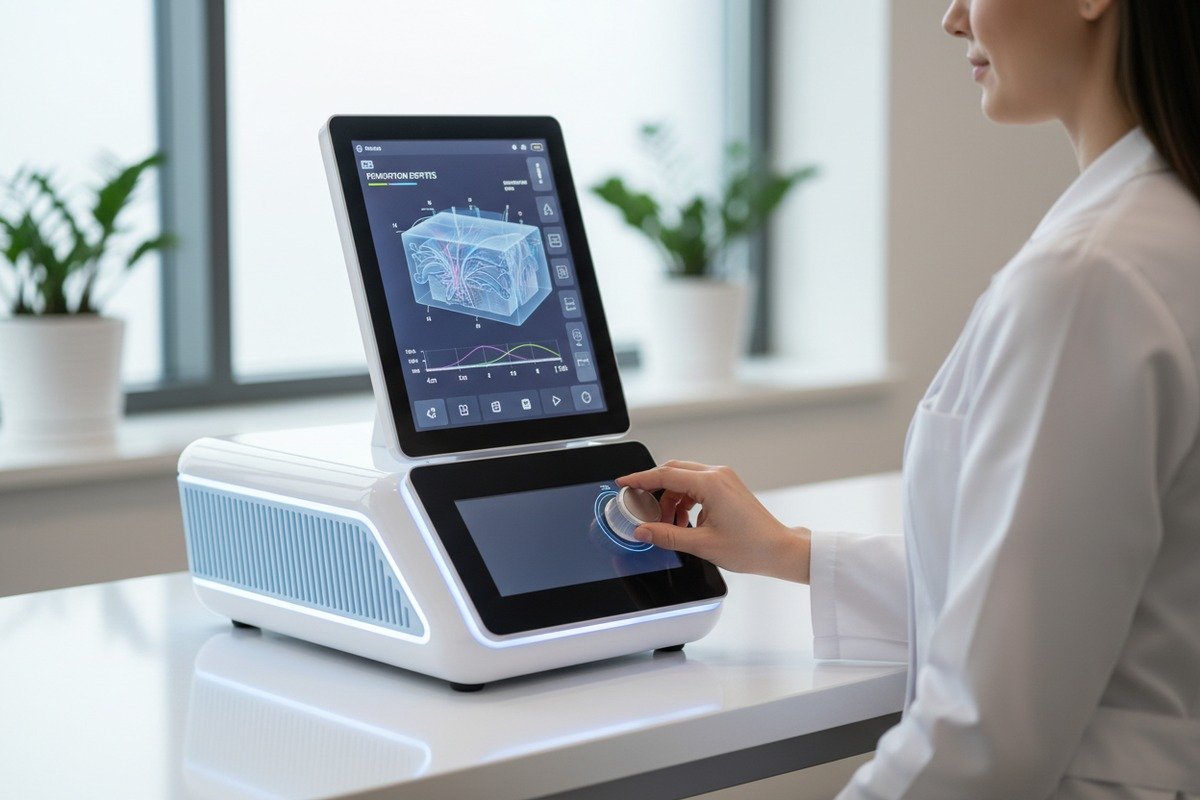
Every week, our engineering team receives questions from buyers confused about pressure specifications OEM customization 1. Many importers struggle to decode technical sheets filled with MPa, bar, and energy flux density 2 numbers. Without clarity, you risk ordering equipment that either underperforms or damages tissues.
The maximum pressure per shock in shockwave therapy machines ranges from 0.1-1 MPa (1-10 bar) for radial devices to 10-150 MPa for focused systems. Focused shockwave machines deliver concentrated high-pressure pulses reaching depths of 4-12 cm, while radial pressure wave units spread lower-pressure energy across superficial tissues up to 6 cm deep.
Understanding these pressure differences helps you select the right equipment for your brand positioning. Let me walk you through what these numbers mean for your business decisions.
How do I choose the right maximum pressure to balance safety and efficacy for my brand?
Our production floor handles orders from brands targeting very different market segments. Some clients want powerful clinical-grade machines. Others need gentler devices for spa environments. The pressure specification you choose shapes your entire product strategy.
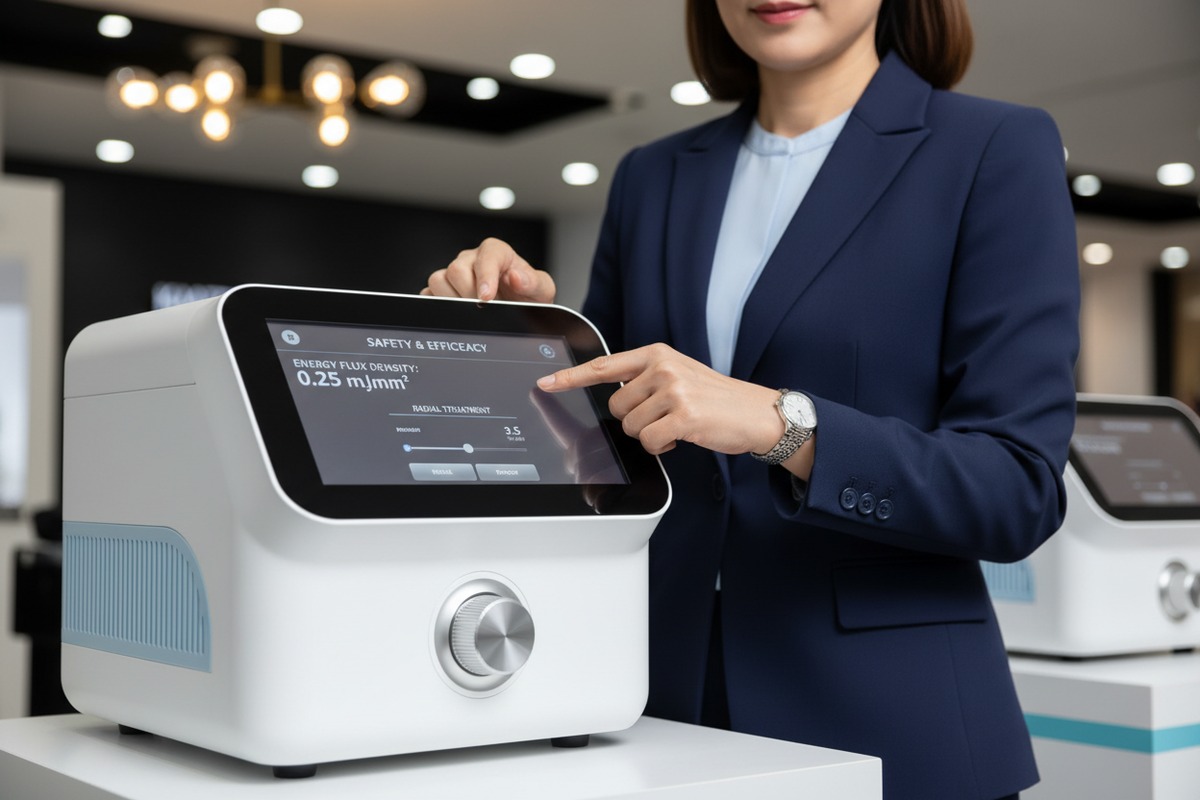
To balance safety and efficacy, match your maximum pressure to your target application. Radial devices at 2-5 bar suit superficial treatments and pain-sensitive clients. Focused systems at 50-80 MPa target deep tissues but require trained operators. Always verify energy flux density stays below 0.28 mJ/mm² for tendon treatments to prevent vascular damage.
Understanding the Two Main Device Categories
The shockwave therapy market divides into two distinct technology camps. Each serves different clinical needs and price points.
Focused shockwave therapy (ESWT) 3 generates true shockwaves with peak pressures between 10-100 MPa. Advanced systems push this to 150 MPa. These devices concentrate energy at a precise focal point deep inside the body. Electrohydraulic, electromagnetic, and piezoelectric generators create these powerful pulses.
Radial pressure wave therapy (RPWT) 4 produces lower pressures from 0.1-1 MPa. Most clinical units max out at 5 bar. A pneumatic compressor drives a projectile against an applicator, creating a spreading pressure wave. Energy dissipates as it travels deeper.
Pressure Comparison by Device Type
| Device Type | Maximum Pressure | Typical Clinical Use | Penetration Depth | Best Applications |
|---|---|---|---|---|
| Focused Electrohydraulic | 80-150 MPa | 50-80 MPa | 8-12 cm | Calcific deposits, bone healing |
| Focused Electromagnetic | 50-100 MPa | 40-60 MPa | 4-8 cm | Chronic tendinopathies |
| Focused Piezoelectric | 30-80 MPa | 30-50 MPa | 4-6 cm | Precise targeting, sensitive areas |
| Radial Ballistic | 1-10 bar | 2-5 bar | 0-6 cm | Trigger points, fascia, cellulite |
Energy Flux Density Matters More Than Raw Pressure
When we calibrate machines at our facility, we focus heavily on energy flux density (EFD). This metric measures energy delivered per square millimeter. High peak pressure means nothing if the energy disperses poorly.
Clinical research categorizes EFD into three bands. Low EFD sits below 0.08 mJ/mm². Medium ranges from 0.08-0.28 mJ/mm². High EFD exceeds 0.28 mJ/mm².
For your brand, consider your end users carefully. Salon operators rarely need high EFD. They treat muscle tension, cellulite, and mild pain. Medium EFD at moderate pressures delivers results without complications. Medical clinics targeting calcific tendinitis 5 or plantar fasciitis may justify higher specifications.
Animal studies show vascular damage 6 occurs above 0.4-0.6 mJ/mm². We always advise our B2B clients to stay conservative with EFD limits, especially for devices sold into less regulated markets.
Can I request specific pressure range adjustments for my custom shockwave machine order?
During recent negotiations with a Canadian distributor, they asked us to modify the pressure ceiling on our radial units. They wanted 4 bar maximum instead of our standard 5 bar. Their liability concerns drove this request.
Yes, pressure range adjustments are possible through OEM customization. Software limits can restrict maximum output from standard hardware. Physical modifications like compressor pressure regulators or applicator head changes also adjust ranges. Lead times extend 2-4 weeks for software changes, 6-8 weeks for hardware modifications. Minimum order quantities typically apply.

Software-Based Pressure Limiting
The fastest customization route involves firmware adjustments. Our touchscreen interfaces already include pressure setting controls. Engineering can simply cap the maximum selectable value.
This approach works well for radial devices. The pneumatic system physically produces whatever pressure the compressor delivers. Software just prevents operators from selecting dangerous levels.
For focused systems, software can limit capacitor charge levels. Lower charge means lower peak pressure at the focal point. This method preserves hardware integrity while meeting your safety requirements.
Hardware Modification Options
Some clients need physical changes. A European brand once requested we install medical-grade pressure regulators with tamper-proof settings. This prevented end users from overriding software limits.
Hardware modifications we commonly offer include:
- Pressure regulator installation with fixed maximum settings
- Alternative compressor specifications for different pressure ceilings
- Custom applicator heads with modified transmission characteristics
- Shock tube length adjustments affecting energy delivery
MOQ and Lead Time Expectations
| Customization Type | Minimum Order Quantity | Additional Lead Time | Cost Impact |
|---|---|---|---|
| Software pressure cap | 20 units | 2-3 weeks | Minimal |
| Firmware interface changes | 50 units | 3-4 weeks | $500-1000 setup |
| Pressure regulator addition | 30 units | 4-6 weeks | $15-30 per unit |
| Custom compressor spec | 100 units | 6-8 weeks | $40-80 per unit |
| Modified applicator head | 50 units | 8-12 weeks | $100-200 per unit |
Documentation and Compliance Support
When you modify pressure specifications, your regulatory paperwork changes too. We provide updated technical files showing the new pressure parameters. CE marking documentation reflects actual device capabilities.
Our team prepares test reports from calibrated pressure measurement systems. Hydrophone mapping 7 verifies peak pressure output matches your specifications. This documentation supports your regulatory submissions in destination markets.
If your annual purchase volume exceeds $100,000-150,000, or you represent a recognized industry brand, consider discussing flexible payment terms. Some established partners successfully negotiate Net 30-90 day arrangements. If full open account proves difficult, try proposing payment terms starting from bill of lading date rather than goods receipt date.
How does the maximum pressure output affect the long-term durability of my imported equipment?
Our quality control department tracks warranty claims closely. Patterns emerge clearly over time. Machines running consistently at maximum pressure fail faster than those operated at moderate settings.
Higher maximum pressure directly stresses mechanical components, reducing equipment lifespan. Focused systems operating above 80% of rated maximum show 30-50% faster wear on shock generators. Radial devices at maximum pressure experience accelerated piston and O-ring degradation. Specify equipment rated 20-30% above your actual clinical needs to extend service life and reduce warranty claims.

Component Stress at Maximum Pressure
Every shockwave generation cycle creates mechanical stress. In electrohydraulic focused systems, spark gap electrodes erode with each discharge. Higher energy discharges cause faster erosion.
Electromagnetic systems stress coil windings and membrane assemblies. The magnetic pulse that generates shockwaves creates heat. Operating at maximum pressure maximizes heat generation per cycle.
Radial systems stress different components. The pneumatic projectile impacts the applicator thousands of times per treatment session. Higher pressure means harder impacts. O-rings, seals, and the projectile itself wear faster.
Expected Lifespan by Operating Intensity
| Operating Intensity | Focused Generator Life | Radial Handpiece Life | Maintenance Interval |
|---|---|---|---|
| Light (50% max) | 3-5 million shocks | 5-7 million shocks | 12 months |
| Moderate (70% max) | 2-3 million shocks | 3-5 million shocks | 6-9 months |
| Heavy (90% max) | 1-2 million shocks | 2-3 million shocks | 3-6 months |
| Maximum (100%) | 0.5-1 million shocks | 1-2 million shocks | 1-3 months |
Design Headroom Recommendations
Smart equipment specification builds in headroom. If your salon customers typically need 3 bar for treatments, specify machines rated for 4-5 bar maximum. They will rarely touch the upper limit.
This headroom strategy offers several advantages. Components operate within comfortable stress ranges. Heat buildup stays manageable. Mechanical wear progresses slowly.
From our production experience, machines with 30% headroom maintain calibration accuracy longer. Pressure output drift is a common problem in heavily used equipment. Starting with extra capability delays the point where drift becomes clinically significant.
Maintenance and Consumables Planning
Help your customers budget for maintenance. Provide clear guidance on consumable replacement schedules. Applicator transmitters on radial systems typically need replacement every 500,000-1,000,000 shocks depending on operating pressure.
Focused system generators have fixed lifespans. Electrohydraulic electrodes may last 1,000-3,000 treatments. Electromagnetic membranes last longer but eventually fatigue. Include this information in your product documentation.
We supply our partners with recommended spare parts kits sized for typical annual usage. This helps your service operations and protects your brand reputation.
What pressure specifications do my salon customers actually need to achieve professional results?
When we exhibit at aesthetic trade shows, salon owners always ask about power. They assume more pressure equals better results. Our clinical advisors spend considerable time correcting this misconception.
Most salon applications require only 1.5-3.5 bar (0.15-0.35 MPa) radial pressure for professional results. Cellulite treatment, muscle relaxation, and trigger point therapy respond well within this range. Only specialized medical applications like calcific tendinitis require focused systems above 30 MPa. Match specifications to actual treatment protocols, not marketing headlines.
Common Salon Treatment Requirements
Salon environments differ fundamentally from medical clinics. Treatments focus on aesthetic improvement and wellness rather than pathology resolution. This shapes pressure requirements significantly.
Cellulite reduction protocols 8 typically use 1.5-2.5 bar. The goal is stimulating connective tissue remodeling and improving lymphatic drainage. Excessive pressure causes bruising without enhancing results.
Muscle relaxation and recovery treatments work at 2-3 bar. Athletes and active clients seek reduced tension and faster recovery. Moderate pressure activates mechanoreceptors and increases local circulation effectively.
Trigger point treatment may push to 3-4 bar for stubborn knots. However, most practitioners find 2.5-3.5 bar sufficient. Going higher just increases client discomfort.
Treatment Protocol Pressure Guidelines
| Application | Recommended Pressure | Frequency | Shocks Per Session | Treatment Area |
|---|---|---|---|---|
| Cellulite Grade 1-2 | 1.5-2.0 bar | 10-15 Hz | 2000-3000 | Thighs, buttocks |
| Cellulite Grade 3 | 2.0-2.5 bar | 12-15 Hz | 3000-4000 | Affected areas |
| Muscle relaxation | 2.0-3.0 bar | 8-12 Hz | 1500-2500 | Large muscle groups |
| Trigger points | 2.5-3.5 bar | 8-10 Hz | 500-1000 per point | Specific points |
| Scar tissue | 2.0-3.0 bar | 10-12 Hz | 1000-2000 | Scar area |
| Lymphatic stimulation | 1.0-1.5 bar | 12-15 Hz | 1500-2500 | Drainage pathways |
Why "More Power" Marketing Misleads Buyers
Some competitors market devices emphasizing maximum pressure as the primary feature. Our experience suggests this creates problems for everyone.
Salon staff without extensive training may assume higher is better. They crank settings to maximum and cause client discomfort or bruising. Negative experiences damage your brand reputation.
Equipment running at maximum stress fails faster. Your warranty costs increase. Customer satisfaction decreases when devices need service.
The right approach positions your products around "right power for results." Educate your distribution partners about appropriate settings. Provide treatment protocol guides with your equipment. This supports professional outcomes and protects your brand.
Practical Buying Recommendations
For salon-focused brands, we typically recommend radial systems with 4-5 bar maximum capability. This provides comfortable headroom above typical 2-3 bar treatment settings.
The touchscreen interface should make appropriate settings easy to select. Pre-programmed treatment protocols help inexperienced operators. Clear pressure displays prevent accidental over-treatment.
Consider your market positioning carefully. Premium salon brands benefit from sophisticated interfaces and comprehensive protocol libraries. Value-oriented brands may prioritize simplicity and reliability over advanced features.
Conclusion
Choosing the right maximum pressure specifications shapes your product success and customer satisfaction. Match pressure ranges to actual treatment needs rather than impressive specifications. Partner with manufacturers who understand both the technology and your market requirements. Your brand reputation depends on equipment that delivers consistent, safe, professional results.
Footnotes
1. Explains how OEMs offer tailored solutions for medical device production. ↩︎
2. Explains EFD as a key metric for shockwave energy output. ↩︎
3. Provides a concise definition and common applications of ESWT. ↩︎
4. Defines RPWT as a noninvasive treatment using acoustic waves for healing. ↩︎
5. Confirms ESWT efficacy for calcific tendinitis at specific energy levels. ↩︎
6. Highlights the caution needed with high EFD to prevent tissue damage. ↩︎
7. Describes hydrophones’ role in accurate shockwave measurement for quality and regulation. ↩︎
8. Outlines a typical radial shockwave therapy protocol for cellulite treatment. ↩︎

 English
  Español de México
  Deutsch
  Français
  العربية
  Русский