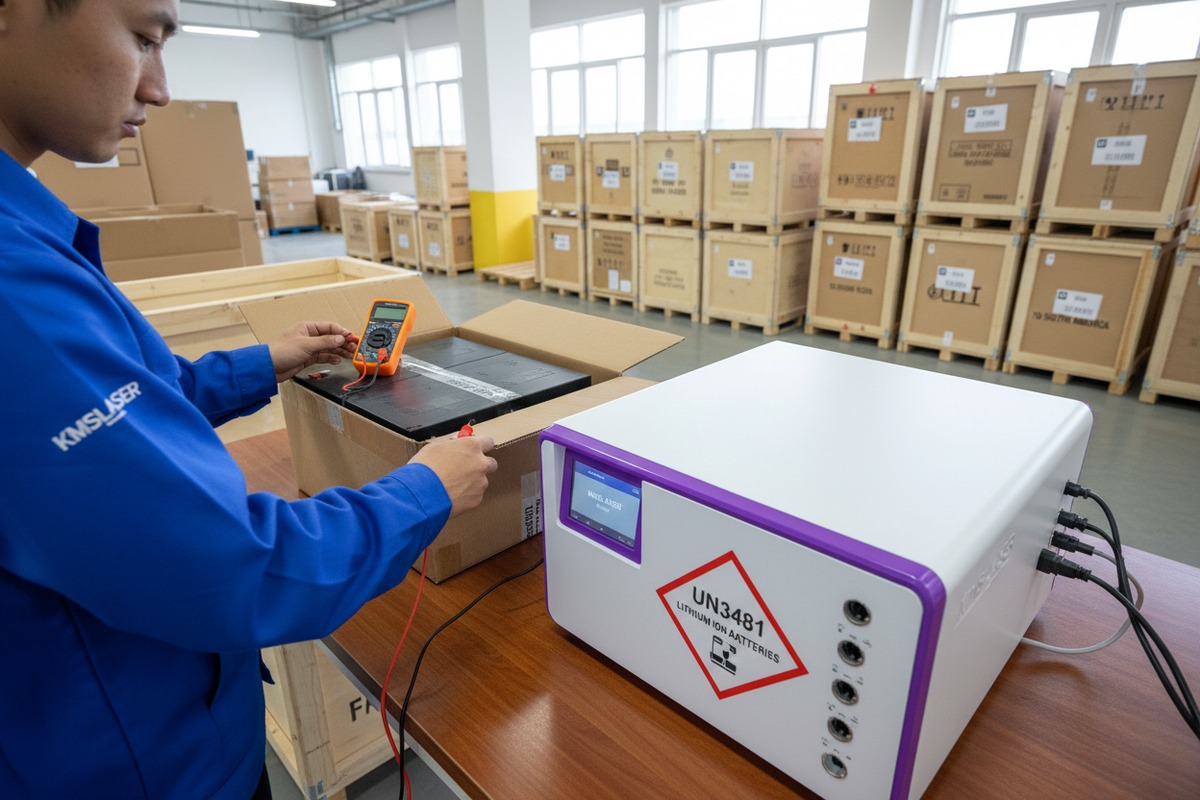
When our logistics team prepares shipments for Brazil or Chile, we often face strict scrutiny over the power sources inside our devices IATA (air) 1. You might worry that a single labeling error could detain your entire medical equipment order at customs, costing you thousands in storage fees.
Shipping pressotherapy machines to South America requires compliance with IATA (air) or IMDG (sea) standards, specifically classifying batteries under UN3481. You must ensure batteries are at ≤30% State of Charge for air transport, use UN-approved rigid packaging, and provide a valid MSDS and UN38.3 test summary to clear customs.
Understanding these complex regulations is vital for a smooth supply chain, so let’s break down exactly what you need to know.
Which lithium battery certifications do I need for my pressotherapy machines to clear South American customs?
We often see clients confused by the alphabet soup of required paperwork when our sales team confirms an order for Bogota or Buenos Aires IMDG (sea) standards 2. Without the correct safety test reports, your shipment risks being rejected by the carrier before it even leaves the factory floor.
To clear South American customs, your pressotherapy machines’ lithium batteries must have a passed UN38.3 Test Summary to prove transport safety. Additionally, countries like Brazil often require IEC 62133 certification for battery safety and specific medical device registrations with local agencies like ANVISA or ANATEL.

The Critical Role of UN38.3 Testing
The foundation of international battery shipping is the UN38.3 certification. In our factory, we ensure every battery batch undergoes this rigorous testing before we even consider packing it into a pressotherapy unit IEC 62133 certification 3. This standard is not optional; it is a global requirement adopted by South American authorities to ensure batteries can withstand the vibrations, pressure changes, and temperature shocks of transport.
The UN38.3 test series includes eight specific tests (T1 to T8) Class 9 hazardous material labels 4. For air transport to countries like Peru or Argentina, the battery must pass altitude simulation, thermal cycling, and external short circuit tests. If your supplier cannot provide a UN38.3 Test Summary 5 Report (TSR) that links directly to the specific battery model in your machine, the shipment will be grounded.
Local Regulatory Nuances
While UN38.3 covers the "transport" aspect, import clearance in South America often demands more Shipper’s Declaration for Dangerous Goods (DGD) 6. For instance, Brazil is particularly strict. The National Health Surveillance Agency (ANVISA 7) oversees medical devices, while ANATEL monitors telecommunications and batteries.
If your pressotherapy machine is wireless or portable, customs officers may request an IEC 62133 CB Report. This certifies the safety of the cell and battery pack during use, not just transport. We always advise our partners to verify if their local import broker needs the documents translated into Spanish or Portuguese, as this varies by port of entry.
Summary of Required Certifications
Below is a breakdown of the essential certifications you should request from us or your current supplier before shipping.
| Certification / Standard | Purpose | Mandatory for South America? |
|---|---|---|
| UN38.3 | Verifies safety for transport (vibration, shock, altitude). | Yes (Universal) |
| IEC 62133 | Verifies electrical safety and reliability for use. | Often (e.g., Brazil, Chile) |
| MSDS (SDS) | details chemical hazards and handling instructions. | Yes (Carrier Requirement) |
| 1.2m Drop Test | Ensures packaging integrity if batteries are loose. | Yes (If packed separately) |
How can I ensure my supplier’s battery packaging complies with international air and sea freight safety standards?
Our warehouse staff meticulously double-checks every box because we know that loose batteries can cause catastrophic fires during transit. Improper packaging is the number one reason shipments are flagged during pre-flight inspections, leading to frustrating delays for your business.
You must verify that your supplier uses UN-approved outer packaging that is rigid and capable of withstanding a 1.2-meter drop. Internally, batteries must be isolated to prevent short circuits, cushioned to stop movement, and clearly marked with Class 9 hazardous material labels and lithium battery handling marks.
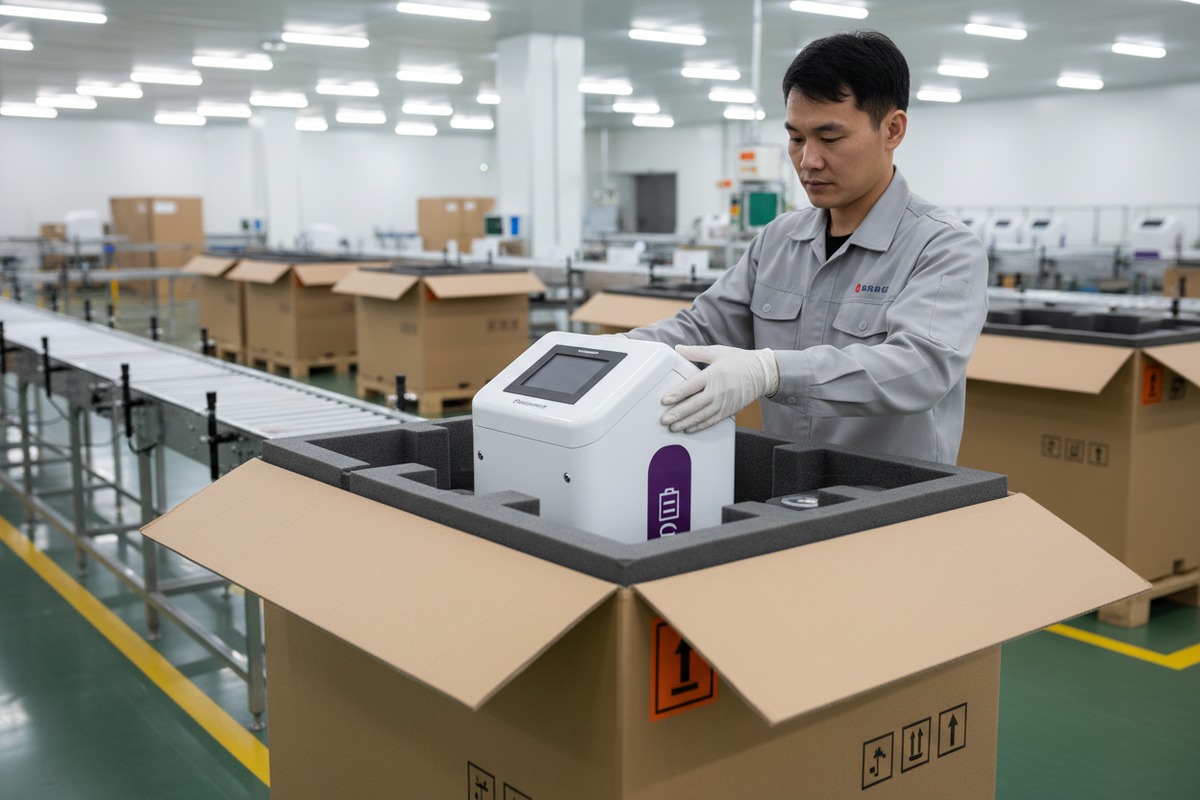
Adhering to Packing Instructions
When we pack pressotherapy machines, we follow specific "Packing Instructions" (PI) defined by IATA for air and IMDG for sea. For lithium-ion batteries packed with equipment (not installed inside), we typically use PI 966. If the battery is installed inside the device, we use PI 967.
The distinction is vital. Batteries packed with equipment are considered higher risk than those securely installed inside the unit. Therefore, our packaging protocols involve:
- Inner Packaging: We place the battery in a non-conductive blister pack or bubble wrap to completely insulate the terminals.
- Cushioning: We use custom-cut foam to ensure neither the device nor the battery can shift inside the box.
- Outer Packaging: We use strong, rigid cardboard boxes that bear the UN specification markings, certifying they have passed drop and stack tests.
Labeling Mistakes to Avoid
Visually, the box must tell a clear story to the cargo handlers in Santos or Valparaiso. We apply the Class 9 "Miscellaneous Dangerous Goods" label and the specific Lithium Battery Mark. This mark must include the UN number (e.g., UN3481 8) and a valid emergency telephone number.
A common issue we see with other suppliers is using smaller, non-compliant labels or forgetting to cover old labels on reused boxes. For South American destinations, ensuring the emergency contact number works internationally is crucial, as local authorities may test it.
Air vs. Sea Packaging Differences
The mode of transport dictates the strictness of the rules. Air cargo is unforgiving regarding the "State of Charge" (SoC), which dictates how we prepare the battery before it goes into the box.
| Feature | Air Freight (IATA) | Sea Freight (IMDG) |
|---|---|---|
| State of Charge (SoC) | Strict max 30% SoC limit. | No specific SoC limit (recommended <50%). |
| Packaging Strength | Must pass strict pressure & drop tests. | Must be weather-resistant and secure. |
| Labeling | Cargo Aircraft Only label may apply. | Standard Class 9 & UN Number required. |
| Damaged Batteries | Strictly Prohibited. | Prohibited (requires special salvage clearance). |
What specific MSDS or UN38.3 documentation must I provide for my pressotherapy equipment shipment?
We recently helped a client recover a shipment in Chile that was held up simply because the safety data sheet was outdated by a few months. Inaccurate or missing documentation turns a standard import process into a bureaucratic nightmare that halts your sales cycle.
Your shipment requires a current Material Safety Data Sheet (MSDS) dated within the delivery year and a UN38.3 Test Summary Report. For air cargo, a Shipper’s Declaration for Dangerous Goods (DGD) is mandatory, while sea freight requires a Multimodal Dangerous Goods Form.

The Material Safety Data Sheet (MSDS)
The MSDS (now often referred to simply as SDS) is the biography of the battery. It is not enough to just have a sheet; it must be the right sheet. In our production process, we ensure the SDS matches the specific cell model inside the pressotherapy unit.
Customs officers in South America scrutinize Section 14 (Transport Information). This section confirms the UN number (UN3481 for batteries packed with equipment) and the Packing Group. If the Watt-hour (Wh) rating listed here doesn't match the label on the battery or the commercial invoice, the shipment will be rejected. We always provide an SDS issued in the current calendar year to avoid expiry issues.
The UN38.3 Test Summary Report
Since 2020, providing the full test report is not always necessary, but the Test Summary is mandatory. This is a standardized document that lists:
- Name of the battery manufacturer.
- Physical description of the cell/battery.
- List of tests passed (T1-T8).
- Signature of the testing laboratory.
We attach this summary physically to the shipping documents and digitally to the air waybill to ensure carriers like DHL or Maersk have immediate access.
The Shipper's Declaration (DGD)
For fully regulated shipments (usually when battery capacity exceeds 100Wh), a Shipper's Declaration for Dangerous Goods is required. This is a legal document signed by a certified specialist.
Many portable pressotherapy machines fall under Section II (Exempt) rules if the battery is small (under 100Wh). In this case, the DGD is replaced by a simpler compliance statement on the air waybill. However, do not assume exemption. We calculate the Watt-hours (Voltage x Amp-hours) for every unit to determine the exact documentation needed.
Documentation Checklist
- Commercial Invoice: Clearly listing "Lithium Ion Batteries packed with equipment" and HS Code.
- SDS: 16-section standard, preferably in English and the destination language (Spanish/Portuguese).
- UN38.3 Summary: Validated and signed.
- Packing List: detailing gross/net weights of batteries specifically.
How do South American lithium battery regulations impact my overall import lead times and logistics costs?
When we calculate delivery timelines for our partners, we explicitly factor in the “hazardous goods buffer” to manage expectations realistically. Ignoring the logistical impact of these battery regulations leads to unexpected surcharges and missed product launch dates.
South American regulations increase costs due to hazardous goods surcharges ($50–$150 per shipment) and strict inspection fees. Lead times extend by 3–5 days for pre-flight battery draining to 30% SoC, specialized labeling checks, and slower customs clearance procedures at destination ports.
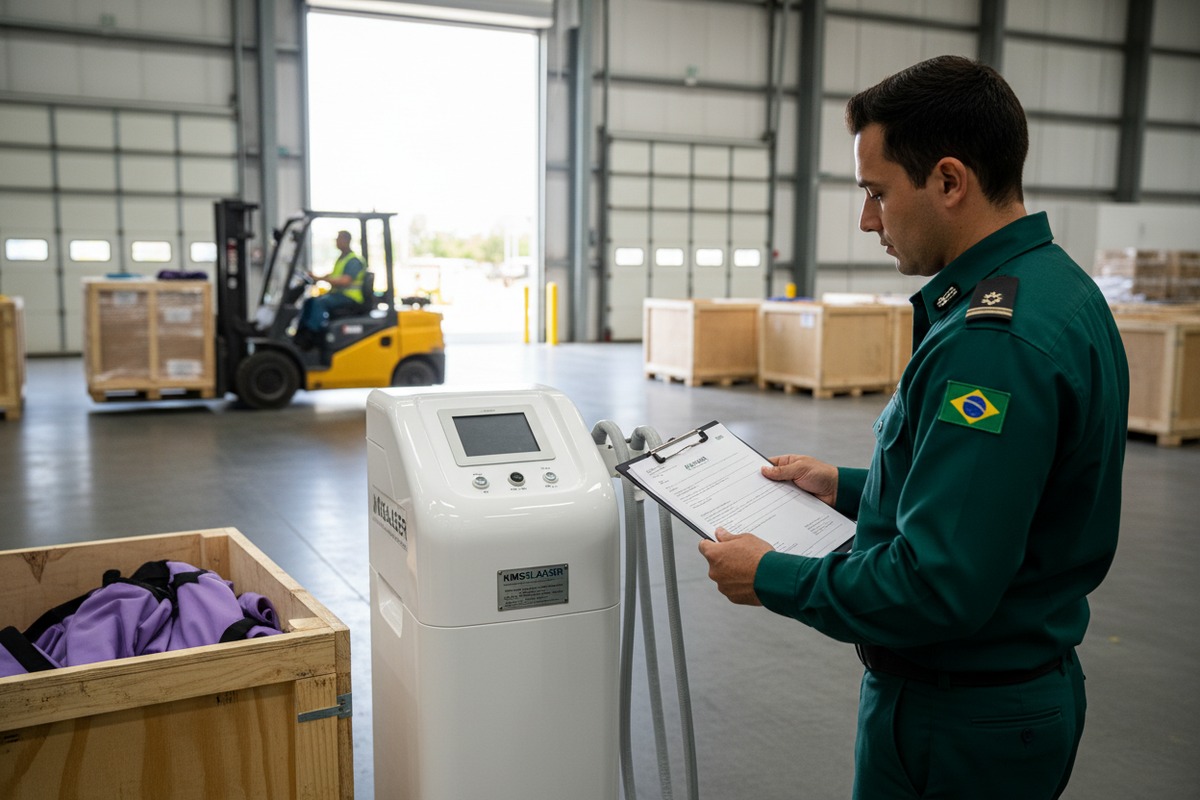
The Cost of Compliance
Shipping "Dangerous Goods" (DG) is invariably more expensive than shipping general cargo. Carriers charge a premium because they must segregate these goods and train their staff to handle them. For a typical order of pressotherapy machines, you should budget for:
- DG Surcharge: Airlines and sea carriers add a fee per House Air Waybill or Bill of Lading.
- Handling Fees: Freight forwarders charge extra for checking labels and repackaging if the original boxes show any signs of denting.
- Packaging Costs: UN-certified boxes cost 2-3 times more than standard cardboard cartons.
Time Implications: The 30% Rule
The most significant impact on lead time for air freight is the 30% State of Charge (SoC) requirement. Effective for almost all air shipments, we must discharge batteries to below 30% capacity before packing.
This is not a quick process. We have to run the pressotherapy machines or use specialized discharging equipment, which adds roughly 1-2 days to our production turnaround time. If a shipment arrives at the airport with a higher charge, it is returned to the factory, causing delays of a week or more.
Port Delays in South America
Once the goods arrive in countries like Brazil or Colombia, the "Red Channel" risk increases. Shipments with batteries are frequently flagged for physical inspection to verify they match the declared UN number.
- Brazil: Customs may cross-reference the battery serial numbers with the Import License (LI). Discrepancies can freeze cargo for weeks.
- Argentina: Additional affidavits regarding electrical safety may be requested, pausing release.
We recommend using sea freight for bulk orders to mitigate these costs. While slower (30-45 days transit), sea freight regulations (IMDG) are more lenient regarding SoC, and the hazardous surcharges are spread over a larger volume, lowering the cost per unit.
| Factor | Air Freight Impact | Sea Freight Impact |
|---|---|---|
| Preparation Time | High (Discharging to 30% SoC required). | Low (No discharge required). |
| Transit Time | Fast (3-7 days), but high risk of rejection. | Slow (25-45 days), stable flow. |
| Cost | High (DG surcharges apply to gross weight). | Moderate (Surcharges per container/LCL). |
Conclusion
Shipping pressotherapy machines to South America involves navigating a complex web of safety regulations, but compliance is the only way to ensure your business continuity. By securing UN38.3 certifications, adhering to rigid packaging standards, and providing accurate MSDS documentation, you protect your investment from customs seizures and fines. Whether you choose the speed of air freight or the economy of sea transport, working with a manufacturer who understands these hazardous goods protocols is your best strategy for success.
Footnotes
1. Provides global regulations for shipping dangerous goods by air. ↩︎
2. Outlines international guidelines for the safe maritime transport of dangerous goods. ↩︎
3. Details the international safety standard for rechargeable lithium-ion batteries. ↩︎
4. Describes the labeling requirements for miscellaneous dangerous goods, including lithium batteries. ↩︎
5. Explains the mandatory standardized document for lithium battery transport safety. ↩︎
6. Explains the mandatory document for declaring dangerous goods in air transport. ↩︎
7. Outlines the Brazilian regulatory agency overseeing medical devices. ↩︎
8. Identifies the specific UN number for lithium-ion batteries packed with equipment. ↩︎

 English
  Español de México
  Deutsch
  Français
  العربية
  Русский