
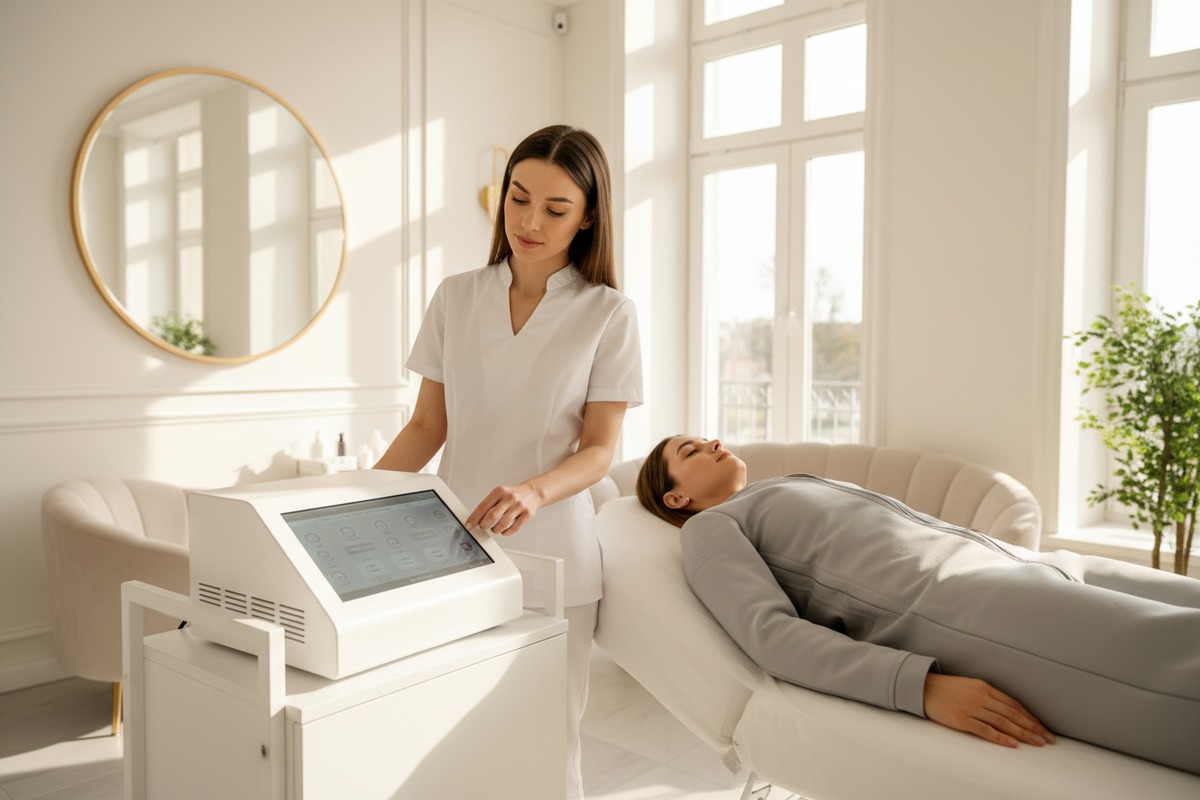
We often encounter salon owners who visit our production facility feeling completely overwhelmed by the technical data sheets attached to our equipment. You know you need a device that delivers visible results without constant breakdowns, but navigating through jargon about pascals, wattage, and duty cycles can be frustrating and confusing.
Beginners should prioritize machines with at least 6 to 12 overlapping air chambers and an adjustable pressure range between 20 mmHg and 200 mmHg. Ensure the device features a low-noise air pump under 60dB and suits made from high-density, double-layered TPU for durability and hygiene.
Let’s break down exactly what these numbers mean for your business and how to choose specifications that guarantee quality treatments.
How many air chambers should my pressotherapy machine have to ensure professional results?
When our engineering team designs the circuit boards for our export models, we constantly balance the cost of manufacturing with therapeutic efficacy. Clients frequently ask us if adding more chambers truly equals better drainage or if it is simply a marketing tactic to increase the price.
For professional-grade results, look for a system with a minimum of 6 to 12 overlapping air chambers per garment. This count ensures a smooth, continuous pressure wave that effectively moves lymph fluid, whereas fewer chambers can create gaps that allow backflow and reduce overall treatment efficiency.
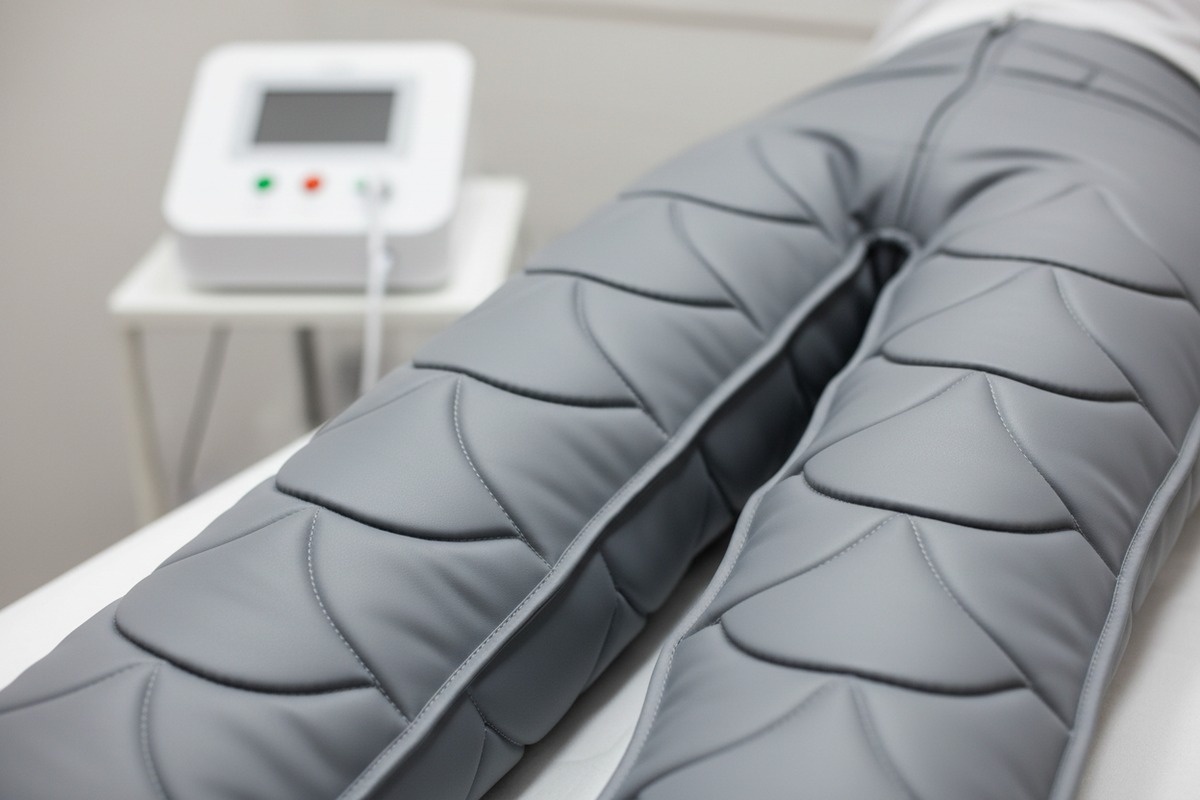
To understand why chamber count matters, you must visualize how the machine moves fluid through the body. The goal of pressotherapy is to mimic the hands of a skilled massage therapist performing manual lymphatic drainage 1.
The Problem with "Gaps" in Compression
In entry-level machines with only 2 or 4 chambers, the air bags are often large and separated by significant gaps of fabric. When one chamber deflates and the next inflates, there is a "dead zone" where no pressure is applied. In these gaps, fluid can flow backward (reflux), effectively undoing the work of the previous compression cycle.
In our factory, we utilize "overlapping" chamber designs for our professional lines. This means the internal airbags are layered like fish scales. As Chamber A begins to deflate, Chamber B is already inflating over the top of it. This creates a seamless, peristaltic wave that forces fluid upward without giving it any room to slip back down.
Why 6 to 12 Chambers is the Sweet Spot
For a beginner entering the market, you do not necessarily need the 24-chamber systems used in hospitals, but you should avoid 4-chamber home units. A 6 to 12 chamber system offers the perfect balance of precision and cost. It allows for distinct pressure zones. For example, you can apply different pressure to the ankle compared to the calf or thigh.
Distal-to-Proximal Flow
The technical term for this movement is sequential compression 2. The machine must fill from the extremities (distal) towards the center of the body (proximal). Higher chamber counts allow for a smoother gradient. If a client has a knee injury, a machine with 12 chambers allows you to turn off the specific chamber over the knee while treating the calf and thigh. A 4-chamber machine would force you to skip the entire upper leg.
| Feature | 4-Chamber System | 12-Chamber System | 24-Chamber System |
|---|---|---|---|
| Fluid Movement | Jerky, potential backflow | Smooth, continuous wave | Extremely precise |
| Zone Control | Limited (Entire lower leg) | Moderate (Ankle, Calf, Knee) | High (Specific muscle groups) |
| Best Use Case | Basic home relaxation | Professional Salon / Spa | Medical / Post-Surgical |
| Price Point | Low | Mid-Range | High |
What pressure range and intensity levels should I look for to ensure effective drainage?
During our safety testing phase, we push our compressors to their absolute limits to define the safe operating zones for end-users. Many buyers we speak to mistakenly believe that higher pressure always yields faster results, which often leads to client discomfort or even severe bruising.
Select a machine offering a broad, adjustable pressure range from 20 mmHg to at least 200 mmHg. This flexibility allows you to treat sensitive areas with gentle lymphatic drainage while also providing firm compression for sports recovery, ensuring the device serves a wide variety of client needs safely.
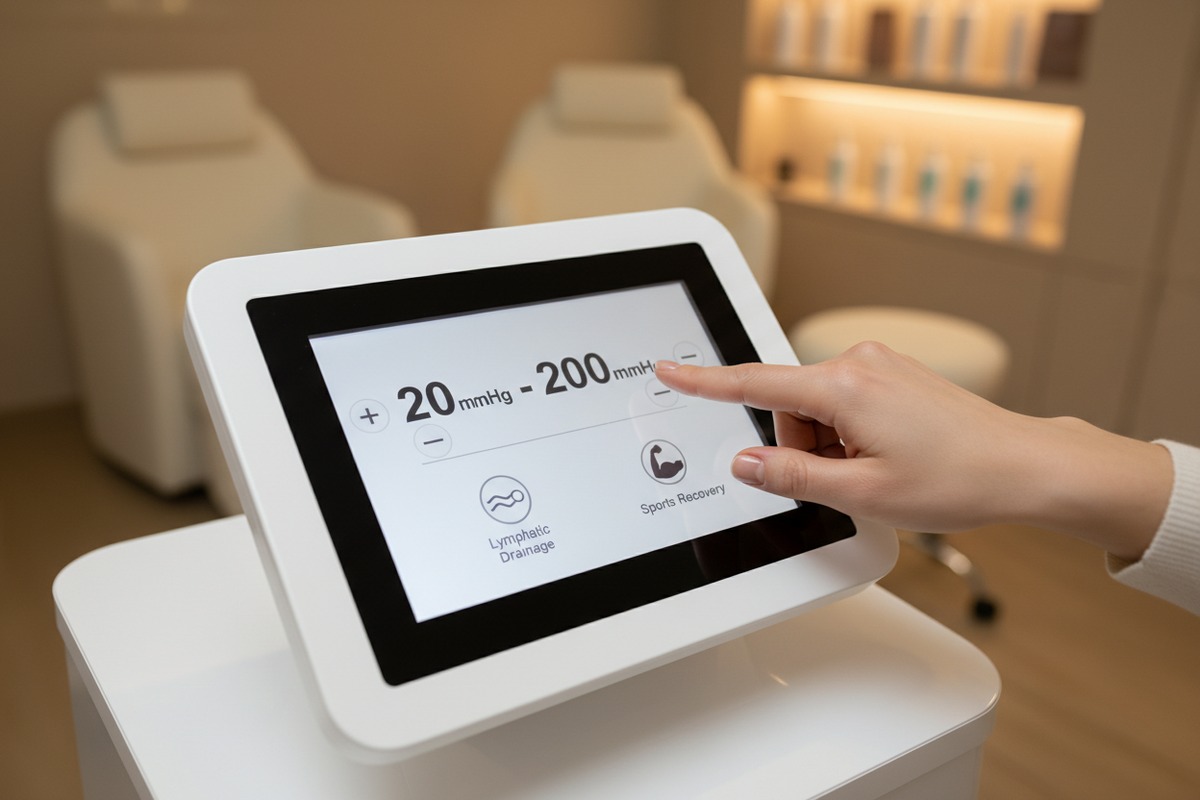
Pressure is measured in millimeters of mercury (mmHg) 4, the same unit used for blood pressure. The range you choose determines the versatility of your service menu. If you buy a machine that only operates at high pressure, you limit your ability to treat delicate cases.
Understanding the Physiology of Pressure
Lymphatic vessels 5 are extremely thin and sit just below the skin. They rely on gentle rhythmic pumping to open their valves. If the pressure is too high (above 60 mmHg for pure drainage), you risk collapsing these vessels entirely, blocking the very flow you are trying to encourage.
However, deep veins and muscles require more force. Athletes looking for recovery after a marathon need deep compression to flush out lactic acid and metabolic waste. This requires pressures between 80 mmHg and 180 mmHg.
Digital vs. Analog Controls
When sourcing components, we prefer digital pressure sensors over analog knobs. An analog knob is imprecise; you might think you are setting it to 40 mmHg, but it could be 60 mmHg. Digital controls allow you to set exact numbers.
Recommended Pressure Settings
For a beginner, the ability to fine-tune pressure is critical. Look for a machine that adjusts in increments of 5 or 10 mmHg. Avoid machines with only "Low, Medium, High" settings, as "Low" on one machine might be "High" on another.
Safety Mechanisms
High pressure carries risks. Your machine specs must include an automatic dump valve or emergency stop button. In our firmware, we program a safety release that triggers if the internal sensor detects pressure spiking beyond the set limit for more than a few seconds. This prevents the "tourniquet effect," where circulation is cut off rather than enhanced.
| Treatment Goal | Recommended Pressure Range | Intended Effect |
|---|---|---|
| Lymphatic Drainage | 20 – 50 mmHg | Stimulate superficial lymph flow without collapsing vessels. |
| Water Retention (Edema) | 50 – 80 mmHg | Push excess fluid from tissues back into the circulatory system. |
| Cellulite Reduction | 60 – 100 mmHg | Break down stagnation and improve blood flow to fatty tissue. |
| Sports Recovery | 80 – 180 mmHg | Deep muscle compression to flush lactic acid and relax tension. |
How do I verify the durability and noise levels of the internal air pump?
We purposefully source specific pistons and brushless motor 6s to ensure our units run quietly in calm spa environments. A noisy pump not only ruins the relaxation experience for your customer but often indicates cheap internal components that are likely to overheat and fail quickly.
Verify durability by checking for a brushless motor specification and a noise rating below 50 decibels. High-quality pumps provide consistent airflow without overheating during back-to-back sessions, while louder units often signal inferior build quality that leads to frequent mechanical failures and costly downtime.

The air compressor is the heart of the pressotherapy machine 7. If it fails, your business stops. For beginners, it is easy to overlook the pump specs because they are hidden inside the casing, but this is where the quality difference lies.
The Importance of Airflow (Liters Per Minute)
Durability is not just about not breaking; it is about performance consistency. You should look for the airflow rate, usually measured in Liters Per Minute (LPM). A weak pump (under 10 LPM) will struggle to fill a full-body suit, especially for larger clients. It will take too long to reach the target pressure, resulting in a sluggish, ineffective wave cycle. A professional pump should deliver at least 20 to 50 LPM, allowing for rapid inflation and deflation cycles.
Noise Levels and Client Experience
Imagine a client trying to sleep during a relaxation treatment while a machine buzzes like a lawnmower next to their head. We test our motors in soundproof chambers to ensure they stay under 50dB. This is roughly the volume of a quiet refrigerator. If a manufacturer does not list the decibel level, or if it is above 60dB, it is likely a diaphragm pump designed for industrial use, not for a spa.
Heat Management and Duty Cycle
Home-use machines often have a short "duty cycle," meaning they must cool down after 30 minutes of use. In a salon, you cannot tell a client to wait because the machine is hot. You need a pump designed for "continuous operation." We achieve this by adding internal heat sinks and cooling fans. When buying, ask the supplier: "Can this machine run for 4 hours straight without overheating?"
Maintenance of the Pump
Even the best pump needs care. Look for machines with an accessible external air filter. Dust and lint can get sucked into the intake, clogging the pistons and causing the motor to burn out. A machine that allows you to easily clean or change the filter will last years longer than a sealed unit.
| Specification | Home / Entry Level Unit | Professional Salon Unit |
|---|---|---|
| Noise Level | > 60 dB (Loud hum) | < 50 dB (Quiet purr) |
| Airflow Rate | 10 – 15 Liters/min | 25 – 60 Liters/min |
| Continuous Run Time | Max 45 mins | Continuous / 24h rated |
| Motor Type | Standard brushed motor | Brushless magnetic motor |
What material specifications should I look for in the pressure suit to ensure longevity?
Our textile workshops rigorously test fabrics for resistance to sweat, massage oils, and the mechanical stress of constant inflation cycles. The suit is the only part of the system that actually touches the client, yet many buyers overlook material quality until the seams burst after just a few months of use.
Prioritize suits made from medical-grade Thermoplastic Polyurethane (TPU) rather than PVC or nylon. TPU is non-porous, resistant to massage oils, and easy to sanitize, ensuring the garment withstands high pressure without tearing while maintaining strict hygiene standards for your salon.
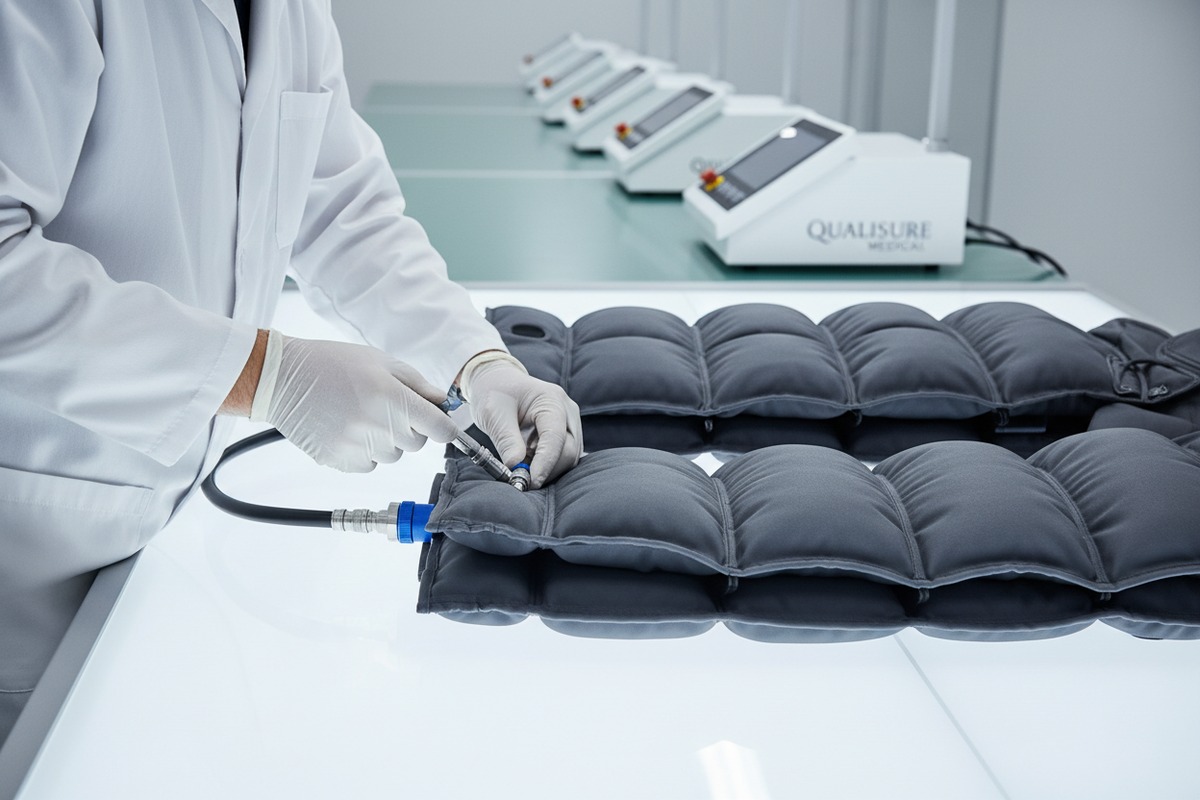
The suit (or sleeves/boots) endures incredible stress. It expands and contracts thousands of times. If the material is weak, it will leak air, rendering the machine useless.
PVC vs. TPU: The Material Battle
Cheap machines use PVC (Polyvinyl Chloride). While inexpensive, PVC is stiff and tends to crack over time, especially in the creases where the boot folds. It also has a distinct "plastic" smell that can be off-putting to clients.
We recommend and use High-Density TPU (Thermoplastic Polyurethane). Thermoplastic Polyurethane (TPU) 8 TPU is superior because it is flexible, odorless, and extremely strong. It can stretch without losing its shape. Furthermore, TPU is resistant to hydrolysis. This means that if sweat or oil sits on it, the material won't break down or become sticky, which is a common issue with PVC.
Hygiene and Cleaning
In a salon, you must wipe down the suit between every client. Fabric-lined suits are a nightmare because they trap dead skin cells and bacteria. You want a suit with a smooth, non-porous interior surface that can be wiped with hospital-grade disinfectant.
Connectors and Hoses
The weak point in many systems is where the hose connects to the suit.
- Avoid: Rigid plastic tubes that simply jam into a hole. These loosen over time and start popping out during treatment.
- Look For: Locking connectors (often called "click" connectors) or high-quality silicone hoses. Silicone is flexible and does not kink or crack like cheap plastic tubing does.
Zippers vs. Velcro
For the closures, you will see either Velcro or Zippers.
- Velcro: It is adjustable but wears out. It collects lint, hair, and eventually loses its grip. When the Velcro fails, the boot flies open under pressure.
- Zippers: High-quality YKK-style zippers are the industry standard. They are secure and do not wear out easily.
- Size Expanders: Since zippers are not adjustable, look for a machine that includes "zipper extenders." These are strips of material that zip into the main boot to widen it for larger clients. This is essential for inclusivity in your salon.
Conclusion
Choosing the right pressotherapy machine is about balancing performance with reliability. By focusing on 6 to 12 overlapping chambers, a flexible pressure range (20-200 mmHg), a quiet brushless pump, and durable TPU garments, you ensure your investment delivers professional results for years to come. Don't just buy a machine; invest in a specification sheet that supports your business growth.
Footnotes
1. Defines manual lymphatic drainage, a technique pressotherapy mimics. ↩︎
2. Explains the medical term and function of sequential compression devices. ↩︎
3. Provides an authoritative overview of lymph fluid and its function. ↩︎
4. Defines mmHg as a unit of pressure, commonly used in medicine. ↩︎
5. Provides anatomical and functional details of lymphatic vessels. ↩︎
6. Explains the advantages and technology of brushless motors. ↩︎
7. Explains what a pressotherapy machine is and its benefits. ↩︎
8. Details the properties and medical applications of TPU material. ↩︎

 English
 Español de México
 Deutsch
 Français
 العربية
 Русский
