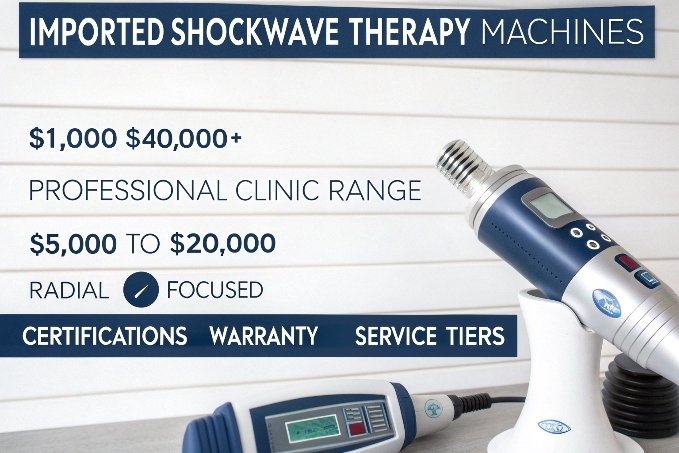
I sell beauty equipment worldwide, and price confusion causes the most delays, because buyers compare unlike machines and get stuck between specs and budgets.
A reasonable price range spans roughly $1,000–$40,000+ depending on radial vs. focused technology, output level, certifications, warranty, and brand support; most professional, clinic-ready imports sit between $5,000 and $20,000 before duties and shipping.
Clear ranges calm decisions. The sections below explain what drives variation, how to judge reliability at lower prices, the brand-name premium, and realistic wholesale averages for planning.
What factors affect price variation?
I always start by mapping your clinical use and compliance needs, because those choices set 80% of the final price.
Price varies with technology type (radial vs. focused), peak energy and duty cycle, certification scope (e.g., CE/FDA, IEC 60601), handpiece architecture, included accessories, warranty and service terms, and order volume or OEM customization.
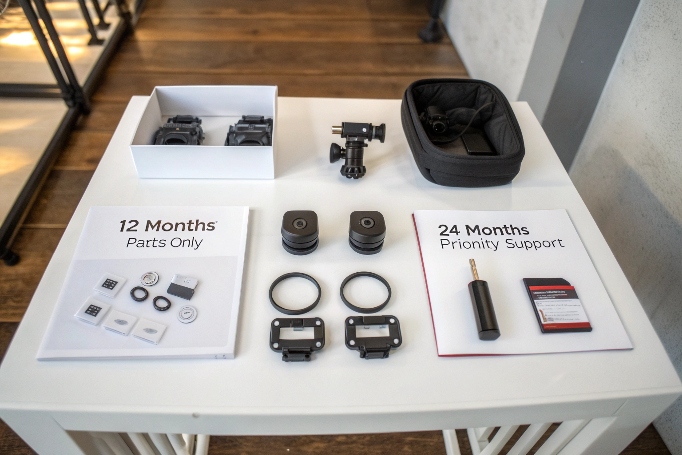
Price is not random. It follows a few predictable levers. Technology is the first lever. Focused systems usually cost more than radial because they aim energy deeper and require tighter performance control—see a simple overview of focused vs radial shockwave therapy 1. The second lever is output stability at clinical duty cycles; machines that stay cool and stable at higher pulse rates and longer sessions use better components and cost more. The third lever is compliance: a device that ships with complete IEC 60601 safety and EMC testing 2, plus CE marking for medical devices 3 or FDA 510(k) clearance 4, carries added development and lab costs. The fourth lever is the handpiece: radial pneumatic handpieces need quality sleeves, bearings, and projectiles; focused transducers need precise cooling and membranes. The fifth lever is service: longer warranties, fast spare parts, and trained support teams increase upfront price but reduce total cost of ownership 5. The final lever is business structure: private-label OEM orders with custom shells, firmware, and packaging can save unit cost at higher volumes but add NRE (non-recurring engineering) and MOQs; suppliers often reflect volume discounts 6 as quantity rises.
Price drivers at a glance
| Driver | Typical low-cost option | Typical higher-cost option | How it moves price |
|---|---|---|---|
| Technology | Radial (pneumatic) | Focused (electromagnetic/piezo) | Focused adds 2–4× vs basic radial |
| Output / duty | 60–90 psi, short duty | Higher pressure, continuous duty | Higher stability raises cost |
| Certification | Basic CE self-declaration | Full IEC 60601 + CE/FDA dossier | Lab + NB/NRTL fees add margin |
| Handpiece design | Simple sleeve / basic projectile | Precision bearings, improved sleeve, cooling | Better durability costs more |
| Accessories | Few heads, minimal kit | Full transmitter set, trolley, foot pedal | Kits add $200–$2,000+ |
| Warranty / service | 12 months, parts-only | 24 months, parts + priority support | Longer coverage priced in |
| Volume / OEM | 1–2 units | 20–100 units (private label) | Volume discounts 8–20% typical |
Practical budgeting tips
- Lock your required indications first; this prevents overbuying.
- Ask for a certificate pack list upfront; certificates justify price and de-risk customs.
- Compare handpiece life and pulse limits; durability lowers lifetime cost.
- Request a spares quote; cheap devices with expensive spares are not cheap.
Are cheaper machines less reliable?
I tell buyers that cheap can be fine for light loads, but price-only choices often fail under heavy clinic duty.
Lower-cost units are not automatically unreliable, but risk increases when components, thermal design, and QC are weak. Reliability correlates with validated duty cycles, handpiece life, quality of spares, and the supplier’s service discipline, not price alone.
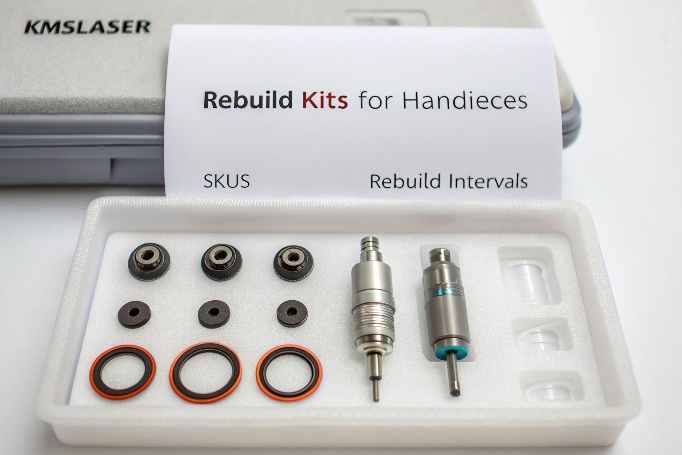
Reliability depends on engineering choices that are easy to check. Look at handpiece rebuild intervals and pulse-count limits. Review sleeve and projectile materials, lubrication guidance, and torque specs. Examine cooling paths, fan quality, and filter design. Ask for a simple acceptance test: a 30-minute run at a typical protocol while logging pressure and surface temperature. If output drifts or the handle overheats, that device will struggle in daily use. Cheaper machines often include fewer transmitters and short warranties; that is not fatal if spares are available quickly and the clinic has basic maintenance skills. The biggest hidden risk is inconsistent QC across batches. Buyers can reduce that risk by insisting on shipment-level photos, serial tracking, and pre-shipment inspection records using AQL sampling 7.
Reliability risk checklist (and what to ask the supplier)
| Area | Low-risk signal | Red flag |
|---|---|---|
| Output stability | Flat pressure curve over 30-min run | Pressure sag ≥10% at steady settings |
| Handpiece life | Clear pulse limit + rebuild kit | Vague or no pulse specification |
| Thermal control | Handle stays <45°C at duty | Hot grip, frequent thermal alarms |
| Spares availability | Listed part numbers in price list | “Contact us if needed” only |
| QC evidence | Batch photos, SN list, test log | No component or run-in records |
| Warranty clarity | Written coverage per module | Generic “1-year warranty” only |
When a low price is still a good deal
- Mobile or light-use rooms (low daily sessions).
- Pilot programs testing patient demand.
- Backup device for overflow days.
In these cases, reliability risk is manageable if there is a clear spares pathway and a minimal acceptance test at install.
How do brand names affect pricing?
I explain that brand pricing is a package: proof of outcomes, resale value, compliance depth, training, and a service network.
Brands charge more because they invest in clinical validation, regulatory depth, industrial design, and post-sale infrastructure. The premium buys faster onboarding, stronger resale value, tighter tolerances, and predictable uptime—important for high-throughput clinics.
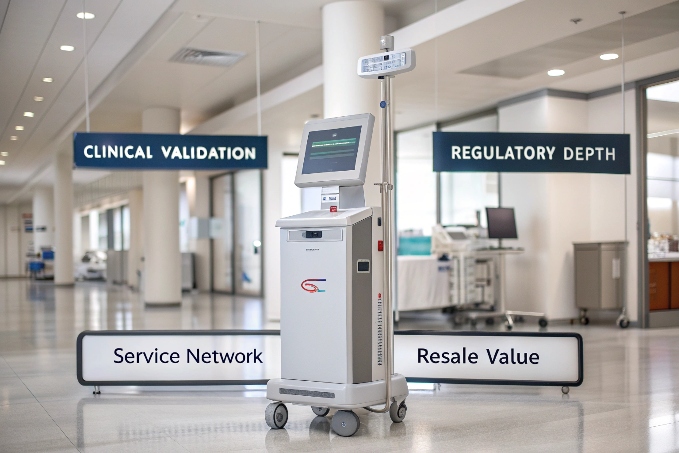
Brand value shows up in small, daily ways. Hospitals accept familiar certificates faster. Staff training takes less time due to cleaner UI and preset libraries. Output repeatability across units is better, which stabilizes patient experience. If a part fails, a known distributor ships within days. Used-market demand stays higher, which matters if a clinic upgrades later. This premium, however, may not make sense for light usage or purely aesthetic menus. In those cases, a well-built mid-tier import with solid documentation gives better ROI.
Where brand premium pays off (and where it doesn’t)
| Clinic profile | Brand premium value | Why |
|---|---|---|
| High-throughput MSK clinic | High | Uptime and repeatability drive revenue |
| Multi-site chain | High | Standardization and shared training |
| Hospital / tendered buys | High | Compliance and audits dominate |
| Solo aesthetic studio | Medium | Mid-tier often meets needs |
| Pilot program | Low–Medium | Test demand before premium spend |
What is the average wholesale price?
I keep a simple “wholesale anchors” table, so purchasing managers can benchmark quotes in minutes.
A realistic wholesale average for clinic-ready radial imports clusters around $5,000–$10,000 per unit at modest volumes; focused systems average $15,000–$30,000+ depending on transducer design, certification scope, and kit size.

Wholesale price depends on the bill of materials (BOM) 8, factory certification portfolio, and agreed service terms. Distributors typically negotiate tiered breaks at 5, 10, and 20 units—classic volume discount 6 behavior. Shipping (air vs. sea), duties, and local compliance reviews add to the landed cost 9 and should be planned alongside wholesale targets, with responsibilities clarified under Incoterms 2020 10.
Wholesale anchors and quick calculator
| Category | Typical wholesale (EXW) | Notes |
|---|---|---|
| Radial – entry clinic | $3,500–$6,000 | Basic kit, few heads, 12–18 mo warranty |
| Radial – premium clinic | $7,000–$12,000 | Bigger kit, stronger duty, 18–24 mo |
| Focused – standard | $15,000–$25,000 | Core transducer, CE dossier |
| Focused – premium | $25,000–$40,000+ | Extended kit, advanced cooling |
Quick landed estimate:
Landed Cost ≈ Wholesale + Freight + Duty/Tax + Compliance Adders
For planning: add 8–20% to wholesale for typical freight/duty; add more if extra certification steps are required locally.
Volume and customization effects
| Deal lever | Typical impact | Planning note |
|---|---|---|
| 5–9 units | −5% to −8% | Small distributor tier |
| 10–19 units | −8% to −12% | Stronger discount window |
| 20+ units | −12% to −18% | Add free spares bundle |
| OEM logo/skin | +$0–$50/unit | Minimal NRE |
| Firmware options | +$20–$200/unit | License or dev cost |
| New handpiece variant | One-time NRE | Spreads across volume |
Conclusion
Set the range by clinical need, not hype. Check the factors, vet reliability with a short run test, pay brand premiums only where they add value, and anchor wholesale plans around $5,000–$10,000 for radial and $15,000–$30,000+ for focused.
Footnotes
1. Overview comparing focused and radial ESWT modalities. ↩︎
2. IEC 60601 medical electrical safety and EMC testing summary. ↩︎
3. EU guidance on CE marking under the MDR framework. ↩︎
4. FDA page explaining 510(k) clearance for devices. ↩︎
5. Total Cost of Ownership concept and why it matters. ↩︎
6. Definition of volume discounts and pricing breaks. ↩︎
7. ASQ primer on acceptance sampling and AQL plans. ↩︎
8. Bill of Materials (BOM) definition and components. ↩︎
9. How to calculate landed cost for imports. ↩︎
10. ICC reference for Incoterms 2020 responsibilities. ↩︎

 English
  Español de México
  Deutsch
  Français
  العربية
  Русский