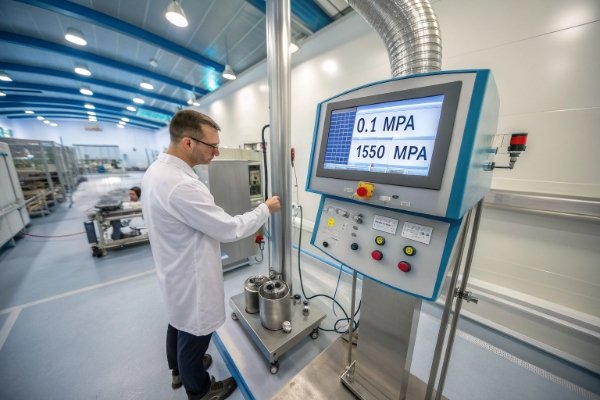
When I first began testing the pressure output of our early shockwave prototypes, I was shocked by the range—some devices generated gentle taps, while others produced shockwaves strong enough to break calcific deposits.
The maximum pressure per impact in a shockwave therapy machine varies widely by type: focused shockwave devices typically reach peak pressures of 10–100 MPa (and up to 150 MPa in advanced systems), while radial shockwave machines produce lower pressures around 0.1–1 MPa (roughly 1–10 bar), with most clinical units operating up to 5 bar. These pressure levels directly determine how deeply and precisely energy can be delivered into tissue.
As a manufacturer, we verify each model’s pressure output with calibrated sensors, since even small deviations can change treatment effectiveness. Independent standards such as IEC 60601-2-62 1 define testing requirements for therapeutic ultrasound and shockwave devices.
Why Is Peak Pressure Critical in Determining the Depth and Focus of Shockwave Energy?
When I design new applicator heads, one of my key concerns is how peak pressure translates into biological depth. The higher the pressure, the deeper and more concentrated the energy becomes.
Peak pressure determines both the penetration depth and the concentration of energy at the focal point—higher peak pressures (above 50 MPa) create strong, focused impulses ideal for deep tissue or bone, while lower pressures (under 1 MPa) produce wider, shallower energy spread suited for soft-tissue treatments.

This relationship is well described in physical studies of shockwave propagation 2, which show how energy density increases with rising peak pressure.
How Pressure Affects Energy Distribution
| Peak Pressure | Typical Range | Penetration Depth | Treatment Focus |
|---|---|---|---|
| Low (0.1–1 MPa / 1–10 bar) | Radial systems | 0–4 cm | Broad, superficial |
| Medium (5–50 MPa) | Focused ESWT | 2–8 cm | Controlled, mid-depth |
| High (50–150 MPa) | Electrohydraulic / piezo systems | 4–12 cm | Deep, precise |
Real-World Example
In practice, higher-pressure devices allow clinicians to treat stubborn cases like non-union fractures or calcific tendinitis. For example, focused ESWT for bone nonunion 3 uses pressures above 50 MPa to stimulate osteogenesis. Lower-pressure systems, by contrast, are preferred for soft-tissue injuries and pain management, where comfort and coverage are priorities.
When we tune our systems, we always aim for a smooth pressure ramp-up to reduce patient discomfort while maintaining therapeutic effectiveness.
What Are Common Maximum Pressure (bar or MPa) Values for Radial Shockwave Devices?
I often tell clients that “radial” doesn’t mean weak—it simply means the energy spreads more widely. However, the pressure range is much lower compared to focused systems.
Radial shockwave machines typically reach maximum pressures between 1 bar and 10 bar (≈ 0.1–1 MPa), with most clinical-grade systems operating up to 5 bar (≈ 0.5 MPa). These machines are driven pneumatically, using compressed air to accelerate a projectile that impacts a metal applicator.
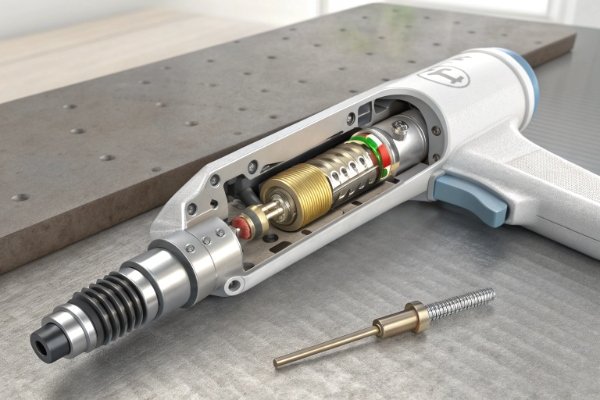
The mechanical design of pneumatic handpieces 4 directly determines how consistently radial pressure is produced.
Typical Radial Pressure Ranges
| Setting | Pressure (bar) | Pressure (MPa) | Application |
|---|---|---|---|
| Low | 1–2 bar | 0.1–0.2 MPa | Trigger points, fascia release |
| Medium | 3–4 bar | 0.3–0.4 MPa | Tendon and ligament therapy |
| High | 5 bar | 0.5 MPa | Calcific deposits, chronic pain |
Clinical Use Insights
At 1–2 bar, treatments feel gentle and are used for sensitive areas. Around 4–5 bar, the impact is stronger, stimulating blood flow and tissue remodeling. Clinical overviews of radial ESWT 5 confirm its effectiveness for tendon and fascia conditions. Many modern handpieces can sustain 2 million shocks even at 5 bar, but they require precise engineering to maintain durability and consistent output.
This balance between pressure and mechanical design defines the overall reliability of a radial system.
For Focused Shockwave Devices, What Peak Pressures Are Achievable?
When I first measured the focused shockwaves generated by an electrohydraulic system, the sensor reading jumped past 100 MPa. That’s the true power of focused technology.
Focused shockwave therapy devices typically achieve peak positive pressures between 10 MPa and 100 MPa, depending on the generation method (electrohydraulic, electromagnetic, or piezoelectric). Some advanced systems can reach up to 150 MPa for deep or hard-tissue applications.
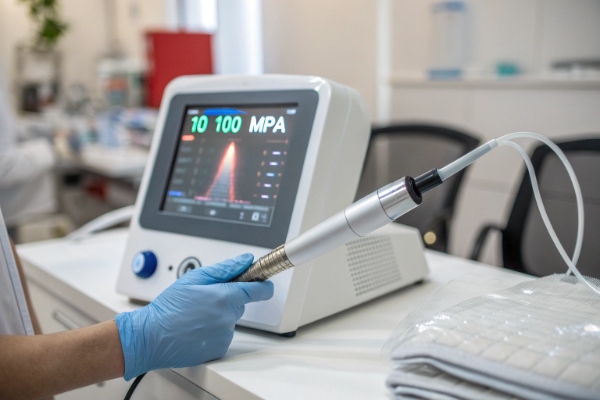
According to comparative studies of ESWT generation types 6, electrohydraulic systems deliver the highest pressure and penetration.
We validate each focused applicator in our lab with hydrophone pressure mapping techniques 7 to confirm the real peak pressure values and ensure consistent output across the treatment range.
How Can a Buyer Validate the Claimed Max Pressure Before Purchasing?
I’ve seen far too many spec sheets list unrealistic pressure numbers without proper testing. Buyers should always ask for proof.
To validate the claimed maximum pressure, buyers should request calibration certificates, hydrophone or sensor-based test reports, and third-party verification data that confirm actual output under clinical operating conditions. Reliable manufacturers will provide clear units (bar or MPa) and explain their measurement methodology.

Proper verification follows the same methodology as IEC standard calibration procedures 8 for medical acoustic devices. Pressure values can also be compared using acoustic cavitation measurement protocols 9 to assess reproducibility.
As a manufacturer, we maintain in-house calibration setups and issue reports with each shipment—because transparent data builds long-term trust.
Conclusion
Peak pressure defines how deeply and effectively a shockwave machine works. Accurate, verifiable pressure output ensures both safe treatment and reliable performance—core principles behind every device we build. For additional reference, see the International Society for Medical Shockwave Treatment’s technical resources 10.
Footnotes
1. IEC 60601-2-62 standard outlines safety for therapeutic shockwave devices. ↩︎
2. Study on shockwave pressure and energy distribution in biological media. ↩︎
3. Research demonstrating high-pressure ESWT effects on bone regeneration. ↩︎
4. Article analyzing pneumatic handpiece mechanics and reliability. ↩︎
5. Clinical review confirming efficacy of radial ESWT for tendinopathies. ↩︎
6. Comparative overview of electrohydraulic, electromagnetic, and piezoelectric ESWT systems. ↩︎
7. Method for measuring peak pressure in focused shockwave therapy devices. ↩︎
8. ISO calibration standard for acoustic output measurement in medical devices. ↩︎
9. Research on cavitation metrics used for verifying acoustic pressure levels. ↩︎
10. Organization offering international guidelines for ESWT parameters and safety. ↩︎

 English
  Español de México
  Deutsch
  Français
  العربية
  Русский