When I first started manufacturing shockwave handpieces, one of the most frequent questions I received from importers was: “How many shocks can it last before needing replacement?” The answer depends on the mechanism, the design, and how well it’s maintained.
The lifespan of a shockwave therapy handpiece—measured in total shock impacts—ranges from about 200,000 to over 5,000,000 shocks, depending on whether it’s a radial or focused device. Radial handpieces typically need rebuilds after 200,000–1,000,000 shocks, while focused or piezoelectric transducers often last 3,000,000–5,000,000 shocks before major servicing.
In our facility, every handpiece design is stress-tested 1 well beyond its rated impact count to ensure it maintains stable energy delivery across its lifespan.
What Factors Influence How Long a Shockwave Handpiece Remains Effective?
I once inspected two returned handpieces from different clients—one lasted 1.2 million shocks, the other failed at 300,000. The difference came down to usage intensity and cleaning habits.
Handpiece lifespan depends on multiple factors including energy level, operating frequency, cooling, maintenance quality, and the user’s adherence to recommended duty cycles. Poor lubrication or continuous high-intensity use often shortens lifespan dramatically.
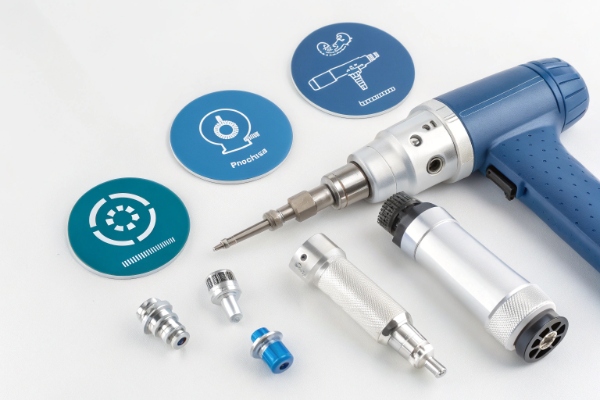
Major Factors Affecting Lifespan
| Factor | Description | Impact on Lifespan |
|---|---|---|
| Energy Level | Higher energy per pulse increases wear on internal components | Shortens life |
| Pulse Frequency | Continuous high-frequency use generates heat and friction | Moderate shortening |
| Maintenance | Regular lubrication 2 and cleaning prevent internal abrasion | Extends life |
| Cooling Intervals | Allowing rest periods 3 during long sessions prevents overheating | Extends life |
| Usage Volume | Heavy daily use (over 30,000 shocks/day) accelerates component fatigue | Shortens life |
Manufacturer’s Practice
In our testing protocols, we simulate real clinic workloads by running 20,000 pulses per cycle with controlled rest periods. Devices that maintain stable energy after 1 million shocks are certified for export. We find this approach mirrors real-world clinical conditions 4 much better than static lab testing.
How Does Handpiece Lifespan Affect Total Cost of Ownership and Maintenance Planning?
When clients plan to distribute or use our machines in busy clinics, I always recommend they look beyond the purchase price. The real cost comes from upkeep and spare parts.
A longer handpiece lifespan reduces total cost of ownership by minimizing downtime, replacement frequency, and service costs. Shorter-lived handpieces, while cheaper upfront, can cost more in the long term due to frequent rebuilds and lost clinic hours.
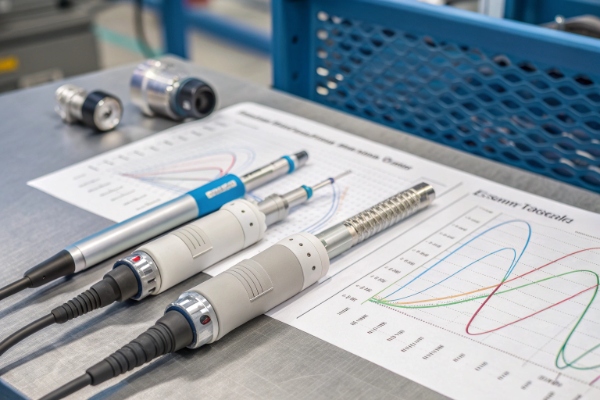
Example Cost Comparison
| Handpiece Type | Rated Lifespan | Replacement Cost (USD) | Estimated Cost per 1 Million Shocks |
|---|---|---|---|
| Radial (standard) | 500,000 shocks | $250 | $500 |
| Radial (premium) | 1,000,000 shocks | $350 | $350 |
| Focused (piezoelectric) | 5,000,000 shocks | $1,000 | $200 |
Planning Tips
- Budget for consumables: Allocate replacement parts every 6–12 months for radial units in high-traffic clinics.
- Monitor energy drift: If energy per shock decreases 5 by 15–20%, plan for service.
- Train operators: Proper handling and cooling intervals extend the effective lifespan by up to 30%.
As a manufacturer, we help importers calculate annual maintenance costs and include recommended spare-part quantities in bulk orders.
What Indicators Should Buyers Look for in Handpiece Durability and Replacement Policy?
Many importers I’ve worked with were surprised to learn that some suppliers don’t list clear lifespan data. But those numbers tell you a lot about quality and engineering.
Buyers should always look for handpiece durability indicators such as rated shot capacity, certified cycle testing, replaceable internal components, and warranty coverage. These details show whether the manufacturer has truly validated performance.

Durability Indicators to Check
| Specification | What It Means | Why It’s Important |
|---|---|---|
| Rated Shot Capacity | Number of shocks before rebuild 6 | Shows tested endurance |
| Component Type | Replaceable projectile and tube | Reduces maintenance cost |
| Warranty Terms | Should cover at least 500,000–1,000,000 shocks | Indicates manufacturer confidence |
| Material Quality | Aviation-grade aluminum and wear-resistant coatings 7 | Prevents deformation and heat damage |
| Certification Report | Endurance test or CE/ISO documentation 8 | Confirms reliability claims |
Buyer’s Checklist
When I prepare OEM quotations, I always include the shot capacity certification with test reports. Importers should insist on these documents, especially for private-label projects, to build transparency and trust with end users.
How Can OEM/ODM Suppliers Demonstrate Handpiece Lifespan Reliability?
This is one of the most important questions serious distributors ask—and one that separates professional manufacturers from resellers.
OEM/ODM suppliers can demonstrate handpiece lifespan reliability by conducting endurance testing (1–5 million shocks), providing detailed test reports, and offering verified component certificates. Reliable suppliers also maintain full traceability for every batch of materials and assembly.

How We Validate Handpiece Lifespan
| Testing Method | Description | Purpose |
|---|---|---|
| Endurance Bench Testing | Simulated operation under variable energy and frequency 9 | Measures mechanical fatigue |
| Energy Stability Test | Monitors EFD consistency after 1 million shocks | Ensures output uniformity |
| Thermal Imaging | Detects hotspots in long sessions | Prevents overheating failures |
| Component Analysis | Inspects wear on guide tubes and projectiles | Identifies weak points early |
Quality-Control Commitment
In our OEM/ODM projects, each handpiece model undergoes at least 500,000 shocks before approval. We record data such as average energy loss and surface wear under different pressure settings. By sharing these test results, we give importers confidence that their products will perform consistently in clinics worldwide. For best practice, see ISO 13485 durability validation guidelines 10.
Conclusion
A shockwave handpiece’s lifespan defines not only reliability but also business profitability. By choosing a device tested for millions of shocks and backed by transparent data, importers can ensure consistent performance, lower maintenance costs, and long-term client satisfaction.
Footnotes
1. Research on shockwave handpiece stress testing and durability. ↩︎
2. Maintenance guidance for shockwave device lubrication. ↩︎
3. Clinical recommendation on rest intervals for ESWT devices. ↩︎
4. Real-world clinic maintenance and testing guidance. ↩︎
5. Reference on energy drift monitoring during shockwave therapy. ↩︎
6. Comparative endurance data for shockwave handpieces. ↩︎
7. Material properties of aviation-grade aluminum in device parts. ↩︎
8. EU MDR and CE compliance references for medical devices. ↩︎
9. Explanation of endurance bench testing for handpiece validation. ↩︎
10. ISO 13485 reference for testing and reliability validation. ↩︎

 English
  Español de México
  Deutsch
  Français
  العربية
  Русский