

Watching our assembly line efficiently produce shockwave devices shockwave devices 1, we often see clients rush the branding process without realizing the legal minefield involved in logo customization.
Key risks include trademark infringement against existing medical device brands, loss of copyright ownership without assignment agreements, and regulatory non-compliance if logos mimic mandatory safety symbols. Additionally, using generative AI for design can prevent copyright registration, leaving your brand vulnerable to competitors.
Let’s examine the specific steps required to secure your brand identity during the manufacturing process.
How can I ensure my logo design doesn't infringe on existing medical device trademarks?
We advise our clients during the initial design phase to avoid visual elements that closely resemble established competitors in the medical aesthetic market. medical aesthetic market 2
You must conduct a comprehensive trademark search in the specific jurisdictions where you plan to sell, focusing on Class 10 medical devices. Avoid using generic medical symbols or designs confusingly similar to competitors, as these can lead to costly rebranding lawsuits and customs seizures.
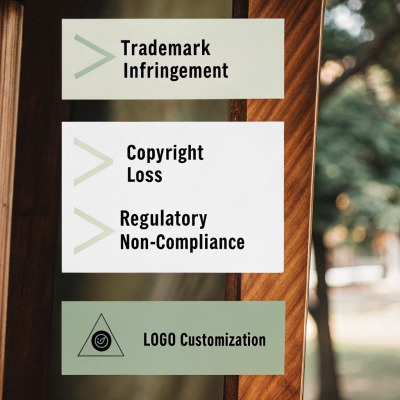
When developing a custom logo for a shockwave therapy machine, the line between a "common industry symbol" and "trademark infringement" is often thinner than buyers realize. In the medical device sector, specifically under Trademark Class 10 Trademark Class 10 3 Trademark Class 10 4 (which covers surgical, medical, dental, and veterinary apparatus), certain visual tropes are overused. For instance, many brands try to incorporate sound waves, lightning bolts, or pulse lines into their logos. While these effectively communicate the function of the device, they are legally weak if they are too generic. Conversely, if your design mimics the stylized wave pattern of a market leader like Storz or EMS, you risk immediate legal action.
The Danger of "Confusing Similarity"
Infringement does not require an exact copy. The legal standard is usually whether the mark is "confusingly similar" to the average consumer. Since our shockwave machines feature clean, modern lines with specific blue and white aesthetics, placing a logo that visually echoes a major competitor's font or color scheme can be disastrous. If a clinic owner buys your machine thinking it is associated with a different famous brand because of the logo, you are liable. This is particularly risky in the US market, where litigation is common.
Regulatory Interference
Another critical, often overlooked risk is the accidental mimicry of regulatory marks. Your logo must not look like an FDA, CE, or UL certification mark UL certification mark 5. We have seen designs rejected because a circular logo placed near the power button looked too much like a compliance symbol. This is not just an IP issue; it is a regulatory compliance issue that can stop your goods at the border.
The following table outlines common design elements and their associated risk levels when customizing logos for medical therapy devices.
| Design Element | Risk Level | Reason for Risk | Recommendation |
|---|---|---|---|
| Generic Waves | High | Hard to trademark; weak legal protection. | Combine with unique text or abstract icons. |
| Medical Cross | Severe | Restricted by international law (Red Cross/Crescent). | Do not use. Use abstract health symbols instead. |
| Mimicking Competitors | High | Risk of lawsuit for "passing off" or confusion. | Conduct a professional search in Class 10. |
| Regulatory Look-alikes | High | Customs seizure for false labeling. | Keep brand logos distinct from compliance stickers. |
| Abstract Geometric | Low | Easier to protect and distinguish. | Highly recommended for long-term brand equity. |
Who owns the intellectual property rights if the manufacturer helps design my logo?
When our engineering team sketches logo concepts or modifies interface graphics for clients, we prioritize clarity on who actually owns the final source files.
Unless a written "work for hire" or IP assignment agreement is signed, the original designer—whether a freelancer or a factory employee—often retains the copyright by default. This means paying for the service does not automatically grant you full legal ownership or the right to register it.

This is one of the most common pitfalls we witness in the OEM industry. OEM industry 6 Many buyers assume that because they paid an invoice for "logo design" or "customization fees," they own the resulting intellectual property. Under US copyright law, and similarly in many other jurisdictions US copyright law 7, the copyright belongs to the creator of the work unless it is explicitly transferred in writing. If you hire a freelancer or rely on your manufacturer's in-house design team to create the logo for your shockwave machine, they technically own the rights to that image.
The "Work for Hire" Trap
Without a proper contract, the designer could theoretically revoke your right to use the logo, demand royalties later, or even sell a very similar design to another buyer. When we collaborate with clients on the visual interface—such as the diagram of the human skeletal system displayed on the screen—we ensure that the ownership of these custom software assets is clearly defined. However, not all suppliers are this diligent. You must be proactive.
AI-Generated Designs
The rise of AI tools adds another layer of complexity. AI tools 8 If you or your supplier use a tool like Midjourney or Canva AI to generate a logo, the US Copyright Office has stated US Copyright Office 9 that works created entirely by AI without sufficient human authorship cannot be copyrighted. This means you might have a logo that you cannot legally protect from being copied by others. If your "custom" logo is just an AI generation, a competitor could scrape it and use it, and you would have very little legal recourse.
To protect your business, you need to understand the difference between a license to use and full assignment of rights.
| Feature | License to Use | Full Assignment / Work for Hire |
|---|---|---|
| Ownership | Designer/Factory retains ownership. | You (the Buyer) become the legal owner. |
| Exclusivity | Designer may re-use elements for others. | The design is exclusively yours. |
| Modification | You may need permission to edit the logo. | You can modify the logo freely. |
| Resale | You cannot sell the logo rights. | You can sell or license the logo to others. |
| Registration | You cannot register the copyright. | You can register the copyright and trademark. |
How do I prevent the factory from selling my branded shockwave machines to other buyers?
We frequently see clients worry that their custom molds or specific logo placements will appear on a competitor's shipment, which harms brand integrity.
To prevent unauthorized sales, you must execute a strict Non-Disclosure Agreement (NDA) and a Manufacturing Supply Agreement (MSA) that explicitly prohibits the factory from selling your custom-branded units to third parties. These contracts should define your ownership of molds and impose penalties for breaches.
The fear of "backdoor selling" is valid in international trade. international trade 10 If you invest in a custom mold for the silver and blue handheld applicator or develop a unique software interface for the screen, you do not want to see those exact features on Alibaba under a different name next month. This happens when IP rights are not contractually enforced on the factory floor.
The NNN Agreement
In China, a standard Western NDA is often insufficient. We recommend an NNN Agreement: Non-Use, Non-Disclosure, and Non-Circumvention.
- Non-Use: The factory cannot use your design, logo, or molds for their own gain or for other clients.
- Non-Disclosure: They cannot share your technical specs or design files with others.
- Non-Circumvention: They cannot go behind your back to sell directly to your customers if they find out who they are.
Managing Sub-Suppliers
Your risk isn't just with the main assembly factory. It also lies with the subcontractors. For example, the vendor who prints your user manuals or the supplier who manufactures the outer casing with your logo. If these sub-suppliers are not bound by confidentiality, they might overrun production and sell the extras. When we manage orders, we ensure that our supply chain partners adhere to strict confidentiality, but you should legally require your primary manufacturer to take liability for their subcontractors' leaks.
Mold Ownership
If you pay for a custom mold (e.g., for that specific rectangular box shape with modern lines), the contract must state that the mold is your property. It should typically remain at the factory for production, but you should have the right to remove it or destroy it if the partnership ends. Without this, the factory might claim the mold belongs to them since it sits on their floor.
Do I need to register my trademark in China before starting OEM production?
Before our logistics team ships a single container, we check if the client's brand is safe from "trademark squatters" who might block the export.
Yes, registering your trademark in China is crucial, even if you only manufacture there. China operates on a "first-to-file" system, meaning squatters can legally register your brand first and then seize your goods at customs for trademark infringement when you try to export them.

Many of our US clients believe that because they have a US trademark, they are safe. This is a dangerous misconception. Trademark rights are territorial. A US trademark gives you zero protection in China. In China, the "First-to-File" rule means the first person to file the paperwork owns the brand, regardless of who used it first globally.
The "Squatter" Scenario
Imagine you have built a reputation for your shockwave therapy brand in New York. You order 500 units from us. A malicious third party (a squatter) notices your rising popularity and registers your logo in China. When your goods arrive at Chinese customs for export, the squatter can claim you are infringing on their Chinese trademark. They can have Chinese customs seize your genuine products. You are then forced to pay a massive ransom to the squatter to release your own goods.
The OEM Exception Uncertainty
While there have been legal cases suggesting an "OEM exception" (meaning goods made solely for export don't infringe Chinese trademarks), this is legally unstable and varies by court interpretation. It is far cheaper and safer to register your trademark in China before production begins. This also allows you to record your trademark with Chinese Customs (GACC). Once recorded, customs officers will actively monitor for fake versions of your product leaving the country, providing an extra layer of security against counterfeiters.
Steps for Protection
- File Immediately: Do not wait until your product is famous.
- Cover Relevant Classes: File in Class 10 (Medical Apparatus) and potentially Class 35 (Advertising/Sales) or Class 44 (Medical Services).
- Use Chinese Characters: Consider registering a Chinese name for your brand as well, as the market may create one for you if you don't.
Risk Summary Table: No China Registration vs. Registration
| Scenario | Risk Level | Potential Consequence |
|---|---|---|
| No Registration | Critical | Squatters register your mark; goods seized at export; ransom demands. |
| US Registration Only | High | No protection in China; creates false sense of security. |
| China Registration | Low | Legal ownership established; ability to sue infringers in China. |
| Customs Recordation | Lowest | Customs actively polices exports; blocks counterfeits. |
Conclusion
Securing your intellectual property requires proactive contracts, international trademark registration, and clear ownership agreements before production starts. By addressing these risks early, you ensure your custom shockwave therapy machines build your brand's value, rather than your competitor's.
Footnotes
1. Product documentation from a leading manufacturer of shockwave therapy equipment. ↩︎
2. Official website for the international society of aesthetic plastic surgeons. ↩︎
3. Official USPTO classification for medical and surgical apparatus. ↩︎
4. Official international classification standard for medical devices. ↩︎
5. Official documentation for the safety certification mark mentioned. ↩︎
6. General background on the original equipment manufacturer business model. ↩︎
7. Legal text of the US Copyright Act provided by Cornell Law School. ↩︎
8. International organization’s overview of intellectual property and artificial intelligence. ↩︎
9. Official government agency issuing the AI copyright guidance. ↩︎
10. Reference for international trade agreements regarding intellectual property rights. ↩︎

 English
 Español de México
 Deutsch
 Français
 العربية
 Русский
