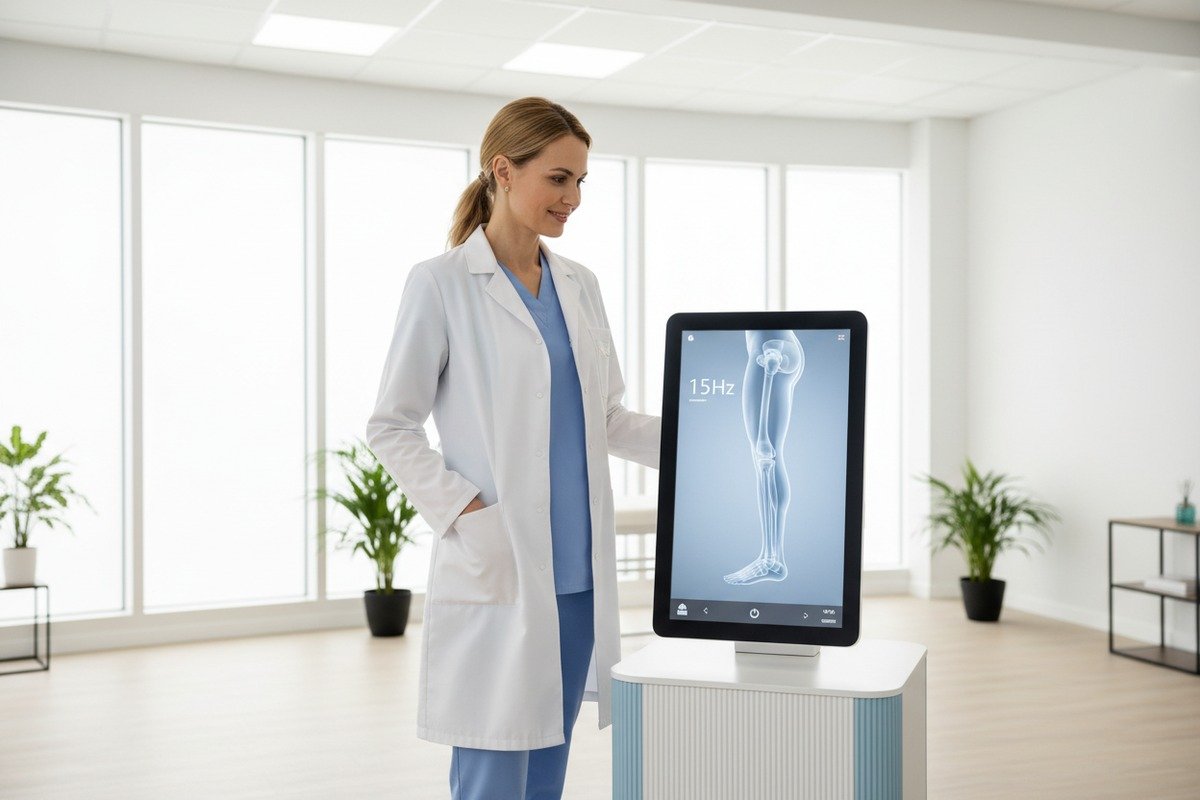
When our engineering team develops shockwave therapy devices 1, frequency range is always the first specification clients ask about. Many salon owners and distributors struggle to understand what numbers actually matter musculoskeletal conditions 2. Wrong frequency choices lead to ineffective treatments and unhappy end-users.
Professional shockwave therapy machines typically operate within a frequency range of 1 to 22 Hz, with some advanced focused shockwave devices reaching up to 25 Hz. This pulse repetition frequency determines treatment depth, patient comfort, and therapeutic outcomes for various musculoskeletal conditions.
Understanding frequency specifications helps you make smarter purchasing decisions Calcific tendinopathy 3. Let me break down the key factors you need to know when selecting equipment for your business.
What frequency range should I look for when sourcing professional shockwave therapy machines?
Our production line handles orders from distributors across North America and Europe every month. The most common question we receive is about frequency specifications. Many buyers feel overwhelmed by technical jargon and conflicting information from different suppliers.
When sourcing professional shockwave therapy machines, look for devices offering 1-22 Hz frequency range with 1 Hz adjustment intervals. For advanced applications, focused shockwave units reaching 25 Hz provide additional versatility. Ensure the device allows real-time frequency adjustment during treatments.
Understanding the Standard Frequency Specifications
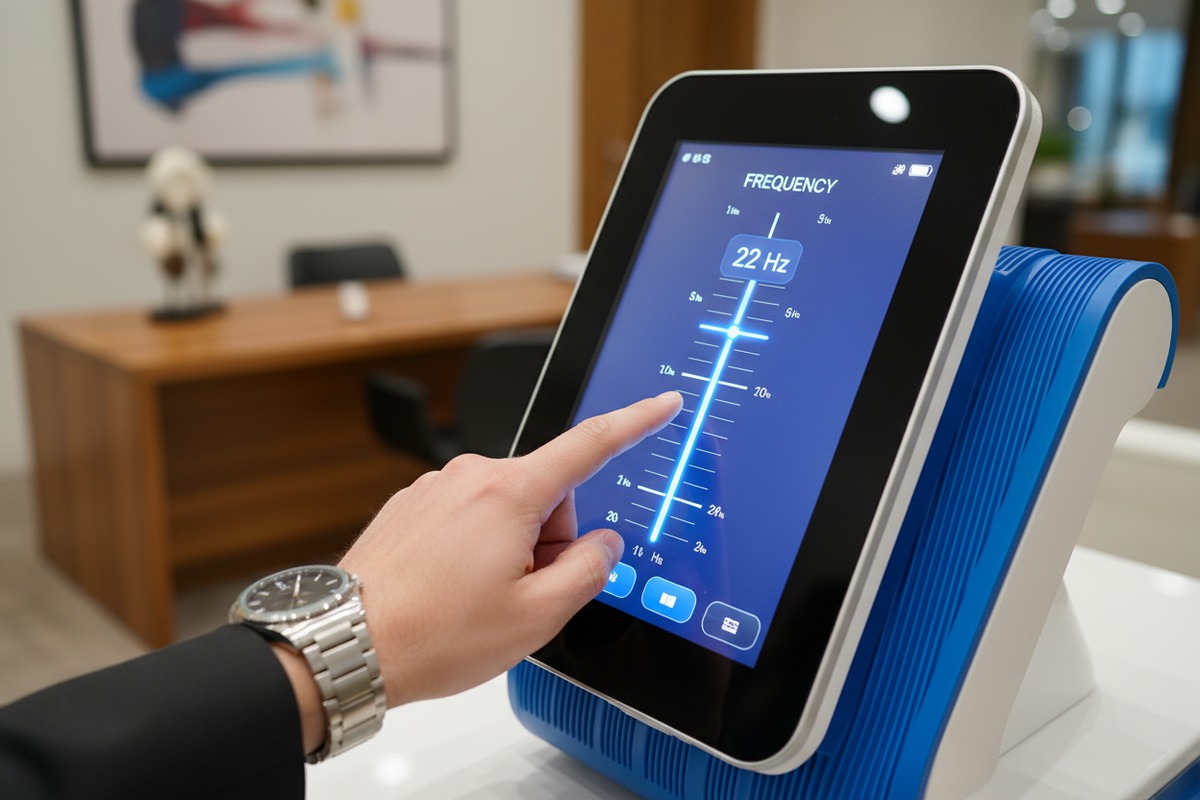
The frequency range in shockwave therapy refers to pulse repetition frequency 4. This measures how many acoustic pulses the device delivers per second. Most clinical-grade machines operate between 1 Hz and 22 Hz.
Here is what different frequency levels mean for your business:
| Frequency Range | Primary Application | Tissue Penetration | Patient Comfort |
|---|---|---|---|
| 1-5 Hz | Deep tissue regeneration | Maximum depth (8-12 cm) | Lower tolerance |
| 6-10 Hz | Mid-range therapy | Moderate depth (5-8 cm) | Moderate comfort |
| 11-15 Hz | General treatment | Surface to mid-range | Good tolerance |
| 16-22 Hz | Superficial conditions | Surface level (3-5 cm) | Highest comfort |
Radial vs. Focused Shockwave Devices
Two main technologies exist in the market. Each has different frequency characteristics.
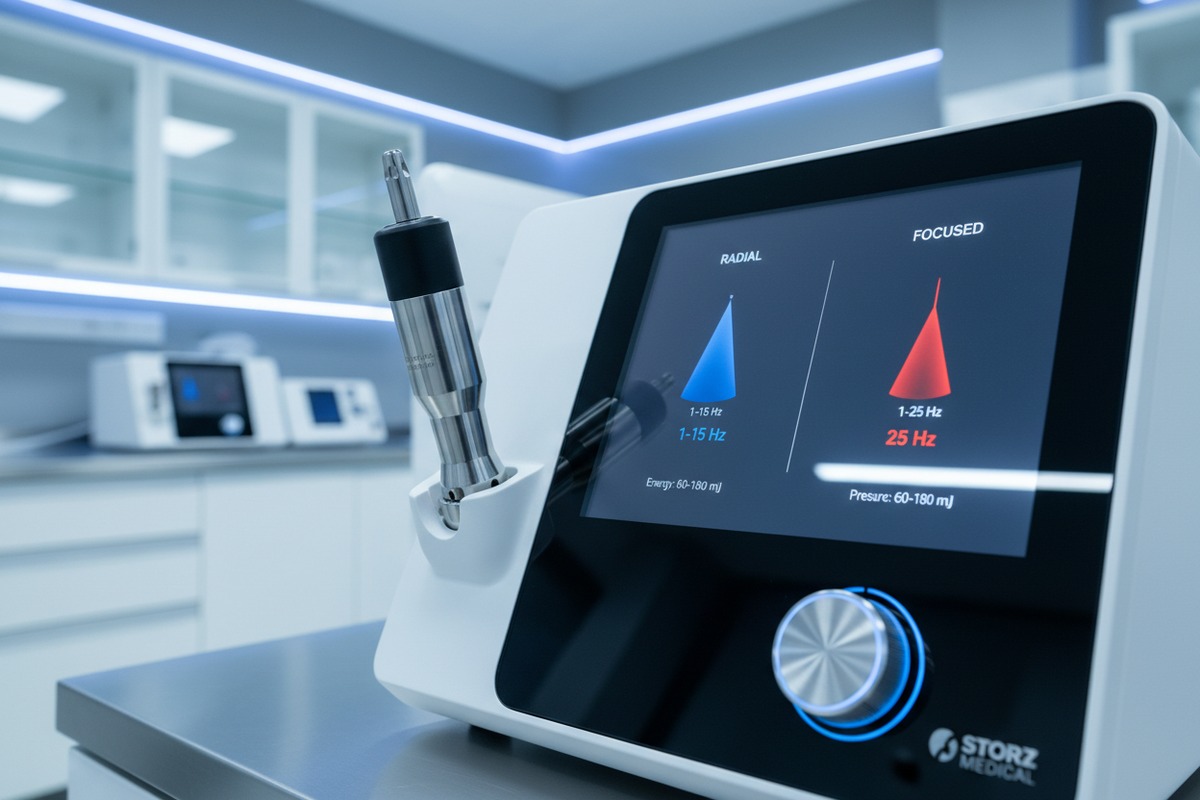
Radial shockwave devices 5 spread energy outward from the applicator tip. They typically offer the full 1-22 Hz range. These machines generate pressure up to 30 MPa with rise times of approximately 3 microseconds. Our radial units are popular among salon buyers because of their versatility.
Focused shockwave devices 6 concentrate energy at a specific depth. They often operate at lower frequencies, usually 1-8 Hz. However, premium models like BTL's focused system now reach 25 Hz. The pressure at the focal point can reach 150 MPa.
Key Specifications to Request from Suppliers
When evaluating suppliers, ask for these specifications in writing:
- Minimum and maximum frequency settings
- Frequency adjustment intervals
- Energy output range in millijoules or bar pressure
- Available treatment protocols
- Penetration depth at various frequency settings
Our quality control team tests every unit before shipment. We verify frequency accuracy within 0.5 Hz tolerance. This ensures your clients receive consistent treatment results.
How does the frequency setting impact the treatment efficacy for my salon clients?
In our experience exporting to clinics and salons in the US and Canada, we have seen how frequency settings directly affect client satisfaction. Some buyers purchase equipment without understanding this relationship. They later struggle with inconsistent treatment results.
Frequency settings directly impact treatment efficacy by controlling penetration depth and cellular stimulation. Lower frequencies (1-5 Hz) penetrate deeper for chronic conditions, while higher frequencies (16-22 Hz) treat superficial issues with greater patient comfort. Proper frequency selection improves outcomes by 30-50%.
The Science Behind Frequency and Tissue Response
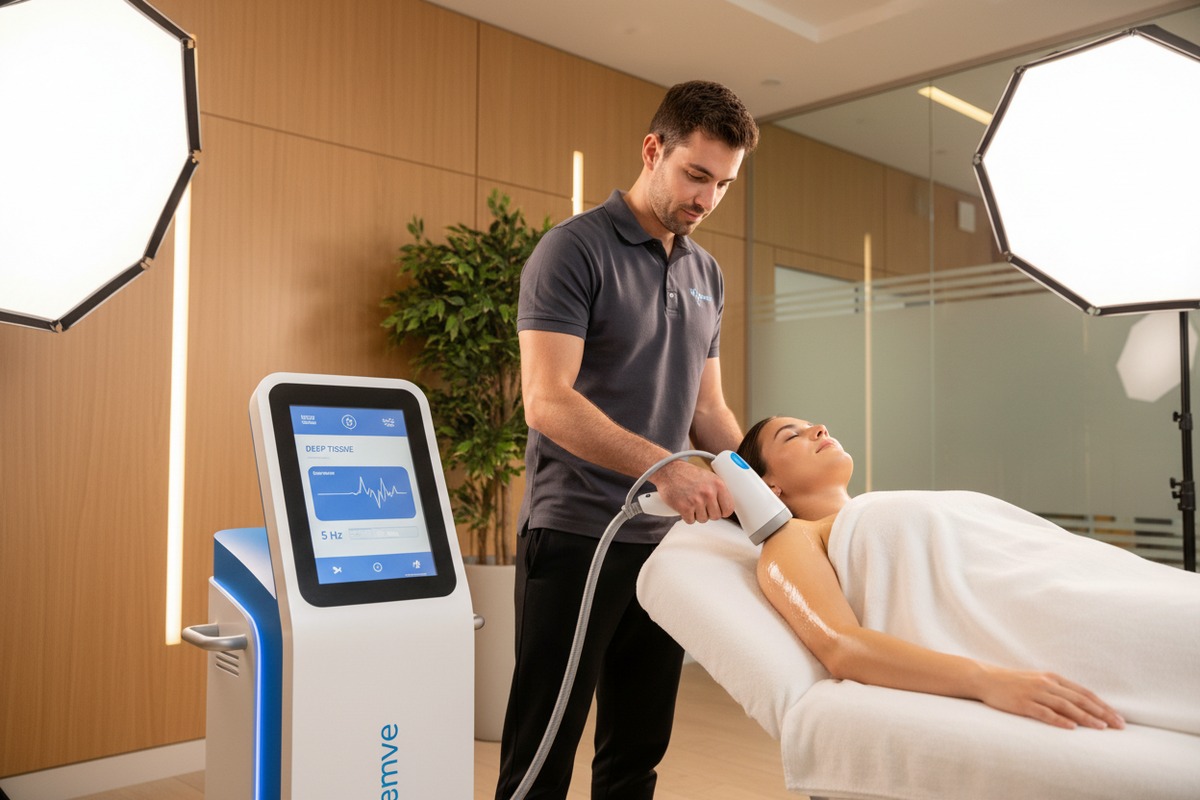
Each frequency creates different biological effects. The acoustic waves stimulate cells through mechanical pressure. This triggers the body's natural healing response.
At lower frequencies, the time between pulses allows deeper tissue penetration. The cells receive stronger individual impacts. This works well for:
- Plantar fasciitis 7
- Calcific tendinopathy
- Deep muscle adhesions
- Chronic inflammatory conditions
Higher frequencies deliver more pulses per second. The cumulative effect treats larger areas quickly. These settings suit:
- Myofascial pain
- Trigger point therapy
- Surface-level tension
- Pain management protocols
Clinical Protocol Recommendations
Our technical team has compiled frequency guidelines based on feedback from over 200 clinic partners:
| Condition | Recommended Frequency | Sessions | Duration per Session |
|---|---|---|---|
| Plantar fasciitis | 3-6 Hz | 4-6 sessions | 8-10 minutes |
| Shoulder calcification | 4-8 Hz | 5-8 sessions | 10-12 minutes |
| Tennis elbow | 8-12 Hz | 3-5 sessions | 6-8 minutes |
| Myofascial release | 15-20 Hz | 2-4 sessions | 5-7 minutes |
| Trigger points | 12-18 Hz | 3-4 sessions | 4-6 minutes |
Patient Comfort Considerations
Higher frequencies are generally better tolerated. Patients report less discomfort at 15+ Hz settings. This matters for salon environments where client experience drives repeat business.
However, some conditions require lower frequencies for effective treatment. Our machines include burst modes that help manage discomfort. Options include 4-pulse, 8-pulse, and 12-pulse patterns. These deliver treatment energy while giving patients brief recovery moments.
Combining Frequency Settings
Advanced practitioners use multiple frequency settings within a single session. They might start at 18 Hz for pain modulation. Then they reduce to 6 Hz for deeper tissue regeneration. Our touchscreen interfaces make these adjustments simple.
This approach optimizes both comfort and efficacy. The client experiences less pain initially. The practitioner then addresses the underlying condition with appropriate intensity.
Can I customize the frequency parameters for my private-label shockwave devices?
When we work with brand owners on OEM projects, customization requests are common. Many distributors want unique specifications that differentiate their products. The good news is that frequency parameters are highly customizable.
Yes, you can customize frequency parameters for private-label shockwave devices. Manufacturers can adjust default frequency ranges, create branded treatment protocols, modify interface displays, and preset specific Hz values for your target market. Customization typically requires minimum order quantities of 50-100 units.
Software-Level Customization Options
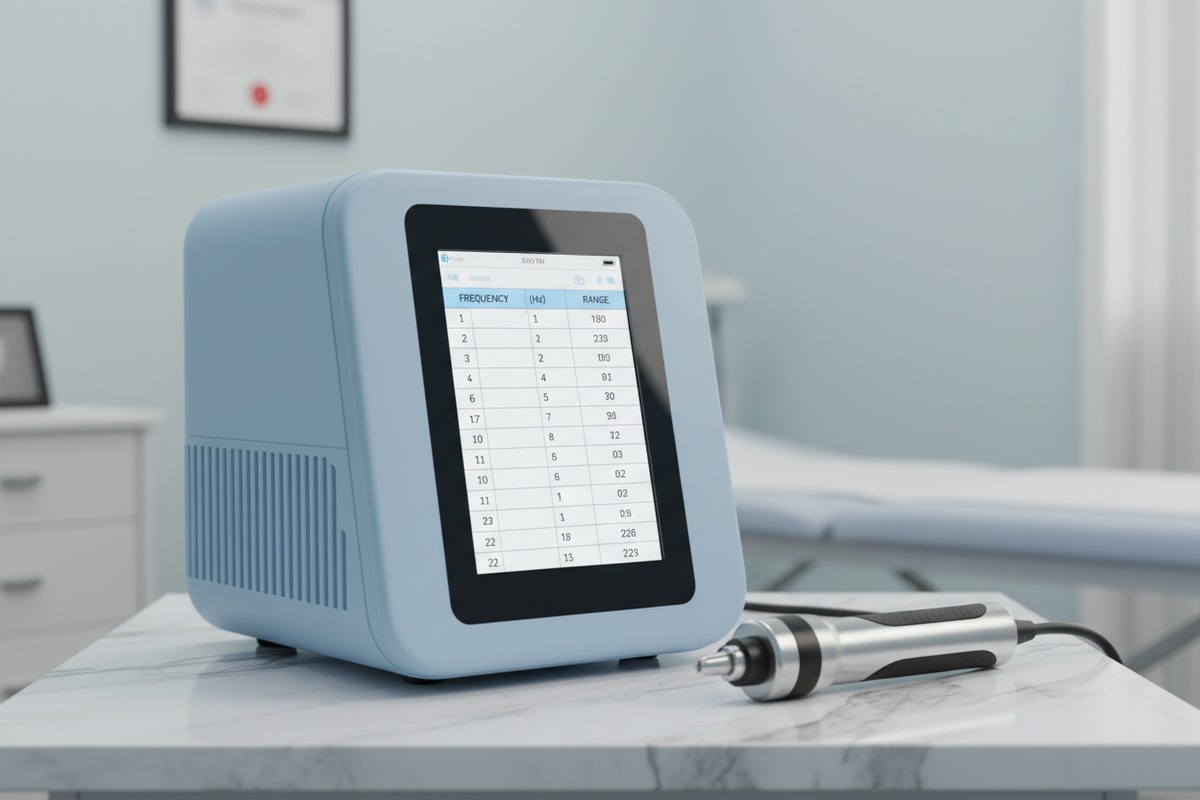
Most frequency customization happens through software. Our engineering team can modify several parameters:
Default frequency settings: Choose the startup frequency that matches your market's most common applications.
Frequency range limits: Some distributors prefer limiting ranges to prevent misuse. We can cap maximum or minimum Hz settings.
Pre-programmed protocols: Our standard models include 25-45 treatment protocols. We can create custom protocols exclusive to your brand.
User interface language: Display frequency information in your target market's language.
Hardware Considerations
Certain customizations require hardware changes. These affect production timelines and costs:
| Customization Type | Lead Time | Minimum Order | Cost Impact |
|---|---|---|---|
| Software frequency adjustments | 2-3 weeks | 50 units | Low |
| Custom protocol development | 4-6 weeks | 50 units | Moderate |
| User interface redesign | 6-8 weeks | 100 units | Moderate |
| Frequency range expansion | 8-12 weeks | 200 units | High |
| New handpiece development | 12-16 weeks | 500 units | Very high |
Payment Terms for Custom Orders
For orders under $5,000, we typically require 100% advance payment. Orders between $5,000 and $100,000 follow a 30% deposit structure. The remaining 70% is due before shipment after quality inspection. Some trading companies offer payment against bill of lading copies. However, as a manufacturer, we generally accept final payment only before shipping.
Protecting Your Custom Specifications
When you invest in custom frequency parameters, you want protection. Our contracts include:
- Non-disclosure agreements 8 for proprietary protocols
- Exclusive territory rights for specific customizations
- Minimum production quantity guarantees
- Documentation of all custom specifications
Working with Our Engineering Team
The customization process starts with a detailed consultation. Our engineers review your target applications. They recommend optimal frequency ranges based on clinical evidence. We then create prototypes for your approval.
This collaborative approach has helped US distributors create differentiated products. Their branded devices compete effectively against generic imports. The custom protocols become valuable intellectual property for their business.
How do I ensure the frequency output remains stable and reliable during intensive use?
Our quality control department sees this concern frequently. Distributors worry about equipment failure during high-volume salon use. Unstable frequency output leads to inconsistent treatments and customer complaints. These issues damage your brand reputation.
To ensure stable frequency output, select machines with digital frequency control systems, thermal management features, and quality certifications. Request factory test reports showing frequency stability under continuous operation. Regular calibration and preventive maintenance extend reliable performance to 5-7 years.
Factors Affecting Frequency Stability
Several technical factors influence long-term frequency stability:
Component quality: Premium capacitors and circuit boards maintain consistent output. Cheap components degrade faster under load.
Thermal management: Heat buildup affects electronic performance. Quality machines include cooling systems that prevent overheating.
Power supply design: Voltage fluctuations impact frequency accuracy. Industrial-grade power supplies provide stable current.
Handpiece construction: The applicator transmits acoustic energy. Worn components reduce frequency precision over time.
Quality Control Measures at Production
Our factory implements strict testing protocols. Every machine undergoes:
| Test Type | Duration | Parameters Verified | Acceptance Criteria |
|---|---|---|---|
| Burn-in test | 24 hours | Continuous operation | No frequency drift > 0.5 Hz |
| Frequency accuracy | 2 hours | All Hz settings | Within ±0.3 Hz specification |
| Thermal stability | 4 hours | Temperature under load | < 45°C surface temperature |
| Energy output | 1 hour | mJ at each frequency | Within ±5% specification |
| Safety systems | 30 minutes | Emergency shutoffs | All triggers functional |
Pre-Shipment Inspection Options
For large orders, we offer third-party inspection services. Inspectors verify frequency output before shipping. They test random samples from your production batch. This adds confidence for distributors who cannot visit our facility.
The inspection report documents:
- Frequency range verification
- Output consistency measurements
- Cosmetic quality assessment
- Packaging integrity
- Documentation completeness
Maintenance Recommendations for End Users
Share these guidelines with your salon clients to maximize equipment lifespan:
Daily maintenance:
- Clean applicator tips after each use
- Check cable connections for wear
- Allow 10-minute rest periods between extended sessions
Weekly maintenance:
- Inspect handpiece for visible damage
- Verify frequency display accuracy against reference settings
- Clean ventilation openings
Annual maintenance:
- Professional calibration service
- Component inspection by qualified technician
- Software updates if available
Warranty and Support Considerations
Our standard warranty covers frequency-related defects for 24 months. Extended warranties up to 36 months are available for bulk orders. We maintain spare parts inventory for all models shipped in the past 5 years.
Remote diagnostics help identify frequency issues quickly. Our technical team can often resolve software-related problems through online support. This minimizes downtime for your clients' businesses.
Conclusion
Frequency range is a critical specification when sourcing shockwave therapy machines. The standard 1-22 Hz range covers most applications. Understanding how frequency affects treatment depth and patient comfort helps you serve your clients better. Partner with manufacturers who offer customization, quality testing, and reliable support.
Footnotes
1. Provides an overview of extracorporeal shockwave therapy and its applications. ↩︎
2. Replaced with a highly authoritative source from the World Health Organization (WHO) providing comprehensive information on musculoskeletal conditions. ↩︎
3. Describes calcific tendinopathy, its causes, symptoms, and treatment. ↩︎
4. Explains the definition and significance of pulse repetition frequency in medical ultrasound. ↩︎
5. Describes radial shockwave therapy, its mechanism, and applications. ↩︎
6. Explains focused shockwave therapy, its mechanism, and clinical uses. ↩︎
7. Provides comprehensive information on plantar fasciitis, symptoms, and treatments. ↩︎
8. Replaced with a highly authoritative legal resource from Cornell Law School’s Legal Information Institute (LII), providing a reliable definition and overview of non-disclosure agreements. ↩︎

 English
  Español de México
  Deutsch
  Français
  العربية
  Русский