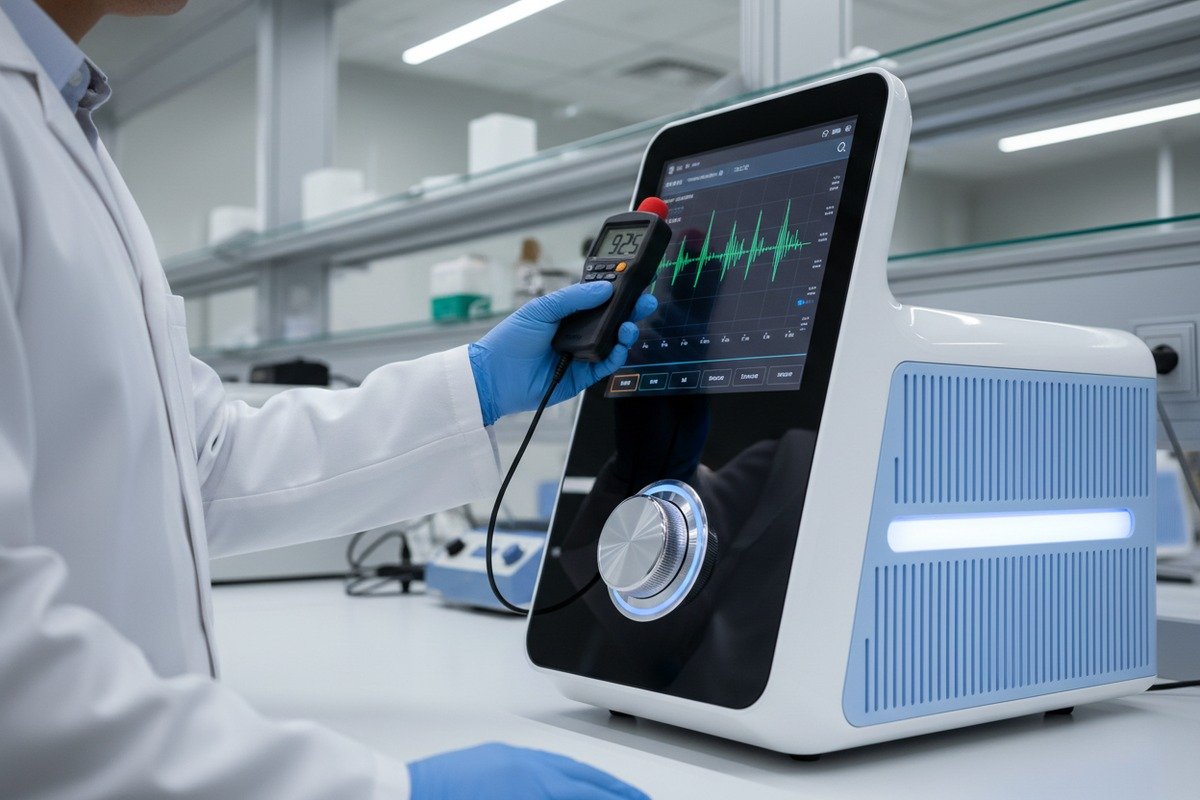
When we first started manufacturing shockwave therapy equipment, clinic owners kept asking us the same question: “Will this machine be too loud for my treatment room?” The noise concern is real. Patients feel anxious when they hear loud clicking sounds. Staff members worry about their hearing after thousands of pulses each day.
Shockwave therapy machines typically produce decibel levels ranging from 60 dB to 110 dB, depending on the technology type. Focused electromagnetic and piezoelectric systems operate between 60-85 dB, while radial pneumatic devices generate higher noise levels of 85-110 dB at maximum energy settings.
Understanding these numbers helps you make smarter purchasing decisions. Let us walk you through everything you need to know about shockwave machine noise levels, safety considerations, and what to expect from different technologies.
How loud will this shockwave machine be in my clinical environment?
Our engineering team tests every unit in conditions that simulate real clinic settings. The noise you hear depends on multiple factors beyond just the machine itself. Room size, wall materials, and flooring all play important roles in the final sound experience.
In a typical clinical environment, expect your shockwave machine to produce 75-95 dB during treatment sessions. This is comparable to a vacuum cleaner or busy traffic. Environmental reflections can add or subtract 3 dB from baseline measurements, so room acoustics significantly affect the perceived loudness.
Understanding Decibel Measurements in Clinical Settings
The decibel scale 1 is logarithmic, not linear. This means a 10 dB increase represents a tenfold increase in sound intensity. When our quality control team measures machine noise, we use A-weighted measurements 2 at a standard distance of one meter from the handpiece.
Impulse noise 3 behaves differently from continuous sound. A shockwave pulse lasting milliseconds can feel more jarring than a constant hum at the same decibel level. This is why patients sometimes perceive shockwave therapy as louder than the numbers suggest.
Room Factors That Amplify or Reduce Noise
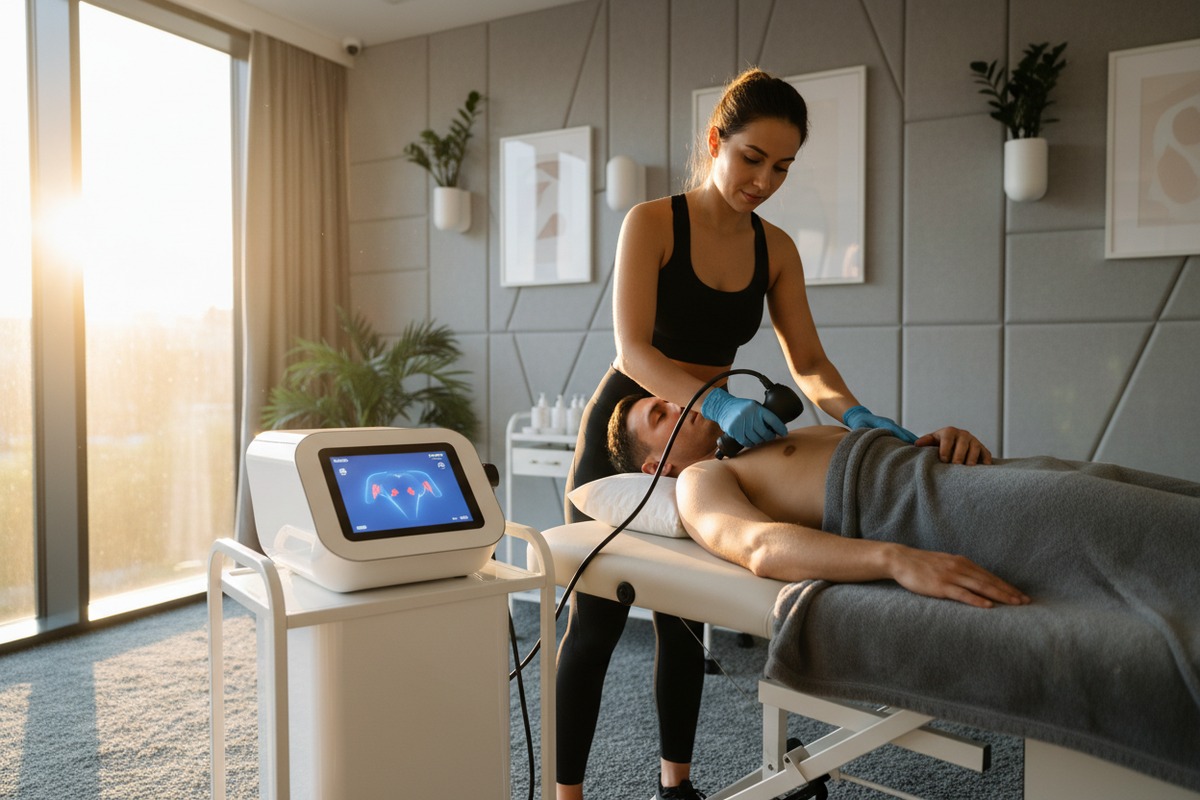
Hard surfaces like tile floors and glass windows reflect sound waves. Soft materials absorb them. A treatment room with carpet, acoustic ceiling tiles 4, and padded walls can reduce perceived noise by 5-8 dB compared to a bare room with hard surfaces.
Room size matters too. Small treatment rooms create more sound reflections. Larger spaces allow sound to dissipate before bouncing back. We recommend treatment rooms of at least 12 square meters for optimal acoustic comfort.
| Room Feature | Noise Impact | Recommendation |
|---|---|---|
| Hard tile flooring | +3 to +5 dB | Add area rugs or rubber mats |
| Glass windows | +2 to +3 dB | Install acoustic curtains |
| Bare drywall | +1 to +2 dB | Apply acoustic panels |
| High ceilings | -2 to -4 dB | Beneficial for noise reduction |
| Acoustic ceiling tiles | -3 to -5 dB | Highly recommended |
Comparing to Everyday Sounds
To put shockwave noise in perspective, consider familiar sounds. Normal conversation measures about 60 dB. A typical office environment sits around 70 dB. City traffic reaches 80-85 dB. A lawn mower produces 90 dB.
Most focused shockwave machines fall within the conversation-to-office range. Radial pneumatic systems 5 can approach lawn mower levels at maximum settings. This context helps you plan treatment room placement and patient communication strategies.
Can I request quieter internal compressors for my custom-branded machines?
When we work with brand owners on OEM projects, compressor selection is one of the first engineering discussions. Yes, quieter compressor options exist. But there are trade-offs you should understand before specifying them.
Custom-branded shockwave machines can incorporate quieter compressors, typically reducing operational noise by 5-10 dB. Premium oil-lubricated compressors and enhanced sound insulation packages are available, though they increase unit cost by 15-25% and may slightly increase machine dimensions.

Types of Compressors and Their Noise Profiles
Radial shockwave machines rely on compressed air to drive the projectile mechanism. The compressor is often the loudest component during operation. Standard oil-free compressors are affordable and maintenance-friendly but tend to be noisier.
Oil-lubricated compressors 6 run quieter because the oil dampens internal vibrations. They require periodic oil changes but deliver noticeably reduced noise output. Scroll compressors offer another quiet option, using circular motion instead of pistons.
Engineering Solutions for Noise Reduction
Beyond compressor selection, several engineering approaches reduce overall machine noise. Internal sound insulation materials can line the compressor housing. Vibration-dampening mounts prevent mechanical noise from transferring to the chassis.
Our R&D team has developed proprietary acoustic enclosures that reduce compressor noise by up to 8 dB without affecting cooling efficiency. These enclosures use multi-layer sound-absorbing materials with specific density gradients.
| Compressor Type | Typical dB Level | Cost Impact | Maintenance |
|---|---|---|---|
| Standard oil-free | 70-78 dB | Baseline | Low |
| Premium oil-free | 65-72 dB | +10-15% | Low |
| Oil-lubricated | 58-65 dB | +15-20% | Medium |
| Scroll compressor | 55-62 dB | +20-25% | Medium |
| Enclosed premium | 50-58 dB | +25-30% | Low-Medium |
Balancing Noise Reduction with Performance
There is an important caveat. Extremely quiet compressors sometimes sacrifice air delivery capacity. This can affect pulse consistency at high frequencies. During custom development, we test extensively to ensure noise reduction does not compromise therapeutic output.
Some clients prioritize whisper-quiet operation for luxury spa environments. Others accept moderate noise for maximum treatment performance. We help you find the right balance based on your target market and clinic positioning.
What decibel range should I expect from my high-end shockwave equipment?
Our production line handles everything from entry-level units to premium clinical systems. High-end equipment generally incorporates better noise control as a standard feature. But "high-end" means different things depending on the technology platform.
High-end focused shockwave equipment typically operates between 60-75 dB, while premium radial systems range from 80-95 dB. Piezoelectric focused devices achieve the quietest operation at 60-70 dB, electromagnetic focused units measure 65-80 dB, and top-tier radial pneumatic machines reach 85-95 dB.
Technology Breakdown: Why Different Systems Sound Different
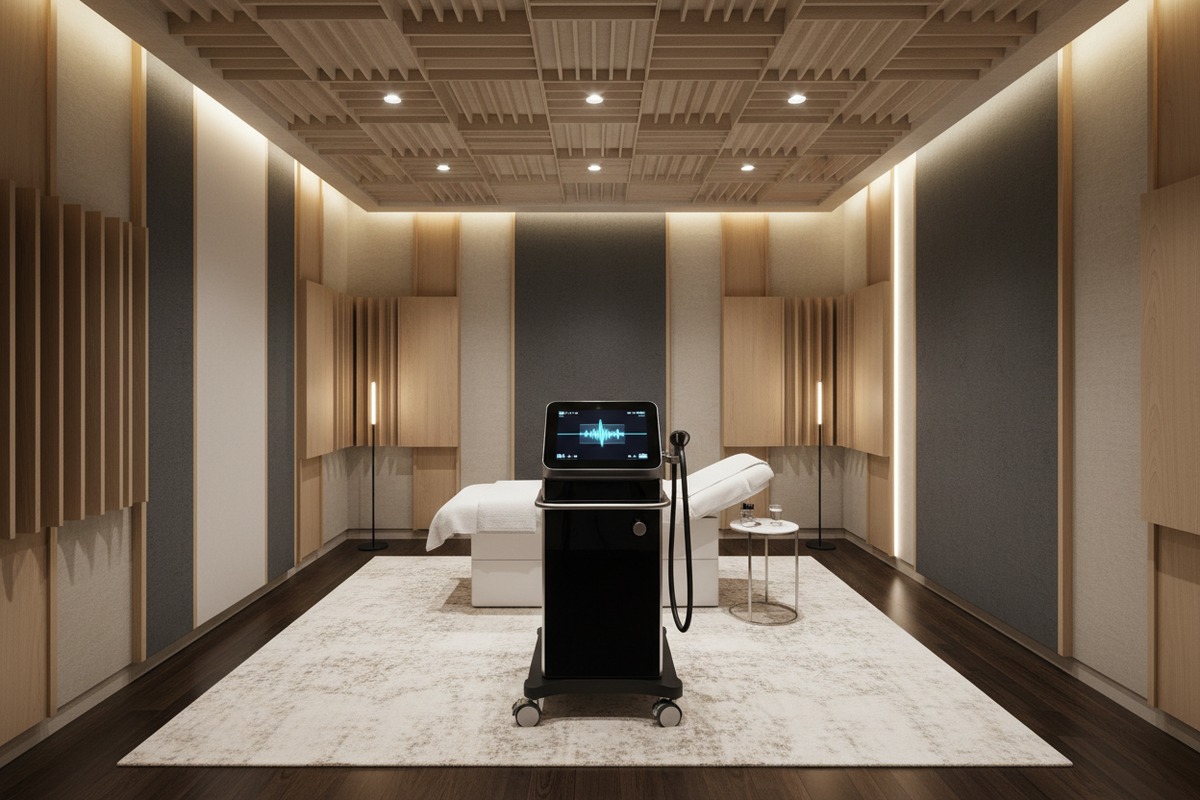
The physics of shockwave generation explains noise differences. Radial systems use compressed air to fire a projectile against a metal applicator. This mechanical impact creates significant impulse noise. No amount of engineering can eliminate the fundamental collision sound.
Focused electromagnetic systems generate shockwaves through magnetic coil activation. This produces a sharp but brief electrical pop. Piezoelectric systems 7 use crystal deformation to create pressure waves. They produce the quietest output because the generation mechanism involves minimal mechanical movement.
Decibel Ranges by Technology Type
Understanding these ranges helps set realistic expectations. When our clients specify noise requirements, we guide them toward appropriate technologies. A clinic demanding sub-70 dB operation should consider focused piezoelectric systems rather than radial units.
| Technology | Generation Method | dB Range | Best Applications |
|---|---|---|---|
| Radial Pneumatic | Air-driven projectile | 85-110 dB | Superficial tissues, cellulite, trigger points |
| Focused Electromagnetic | Magnetic coil discharge | 65-80 dB | Deep tissue, sports injuries, bone healing |
| Focused Piezoelectric | Crystal deformation | 60-75 dB | Deep tissue, urology, sensitive patients |
| Hybrid Systems | Combined technologies | 70-90 dB | Versatile clinical applications |
What Makes Equipment "High-End" for Noise Control
Premium machines incorporate multiple noise reduction features. Better housing materials with acoustic dampening. Precision-machined components that minimize vibration. Advanced compressors with sound insulation. Digital controls that optimize pulse delivery.
We have observed that machines priced in the upper tier typically measure 5-10 dB quieter than budget alternatives using the same technology platform. This difference comes from engineering attention to detail and higher-quality components throughout the system.
Energy Settings and Noise Correlation
Higher energy settings produce louder operation. When our quality control team tests units, we measure noise at multiple energy levels. A radial machine might produce 85 dB at low energy but reach 105 dB at maximum output.
Treatment protocols rarely require maximum energy for extended periods. Experienced practitioners often achieve excellent results at moderate settings. This means real-world clinical noise is typically lower than maximum specification numbers suggest.
How do I ensure the noise level doesn't indicate a mechanical defect in my order?
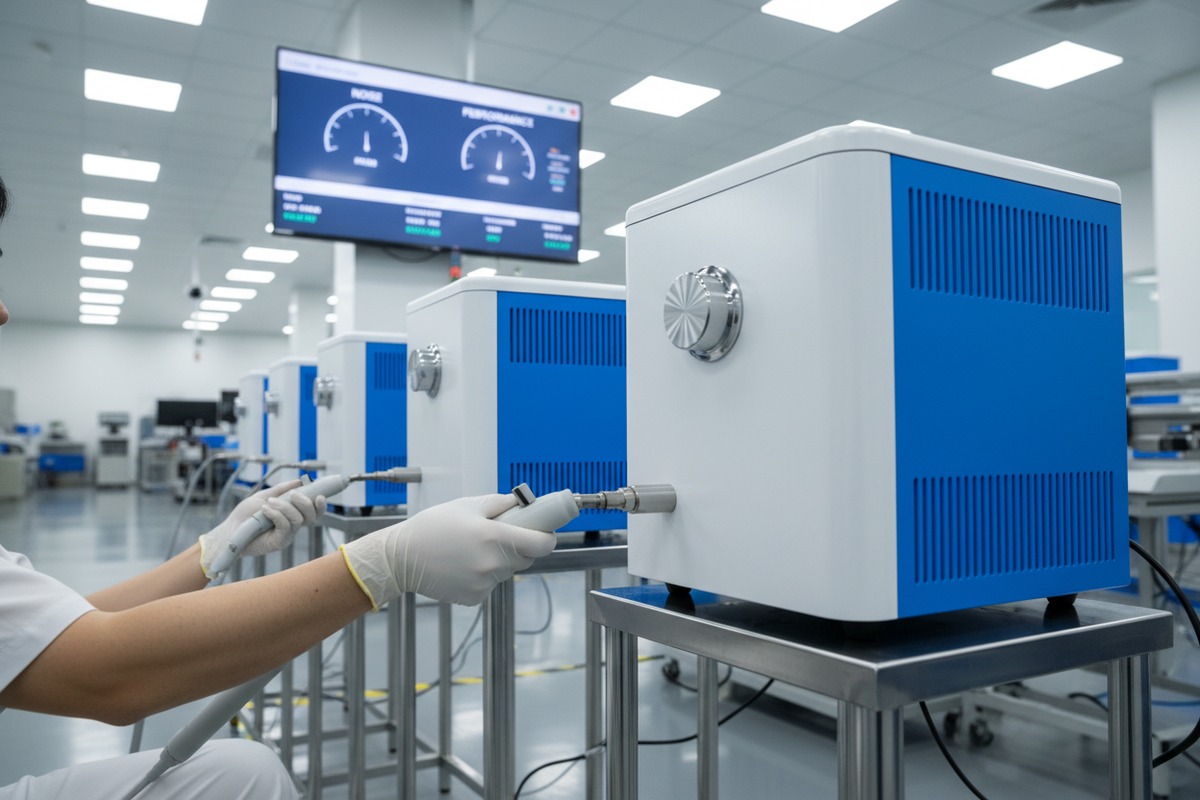
Before shipping any order, our pre-shipment inspection 8 includes acoustic testing. Abnormal noise patterns can signal quality issues. Knowing what to listen for helps you catch problems early, whether during factory inspection or after delivery.
Normal shockwave noise is rhythmic and consistent with each pulse. Mechanical defects create irregular sounds: grinding indicates bearing wear, rattling suggests loose components, and squealing points to compressor issues. Request factory test reports showing decibel readings within published specifications before shipment.
Establishing Baseline Noise Expectations
Every machine model has documented noise specifications. When you place an order, request the technical datasheet showing expected decibel ranges at different energy settings. This becomes your reference point for quality verification.
Our factory test protocol includes noise measurement at 25%, 50%, 75%, and 100% power settings. We record these readings and include them in the quality control documentation. Any deviation greater than 3 dB from published specifications triggers further investigation.
Warning Signs of Mechanical Problems
Healthy shockwave machines produce predictable, repetitive sounds. Each pulse should sound identical to the previous one. Variations in pulse sound quality indicate potential issues requiring attention.
Grinding or scraping sounds suggest internal component wear. Metal-on-metal contact creates distinctive harsh tones that differ from normal operational noise. These sounds often worsen over time and indicate need for maintenance or repair.
Rattling sounds point to loose fasteners or components. Vibration during operation can gradually loosen screws and mounts. While sometimes easy to fix, rattling can also indicate structural problems requiring professional attention.
High-pitched squealing often relates to compressor problems. Belt tension issues, bearing wear, or lubrication failures create these distinctive sounds. Compressor problems typically require component replacement.
Quality Control Checklist for Buyers
We recommend a systematic approach to noise-based quality verification. This checklist helps ensure your order meets specifications before you accept delivery.
| Inspection Point | What to Check | Acceptable Range |
|---|---|---|
| Baseline noise at 50% power | Steady rhythmic pulse | Within ±3 dB of spec |
| Noise consistency over 100 pulses | No variation in sound character | Identical pulse sounds |
| Compressor startup | Smooth engagement | No grinding or squealing |
| Housing vibration | Minimal chassis movement | No visible vibration |
| Handpiece connection | Secure attachment | No rattling at joint |
Factory Testing and Documentation Requirements
Specify your noise testing requirements in the purchase order. Request video documentation of acoustic testing. Modern smartphones can record audio that captures abnormal sounds even if precise decibel measurement is not available.
For large orders, consider third-party inspection services. Companies like SGS and Bureau Veritas offer pre-shipment inspection services in China. They can verify noise performance against specifications before goods leave the factory.
Our standard practice includes noise testing in the quality control report. We photograph the decibel meter display during testing and include these images in documentation. This gives you objective verification of acoustic performance before shipment.
Conclusion
Shockwave therapy machine noise levels range from 60 dB to 110 dB depending on technology type. Focused systems run quieter than radial units. Room acoustics, energy settings, and equipment quality all affect the final sound experience in your clinic.
Footnotes
1. Explains the logarithmic nature and definition of the decibel scale. ↩︎
2. Authoritative OSHA regulation page on occupational noise exposure, directly mentioning A-weighted measurements and their use in compliance. ↩︎
3. NIOSH/CDC defines impulse noise and its characteristics compared to continuous sound. ↩︎
4. Details the benefits of acoustic ceiling tiles for sound control and noise reduction. ↩︎
5. Explains the mechanism and characteristics of radial pneumatic shockwave therapy. ↩︎
6. Discusses the technology and benefits of oil-lubricated compressors, including noise dissipation. ↩︎
7. Describes the physical principles of piezoelectric shockwave generation and direct focusing. ↩︎
8. Authoritative source (TUV Austria) explaining pre-shipment inspection and its importance, from a reputable organization similar to the original domain. ↩︎

 English
  Español de México
  Deutsch
  Français
  العربية
  Русский