
Every week, our production line handles dozens of shockwave therapy 1 units. We see which components fail first and why clinics lose revenue from unexpected downtime.
When testing shockwave therapy machine samples, focus on five critical failure points: handpiece durability and shot count accuracy, energy output consistency, internal cooling system performance, pneumatic pressure stability, and build quality for shipping. Each area requires specific diagnostic tests before bulk ordering to prevent costly returns and clinic disruptions.
This guide walks you through practical testing methods we use in our quality control process ISTA standards 2. You will learn exactly how to evaluate samples before committing to large purchases.
How can I verify the durability and shot count of the shockwave handpiece in my sample?
Our engineers have tracked handpiece failures across thousands of units. The handpiece experiences the most mechanical stress during treatments. Small defects become major problems after extended use.
To verify handpiece durability, run a minimum of 5,000 test shots at maximum pressure settings while monitoring for projectile jamming, unusual vibrations, or sound changes. Inspect O-rings, bullets, and springs before and after testing. Compare the displayed shot count against actual delivered pulses using an external counter or calibration device.
Understanding Mechanical Stress Points
The handpiece contains several components under constant stress. The bullet accelerates and decelerates thousands of times per treatment session. Springs compress and release repeatedly. O-rings seal against high-pressure air.
Each component has a different failure timeline. Bullets typically last 500,000 to 1,000,000 shots. Springs may weaken after 300,000 cycles. O-rings degrade faster, often needing replacement every 100,000 shots.
Step-by-Step Handpiece Testing Protocol
Start with a visual inspection. Look for manufacturing defects, uneven surfaces, or poor assembly. Check that the applicator tip connects firmly without wobbling.
Next, perform the "wiggle test." Gently move the handpiece cable at various points. Listen for intermittent clicking or watch for power fluctuations. Loose internal connections cause treatment interruptions.
Run your shot count test in phases:
| Test Phase | Shot Count | Pressure Setting | What to Monitor |
|---|---|---|---|
| Phase 1 | 1,000 shots | Low (1-2 Bar) | Baseline sound and vibration |
| Phase 2 | 2,000 shots | Medium (3-4 Bar) | Consistency changes |
| Phase 3 | 2,000 shots | Maximum (5-6 Bar) | Heat buildup, jamming |
| Post-Test | N/A | N/A | Component wear, accuracy |
Identifying Early Wear Signs
Listen carefully during testing. A healthy handpiece produces consistent clicking sounds. Irregularity suggests projectile jamming or spring fatigue.
Feel the handpiece body. Excessive heat indicates friction problems. Vibration that travels up the handle suggests loose internal components.
After testing, disassemble and photograph internal parts. Compare wear patterns against manufacturer specifications. Early wear on the bullet's striking surface predicts premature failure.
How do I test for energy output consistency to ensure the machine doesn't lose power during treatments?
When we calibrate machines at our facility, energy drift is the problem clients report most often. energy output consistency 3 Inconsistent output means treatments either cause unnecessary pain or fail to work at all.
Test energy consistency by measuring output at the beginning, middle, and end of extended treatment sessions using a calibrated pressure sensor or hydrophone. Record readings at each pressure level across 3,000+ consecutive shots. Acceptable variation should stay within ±10% of the set value. Anything beyond indicates compressor issues, sensor drift, or power supply problems.

Why Energy Consistency Matters
Shockwave therapy works through precise mechanical energy delivery. Too little energy fails to stimulate tissue regeneration. Too much energy causes excessive microtrauma and patient discomfort.
Clinical studies show effective treatment requires penetration to specific tissue depths. A machine that loses 20% power mid-treatment may not reach the target area. This wastes patient time and damages your reputation.
Equipment Needed for Energy Testing
Professional testing requires calibrated measurement tools. Basic evaluation uses a pressure gauge at the compressor output. Advanced testing uses hydrophone 4s that measure actual acoustic energy.
| Testing Method | Equipment Cost | Accuracy Level | Best For |
|---|---|---|---|
| Compressor gauge | Low | Basic | Initial screening |
| Pressure transducer | Medium | Good | Sample evaluation |
| Calibrated hydrophone | High | Excellent | Final verification |
| Force meter | Medium | Good | Comparative testing |
Structured Energy Testing Protocol
Begin by documenting baseline readings. Set the machine to its lowest energy level. Record the displayed setting and measured output. Repeat at medium and maximum settings.
Now run an extended consistency test. Set the machine to medium-high output. Fire 500 consecutive shots. Record measurements every 100 shots.
Watch for these warning signs:
- Gradual output decline (suggests compressor fatigue)
- Sudden drops followed by recovery (indicates sensor recalibration)
- Random fluctuations (points to electrical instability)
Distinguishing True Shockwaves from Pressure Waves
Not all machines deliver genuine focused shockwaves 5. Some produce radial pressure waves marketed as "acoustic wave therapy." These penetrate less deeply and produce different biological effects.
True focused shockwaves concentrate energy at a specific depth point. Radial waves disperse energy from the skin surface outward. Testing should verify the machine produces the wave type it claims.
Check the focal zone specifications. Measure actual penetration using gel phantoms or tissue simulants. Machines with narrow focal zones require precise positioning but deliver concentrated energy. Broader zones are more forgiving but less intense.
What steps should I take to inspect the internal cooling system and prevent overheating failures?
Our testing team has seen machines shut down mid-treatment due to thermal overload 6. Overheating damages internal components and interrupts patient care. Cooling system inspection should be mandatory for all samples.
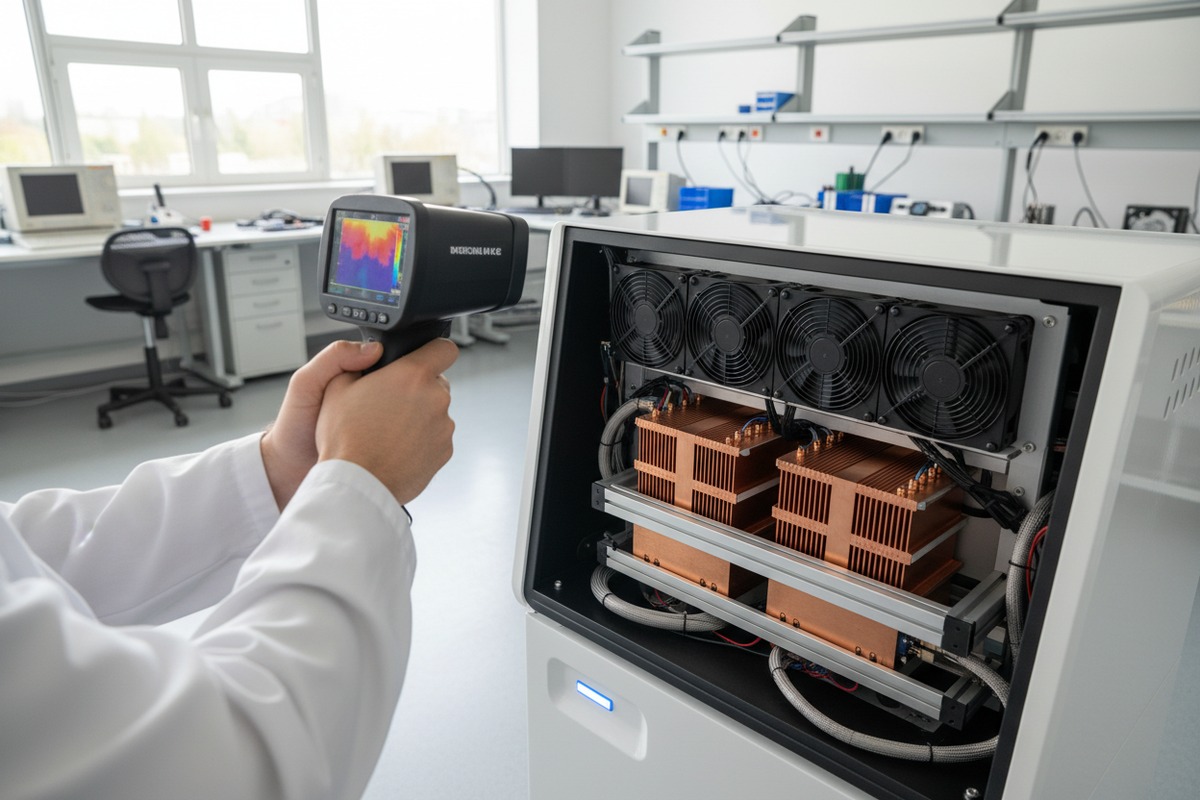
Inspect cooling systems by running continuous maximum-intensity sessions for 30-45 minutes while monitoring external chassis temperature and internal component heat. Check that ventilation ports are unobstructed, fans operate at correct speeds, and thermal sensors trigger appropriate protection responses. Temperature rise above 50°C at touch points indicates inadequate cooling.

How Shockwave Machines Generate Heat
Electromagnetic and pneumatic shockwave generators both produce significant heat. The compressor motor runs continuously during treatment. Solenoid valves cycle thousands of times. Electronic control boards process signals rapidly.
Heat accumulates in enclosed chassis designs. Without adequate dissipation, components exceed safe operating temperatures. Thermal stress accelerates wear on capacitors, solder joints, and plastic housings.
Visual Cooling System Inspection
Start by examining ventilation design. Count the number of air intake and exhaust ports. Check that internal pathways allow airflow across heat-generating components.
Look for these design features:
| Cooling Feature | Purpose | Quality Indicator |
|---|---|---|
| Multiple fan positions | Redundant airflow | Better heat management |
| Metal heat sinks | Passive dissipation | Longer component life |
| Thermal paste application | Heat transfer | Professional assembly |
| Temperature sensors | Active monitoring | Automatic protection |
| Filtered air intakes | Dust prevention | Reduced maintenance |
Active Thermal Testing Procedure
Prepare the test environment. Room temperature should match typical clinical conditions (20-25°C). Ensure adequate space around the machine for airflow.
Run a thermal stress test:
- Set machine to maximum frequency and pressure
- Fire continuously for 15 minutes
- Measure chassis temperature at five points
- Continue for another 15 minutes
- Record any automatic shutdowns or warnings
- Allow 10-minute cool-down
- Restart and verify normal operation
Use an infrared thermometer or thermal camera for accurate readings. Surface temperatures above 50°C may indicate internal components exceeding safe limits.
Preventing Overheating in Clinical Use
Share these findings with clinic clients. Recommend treatment protocols that include cooling breaks. Position machines away from walls and other equipment.
Maintenance schedules should include:
- Monthly vent cleaning
- Quarterly fan inspection
- Annual thermal paste replacement
- Filter changes based on environment
How can I evaluate the build quality and packaging to avoid cosmetic defects during international shipping?
When we ship machines from Guangzhou to North America or Europe, they travel through multiple handling points. Our quality team has learned that packaging failures cause more customer complaints than product defects.
Evaluate build quality by inspecting chassis materials for thickness and rigidity, testing control panel durability through repeated use, and examining cable strain relief designs. For packaging, conduct drop tests from 75cm height at multiple angles, verify foam density and coverage, and confirm box compression strength meets ISTA standards. Document all findings with photographs before approving bulk orders.
Build Quality Assessment Points
Start with the external chassis. Press firmly on different areas. Quality construction shows no flexing or creaking. Cheap builds use thin plastic that cracks under pressure.
Examine assembly precision. Panel gaps should be uniform. Buttons should press smoothly without sticking. Indicator lights should align properly with their labels.
Test connection points thoroughly:
| Connection Type | Test Method | Pass Criteria |
|---|---|---|
| Handpiece port | Insert/remove 50 times | No loosening or wear |
| Power cable | Wiggle at 10 positions | No power interruption |
| Foot pedal jack | Connect/disconnect 30 times | Consistent contact |
| USB/update port | Insert at angles | Secure fit maintained |
Materials and Finish Quality
High-gloss finishes look premium but show scratches easily. Matte finishes hide minor damage better during shipping and clinical use.
Check material certification. Medical-grade plastics should meet relevant standards. Metal components should resist corrosion. Ask suppliers for material specification sheets.
Coupling gel contact areas need special attention. These surfaces experience repeated chemical exposure. Poor materials degrade, becoming sticky or discolored within months.
Packaging Stress Testing
International shipping exposes packages to drops, compression, vibration, and temperature changes. Your testing should simulate these stresses.
Conduct a standardized drop test sequence:
- Flat drop from 75cm onto bottom face
- Corner drop from 50cm onto each corner
- Edge drop from 50cm onto each edge
- Repeat sequence three times
- Open and inspect for damage
Check internal packaging materials. Foam should have density appropriate for machine weight. Custom-molded inserts protect better than loose fill. Double-boxing adds protection for fragile components.
Documentation and Acceptance Criteria
Create a checklist for incoming sample inspection. Photograph any defects before discussing with suppliers. Establish clear acceptance criteria in your purchase agreements.
A typical inspection checklist includes:
- Surface scratches or dents
- Panel alignment issues
- Control responsiveness
- Cable condition
- Accessory completeness
- Documentation accuracy
- Packaging integrity
- Labeling compliance
Request packaging specifications from suppliers. Compare promised materials against actual delivered packaging. Cost-cutting often starts with packaging downgrades.
Conclusion
Testing shockwave therapy samples thoroughly prevents costly mistakes. Focus on handpiece durability 7, energy consistency, cooling performance, and packaging quality. These four areas cause most warranty claims and customer complaints. Invest time in sample evaluation now to protect your business reputation later.
Footnotes
1. Wikipedia provides a comprehensive and authoritative overview of extracorporeal shockwave therapy. ↩︎
2. Explains the role and types of ISTA standards for medical device packaging. ↩︎
3. Highlights the critical role of consistent energy delivery in medical treatments. ↩︎
4. NOAA’s National Ocean Service offers an authoritative definition and explanation of a hydrophone. ↩︎
5. Clearly explains the differences between focused and radial shockwave therapy. ↩︎
6. Discusses heat management and risks of overheating in medical devices. ↩︎
7. Explains the importance and methods of durability testing for medical devices. ↩︎

 English
  Español de México
  Deutsch
  Français
  العربية
  Русский