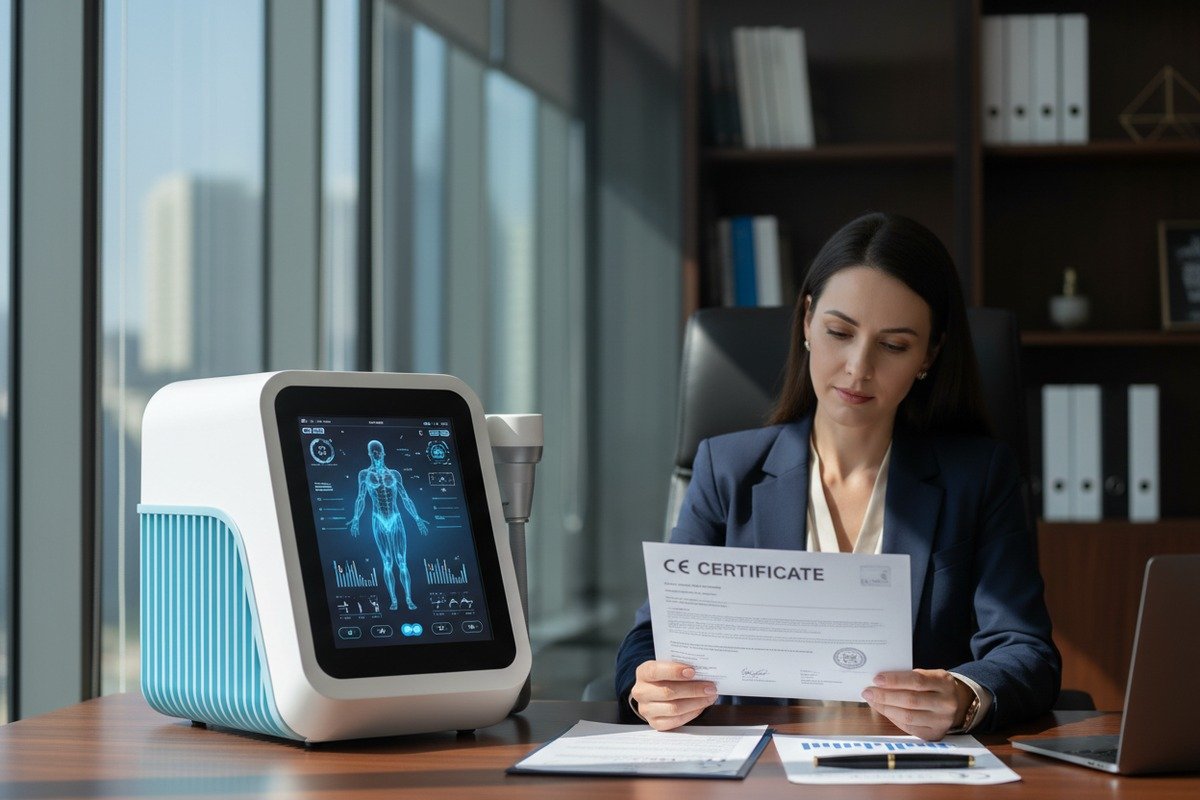
Last year, our export team received a distressing call from a European partner RoHS Directive 2011/65/EU 1. His entire shipment of shockwave machines was held at customs. The reason? Invalid CE documentation. This costly mistake could have been avoided with proper certificate verification.
When importing shockwave therapy machines to Europe, verify these CE certificate details: the four-digit Notified Body number, valid EU Declaration of Conformity referencing MDR 2017/745, correct device classification (typically Class IIa or IIb), EUDAMED registration, and accompanying technical test reports including IEC 61846 or IEC 63045 compliance documentation.
Understanding these critical checkpoints protects your business from seizures, fines, and market delays WEEE Directive 2012/19/EU 2. Let me walk you through each verification step based on our decade of experience shipping to European markets.
How do I verify the authenticity of my supplier’s CE certificate for shockwave machines?
Our quality control team has examined hundreds of CE certificates from various manufacturers Radio Equipment Directive 2014/53/EU 3. The difference between authentic and fraudulent documentation often hides in small details that untrained eyes miss.
To verify CE certificate authenticity, cross-reference the four-digit Notified Body number against the EU’s NANDO database, check that the certificate holder matches EUDAMED registration, confirm the certificate issue date falls within validity periods, and verify the Notified Body’s accreditation scope covers medical devices under MDR 2017/745.
Start With the CE Mark Itself
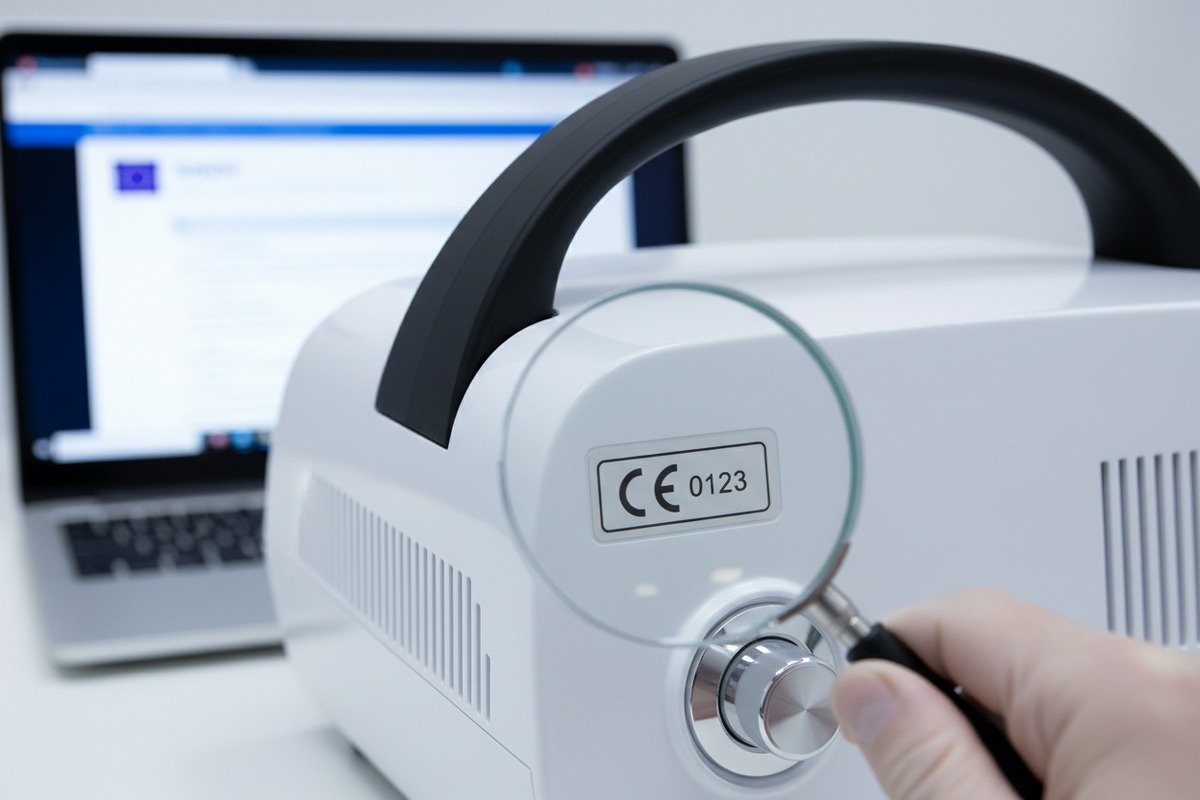
The physical CE mark on your shockwave device tells an important story. A legitimate CE marking follows strict visual requirements. The letters must maintain specific proportions—the C and E form two semicircles with a precise relationship.
| CE Mark Requirement | Compliant | Non-Compliant |
|---|---|---|
| Minimum height | 5mm or larger | Smaller than 5mm |
| Proportions | C and E equal height | Distorted letters |
| Visibility | Clear, legible, permanent | Faded, removable, hidden |
| Location | Device, packaging, and IFU | Missing from any location |
| NB number | Four digits directly below CE | No number or wrong format |
For shockwave therapy machines classified as Class IIa or IIb, a four-digit Notified Body number must appear directly below or beside the CE mark. When we inspect incoming documentation from partner factories, this is our first checkpoint.
Use the NANDO Database
The European Commission maintains the NANDO (New Approach Notified and Designated Organisations) database. This free online tool lets you verify any Notified Body number instantly.
Enter the four-digit code and confirm three things:
- The Notified Body exists and is currently active
- Their accreditation scope includes MDR 2017/745 4
- They are authorized for your device’s classification level
During our pre-shipment inspections, we discovered that roughly 15-20% of certificates from unknown suppliers reference inactive or non-existent Notified Bodies. This immediate red flag saves our partners from costly mistakes.
Cross-Check Against EUDAMED
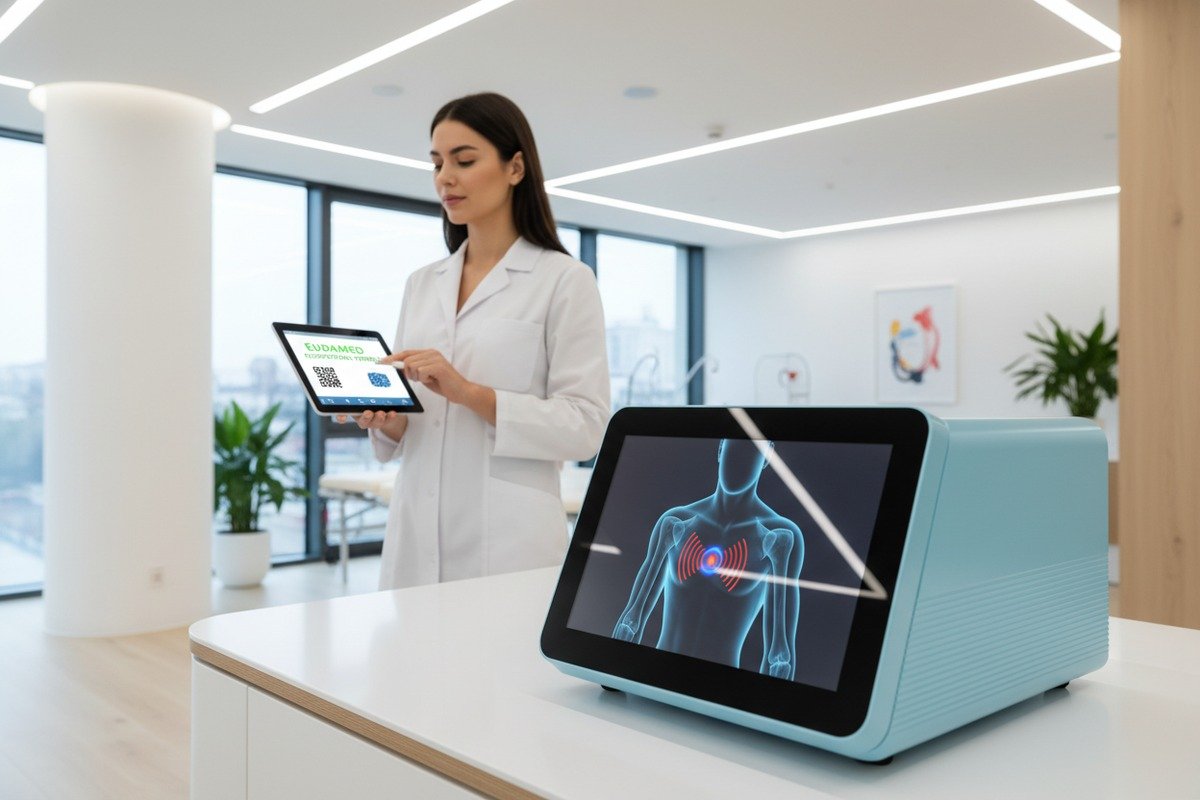
EUDAMED, the European Database on Medical Devices, has become increasingly important since 2025. When modules became fully operational, importers gained direct access to verify device registrations, UDI information, and certificate status.
Search for the manufacturer’s name and device details. Legitimate products will show:
- Active registration status
- Matching certificate numbers
- Valid UDI-DI assignment
- Correct economic operator information
Our engineering team recommends requesting EUDAMED registration 5 screenshots from suppliers before finalizing any purchase order. This simple step has prevented multiple compliance disasters for our distribution partners.
Which specific EU medical directives should be listed on my equipment’s CE documentation?
When our regulatory affairs team reviews documentation packages, directive references immediately reveal whether suppliers understand current EU requirements. Outdated references signal either negligence or deliberate deception.
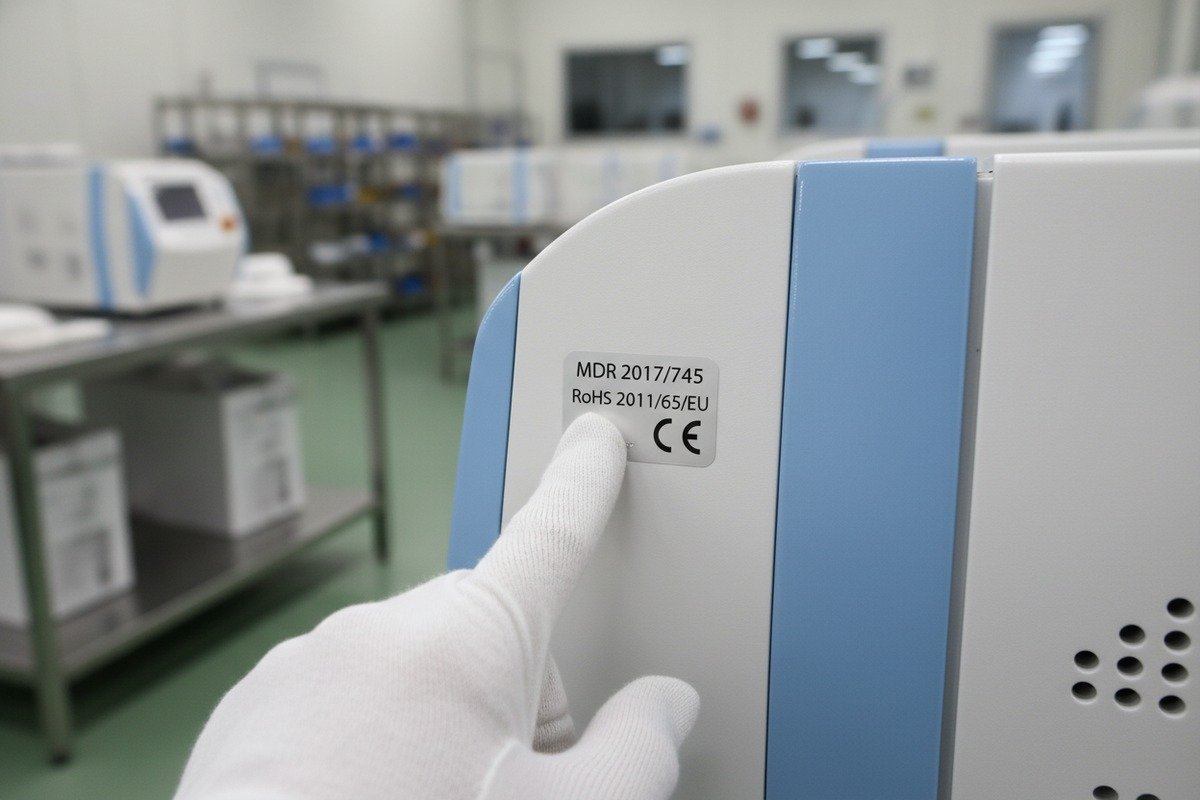
Your shockwave therapy machine’s CE documentation must reference EU MDR 2017/745 (Medical Device Regulation), not the obsolete MDD 93/42/EEC. Additional applicable directives may include RoHS 2011/65/EU for hazardous substances, WEEE 2012/19/EU for electronic waste, and RED 2014/53/EU if the device includes wireless connectivity features.
MDR 2017/745 Is Mandatory
The Medical Device Regulation 2017/745 replaced the old Medical Device Directive in May 2021. Any certificate still referencing only MDD 93/42/EEC is either expired or fraudulent.
| Document | Must Reference | Red Flag |
|---|---|---|
| CE Certificate | MDR 2017/745 | Only MDD 93/42/EEC |
| Declaration of Conformity | Regulation (EU) 2017/745 | Missing regulation number |
| Technical Documentation | Annex II and III of MDR | References to MDD annexes |
| Certificate Validity | Issue date after May 2021 | Pre-2021 without MDR update |
During the MDR transition period, many certificates issued under MDD remained valid until 2024. However, since late 2024, only MDR-compliant certificates should exist for new market placements. Our compliance team rejects any supplier documentation that hasn’t completed this transition.
Classification Affects Documentation Requirements
Shockwave therapy machines typically fall into Class IIa or Class IIb under MDR. This classification determines documentation complexity.
Class IIa applies to devices delivering energy to the body for therapeutic purposes when exposure is short-term. Class IIb applies when risks are higher or energy delivery is more invasive.
The documentation must clearly state the device classification and justify it based on:
- Intended use and indications
- Duration of contact with patient
- Type and amount of energy delivered
- Risk profile of the treatment
Our product development engineers work closely with Notified Bodies to ensure proper classification. Incorrect classification leads to inadequate documentation, which customs authorities catch during inspections.
Don’t Forget Overlapping Directives
Medical devices often fall under multiple EU directives simultaneously. Your shockwave machine documentation should address:
RoHS Directive 2011/65/EU: Restricts hazardous substances in electrical equipment. All electronic medical devices must comply.
WEEE Directive 2012/19/EU: Covers electronic waste disposal. Manufacturers must register with national producer responsibility schemes.
Radio Equipment Directive 2014/53/EU: Applies if your shockwave device includes Bluetooth, WiFi, or wireless treatment probes.
When we design new shockwave models, our engineering team builds compliance for all applicable directives into the product from the beginning. Retrofitting compliance costs significantly more than designing it correctly upfront.
Should the CE certificate name match the factory or my own private label brand?
This question comes up constantly in conversations with our OEM partners. The answer affects legal liability, market positioning, and regulatory compliance simultaneously.
The CE certificate holder must be the entity legally responsible for the device—either the original manufacturer or your company as the private label “manufacturer.” If you private label, your company name must appear on the CE certificate, Declaration of Conformity, and device labeling as the legal manufacturer, accepting full regulatory responsibility under MDR.
Understanding the “Manufacturer” Definition Under MDR
MDR defines “manufacturer” differently than common usage. Under EU law, the manufacturer is whoever places the device on the market under their name or trademark.
This means if you sell shockwave machines under your brand name, you become the legal manufacturer. You assume all obligations:
- Technical documentation maintenance
- Quality management system implementation
- Post-market surveillance activities
- Adverse event reporting
- EUDAMED registration
Our private label partners often initially want to simply use our existing CE certificate. However, this creates a compliance gap that customs authorities increasingly catch.
Two Approaches to Private Label Compliance
| Approach | Certificate Holder | Your Obligations | Risk Level |
|---|---|---|---|
| OEM (Factory branded) | Original manufacturer | Importer duties only | Lower |
| Private Label | Your company | Full manufacturer duties | Higher |
Option 1: OEM Distribution
Keep the original manufacturer’s branding. Your role becomes “importer” under MDR. You verify documentation but don’t own it.
Option 2: Full Private Label
Your company becomes the legal manufacturer. You need your own CE certificate, your own Declaration of Conformity, and your own EUDAMED registration.
Our factory supports both models. For full private label arrangements, we work directly with your regulatory consultants and Notified Body to transfer documentation ownership properly.
The Economic Operator Chain
MDR establishes clear responsibilities for each economic operator:
Manufacturer: Creates and maintains technical documentation, holds CE certificate, implements QMS, conducts post-market surveillance.
Authorized Representative: Acts for non-EU manufacturers, maintains documentation copies, cooperates with authorities.
Importer: Verifies manufacturer compliance before import, ensures labeling requirements, reports non-conformities.
Distributor: Maintains storage conditions, verifies labeling, reports problems upstream.
When you private label, you move from importer position to manufacturer position. This increases your obligations but also your control over the product and documentation.
What technical test reports must accompany my shockwave therapy machine’s CE certificate?
When our R&D team develops new shockwave models, testing requirements drive much of the development timeline. Understanding these requirements upfront prevents costly redesigns and certification delays.
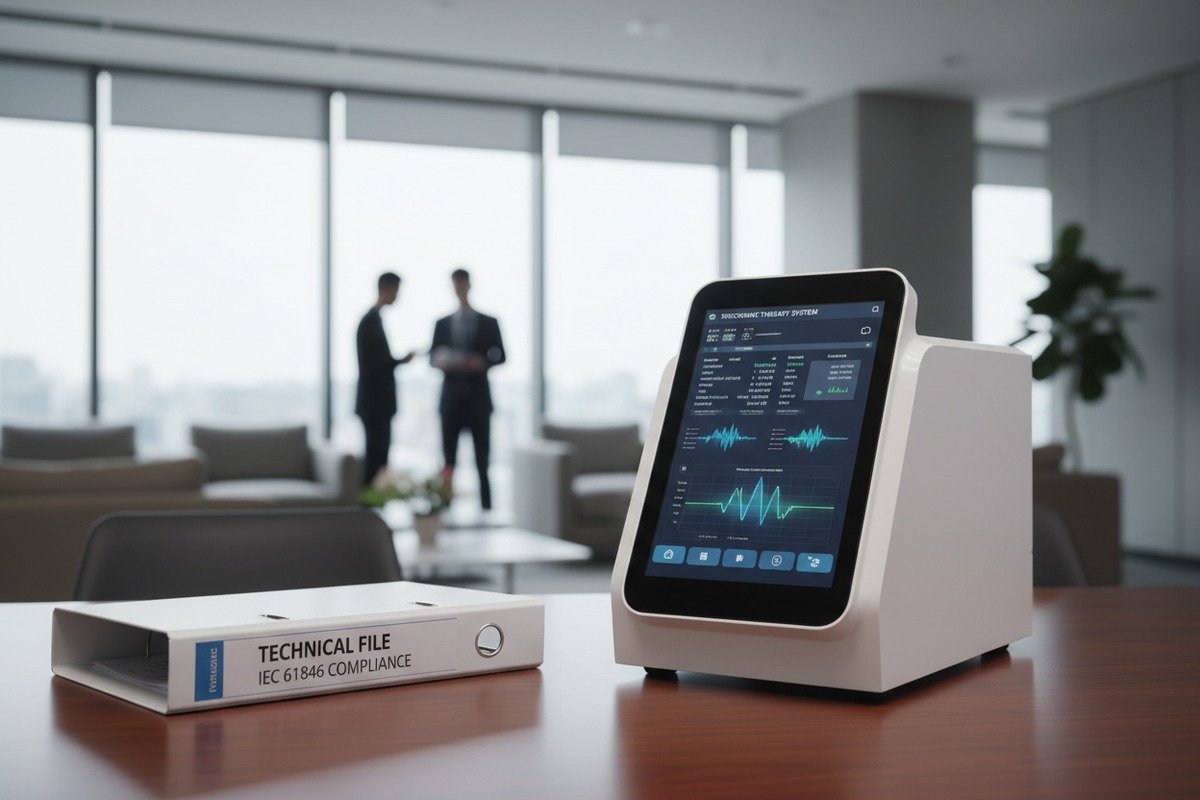
Essential technical test reports for shockwave therapy machines include IEC 60601-1 electrical safety testing, IEC 60601-1-2 electromagnetic compatibility testing, IEC 61846 for focused devices or IEC 63045:2020 for radial/non-focused devices, biocompatibility testing per ISO 10993 series, and clinical evaluation reports demonstrating safety and performance for intended use.
Core Safety Testing Standards
Every medical device must pass fundamental safety testing before CE marking becomes possible.
| Standard | Scope | Key Tests |
|---|---|---|
| IEC 60601-1 | General safety | Electrical insulation, protective earthing, mechanical strength |
| IEC 60601-1-2 | EMC | Emissions limits, immunity to interference |
| IEC 61846 | Focused shockwave | Pressure measurements, focal zone characteristics |
| IEC 63045:2020 | Radial/non-focused | Energy parameters, ballistic applicator safety |
Our production facility maintains in-house testing capabilities for pre-compliance verification. Final certification testing occurs at accredited laboratories, but our internal testing catches issues before expensive external lab fees accumulate.
Shockwave-Specific Standards
The type of shockwave technology determines which specific standard applies.
Focused shockwave devices must meet IEC 61846. This standard specifies measurement methods for pressure pulse parameters, including peak pressure, focal zone dimensions, and energy density.
Radial or weakly-focused devices fall under the newer IEC 63045:2020. This standard addresses ballistic pressure pulse generators and their specific safety considerations.
During our product development process, we determine which standard applies based on the therapeutic mechanism. Incorrect standard selection leads to inappropriate testing, which Notified Bodies catch during technical documentation review.
Biocompatibility Requirements
Any component contacting the patient requires biocompatibility assessment per ISO 10993 series 7.
For shockwave therapy machines, this typically includes:
- Treatment heads and applicators
- Coupling gel contact surfaces
- Any patient-contacting accessories
Testing requirements depend on contact duration and tissue type. Short-term skin contact requires fewer tests than prolonged or invasive contact.
Clinical Evaluation Documentation
MDR significantly increased clinical evidence requirements compared to the old MDD. Your technical documentation must include a Clinical Evaluation Report demonstrating:
- Device safety profile supported by testing and literature
- Performance claims substantiated by clinical data
- Risk-benefit analysis favorable for intended patient population
- Comparison to state-of-the-art treatments
For shockwave therapy machines, this often includes literature reviews of published clinical studies, analysis of post-market surveillance data from similar devices, and potentially new clinical investigations.
Our regulatory team maintains extensive clinical literature databases for shockwave therapy applications. When supporting private label partners, we share this foundational evidence to accelerate their certification timelines.
Conclusion
Proper CE certificate verification protects your European import business from costly delays and legal exposure. Focus on validating Notified Body numbers, confirming MDR 2017/745 references, understanding private label implications, and ensuring complete technical documentation accompanies every shipment.
Footnotes
- Official text of the EU directive on the restriction of hazardous substances in electrical equipment. ↩︎
- Official text of the EU directive on waste electrical and electronic equipment. ↩︎
- Official text of the EU directive on the harmonisation of laws relating to radio equipment. ↩︎
- Official text of the Medical Device Regulation (EU) 2017/745. ↩︎
- Official European Commission page providing an overview of EUDAMED. ↩︎
- Official European Commission database for Notified Bodies under EU legislation. ↩︎
- Provides an overview of the international standard for biological evaluation of medical devices. ↩︎
- Explains the international standard for basic safety and essential performance of medical electrical equipment. ↩︎

 English
  Español de México
  Deutsch
  Français
  العربية
  Русский