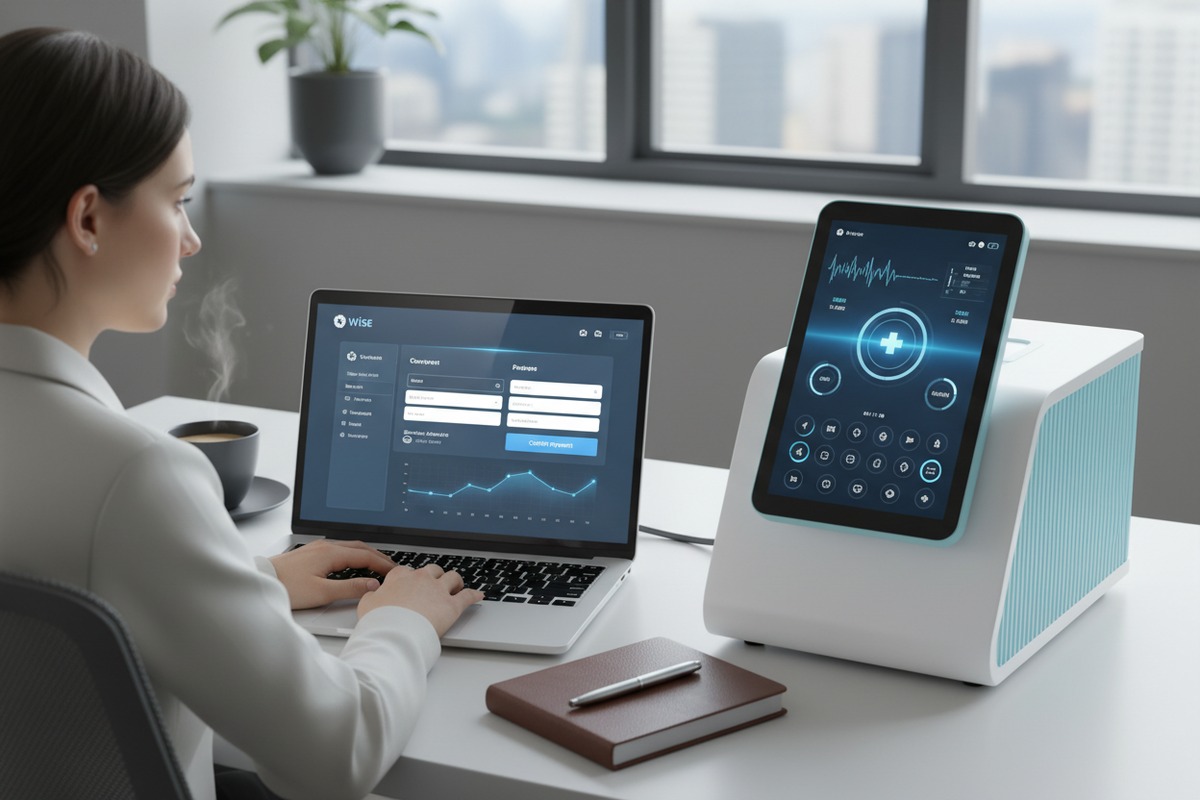
Every week, our export team fields questions from US clinic owners struggling with payment decisions. shockwave therapy machines 1 They worry about wire fraud. They stress over frozen funds. They lose sleep wondering if their $30,000 order will arrive safely. These concerns are valid—and choosing the wrong payment method can cost you thousands.
The best payment methods for importing shockwave therapy machines include T/T wire transfers for orders under $50,000, Letters of Credit for high-value purchases, fintech platforms like Wise or Airwallex for reduced fees, and credit cards through platforms like Alibaba for smaller orders requiring buyer protection.
In this guide, I will walk you through each payment option, explain its pros and cons, and help you choose the right method based on your order size and relationship with suppliers. Let’s start with the most critical concern: security.
How can I ensure my payment is secure when importing shockwave therapy machines from China?
Payment security keeps many first-time importers awake at night. In our years of shipping equipment to US clinics, we have seen buyers lose money to fake supplier accounts. We have also seen simple verification steps prevent fraud entirely.
To ensure payment security, verify supplier credentials through business licenses, use platforms with Trade Assurance, confirm bank account names match company registration, avoid untraceable methods like Western Union, and consider Letters of Credit for orders exceeding $50,000.
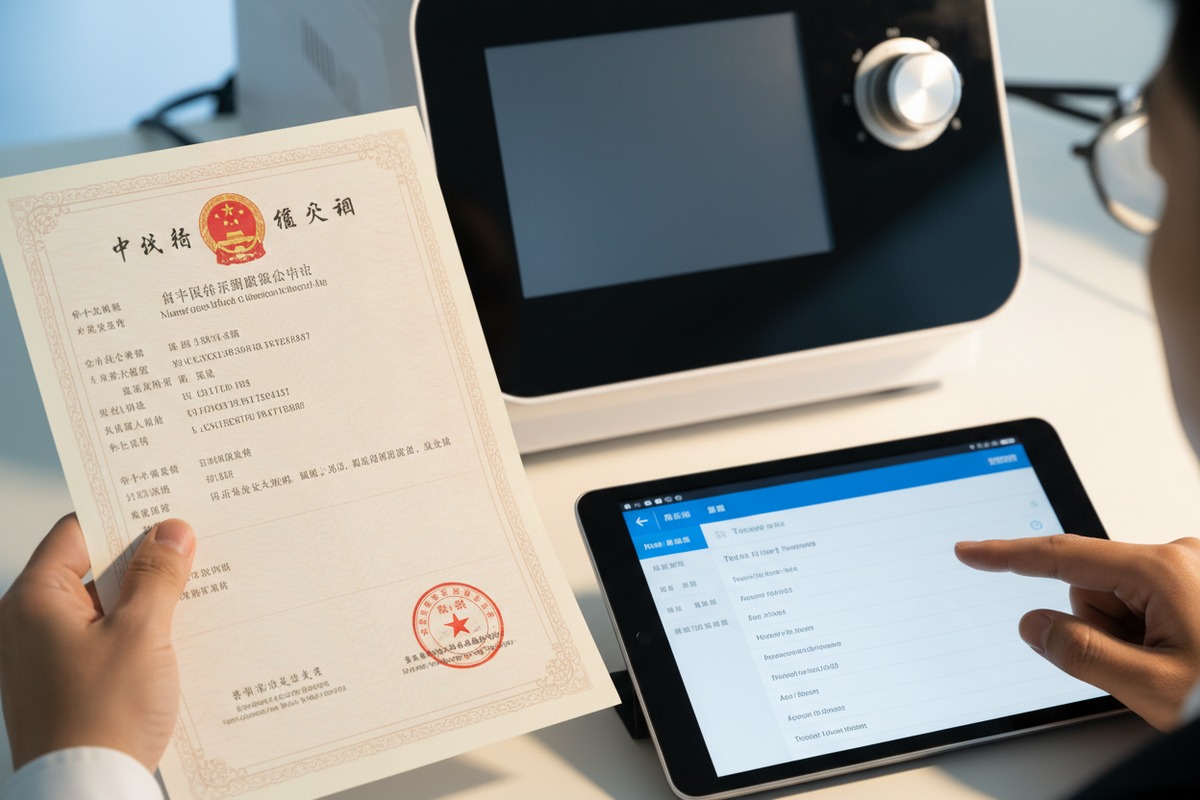
Why Verification Matters Before You Send Money
Before you transfer a single dollar, you must verify who you are paying. This sounds obvious, but many buyers skip this step. They see a low price, get excited, and wire money to an account they never checked.
Here is what we recommend at our facility: Always request the supplier's business license 2. In China, this document shows the registered company name. That name must match the bank account name exactly. If the supplier asks you to pay "Mr. Zhang's personal account" instead of the company account, walk away.
Payment Methods Ranked by Security Level
| Payment Method | Security Level | Best For | Key Protection |
|---|---|---|---|
| Letter of Credit (L/C) | Highest | Orders over $50,000 | Bank guarantees payment only when conditions met |
| Escrow / Trade Assurance 3 | High | First-time orders $1,000-$20,000 | Third party holds funds until delivery confirmed |
| T/T with staged payments | Medium-High | Repeat orders $5,000-$50,000 | 30% deposit limits initial risk |
| Credit Card via Platform | Medium | Samples and small orders under $1,500 | Chargeback rights protect buyer |
| PayPal | Medium | Samples under $200 | Buyer protection but high fees |
| Western Union | Very Low | Never recommended | No recourse if fraud occurs |
How Letters of Credit Protect Large Orders
For orders above $50,000, Letters of Credit 4 remain the gold standard. Here is how they work: Your bank issues a document promising to pay the supplier's bank once shipping documents are presented. The supplier only receives money after proving shipment occurred.
This protects both sides. You know funds will not release until goods ship. The supplier knows payment is guaranteed by a bank, not just your promise. Yes, L/C fees add $500-$1,500 to your costs. But for a $60,000 shockwave machine order, that insurance is worth every penny.
Trade Assurance and Escrow for Medium Orders
If your order is between $1,000 and $20,000, platform escrow services offer excellent protection. Alibaba's Trade Assurance holds your payment until you confirm receipt. If machines arrive damaged or not as described, you can dispute and potentially recover funds.
Our team processes many Trade Assurance orders. The system works well when buyers document everything. Take photos when packages arrive. Test machines immediately. Report issues within the platform's dispute window.
Red Flags That Signal Payment Fraud
Watch for these warning signs:
- Supplier asks for payment to a personal account
- Bank account name differs from company name
- Supplier refuses video calls showing their factory
- Price is 50% below market rate
- Supplier pressures you to pay quickly before "price increases"
One client shared a story with us last year. A "supplier" offered shockwave machines at half our price. The client almost wired $15,000. Then they noticed the bank account was registered to an individual in a different province. They contacted us, and we confirmed the scammer had stolen photos from our website.
Can I negotiate Open Account terms to better manage my business cash flow?
Cash flow is the lifeblood of any distribution business. When our US partners tell us they have capital tied up in inventory, we understand. Paying $40,000 upfront for machines that will not sell for 60 days creates real pressure.
Open Account terms allow payment 30-90 days after receiving goods, significantly improving importer cash flow. However, suppliers typically offer these terms only after establishing trust through $100,000-$150,000 in annual purchases and a consistent payment history over 12-18 months.

What Are Open Account Terms?
Open Account means you receive machines first and pay later. The supplier ships goods based on your promise to pay within agreed terms—usually Net 30, Net 60, or Net 90. This is how most domestic US business works. But for international trade with China, it represents the highest risk for suppliers.
Think about it from our perspective. We purchase components, pay workers, ship machines across an ocean—all before receiving payment. If a buyer disappears or disputes charges, we lose everything.
How to Qualify for Open Account Terms
| Buyer Status | Typical Payment Terms | Minimum Requirements |
|---|---|---|
| First-time buyer | 30% deposit + 70% before shipping | Order confirmation only |
| Repeat buyer (6-12 months) | 30% deposit + 70% against B/L copy | $20,000-$50,000 annual volume |
| Established partner (1-2 years) | Net 30 on partial orders | $50,000-$100,000 annual volume |
| Strategic partner (2+ years) | Net 60-90 on full orders | $100,000-$150,000+ annual volume |
Building Trust Through Payment History
Earning Open Account terms 6 is like building credit. Start with small orders paid on time. Graduate to larger orders with staged payments. After 12-18 months of perfect payment history, approach the conversation.
When clients ask us about Open Account, we look at several factors:
- Total purchase volume over time
- Payment timeliness on previous orders
- Communication responsiveness
- Business stability indicators
The Middle Ground: B/L Copy Payments
Before full Open Account, many suppliers offer a compromise. Instead of paying 70% before machines ship, you pay when receiving the Bill of Lading copy 7. This document proves goods are on the water heading to you. You still pay before physical receipt, but the supplier has already committed to shipping.
This arrangement works well for both sides. We know machines are en route to a paying customer. You know machines actually shipped before releasing the balance.
Negotiation Tips for Better Terms
When you are ready to negotiate, consider these approaches:
First, consolidate orders. Buying $50,000 once gives you more leverage than five $10,000 orders. We can justify extended terms for larger commitments.
Second, offer something in return. Maybe you will commit to quarterly purchase minimums. Maybe you will provide advance forecasts so we can plan production. Partnership works both ways.
Third, start small. Request Net 30 on 50% of order value while prepaying the rest. Prove reliability. Expand terms over time.
One of our long-term partners started in 2019 with full prepayment. By 2021, they qualified for 70% against B/L. Today, they enjoy Net 60 on orders up to $80,000. That progression took patience and consistency.
Which payment methods will help me minimize transaction fees on large beauty machine orders?
Every dollar spent on transaction fees is a dollar taken from your profit margin. When you are ordering $30,000 worth of shockwave machines, a 3% fee means $900 gone. Our purchasing team obsesses over these costs—and we want to help you keep more money in your pocket.
To minimize transaction fees on large orders, use T/T wire transfers through traditional banks (typical fees $25-$50), fintech platforms like Wise or Airwallex that avoid SWIFT fees and offer better exchange rates, or negotiate the supplier to absorb incoming wire fees on orders exceeding $20,000.
Understanding Where Fees Come From
International payments involve multiple fee layers. Your bank charges outgoing wire fees. Correspondent banks charge processing fees. The supplier's bank charges incoming fees. Currency conversion adds 1-3% on top. Understanding each layer helps you minimize total costs.
Fee Comparison by Payment Method
| Payment Method | Outgoing Fee | Hidden Costs | Total Cost on $30,000 Order | Processing Time |
|---|---|---|---|---|
| T/T via Major Bank | $25-$50 | SWIFT fees 8 $15-$30, poor exchange rate 1-2% | $350-$650 | 2-5 business days |
| T/T via Wise/Airwallex | $0-$15 | Mid-market exchange rate | $45-$150 | 1-3 business days |
| Credit Card via Platform | 0 | 3-5% processing fee | $900-$1,500 | Instant |
| PayPal | $0 | 4-5% fee + poor exchange | $1,200-$1,500 | Instant |
| Letter of Credit | $500-$1,500 | Bank processing fees | $500-$1,500 | 5-10 business days |
Why Fintech Platforms Are Changing the Game
Services like Wise, Airwallex, and Payoneer have transformed international payments. They offer local collection accounts in multiple countries. This means you can send a domestic ACH transfer instead of an international wire.
Here is how it works: Airwallex gives the supplier a virtual US bank account. You send a domestic transfer to that account. Airwallex converts currency at near-market rates and deposits RMB into the supplier's Chinese account. Total cost on a $30,000 transfer might be $50-$100 instead of $500+.
Negotiating Fee Arrangements with Suppliers
Many suppliers will absorb incoming wire fees for larger orders. This is standard practice in B2B trade. When you place a $30,000+ order, simply ask: "Can you cover the receiving bank fees?" Most will agree because they want your business.
We typically absorb incoming fees on orders above $20,000. The cost to us is minimal—usually $15-$30. Losing a customer over $30 makes no business sense.
Credit Cards: When Convenience Outweighs Cost
Credit cards cost more but offer benefits. Chargeback protection 9 provides recourse if problems arise. Reward points can offset some fees. Cash flow benefits let you delay actual payment by 30+ days.
For orders under $5,000, credit card fees may be acceptable. A 3% fee on $3,000 is $90. If your card offers 2% rewards, your net cost is $30. Plus you get 30 days before the bill arrives and buyer protection if machines never ship.
For orders above $10,000, credit card fees become painful. That same 3% on $30,000 is $900—real money that could buy additional accessories or fund marketing.
A Personal Insight on Shipping Spare Parts
Before finalizing any payment arrangement, ask your supplier about future spare parts. Will they ship replacement handpieces via air courier or combine them with your next sea freight order? What is the maximum quantity they will express ship at acceptable cost?
This question matters because one broken handpiece should not require a $200 express shipping fee. Understanding this policy upfront helps you budget accurately and avoid surprises later.
How does my chosen payment method affect the production and shipping timeline for my machines?
Timing is everything in business. When you need machines for a trade show or seasonal demand, delays cost real money. What many buyers do not realize is that payment method directly impacts how fast we can move your order through production.
Your payment method affects timelines significantly: T/T deposits allow immediate production start within 24-48 hours, while Letters of Credit require 5-10 days for bank processing before production begins. Credit card and escrow payments may delay shipping until platform verification completes.

How Payment Triggers Production
At our factory, production scheduling depends on payment confirmation. When your 30% deposit clears, your order enters the production queue. Without confirmed payment, we cannot commit materials or labor to your order.
This is not about trust. It is about resource allocation. We might have 15 orders competing for production slots. Paid orders get priority. Pending orders wait.
Timeline Comparison by Payment Method
| Payment Method | Payment Verification | Production Start | Balance Collection | Shipping Release | Total Added Time |
|---|---|---|---|---|---|
| T/T Wire | 2-5 days | Immediately after | Before shipping | Same day | 2-5 days |
| Fintech (Wise/Airwallex) | 1-3 days | Immediately after | Before shipping | Same day | 1-3 days |
| Letter of Credit | 5-10 days | After L/C confirmed | Against documents | After bank review | 7-15 days |
| Trade Assurance | 1-2 days | Immediately after | Platform holds | After buyer confirms | 3-7 days post-delivery |
| Credit Card | Instant-1 day | After verification | At order | After fraud check | 1-3 days |
The Letter of Credit Timeline Problem
Letters of Credit provide excellent security but add significant time. Your bank must issue the L/C. Our bank must review and accept it. Any discrepancies require amendments. This process can take 5-10 business days before we even begin production.
For a shockwave machine with 15-day production time, adding 10 days for L/C processing means 25 days minimum lead time. If you need machines in 20 days, L/C will not work.
Why T/T Remains the Fastest Option
Wire transfers hit our account within 2-5 business days. The moment our finance team confirms receipt, your order enters production. There is no waiting for platform verification, no bank document review, no escrow release process.
For urgent orders, we sometimes begin preparation work when clients share wire confirmation receipts. We order components, schedule production slots, and prepare packaging materials. This shaves days off total delivery time.
Platform Payment Delays You Should Know
Alibaba Trade Assurance holds funds until you confirm receipt. This protects you but can create cash flow challenges for suppliers. Some suppliers delay shipping until they feel confident about fund release. Others may prioritize non-escrow orders because those funds arrive faster.
When using platforms, communicate clearly with your supplier. Confirm you will release funds promptly upon satisfactory receipt. This assurance can motivate faster production and shipping.
Optimizing Your Payment for Speed
If timeline matters, consider this approach:
- Send deposit via fintech platform for fastest clearing
- Confirm production start date in writing
- Prepare balance payment before production completes
- Transfer balance when machines pass QC inspection
- Request shipping same day balance clears
This coordination between payment and production can save 3-5 days compared to waiting until the last minute to send funds.
Conclusion
Choosing the right payment method for your shockwave therapy machine imports requires balancing security, cost, cash flow, and timeline. For most mid-size orders, T/T wire transfers through fintech platforms offer the best combination of low fees and fast processing. Whatever method you choose, verify suppliers carefully and build relationships that lead to better terms over time.
Footnotes
1. Explains what these medical devices are and their applications. ↩︎
2. Replaced with a general and authoritative Wikipedia page on ‘Business license’. ↩︎
3. Details a buyer protection service offered by Alibaba. ↩︎
4. Describes a secure payment instrument used in international trade. ↩︎
5. Defines a common electronic fund transfer method in international trade. ↩︎
6. Defines a payment arrangement where goods are shipped before payment. ↩︎
7. Replaced with a general and authoritative Wikipedia page on ‘Bill of lading’. ↩︎
8. Clarifies the various costs associated with international bank transfers. ↩︎
9. Replaced with an authoritative payment platform’s page directly addressing ‘Chargeback Protection’. ↩︎
10. Explains digital companies that streamline international payments. ↩︎

 English
  Español de México
  Deutsch
  Français
  العربية
  Русский