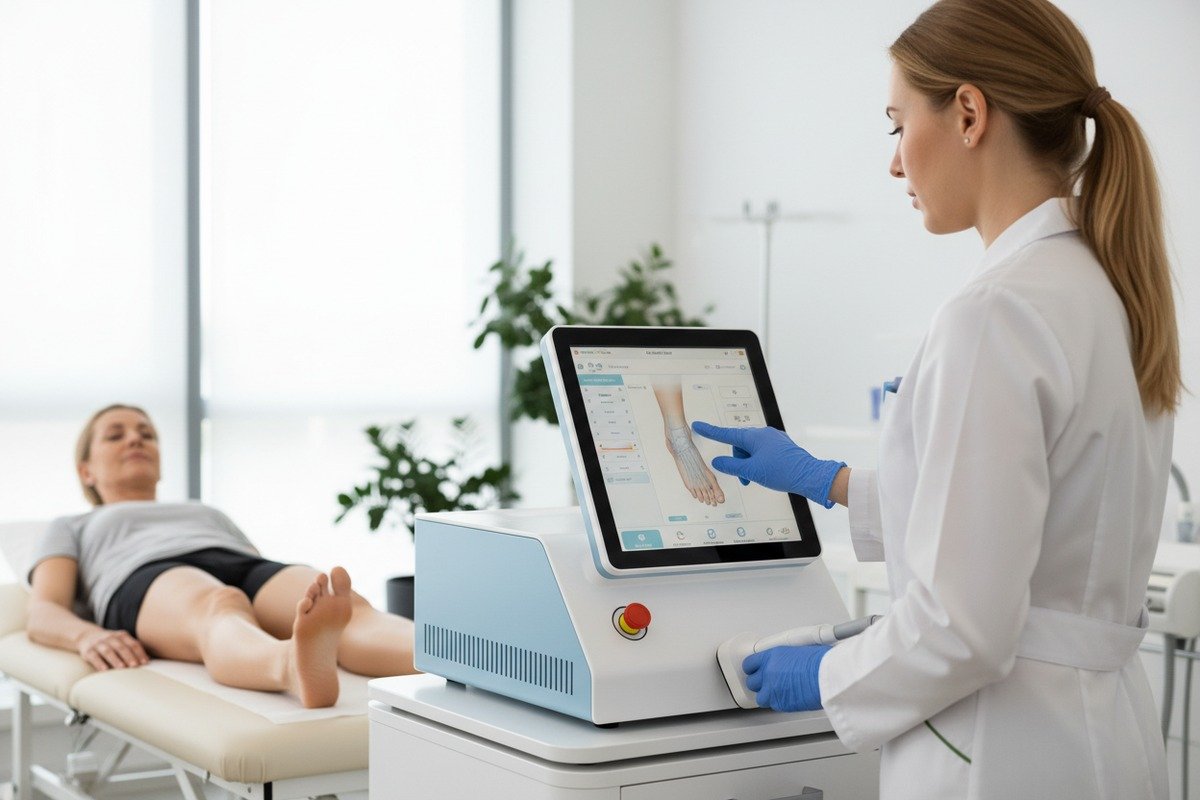
When our engineering team first developed shockwave therapy equipment 1 five years ago, we faced a common question from salon owners: “Why do my patients react so differently to the same treatment?” The answer often lies in output mode selection. Choosing the wrong mode can mean uncomfortable treatments, inconsistent results, and frustrated customers walking out your door.
Yes, modern shockwave therapy machines support both continuous and pulsed modes. Continuous mode delivers steady, uninterrupted pulses at set frequencies between 1-25 Hz, while pulsed modes offer burst patterns of 4, 8, or 12 pulses with pauses. Both modes serve distinct clinical purposes and patient comfort needs.
Understanding these output modes matters for your business success shoulder tendinopathy 2. Let me walk you through exactly how these modes work, what they mean for your brand, and how to choose equipment that delivers both reliably.
Can I customize the pulse and continuous settings to match my brand's specific treatment protocols?
Our production line handles customization requests every week from brand owners worldwide chronic tendinopathy 3. You want your shockwave machine to reflect your unique treatment philosophy. But can the technology actually support your specific vision FDA registration status 4? This question keeps many distributors up at night.
Yes, you can customize both pulse and continuous settings on quality shockwave machines. Most mid-to-high-end devices offer adjustable frequency ranges of 1-25 Hz, energy levels from 10-210 mJ, and burst options of 4/8/12 pulses. Many suppliers also provide OEM software customization for branded preset protocols.
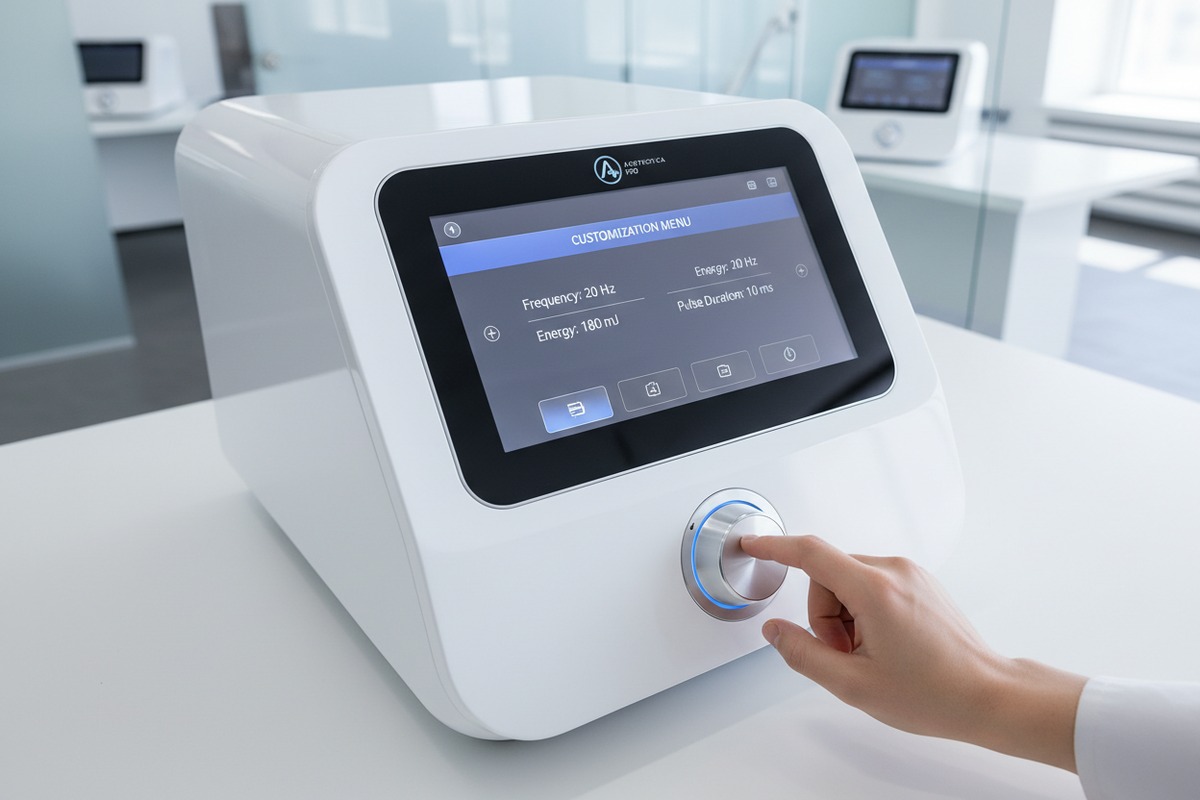
Understanding the Customization Options Available
The customization possibilities depend heavily on the device architecture. When we design control systems for our shockwave units, we build flexibility into the firmware layer. This means your brand can have unique preset libraries without hardware modifications.
Here is what most professional machines allow you to adjust:
| Parameter | Typical Range | Customization Level |
|---|---|---|
| Frequency | 1-25 Hz | Fully adjustable in 1 Hz steps |
| Energy Output | 10-210 mJ | Adjustable in 10 mJ increments |
| Burst Patterns | 4/8/12 pulses | Selectable per protocol |
| Treatment Time | 1-30 minutes | User-defined |
| Pulse Count | 500-5000 per session | Preset or manual |
Creating Brand-Specific Protocol Libraries
Many of our clients want their machines to include proprietary treatment protocols. A typical device ships with 45-90 preset programs covering common conditions. These presets combine specific frequency, energy, and mode settings optimized for conditions like plantar fasciitis 5 or shoulder tendinopathy.
Your brand can customize these presets entirely. Our software team can program your exact specifications into the device firmware. This includes custom names, recommended settings, and treatment guidelines displayed on the touchscreen interface.
Advanced Mode Variants for Specialized Treatments
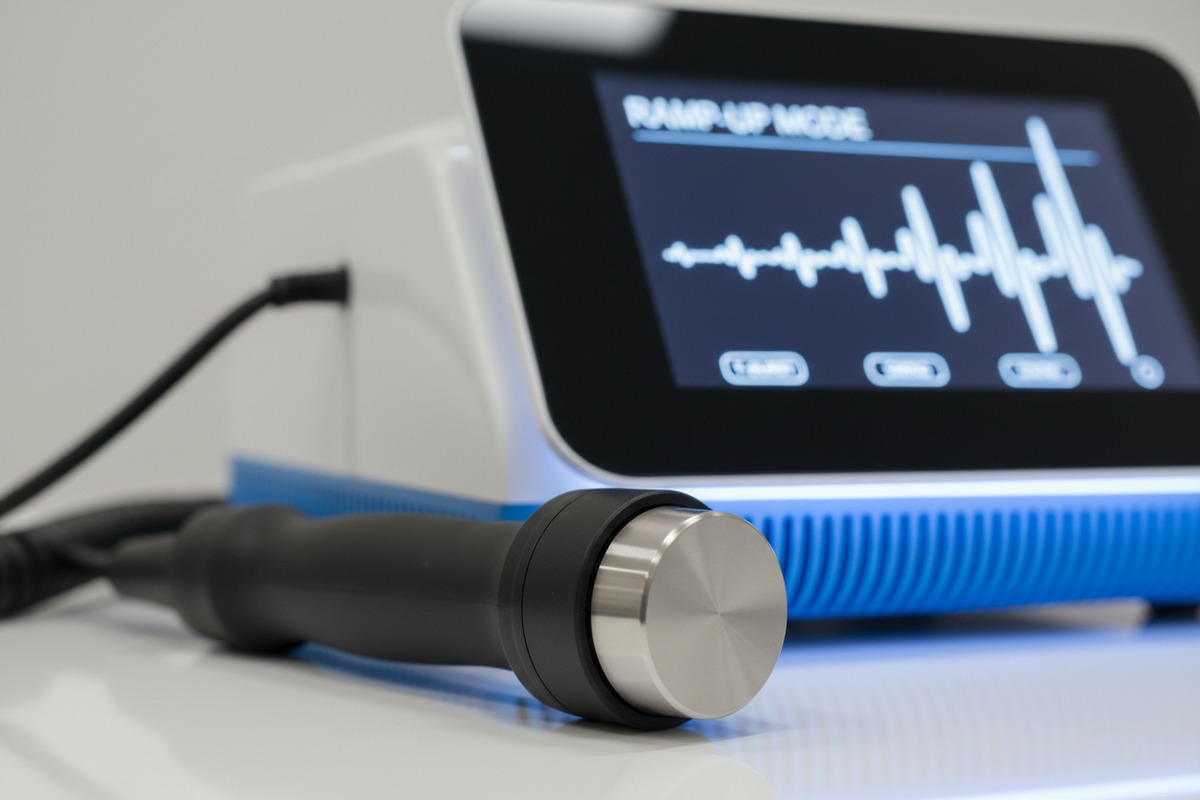
Beyond basic continuous and pulsed modes 6, advanced machines offer specialized variants. These include Swing mode, which varies frequency and energy during a single treatment. T-Burst delivers pulse packages with calculated pauses. T-Ramp gradually increases frequency throughout the session. RAMP-UP slowly builds power over 500 pulses for sensitive patients.
These variants give your brand additional differentiation. You can market specific modes as part of your proprietary methodology. The key is selecting a supplier whose hardware supports these advanced functions natively.
Software Interface Customization
The touchscreen interface represents your brand to end users. Quality manufacturers offer interface customization including logo placement, color schemes, and menu organization. Our white-label service includes complete UI redesign when clients require full brand integration.
Protocol organization also matters for user experience. You can structure treatment categories by body region, condition type, or treatment intensity. Some brands prefer anatomical navigation with human body diagrams. Others want condition-based menus listing specific pathologies.
How do these different output modes impact the clinical results my salon customers expect?
During quality control testing at our facility, we measure real tissue response to different output configurations. The data consistently shows that mode selection directly affects treatment outcomes. Your salon customers will notice the difference between properly selected and poorly matched modes.
Continuous mode provides deeper tissue penetration and consistent cellular stimulation, ideal for chronic conditions and scar tissue. Pulsed modes reduce patient discomfort, prevent tissue tolerance buildup, and mimic natural healing signals. Choosing the correct mode can improve clinical outcomes by matching treatment intensity to specific pathology requirements.

The Science Behind Continuous Mode Results
Continuous mode 7 delivers steady pulses without interruption. This creates sustained mechanical stress on target tissues. The cellular response includes increased blood flow, collagen synthesis activation 8, and inflammatory mediator release.
For chronic tendinopathy, continuous mode often works best. The uninterrupted stimulation breaks down calcified deposits and scar tissue adhesions. Penetration depths reach 30-40mm in radial systems, addressing deep muscular trigger points effectively.
However, continuous mode can cause discomfort in sensitive areas. Patients may request treatment cessation before therapeutic pulse counts are reached. This compromises results.
How Pulsed Mode Affects Treatment Outcomes
Pulsed or burst modes deliver pulse trains separated by brief pauses. A typical 8-pulse burst might fire eight rapid pulses, pause for one second, then repeat. This intermittent pattern offers several clinical advantages.
| Mode Type | Best Applications | Patient Comfort | Tissue Response |
|---|---|---|---|
| Continuous | Deep chronic conditions, calcifications | Moderate to low | Strong mechanical disruption |
| 4-Pulse Burst | Sensitive areas, acute conditions | High | Gentle stimulation |
| 8-Pulse Burst | General musculoskeletal pain | High | Balanced stimulation |
| 12-Pulse Burst | Myofascial trigger points | Moderate | Intensive yet tolerable |
| Swing Mode | Variable conditions | Variable | Adaptive response |
The pauses between pulse trains allow tissue recovery. This prevents tolerance buildup where tissues stop responding to stimulation. It also reduces the cumulative pain sensation that makes some patients abandon treatment.
Matching Modes to Specific Conditions
Your salon customers treat diverse conditions. Each benefits from specific mode selection. Plantar fasciitis patients often respond well to continuous mode because the plantar fascia tolerates intense stimulation. Shoulder impingement patients may need pulsed modes due to proximity to sensitive nerve structures.
Acute injuries require gentler approaches. Fresh muscle strains benefit from 4-pulse burst at lower frequencies. This promotes healing without excessive tissue disruption. Chronic conditions tolerate and often require more aggressive continuous treatment.
Real-World Clinical Outcome Differences
Clinical studies show measurable outcome variations between modes. Pain reduction scores often improve faster with properly matched mode selection. Patient compliance increases when comfort levels remain acceptable throughout treatment courses.
One orthopedic application study found that burst mode achieved equivalent pain reduction to continuous mode while reducing treatment discomfort by 40%. This matters because uncomfortable patients skip appointments. Skipped appointments mean incomplete treatment courses and suboptimal results.
Training Your Customers on Mode Selection
Providing mode selection guidance adds value to your brand. Consider including training materials explaining when each mode applies. Your salon customers will appreciate decision frameworks that simplify treatment planning.
Will the internal components of my shockwave machine handle frequent switching between continuous and pulsed modes?
When we calibrate our machines before shipment, we run extensive mode-switching stress tests. Every unit must pass 1,000 continuous mode-switching cycles without degradation. Your concern about component durability reflects smart business thinking. Equipment downtime costs money and damages your reputation.
Yes, properly engineered shockwave machines handle frequent mode switching without component damage. Quality devices use solid-state electronics and pneumatic systems rated for 2-5 million total pulses. The control systems managing mode transitions employ buffered switching circuits that protect internal components during parameter changes.
Understanding the Components at Risk
Mode switching affects several internal systems. The compressor generates pneumatic pressure for radial shockwave production. The projectile assembly converts air pressure into mechanical impacts. The electronic control board manages timing and energy delivery.
Each component has specific durability ratings. Understanding these helps you evaluate supplier quality claims.
| Component | Function | Typical Lifespan | Failure Signs |
|---|---|---|---|
| Compressor | Air pressure generation | 10,000+ hours | Reduced power, overheating |
| Projectile | Impact generation | 2-5 million pulses | Inconsistent pulse quality |
| Control Board | Mode/parameter management | 5-7 years | Interface glitches, setting drift |
| Handpiece | Pulse delivery to tissue | 2-5 million pulses | Vibration increase, noise changes |
| Power Supply | Electrical regulation | 5-7 years | Unstable energy output |
How Mode Switching Affects Component Wear
Continuous mode places steady demand on the compressor. It runs at constant speed maintaining consistent pressure. Pulsed mode creates variable demand patterns. The compressor speeds up during burst phases and idles during pauses.
This variable loading can stress compressor components differently than steady operation. Lower-quality compressors may experience faster bearing wear under variable loads. Premium compressors designed for medical equipment handle this variability without issue.
The control electronics face different challenges. Mode switching requires rapid parameter recalculation. The processor must adjust timing circuits, energy regulation, and display updates simultaneously. Well-designed systems buffer these transitions smoothly.
Quality Indicators for Durable Machines
Several specifications indicate component quality. Handpiece ratings of 2-5 million pulses suggest commercial-grade projectile assemblies. Compressor specifications should include continuous duty ratings, not intermittent use designations.
Our engineering team selects components rated for 150% of expected operational demands. This safety margin accounts for variable usage patterns and environmental factors. Machines deployed in humid climates or dusty environments face additional stress that consumes this margin.
Look for suppliers who specify component brands and origins. Generic "industrial-grade" claims mean little. Specific component manufacturer names allow independent verification of durability claims.
Maintenance Practices That Extend Component Life
Proper maintenance dramatically extends equipment lifespan. Regular compressor filter changes prevent particulate damage. Periodic handpiece inspection identifies wear before failure. Software updates often include efficiency improvements that reduce component stress.
Train your customers on basic maintenance procedures. Include maintenance schedules with your equipment documentation. This protects your brand reputation and reduces warranty claims.
Warranty Coverage for Mode-Related Wear
Review supplier warranty terms carefully. Some warranties exclude "normal wear" without defining the term. Others pro-rate coverage based on pulse counts. The best warranties cover all components for fixed periods regardless of usage patterns.
Our standard warranty covers the complete machine for 24 months including handpiece replacement if pulse counts remain under rated limits. This structure protects buyers while acknowledging that extreme usage accelerates wear.
What should I look for in a supplier's technical specs to ensure the machine supports stable dual-mode operation?
Our export documentation includes detailed technical specifications because experienced buyers demand them. You need concrete data points to evaluate competing suppliers. Vague marketing language hides equipment limitations that become expensive problems after purchase.
Look for specifications including frequency range of 1-25 Hz, energy output of 10-210 mJ with fine adjustment increments, explicit burst mode options stating 4/8/12 pulse patterns, handpiece durability ratings above 2 million pulses, and demonstrated protocol libraries exceeding 45 presets. Stable dual-mode operation requires quality compressors and buffered electronic controls.
Essential Specifications for Mode Versatility
Not all specifications matter equally. Some numbers are marketing fluff. Others directly indicate operational capability. Learn to distinguish between them.
| Specification | Why It Matters | Acceptable Range | Red Flags |
|---|---|---|---|
| Max Frequency | Treatment speed capability | 20-25 Hz | Under 15 Hz limits applications |
| Energy Range | Treatment intensity options | 10-210 mJ | Narrow range limits versatility |
| Adjustment Increments | Fine-tuning ability | 10 mJ / 1 Hz steps | Large increments only |
| Burst Options | Pulsed mode versatility | 4/8/12 minimum | Single burst option only |
| Handpiece Life | Long-term cost of ownership | 2+ million pulses | Under 1 million or unspecified |
| Protocol Presets | Ready-to-use programs | 45+ programs | Under 20 programs |
Evaluating Compressor Specifications
The compressor determines energy consistency during extended treatments. Continuous mode sessions may run 15-20 minutes. The compressor must maintain stable pressure throughout without overheating.
Request compressor duty cycle specifications. Continuous duty ratings indicate sustained operation capability. Intermittent duty compressors need rest periods that interrupt treatments. Oil-free compressors reduce maintenance but may sacrifice pressure stability.
Operating pressure specifications should match energy delivery claims. Higher maximum energy requires higher operating pressures. Mismatched specifications suggest marketing exaggeration.
Control System Quality Indicators
The electronic control system manages mode switching and parameter stability. Quality indicators include processor speed, memory capacity, and software architecture.
Touchscreen responsiveness during operation suggests adequate processing power. Laggy interfaces during treatment indicate underpowered electronics that may affect pulse timing accuracy.
Look for specifications mentioning real-time monitoring. Quality systems continuously measure and adjust output parameters. This maintains treatment consistency despite component wear or environmental changes.
Physical Build Quality Markers
Physical construction affects long-term reliability. Examine material specifications for the main housing. Medical-grade plastics and metal alloy frames outlast consumer-grade materials.
Handpiece cable specifications matter significantly. Flexible, reinforced cables resist breakage from repeated manipulation. Connector types should be medical-standard with secure locking mechanisms.
Weight specifications indicate internal component quality. Extremely light units may use cheaper, lighter components. Our portable units weigh under 12 kg while maintaining commercial-grade internals through careful engineering optimization.
Documentation and Support Indicators
Complete technical documentation signals supplier professionalism. Request sample user manuals before purchase. Professional documentation includes troubleshooting guides, maintenance schedules, and technical specifications appendices.
Training availability indicates ongoing support commitment. Suppliers offering comprehensive training programs understand that equipment performance depends on proper use. Video training libraries, live webinars, and on-site training options all add value.
Certification documentation proves regulatory compliance. CE marking 10 for European markets, FDA registration status for US markets, and ISO manufacturing certifications demonstrate quality system implementation.
Comparing Specifications Across Suppliers
Create standardized comparison frameworks when evaluating multiple suppliers. List identical specifications side by side. Note where suppliers refuse to provide specific data points.
| Feature | Supplier A | Supplier B | Supplier C |
|---|---|---|---|
| Max Frequency | 22 Hz | 25 Hz | 16 Hz |
| Energy Range | 10-190 mJ | 10-200 mJ | 50-210 mJ |
| Burst Options | 4/8/12 | 4/8/12 + Swing | 8 only |
| Handpiece Rating | 3M pulses | 5M pulses | Not specified |
| Preset Protocols | 45 | 90+ | 30 |
| Weight | 10 kg | 11 kg | 8 kg |
Missing specifications often indicate weaknesses. Professional suppliers provide comprehensive data confidently. Evasive responses suggest hidden limitations.
Conclusion
Shockwave therapy machines that support both continuous and pulsed modes give your brand maximum clinical versatility. Understanding customization options, clinical impacts, component durability, and technical specifications helps you select equipment that serves your customers well. Contact suppliers who provide detailed specifications and comprehensive support for your private-label requirements.
Footnotes
1. Guide to selecting shockwave therapy devices, discussing types and manufacturers. ↩︎
2. Explains how radial pressure wave therapy helps heal shoulder tendinopathies by promoting healing. ↩︎
3. Mayo Clinic discusses shockwave therapy as an effective option for chronic tendinopathy. ↩︎
4. Explains FDA establishment registration and device listing requirements for medical device companies. ↩︎
5. A clinical study on the effectiveness of shockwave therapy for plantar fasciitis treatment. ↩︎
6. Describes burst mode functionality in radial shockwave therapy to prevent patient tolerance. ↩︎
7. Explains radial shockwave therapy, which often involves continuous application and patient feedback. ↩︎
8. Research demonstrating shockwave therapy promotes cell proliferation and collagen synthesis in tenocytes. ↩︎
9. Explains how pneumatic shockwave therapy uses compressed air to generate pressure waves. ↩︎
10. BSI explains CE marking as a manufacturer’s claim of compliance with EU medical device regulations. ↩︎

 English
  Español de México
  Deutsch
  Français
  العربية
  Русский