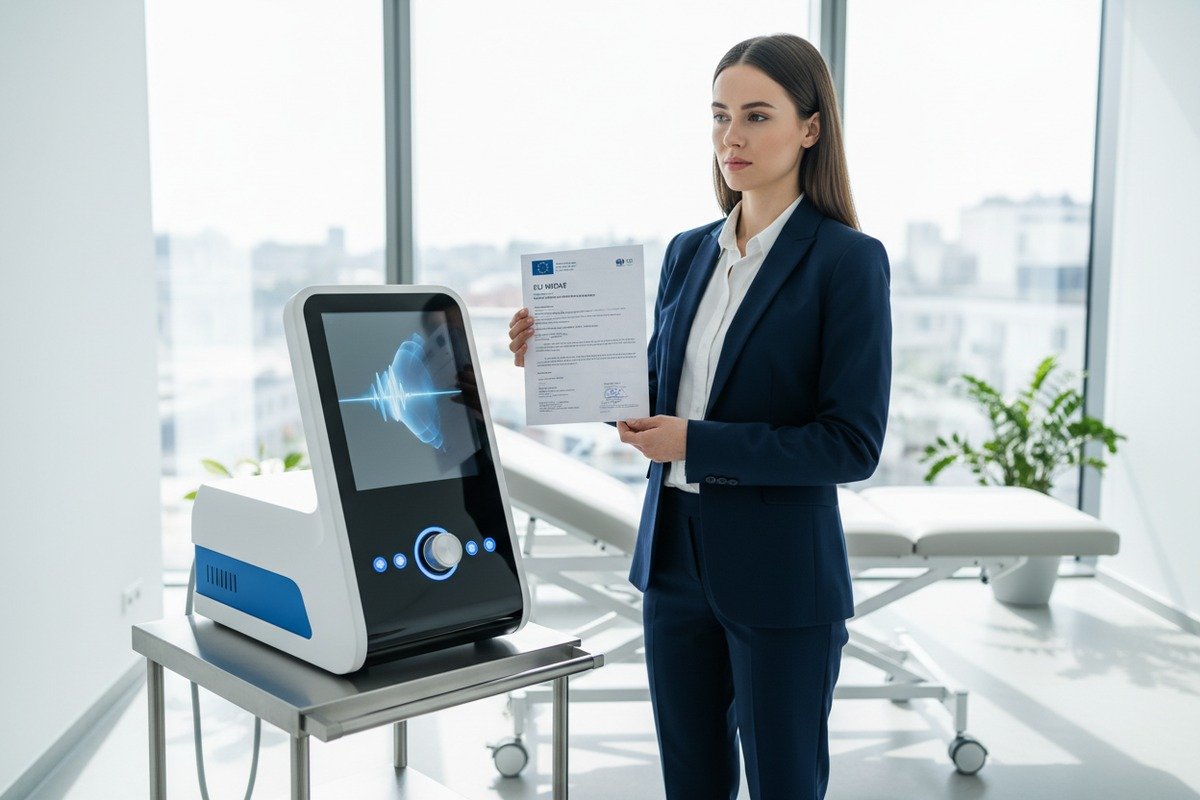
Every week, our export team receives urgent calls from European distributors EU MDR requirements 1. They purchased shockwave machines elsewhere. Now customs holds their shipments. The reason? Missing or fake MDR certificates. These buyers face massive losses. Some even risk legal action.
Yes, shockwave therapy machines must meet EU MDR requirements before entering the European market. Most extracorporeal shockwave therapy devices fall under Class IIa or IIb classification, requiring mandatory Notified Body certification. Class III applies only in rare high-risk scenarios involving implantable components or advanced surgical applications.
Understanding MDR classification protects your business and your customers. This guide explains exactly what you need to know before purchasing. Let’s break down the requirements step by step.
How do I determine if my shockwave therapy machine falls under MDR Class IIb or Class III?
When we design new shockwave therapy units at our facility, classification is the first conversation. Many buyers assume all medical devices need Class III certification. This misunderstanding costs time and money. The truth is more nuanced.
Your shockwave therapy machine's MDR classification depends on energy type, intended use, invasiveness, and clinical claims. Most extracorporeal devices classify as IIa or IIb. Radial shockwave machines typically fall under IIa. Focused electromagnetic units with higher energy output often require IIb certification.

Understanding MDR Classification Rules
The EU MDR uses Annex VIII rules 2 to classify active therapeutic devices. Rules 9 through 12 specifically apply to energy-delivering equipment like shockwave machines. The key factors include:
- Energy delivery method: How the device transfers therapeutic energy
- Patient contact duration: Whether contact is transient, short-term, or long-term
- Invasiveness level: External application versus internal contact
- Clinical claims: What therapeutic outcomes the manufacturer claims
Our engineering team has seen the classification process firsthand. A simple change in marketing claims can bump a device from IIa to IIb. For example, claiming "tissue regeneration" triggers stricter classification than "pain relief."
Radial vs. Focused Shockwave Classification
The technology type significantly impacts classification. Here is how they typically differ:
| Feature | Radial Shockwave | Focused Shockwave |
|---|---|---|
| Typical MDR Class | IIa | IIb |
| Energy Flux Density | Lower (0.08-0.28 mJ/mm²) | Higher (0.28-0.60 mJ/mm²) |
| Penetration Depth | Superficial | Deep tissue |
| Notified Body Required | Yes | Yes |
| Clinical Evidence Level | Moderate | Comprehensive |
When Does Class III Apply?
Class III classification is rare for standard shockwave therapy machines. Our regulatory consultants confirm that Class III only applies when:
- The device includes implantable components
- The device directly contacts the central nervous system
- The device involves invasive surgical procedures
- The device absorbs or emits ionizing radiation
Standard ESWT machines used for musculoskeletal conditions or erectile dysfunction treatment do not meet these criteria. If a supplier claims their basic shockwave unit requires Class III certification, verify this claim carefully. It may indicate confusion about MDR rules.
Verification Steps for Buyers
Before purchasing, take these steps:
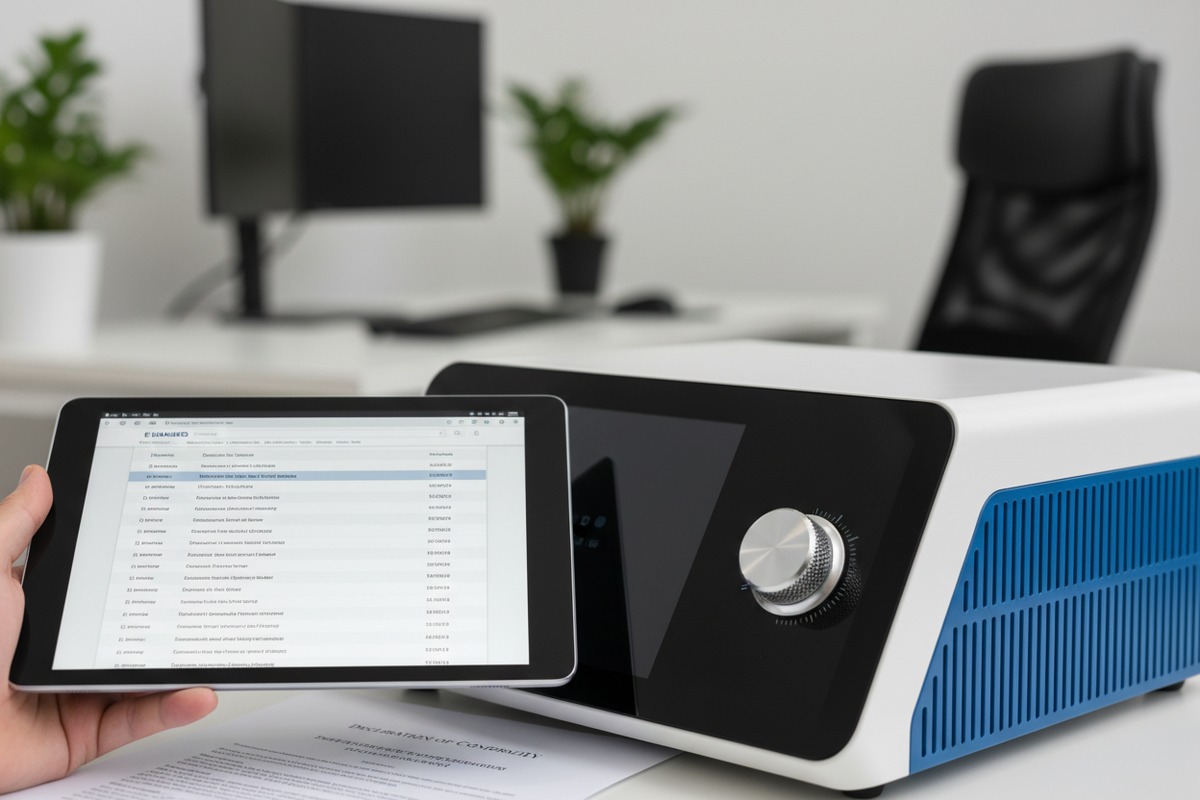
- Request the Declaration of Conformity from the manufacturer
- Check the Notified Body number on EUDAMED database 3
- Review the device's intended purpose statement
- Confirm the classification matches the clinical claims
Can my Chinese manufacturer provide the technical files I need for EU MDR compliance?
During conversations with distributors, this question comes up constantly. Our compliance team has helped dozens of buyers navigate this challenge. The answer depends entirely on the manufacturer's preparation and quality systems.
Legitimate Chinese manufacturers can provide complete MDR technical documentation including clinical evaluation reports, risk management files, and quality management certificates. However, buyers must verify the manufacturer holds ISO 13485 certification and works with EU-recognized Notified Bodies. Many budget suppliers lack proper documentation entirely.

Essential Technical Documentation
Under MDR requirements, manufacturers must maintain comprehensive technical files. When our team prepares export documentation, we include:
- Clinical Evaluation Report (CER): Evidence of safety and performance
- Risk Management File: ISO 14971 4 compliant risk analysis
- Technical Design File: Engineering specifications and testing data
- Quality Management System: ISO 13485 certification 5
- Post-Market Surveillance Plan: Ongoing safety monitoring procedures
Documentation Requirements by Class
The complexity of required documentation scales with device classification:
| Document Type | Class IIa | Class IIb | Class III |
|---|---|---|---|
| Basic Technical File | Required | Required | Required |
| Clinical Evaluation Report 6 | Required | Comprehensive | Extensive |
| Notified Body Audit | Required | Required | Required |
| PMCF Plan | Proportionate | Mandatory | Mandatory |
| Annual Safety Updates | Recommended | Required | Required |
| Design Examination | Not typically | May require | Required |
Red Flags When Evaluating Suppliers
From our experience shipping to European markets, certain warning signs indicate documentation problems:
Self-declared CE marking: For Class IIa and above, self-declaration is not permitted. The CE mark must include a four-digit Notified Body number.
Reluctance to share documents: Compliant manufacturers readily provide Declarations of Conformity and CER summaries.
Outdated MDD certificates: Legacy certificates under the old Medical Device Directive expired by 2024. Only MDR certificates are valid now.
Missing ISO 13485: This quality management certification is fundamental. Without it, proper documentation systems cannot exist.
Testing Standards to Request
Ask your manufacturer to confirm compliance with these harmonized standards:
- IEC 60601-1: Medical electrical equipment safety
- IEC 60601-1-2: Electromagnetic compatibility
- IEC 62304: Medical device software lifecycle (if applicable)
- ISO 14971: Risk management for medical devices
- IEC 63045:2020: Non-focused shockwave equipment (newly harmonized)
Our quality control department tests every unit against these standards before shipment. Proper documentation proves compliance and protects both manufacturer and buyer.
What are the risks to my brand if I import shockwave equipment without the correct MDR certification?
Our sales team recently helped a client recover from a compliance disaster. They had purchased 50 units from an unknown supplier. Every unit was seized at Rotterdam port. The financial and reputational damage took years to repair. This scenario happens more often than you might think.
Importing non-compliant shockwave equipment exposes your brand to customs seizures, substantial fines, product recalls, legal liability for patient harm, and permanent damage to business reputation. EU authorities actively enforce MDR requirements, and non-compliance can result in criminal prosecution for serious violations.
Financial Consequences
The direct costs of non-compliance add up quickly. Based on industry data and client experiences, here is what you might face:
| Risk Category | Potential Cost Range | Recovery Time |
|---|---|---|
| Customs Seizure | Full shipment value loss | Immediate |
| Re-export Fees | €5,000-15,000 per container | 2-4 weeks |
| Regulatory Fines | €10,000-500,000+ | Varies |
| Product Recall | €50,000-500,000+ | 3-12 months |
| Legal Defense | €20,000-200,000+ | 1-3 years |
| Business Interruption | Lost revenue during investigation | 6-18 months |
Legal Liability Issues
Non-compliant devices create serious legal exposure. If a patient experiences harm from an uncertified device, the importer bears significant responsibility. European courts have ruled against importers who failed to verify supplier compliance.
The legal framework holds multiple parties accountable:
- The manufacturer for producing non-compliant equipment
- The importer for introducing it to the EU market
- The distributor for selling it to end users
- The economic operator designated on MDR documentation
Without proper MDR certification, your liability insurance may not cover claims. Many insurers specifically exclude coverage for regulatory violations.
Reputational Damage
Beyond direct financial losses, brand reputation suffers lasting harm. Our industry contacts report that:
- Customers research supplier compliance records online
- Word spreads quickly through professional networks
- Regulatory actions become public record
- Rebuilding trust takes three to five years minimum
Recent Enforcement Actions
EU market surveillance has intensified since MDR fully implemented. Authorities now use:
- Random port inspections with document verification
- EUDAMED database cross-referencing
- Coordinated enforcement across member states
- Whistleblower reporting systems
One client shared that their competitor faced a €150,000 fine for importing 20 non-compliant aesthetic devices. The company also received a two-year import ban for medical equipment.
Protecting Your Business
Smart buyers take protective steps before placing orders:
- Verify Notified Body certification 7 directly with the certifying organization
- Request and review the Declaration of Conformity before payment
- Include compliance warranties in purchase contracts
- Consider third-party pre-shipment inspection
- Maintain complete documentation trails
How will the MDR classification impact my ability to private-label these machines for my customers?
Private labeling is central to our business model. We white-label hundreds of units annually for international brand owners. Understanding how MDR affects this process helps buyers plan effectively and budget appropriately.
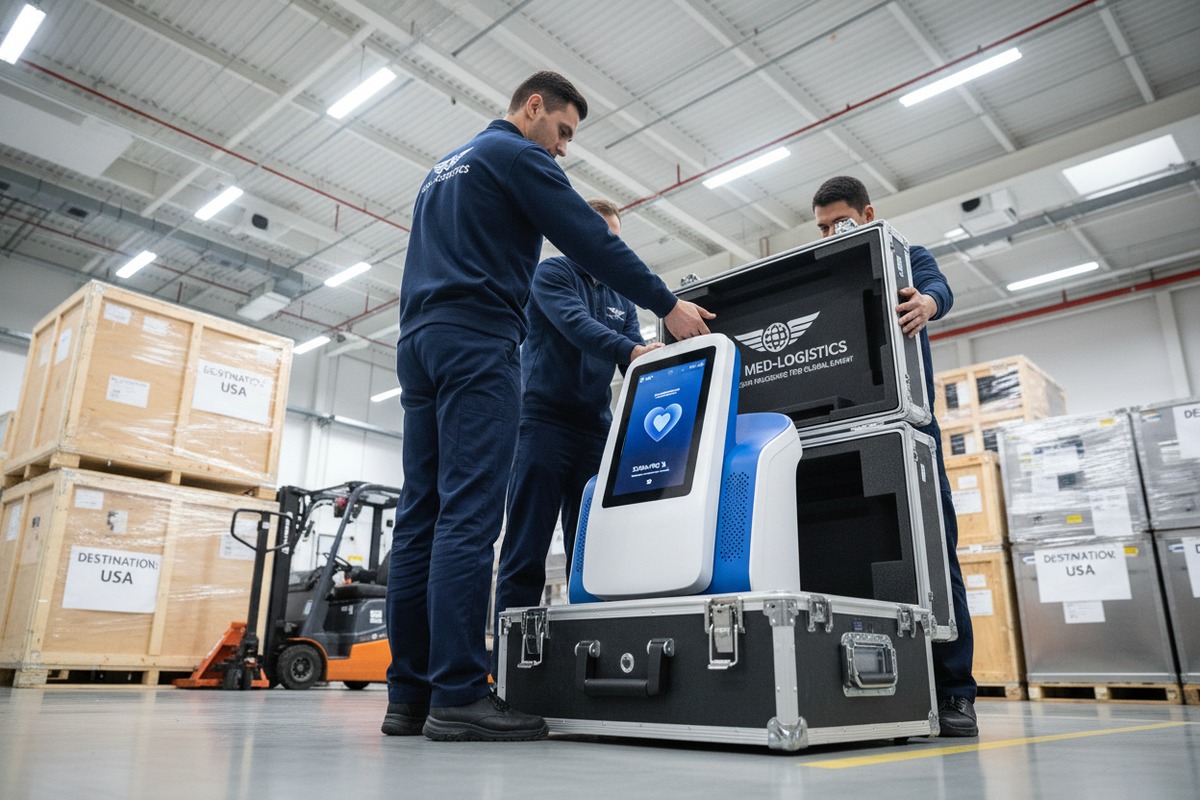
MDR classification directly impacts private-label timelines, costs, and responsibilities. As the person placing a private-labeled device on the EU market, you become the legal manufacturer and must ensure complete MDR compliance. This includes maintaining technical documentation, registering with EUDAMED, and designating an EU Authorized Representative.
The Legal Manufacturer Question
Under MDR, the entity whose name appears on the device is considered the legal manufacturer. This fundamentally changes the compliance landscape for private-label operations.
When you private-label a shockwave machine:
- Your company name goes on the device
- You assume regulatory responsibility
- You must register as a medical device manufacturer
- You need EU Authorized Representative 8 designation
- Technical documentation must name you as manufacturer
Our documentation specialists help clients prepare for these requirements. The transition from "importer" to "legal manufacturer" requires careful planning.
Cost Implications by Classification
MDR compliance costs vary significantly based on device class. Our finance team has compiled typical cost ranges:
| Cost Category | Class IIa | Class IIb |
|---|---|---|
| Notified Body Certification | €30,000-60,000 | €50,000-150,000 |
| Technical File Preparation | €15,000-30,000 | €30,000-80,000 |
| Clinical Evaluation Report | €10,000-25,000 | €25,000-100,000 |
| EU Authorized Representative | €5,000-15,000/year | €8,000-20,000/year |
| Annual Surveillance Audits | €10,000-20,000 | €15,000-35,000 |
| EUDAMED Registration | €2,000-5,000 | €2,000-5,000 |
These costs represent investment in market access. Proper certification protects your revenue stream and customer relationships.
Timeline Considerations
Private-label MDR certification takes significant time. Plan for:
- Technical file review: 2-4 months
- Notified Body audit scheduling: 3-6 months (backlogs persist)
- Certification process: 4-8 months
- EUDAMED registration: 1-2 months
Total timeline from decision to market: 12-18 months for Class IIb devices.
Working with Your OEM Partner
The right manufacturing partner simplifies private-label compliance. When we work with private-label clients, we provide:
- Complete technical documentation packages
- Clinical evaluation report frameworks
- Testing certificates and validation data
- Quality agreement templates
- Post-market surveillance support
PMCF Requirements for Private Labels
Post-Market Clinical Follow-up becomes your responsibility as the legal manufacturer. For Class IIb devices, you must:
- Establish procedures for collecting clinical data
- Monitor device performance in real-world use
- Submit periodic safety update reports
- Respond to adverse event reports
- Update clinical evaluation when new evidence emerges
This ongoing obligation requires systems and resources. Factor PMCF costs into your business planning.
Software Considerations
Many modern shockwave machines include treatment planning software. Under MDR Rule 11, this software requires independent assessment. If your private-label device includes:
- Treatment parameter control systems
- Patient data management
- Diagnostic algorithms
- Treatment planning modules
The software may need separate classification and compliance documentation. Our software development team ensures IEC 62304 compliance for embedded systems.
Conclusion
MDR compliance is not optional for shockwave therapy machines entering European markets. Most devices require Class IIa or IIb certification. Your supplier choice directly impacts compliance success. Demand proper documentation. Verify certificates independently. Protect your brand and your customers.
Footnotes
1. Replaced with the official EUR-Lex link to Regulation (EU) 2017/745 on medical devices, an authoritative source for EU MDR requirements. ↩︎
2. Provides the official classification rules for medical devices under EU MDR. ↩︎
3. Replaced with the official European Commission’s EUDAMED portal, which is the authoritative source for the database. ↩︎
4. Explains the international standard for risk management for medical devices. ↩︎
5. Details the international standard for quality management systems for medical devices. ↩︎
6. Explains the purpose, content, and importance of Clinical Evaluation Reports for MDR compliance. ↩︎
7. Explains the role and designation of Notified Bodies in the EU. ↩︎
8. Defines the role and responsibilities of an EU Authorized Representative under MDR. ↩︎

 English
  Español de México
  Deutsch
  Français
  العربية
  Русский