When our engineering team first developed shockwave therapy devices 1, one question kept coming up from buyers worldwide. They wanted to know if the machines could maintain consistent energy output over time accurate energy flux density 2. Without proper calibration, treatments become unpredictable. Patients may experience irritation or see no results at all.
Yes, shockwave therapy machines do have calibration systems. These systems vary by device type and manufacturer. They typically include built-in software screens, external service calibration protocols, or performance verification tools. Calibration ensures accurate energy flux density, frequency, and pulse delivery for safe, effective treatments.
Understanding how calibration works helps you make smarter purchasing decisions. Let’s explore what this means for your business.
How do I verify the calibration accuracy of my shockwave therapy machines?
Our quality control team runs into this question almost daily. Buyers receive their machines and want proof that the device performs as promised. The stakes are high. Wrong energy output can harm patients or damage your reputation.
You can verify calibration accuracy through built-in touch-screen diagnostics, manufacturer service logs, third-party acoustic output mapping, and traceable bench tests. Check the device's calibration certificate, compare displayed parameters against actual output measurements, and schedule periodic professional inspections to ensure energy stability.

Understanding Built-In Calibration Features
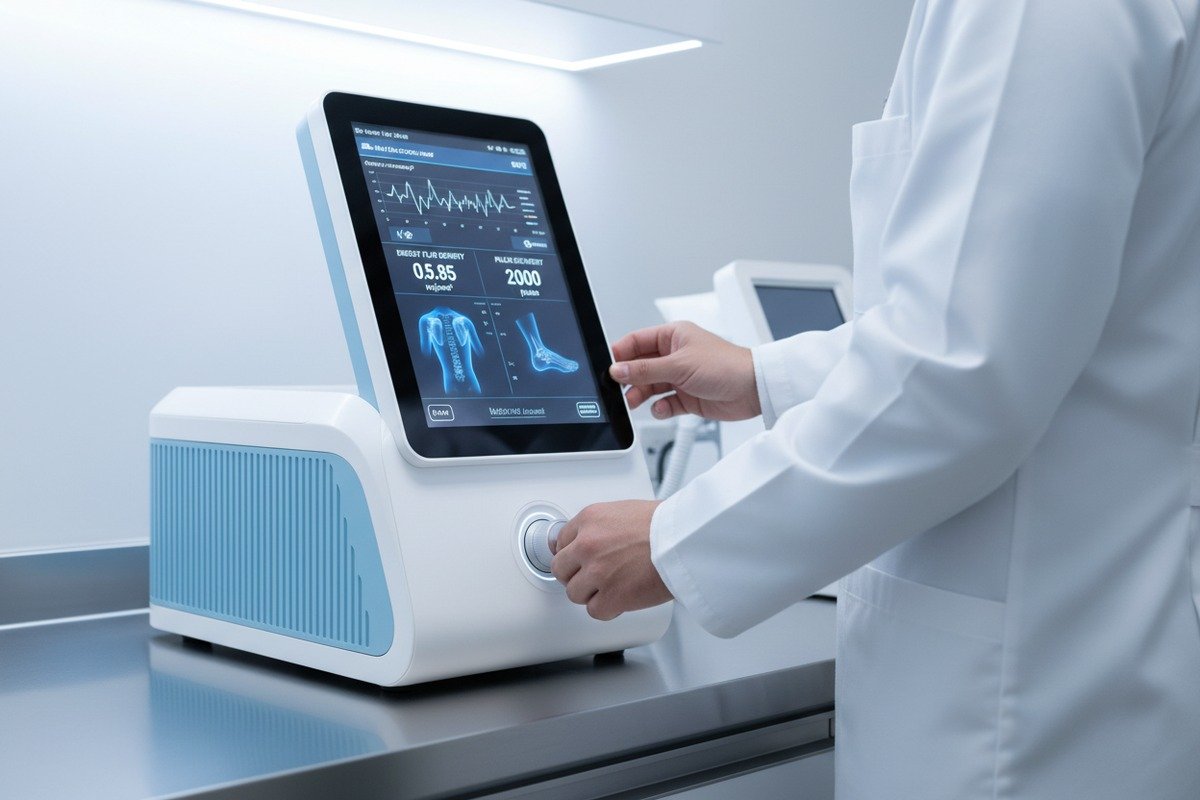
Most modern shockwave devices include self-diagnostic tools. On our tabletop units, the large vertical touchscreen displays real-time parameter readings. You can access calibration menus that show energy flux density, frequency settings, and pulse counts. The system alerts you when values drift outside acceptable ranges.
The glossy black glass panel with integrated LCD screen makes monitoring easy. You see anatomical diagrams alongside technical data. The single metallic control knob allows fine adjustments during calibration checks.
Third-Party Verification Methods
Some clinics prefer independent verification. Companies like Physio Biomedical offer calibration inspection services. They use specialized equipment to measure acoustic output. Their reports compare your device's actual performance against manufacturer specifications.
| Verification Method | What It Measures | Frequency Recommended |
|---|---|---|
| Built-in diagnostics | Energy display accuracy | Before each session |
| Manufacturer service | Full system calibration | Every 6-12 months |
| Third-party testing | Acoustic output mapping 3 | Annually |
| Bench tests | Energy stability over time | After shipping/repair |
Key Parameters to Check
Focus on these core measurements when verifying calibration:
- Energy Flux Density (EFD): Focused devices should read 0.03–0.60 mJ/mm². Radial devices operate at 0.5–6 bar.
- Frequency: Most units range from 1–21 Hz. High frequency settings limit maximum energy.
- Pulse count accuracy: The counter should match actual pulses delivered.
Our white cuboid main units with rounded edges house sensors that track these values continuously. The smooth matte finish protects internal components from environmental interference.
Creating a Verification Schedule
We recommend establishing a routine. Daily quick checks take only minutes. Weekly deep scans catch early drift. Annual professional calibration keeps everything certified.
Document every verification in a log. This protects your business if questions arise later. Regulatory inspectors often ask for calibration records.
Will my imported shockwave equipment require recalibration after long-distance shipping?
In our experience exporting to the US and Europe, this concern appears in nearly every shipment discussion. Buyers invest thousands of dollars. They worry that vibration, temperature changes, and handling damage the delicate calibration settings.
Imported shockwave equipment often needs recalibration verification after long-distance shipping. Transit vibrations, temperature fluctuations, and pressure changes can affect sensitive components. We recommend running a full diagnostic check upon arrival and comparing readings against factory calibration certificates before treating patients.
Why Shipping Affects Calibration
Shockwave devices contain precise mechanical and electronic components. Focused machines use electrohydraulic or piezoelectric generators 4. Radial units rely on pneumatic systems with compressed air. Both types respond to physical stress during transit.
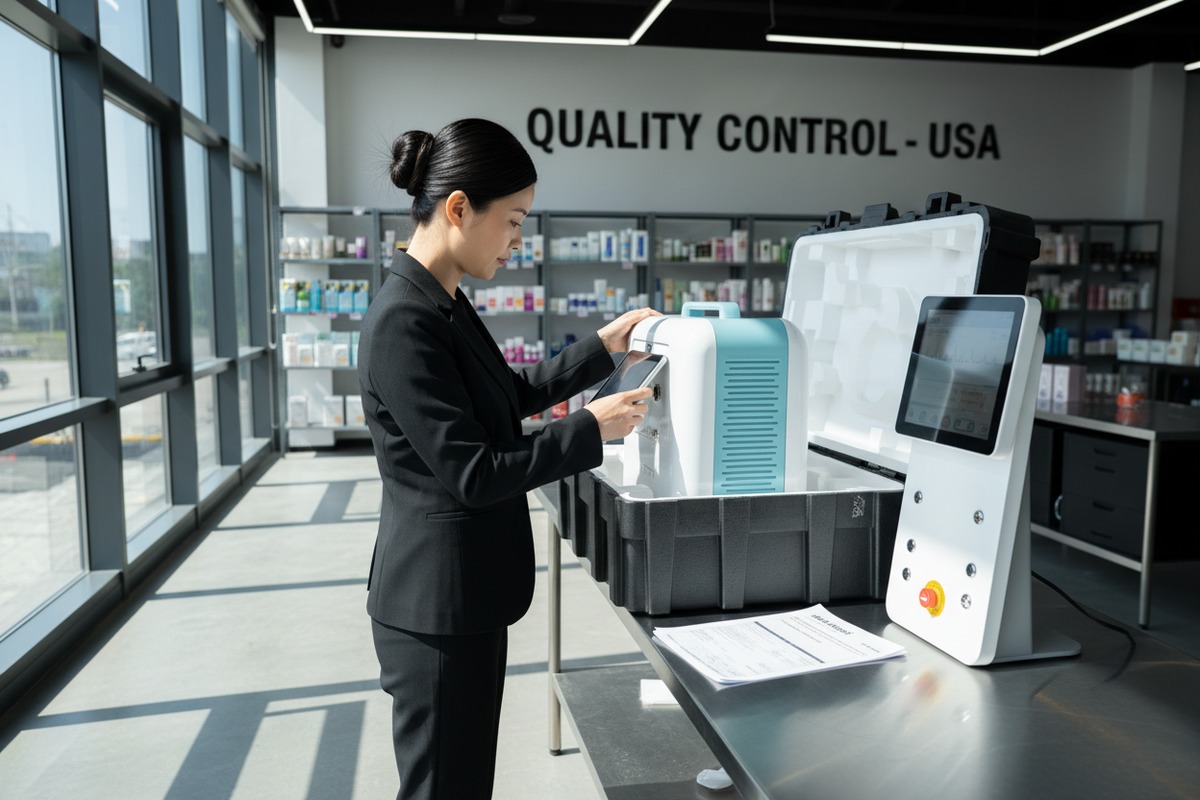
Our sleek, futuristic medical devices feature light blue tapered side panels with horizontal ribbed texture. This design absorbs minor shocks. However, severe impacts can still shift internal alignments.
Temperature matters too. Cargo holds may reach extreme cold or heat. Electronic circuits expand and contract. Calibration stored in memory usually survives, but physical components may need adjustment.
Pre-Shipment Calibration Protocol
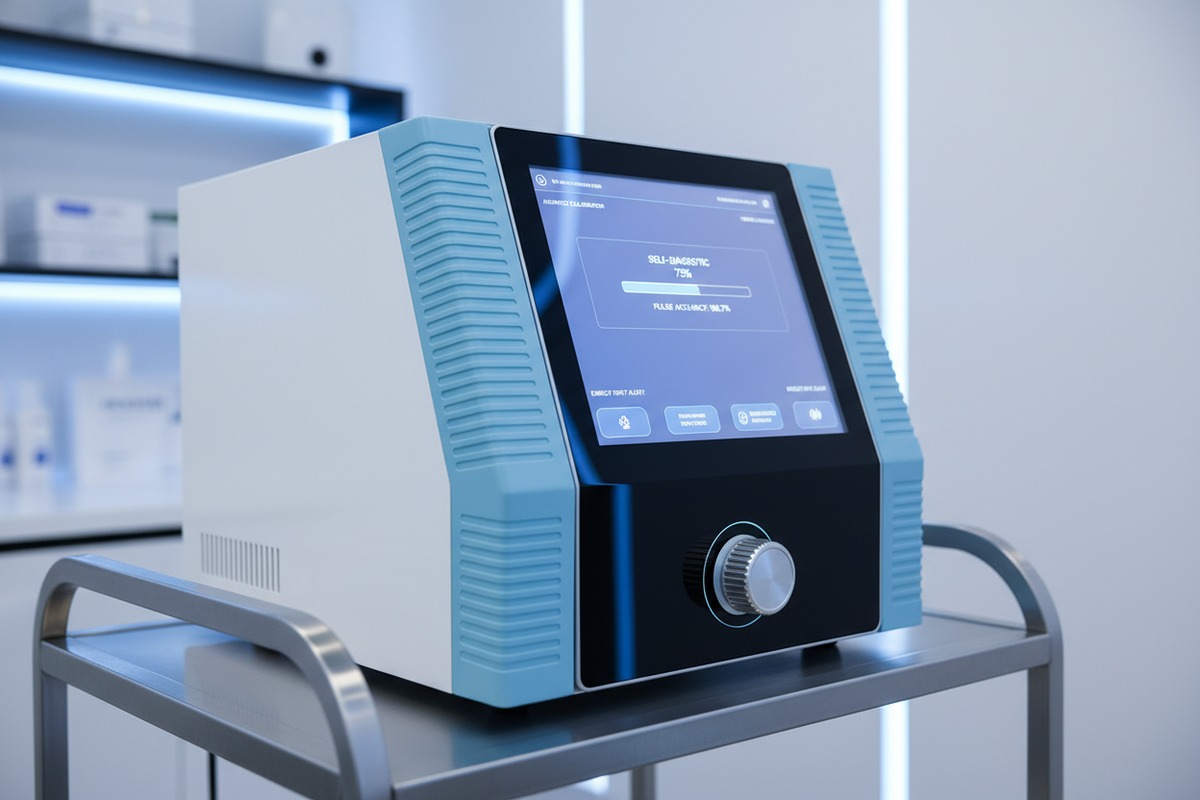
Before any unit leaves our facility, we perform complete calibration. The touch-screen interface displays a high-tech user interface confirming all parameters. We generate a calibration certificate 5 with exact readings.
| Parameter | Pre-Shipment Reading | Acceptable Post-Shipping Variance |
|---|---|---|
| EFD (focused) | 0.03–0.60 mJ/mm² | ±5% |
| Pressure (radial) | 1–4 bar | ±0.2 bar |
| Frequency | 1–21 Hz | ±0.5 Hz |
| Pulse counter | Exact count | ±1% |
Post-Arrival Verification Steps
When your shipment arrives, follow this sequence:
- Visual inspection: Check for external damage to the white plastic body and smooth matte finish.
- Power-up test: Turn on the device and let it complete self-diagnostics.
- Parameter comparison: Match displayed values against your calibration certificate.
- Test pulse delivery: Run a short cycle on a test medium.
- Document results: Record all findings for your quality control files.
Packaging That Protects Calibration
Our durable packaging systems minimize recalibration needs. Custom foam inserts cradle the main unit. The sturdy black arched handpiece holders prevent movement. Temperature indicators on boxes reveal if extreme conditions occurred.
Still, we always tell buyers: verify before use. The few minutes spent checking calibration prevents costly problems later. Your downstream customers expect consistent results every time.
How can I ensure my private-label machines include a reliable calibration system?
When we collaborate with brand owners on OEM projects, calibration specifications top the requirements list. Your brand reputation depends on every unit performing identically. One faulty machine can generate negative reviews that spread across the internet.
Ensure your private-label machines include reliable calibration by specifying IEC 60601 compliance, built-in diagnostic software, manufacturer calibration certificates, and documented service protocols in your OEM contract. Request sample testing, review the calibration interface design, and verify that user-accessible calibration checks exist alongside professional service options.
Calibration Features to Specify in OEM Contracts
Your contract should explicitly list calibration requirements. Vague language leads to disputes later. Be specific about what you need.
| Feature Category | Specific Requirement | Why It Matters |
|---|---|---|
| Compliance | IEC 60601-1/1-2 certification | Meets safety and EMC standards for medical devices |
| User interface | Touch-screen calibration access | Allows quick daily checks |
| Documentation | Individual unit calibration certificate | Proves factory accuracy for each device |
| Service protocol | Written recalibration procedure | Enables your technicians to maintain units |
| Auto-diagnostics | Start-up self-check routine | Catches problems before patient treatment |
Evaluating Sample Units
Before placing bulk orders, test samples thoroughly. Our engineering team walks buyers through calibration verification. You should see how the large vertical touchscreen displays parameter data. Check if the interface makes sense for your end users.
The smooth white plastic body with light blue tapered panels houses the calibration electronics. Examine build quality. Poor construction affects calibration stability over time.
Documentation That Protects Your Brand
Request comprehensive documentation for each unit. This includes:
- Factory calibration certificate with date, technician signature, and exact readings
- User manual section on calibration verification
- Service manual for professional recalibration procedures
- Software update protocol for calibration improvements
Our standard models come with all documentation ready for your branding. We can translate materials and add your logo to calibration screens.
Ongoing Calibration Support
Consider long-term support needs. Will you handle recalibration in-house? Or will you need manufacturer assistance? Some buyers send units back to us for annual service. Others train local technicians using our protocols.
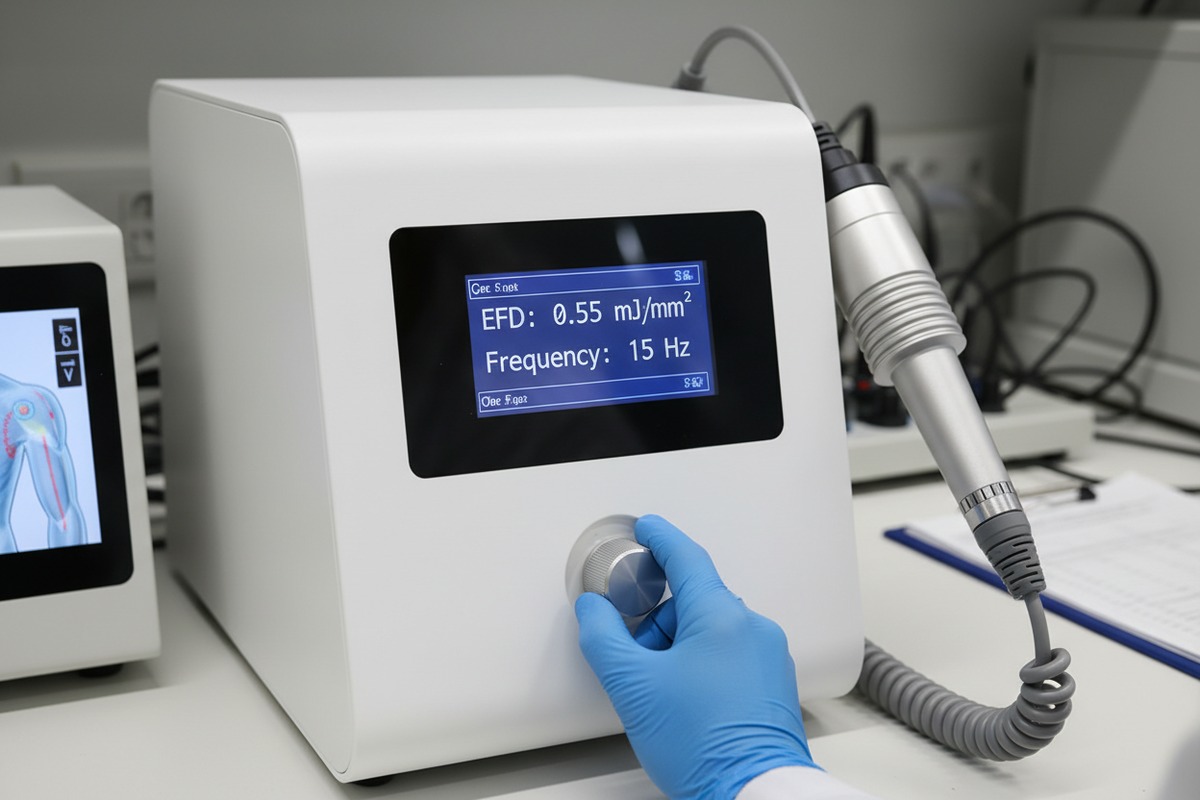
The metallic circular control knob on our devices allows fine parameter adjustment during calibration. This feature matters for service technicians who need precise control.
Ask about spare parts availability. Handpiece revision kits need replacement after specific shock counts. Budget for these consumables in your total cost calculations.
What are the risks to my brand if my shockwave machines lack a calibration feature?
Our sales team has heard troubling stories from buyers who previously sourced from unverified suppliers. Machines arrived without calibration systems. Problems emerged within weeks. Their brands suffered damage that took years to repair.
Machines lacking calibration features pose serious risks to your brand including inconsistent treatment outcomes, patient injuries from unstable energy output, regulatory non-compliance, product liability claims, negative customer reviews, and loss of professional credibility. Energy variations above 0.22 mJ/mm² can cause tissue irritation while levels below 0.18 mJ/mm² may produce no therapeutic effect.
Patient Safety Consequences
Without calibration, energy output becomes unpredictable. Focused devices may deliver excessive force to deep tissues. Radial units might pulse at wrong frequencies. Both scenarios harm patients.
| Energy Level | Classification | Patient Effect |
|---|---|---|
| < 0.18 mJ/mm² | Sub-therapeutic | No healing response |
| 0.18–0.22 mJ/mm² | Regenerative zone | Optimal tissue repair |
| > 0.22 mJ/mm² | Catabolic zone | Irritation and microtrauma |
The bright integrated LCD screen on calibrated devices shows exact energy delivery. Uncalibrated machines lack this visibility. Operators work blind.
Regulatory Compliance Failures
FDA 510(k) clearance 7 requires performance verification. IEC 60601 standards mandate safety testing including calibration accuracy. ISO 14971 risk management addresses calibration-related hazards.
Selling non-compliant devices exposes you to:
- Import seizures at US customs
- Regulatory warning letters
- Mandatory recalls
- Civil and criminal penalties
Our 510(k)-pathway products include all required documentation. Cheap imitation machines skip these steps entirely.
Financial Impact Analysis
The true cost of uncalibrated machines extends far beyond the purchase price. Consider these scenarios:
Warranty claims surge when devices underperform. Your service team spends hours troubleshooting problems that calibration would prevent.
Customer churn accelerates as clinics switch to competitors. One viral negative review costs more than the savings from cheap equipment.
Legal liability grows with each patient complaint. Product liability insurance premiums increase. Lawsuits drain resources.
Competitive Disadvantage
Premium brands differentiate on reliability. When your competitors offer calibrated devices with service support, your uncalibrated machines look inferior. Professional buyers recognize the difference quickly.
The shift toward verified, regulated devices continues accelerating. Clinics want SmartTrode electrodes with self-regulating output. They expect auto-degas systems and closed water systems. Broad focal zones minimize precision errors.
Protecting Your Investment
Choose suppliers who prioritize calibration. Our tabletop units include touch-screen calibration interfaces. The white plastic body with horizontal ribbed texture panels houses precision components. Every unit ships with individual calibration certificates.
Investing in quality now prevents brand disasters later. Your reputation is worth more than any short-term savings.
Conclusion
Calibration systems separate professional shockwave therapy machines from risky imitations. Your brand deserves equipment that delivers consistent, safe results. Verify calibration features before purchasing, check accuracy after shipping, and specify requirements in OEM contracts. The investment protects your patients and your reputation.
Footnotes
1. Explains the definition and core function of these medical instruments. ↩︎
2. Defines a critical parameter for effective and safe shockwave treatments. ↩︎
3. Describes a method for verifying the performance of shockwave therapy machines. ↩︎
4. Details the different types of energy generation mechanisms in shockwave devices. ↩︎
5. Explains the importance and contents of a document verifying device accuracy. ↩︎
6. Provides context on the international safety and performance standard for medical electrical equipment. ↩︎
7. Found the official and updated FDA page for Premarket Notification (510(k)) submissions, which is an authoritative source. ↩︎

 English
  Español de México
  Deutsch
  Français
  العربية
  Русский