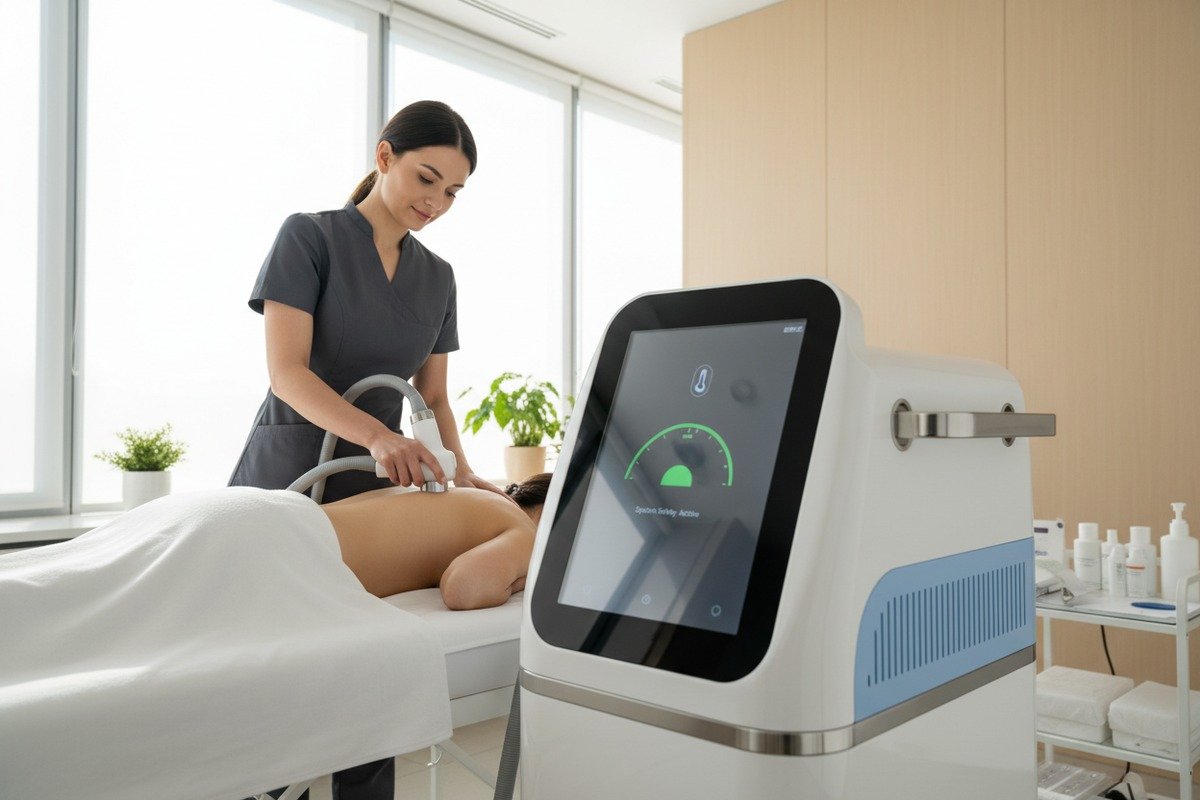
Running a busy salon means your equipment works hard every single day ISO 13485 standards 1. When machines overheat, treatments stop, clients wait, and your reputation suffers. Our engineering team has spent years solving this exact problem for beauty brands worldwide.
Yes, professional shockwave therapy machines feature built-in overheat protection as a standard safety component. These systems use multiple temperature sensors, automatic power reduction, cooling fans, and firmware controls to prevent equipment damage and ensure safe treatments during extended high-volume sessions.
Understanding how these protection systems work helps you make smarter purchasing decisions. Let me walk you through the key aspects of thermal safety in modern shockwave devices.
How does built-in overheat protection safeguard my investment during high-volume salon sessions?
Every machine that leaves our production facility faces the same challenge: surviving thousands of treatment pulses without failure. Heat is the silent killer of electronic equipment, and busy salons generate plenty of it.
Built-in overheat protection safeguards your investment by using temperature sensors, automatic shutdowns, and graduated cooling responses that prevent thermal damage to critical components like handpiece coils, compressors, and circuit boards during continuous operation.

Multi-Layer Protection Architecture
Modern shockwave machines don't rely on a single safety mechanism. Our engineers design systems with redundant protection across every heat-generating component. This approach ensures that if one sensor fails, backup systems still prevent damage.
The handpiece coil typically triggers protection around 80-90°C. Compressor systems activate cooling measures at approximately 70°C. Power boards have thermal relays set at 85°C thresholds. These graduated responses mean your machine adjusts before reaching dangerous temperatures.
How Temperature Sensors Work
NTC thermistors 2 are the most common sensor type in professional equipment. These small components constantly monitor temperatures at critical points. When readings exceed safe limits, the control firmware responds immediately.
| Component | Typical Protection Threshold | Protection Response |
|---|---|---|
| Handpiece Coil | 80-90°C | Pause treatment, boost fan speed |
| Compressor | 70°C | Stop compression cycle, trigger alarm |
| Power Board | 85°C | System shutdown until cooling |
| Treatment Head Surface | 41°C | Automatic shutdown, operator alert |
Real-World Protection in Action
Consider what happens during a busy Saturday at your salon. Your shockwave machine performs back-to-back treatments for six hours. Without protection, internal temperatures would climb steadily until components fail.
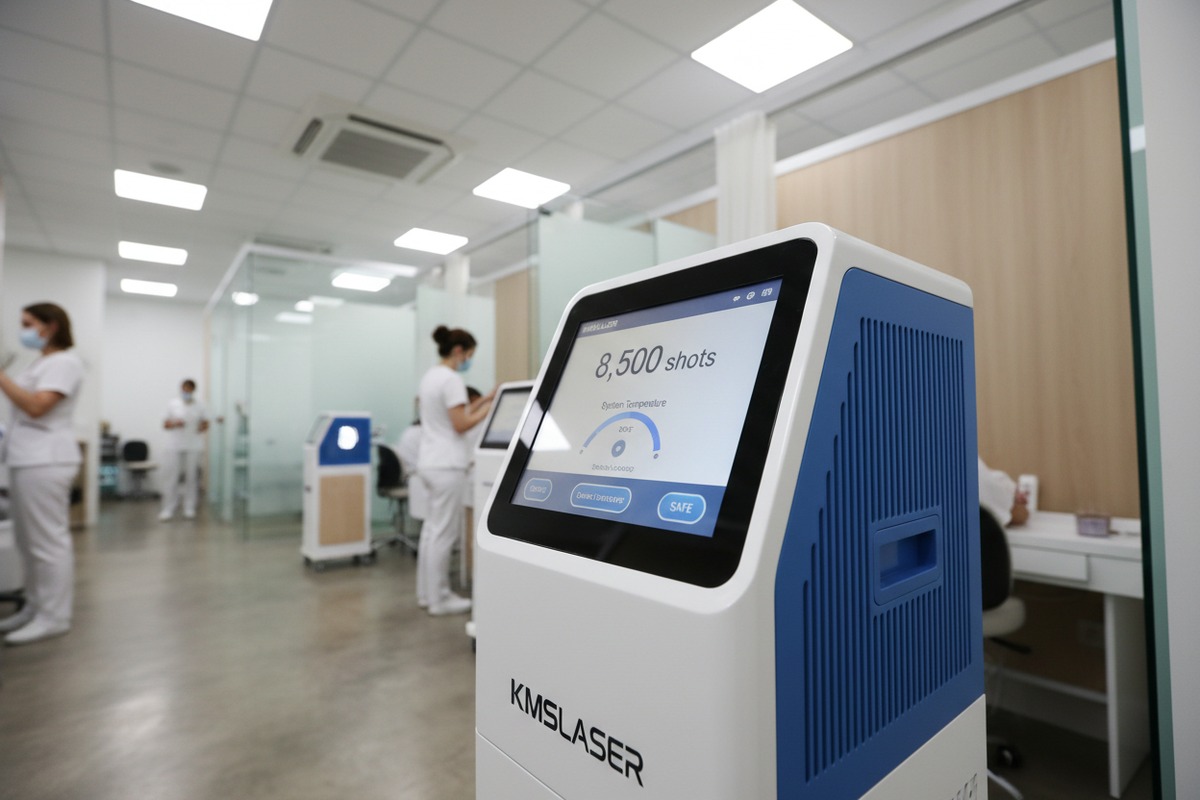
With proper thermal management, the system monitors itself continuously. Pulse-limiting modes kick in after 6,000-8,000 shots, requiring brief cooling periods. Variable-speed fans increase airflow proportionally as temperatures rise. These automatic adjustments happen without operator intervention.
The financial impact is significant. Emergency repairs often cost thousands of dollars. Downtime means lost revenue and disappointed clients. Overheat protection eliminates most thermal-related failures, keeping your investment productive.
Can I request specific thermal safety standards for my custom OEM shockwave therapy machines?
When brands approach us for OEM production, thermal specifications rank among their top concerns. Different markets and regulatory environments require different safety parameters. Our engineering team works closely with clients to meet their exact requirements.
Yes, you can request specific thermal safety standards for custom OEM machines. Our development team customizes temperature thresholds, sensor placement, cooling system capacity, and protection response behaviors to meet your brand's requirements and comply with FDA, CE, or ISO 13485 standards.

Customizable Thermal Parameters
We recently completed a project for a US distributor who needed treatment head shutdowns at 38°C instead of the standard 41°C. Their target market included dermatology clinics where patient comfort standards were extremely strict. Our firmware team adjusted the threshold within two weeks.
Other customization options include:
- Protection threshold temperatures for each component
- Cooldown duration requirements between sessions
- Fan speed profiles and noise levels
- Alarm and notification settings
- Display messages and warning indicators
Regulatory Compliance Considerations
Different markets have different expectations. FDA registration for the US market requires documented thermal management protocols. CE marking 3 for Europe demands compliance with specific safety directives. Our quality team maintains certifications for major export destinations.
| Market | Primary Standard | Key Thermal Requirements |
|---|---|---|
| United States | FDA 510(k) 4 | Documented thermal management, patient contact surface limits |
| European Union | CE/MDR | Risk assessment, clinical evaluation of thermal effects |
| International | ISO 13485 | Quality management system 5 for medical device manufacturing |
| General Safety | IEC 60601-1 | Electrical safety including thermal protection |
The OEM Development Process
Custom thermal specifications add steps to product development. First, we review your requirements and assess feasibility. Then our engineers create modified firmware and select appropriate sensors. Prototype testing follows, with multiple temperature validation cycles.
We document everything. Your brand receives complete technical files showing protection thresholds, test results, and compliance evidence. This documentation supports your own regulatory submissions and gives your customers confidence in product safety.
One client asked whether we could implement AI-driven thermal prediction. While emerging technologies like machine learning for temperature forecasting exist, most practical implementations today use proven sensor-and-threshold approaches. We stay current with innovations but recommend battle-tested solutions for production equipment.
What testing protocols do you use to ensure my machines won't fail due to overheating in the field?
Testing separates reliable equipment from warranty nightmares. Our quality control team runs every machine through extensive thermal validation before shipping. We simulate conditions far more demanding than typical salon use.
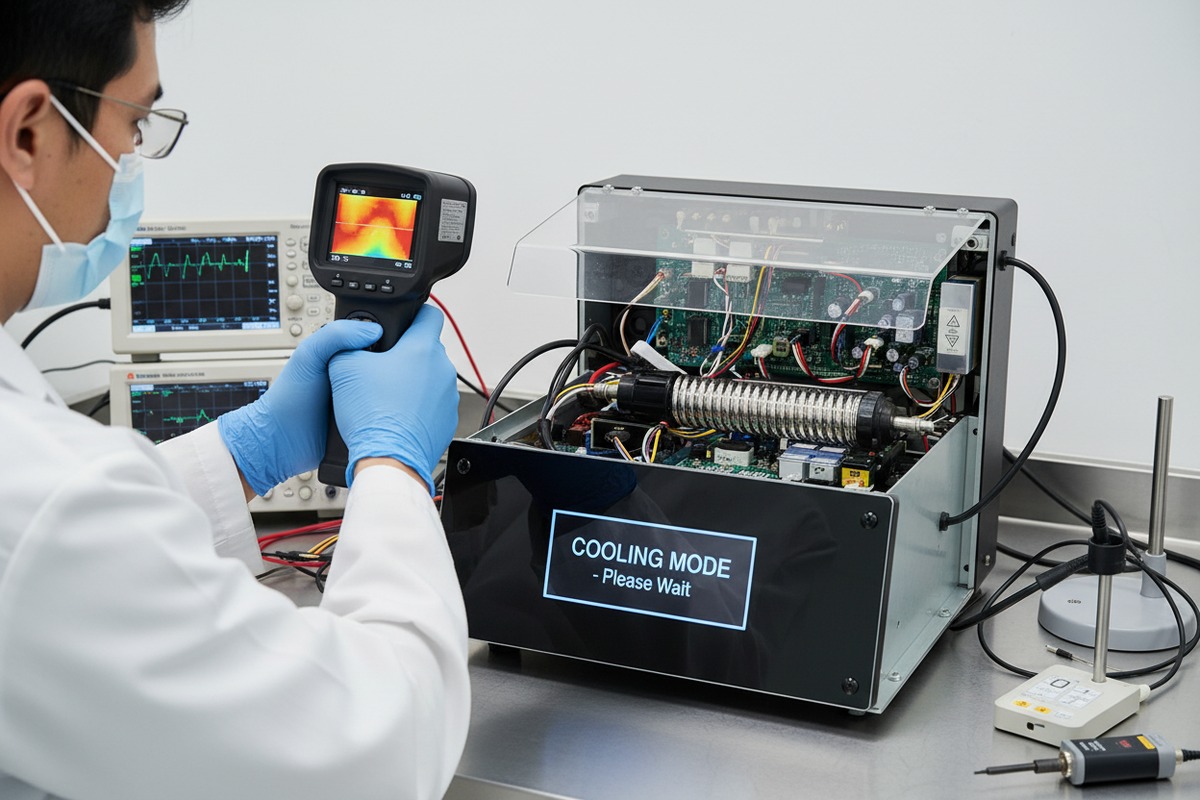
We use comprehensive testing protocols including continuous operation stress tests, ambient temperature variation trials, component-level thermal imaging, and accelerated aging simulations to verify that protection systems function correctly under real-world and extreme conditions.
Stress Testing Methodology
Standard functional testing isn't enough. We push machines beyond normal operating parameters to find weaknesses. Continuous operation tests run devices for hours at maximum power settings. We monitor internal temperatures throughout, verifying that protection systems engage at correct thresholds.
Environmental chambers allow us to test performance at different ambient temperatures. A machine that works perfectly in air-conditioned conditions might struggle in a hot, humid salon environment. We simulate these scenarios before products leave our facility.
Component-Level Verification
Individual components undergo separate testing before assembly. Handpiece coils receive repeated heating and cooling cycles. Thermal paste application gets verified with imaging equipment. Sensor calibration is checked against reference thermometers.
| Test Type | Purpose | Pass Criteria |
|---|---|---|
| Continuous Operation | Verify protection activation | Shutdown occurs within 2°C of threshold |
| Ambient Variation | Confirm performance across temperatures | Full function at 15-35°C ambient |
| Thermal Imaging | Identify hot spots | No component exceeds rated maximum |
| Accelerated Aging | Predict long-term reliability | Protection remains accurate after simulation |
| Pulse Count Endurance | Validate shot limits | Consistent response across 50,000+ pulses |
Documentation and Traceability
Every test generates records. Serial numbers link to specific test results. If a field failure occurs, we can trace back to production data and identify whether the issue is isolated or systemic.
This traceability matters for your brand reputation. When you can show customers documented quality control records, you demonstrate professional-grade supply chain management. We provide test certificates with shipments for clients who request them.
Real Failure Analysis
We also learn from problems. When machines return for warranty service, our technicians perform failure analysis. Was the thermal protection system bypassed? Did a sensor fail? This information feeds back into design improvements and testing protocol updates.
One interesting finding: most thermal failures we investigate weren't protection system problems at all. They were maintenance issues—blocked ventilation, dust accumulation, or water circulation problems in liquid-cooled systems. Proper user training prevents many heat-related failures.
How will advanced cooling features reduce the long-term maintenance costs for my beauty brand?
Maintenance costs eat into profit margins. Every service call, every replacement part, every hour of downtime represents money leaving your business. Smart thermal management dramatically reduces these expenses over equipment lifespan.
Advanced cooling features reduce long-term maintenance costs by preventing thermal stress on components, extending part lifespan, decreasing emergency repair frequency, and maintaining treatment consistency that reduces customer complaints and warranty claims for your beauty brand.
The True Cost of Heat Damage
Heat destroys electronic components gradually. Capacitors lose capacity. Solder joints develop micro-cracks. Plastic housings become brittle. These problems don't appear immediately—they emerge after months or years of cumulative thermal stress.
Machines with aggressive cooling run cooler during operation. Lower operating temperatures mean slower degradation. Components last longer. The interval between required maintenance extends significantly.
Smart Fan Technology
Our current production models use PWM-controlled cooling fans. Unlike simple on-off fans, these adjust speed continuously based on actual temperatures. Benefits include reduced noise during light use, appropriate cooling during heavy use, and lower power consumption overall.
The fans themselves are selected for longevity. Ball-bearing motors outlast sleeve bearings. Dust-resistant designs require less frequent cleaning. These details matter for total ownership cost.
Preventive vs. Emergency Maintenance
| Maintenance Type | Without Advanced Cooling | With Advanced Cooling |
|---|---|---|
| Annual Service Cost | $400-800 | $150-300 |
| Emergency Repairs | 2-4 per year | 0-1 per year |
| Component Replacement | Every 18-24 months | Every 36-48 months |
| Downtime Hours | 20-40 annually | 5-10 annually |
| Average Equipment Lifespan | 3-4 years | 6-8 years |
Emerging Cooling Technologies
The thermal management field continues advancing. Phase-change materials 6 absorb heat during operation and release it during rest periods, smoothing temperature spikes. Nanofluids offer improved heat transfer 7 in liquid-cooled systems. Advanced materials like Annealed Pyrolytic Graphite conduct heat away from sensitive components efficiently.
We evaluate these technologies for practical implementation. Not every innovation makes business sense. Our job is identifying which advances offer real reliability improvements at reasonable cost, then incorporating them into production designs.
Maintenance Best Practices
Even the best cooling systems need support from operators. We recommend:
- Clean air intake vents monthly
- Verify fan operation during power-on
- Ensure adequate clearance around equipment
- Check water circulation systems for air bubbles
- Schedule annual professional inspections
Following these practices maximizes the protective value of built-in thermal management systems. Your maintenance costs stay low. Your equipment stays productive.
Conclusion
Thermal protection isn't optional for professional shockwave therapy equipment—it's essential. From multi-layer sensor systems to customizable OEM specifications, modern machines protect your investment while ensuring safe treatments. Choose equipment with proven cooling technology, and your maintenance costs will thank you.
Footnotes
1. Details the international standard for quality management systems in medical device manufacturing. ↩︎
2. Replaced 404 link with a Wikipedia page providing a comprehensive overview of NTC thermistors. ↩︎
3. Explains the requirements and importance of CE marking for medical devices in the EU. ↩︎
4. Replaced 404 FDA link with the current, working official FDA page for 510(k) premarket notification. ↩︎
5. Describes the requirements for a quality management system in medical device production. ↩︎
6. Explains the concept and application of phase-change materials for thermal management. ↩︎
7. Describes nanofluids and how they enhance heat transfer in cooling systems. ↩︎

 English
  Español de México
  Deutsch
  Français
  العربية
  Русский